IDNO
P.148603.MAT
Description
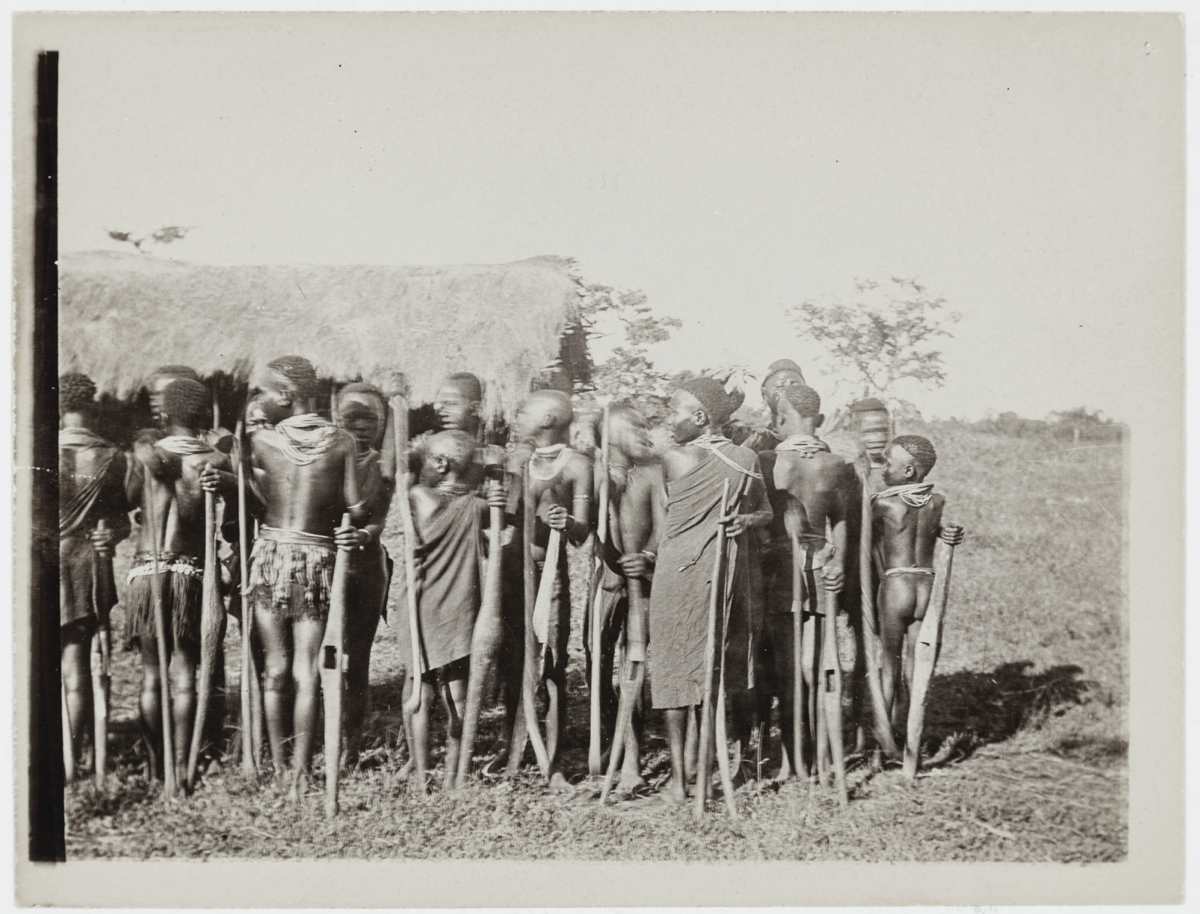
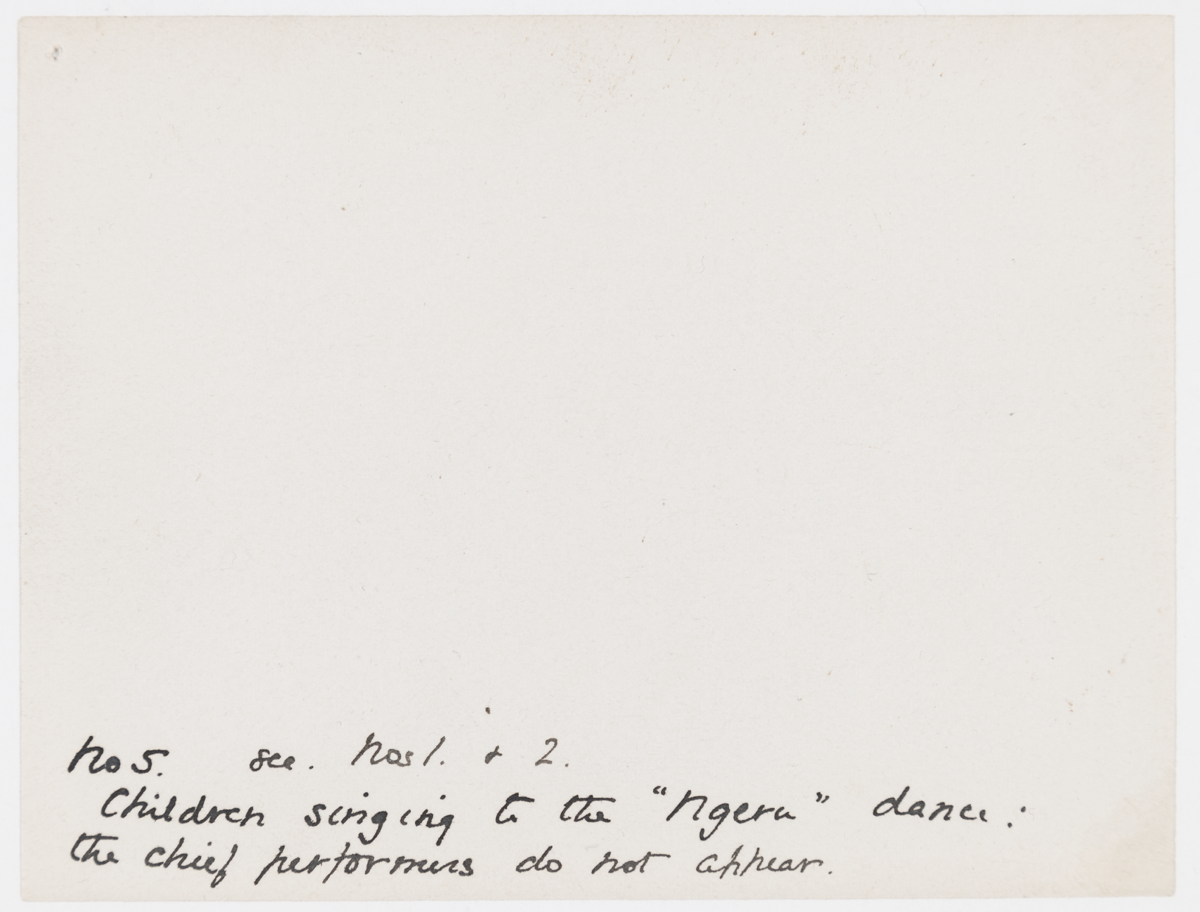
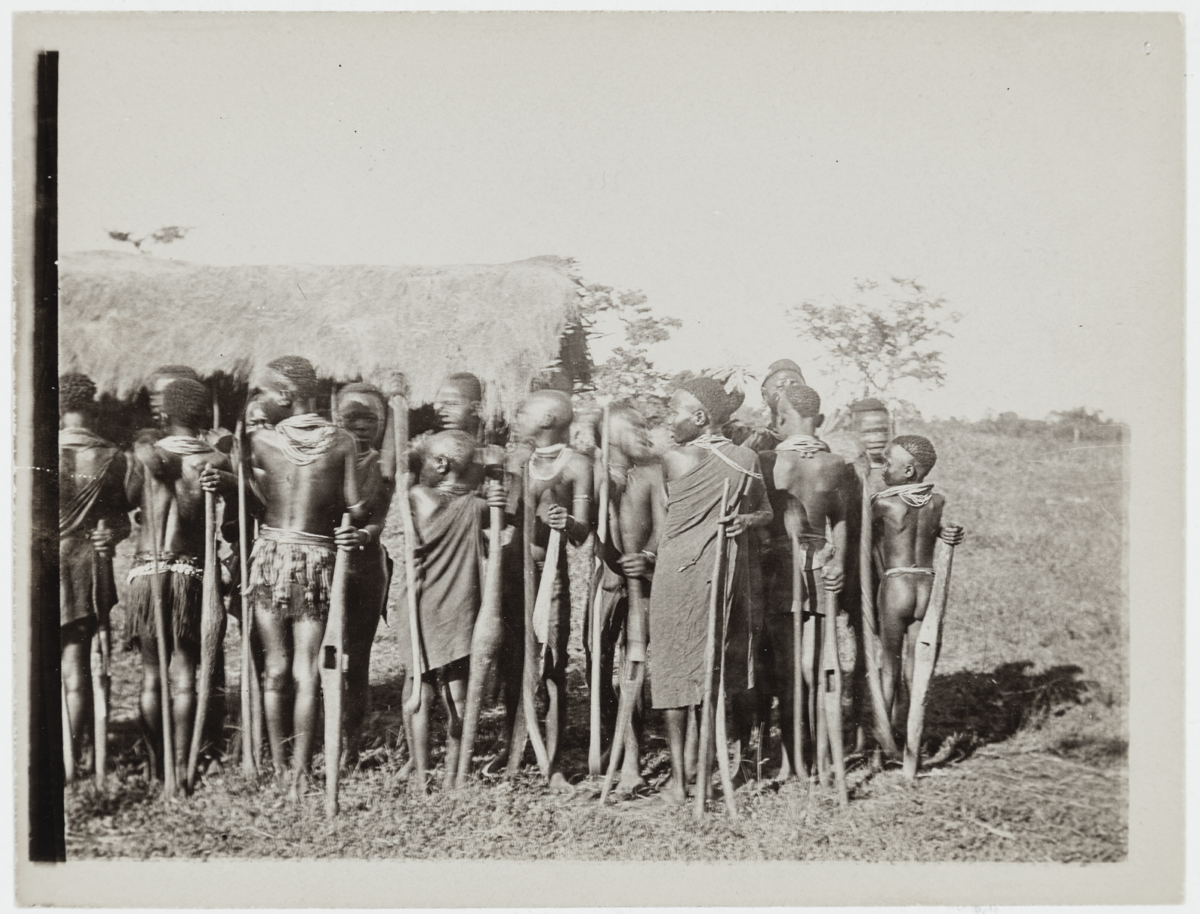
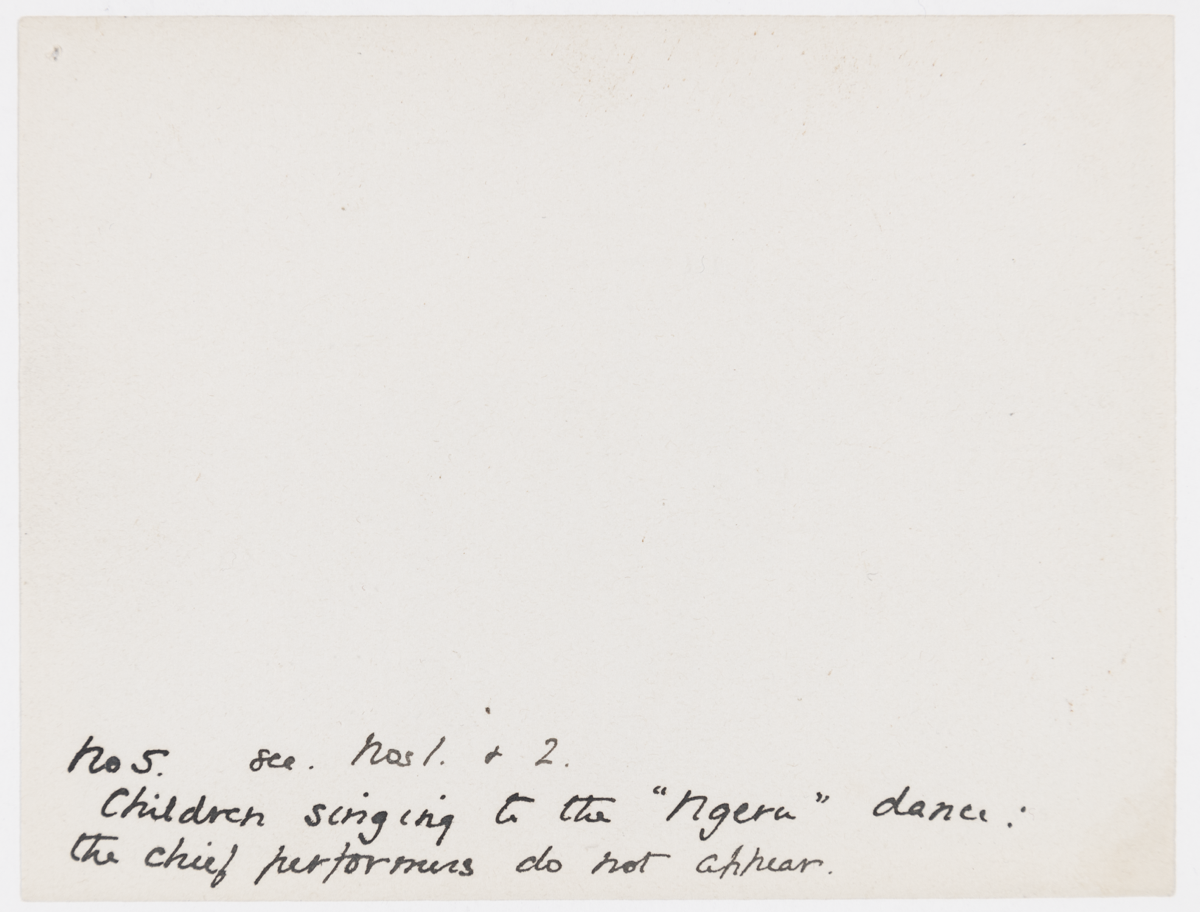
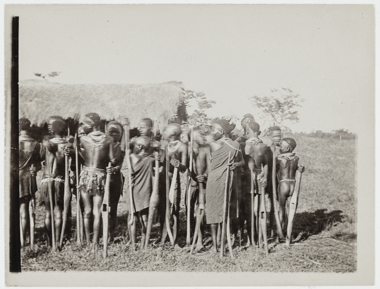
"Children singing to the 'Ngeru' dance, the chief performers do not appear."
Place
E Africa; Kenya
Cultural Affliation
Named Person
Photographer
Browne, Granville St John Orde (Lieutenant)
Collector / Expedition
Date
circa 1911
Collection Name
Museum Archive Transfer
Source
Browne, Granville St John Orde (Lieutenant)
Format
Print Black & White
Primary Documentation
Other Information
P.148599.MAT - P.148606.MAT in envelope C983/ were transferred from MAA Archives AA4/2/2 by Jocelyne Dudding 17/01/2018.
Related Archive: Paper Archive AA4/2/2 is described as "Document - List of objects from Embu district, Kenya sent by Lt. S.J. Orde Brown. Includes ethnological notes on the district and specimens.
Also includes 8 photos with descriptions on back. Photos are referred to in notes.
Acc. 1912.7 (1-84); AR 1912.318-90." [JD 23/02/2022]
Related Archive: In Paper Archive AA4/2/2, Granville St John Orde Browne lists specimens as:
"No. 1. Club used in dance known as 'Ngeru' in Embu district, and as 'Kiboyia' in Kikuyu. The dance is danced with local variations in Kikuyu, Embu, Suka & the neighbouring districts. The club is called 'Mkongoro' in all districts: it is hit with the stick which is called the 'Mwegge'; at intervals in the dance, two performers will start a species of sham fight or fencing match, hitting with 'mwegge' (which is simply an ordinary stick) and guarding with the 'Mkongoro'. The dance should be danced by young and uncircumcised boys (ages up to, say, 15 and Embu, about 18 or even 20, in Suka, but earlier ain Kikuyu, say 14 or less). They were various dresses, the most spectacular being the crest of feathers, of which numbers 2(a) & 2(b) are examples. These were obtained, with the club, during a dance at Chief Kegane's Embu district. The feather crest is peculiar to that particular section.
The dance consists of a slow professional stamping match, followed by a dance in line. Words of the song not obtainable exactly, but they appear to be a sort of reiterated invitation to the spectators to come and watch. I hope to obtain fuller particulars of all dances, with complete descriptions and photos.
Nos. 2(a) & (b). 'Kongoru' for ornament one for the Embu dance 'Ngeru'. No. 2(a) is made from hawks feathers ('hondu') and cock's feathers (ngugu or nguku). The hawk is known as 'bondu' or 'kondu' in other sections.
No. 2(b) is made also of jay's feathers ('Ngungu' living only in the forest). It was considered a very fine article, and was much admired." [JD 02/03/2022]
FM:288111
Images (Click to view full size):