IDNO
N.61509.GIJ
Description
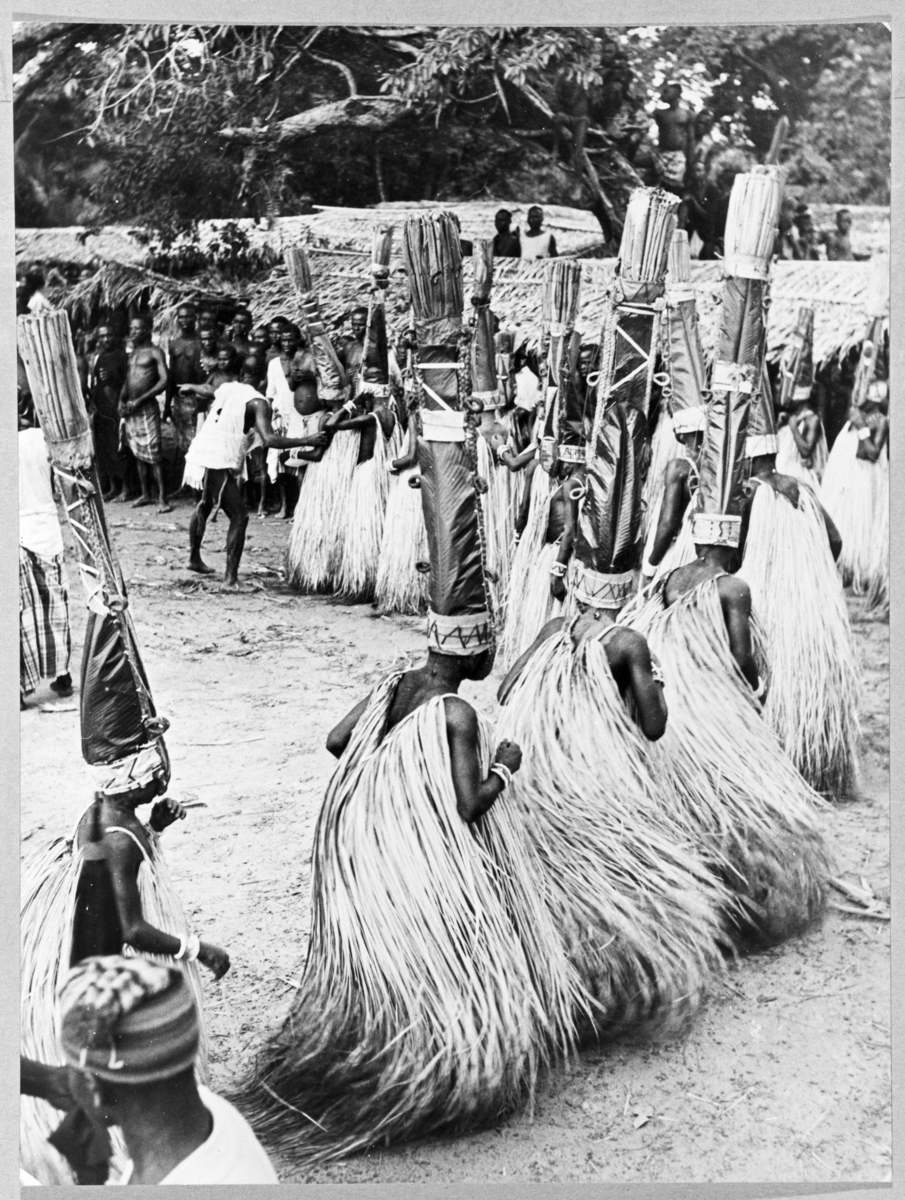
A group of young male initiates participating in the masquerade performed by Isiji (junior age-grade members), dancing in a single file in a circle. The Isiji are wearing wearing tall conical headdresses, palm frond costumes and wrist-ornaments. Adult males are standing around the masqueraders, watching the masquerade, wearing shorts, cloths and shirts. In the background are thatched buildings and trees.
Place
W Africa; Nigeria; Cross River area
Cultural Affliation
Named Person
Photographer
Jones, Gwilliam Iwan (known as G.I.)
Collector / Expedition
Date
circa 1930 - 1939
Collection Name
Jones Collection
Source
Jones, Gwilliam Iwan (known as G.I.)
Format
Film Negative Black & White
Primary Documentation
Other Information
Negatives N.61499.GIJ to N.61513 were found inside a paper pocket in box 6, now numbered C338/. The pocket is now numbered C338/1/.
Publication: A reproduction of this image was displayed in Collected Sights in the section G.I. Jones’ Photographs of Nigerian Masquerades with the descriptive label:
“Isiji (junior grade) boys of the Nkporo tribe performing an initiation masquerade. All characters wear similar masks that were tall conical head-dresses made of fresh thaumatococcus leaves and raffia sacking, placed on a stick frame that ended in a calabash which fitted over the face.”
Context: In the Ada Ibo area there were specific styles of masks which were used in initiation masquerades. The style resembled the Lower Niger but the particular forms used were their own, and in the case of the abstract ones, unique. The masquerades were performed by the initiates at the close of their period of seclusion before their return to the community. The junior grade called Isiji appeared in a masquerade in which all the characters wore similar masks, each consisting of a very tall conical head-dress made of fresh Thaumatococcus leaves and raffia sacking on a stick frame and ending in a calabash which fitted over the wearer’s face.” [Jones 1984. pp.209-210]
He remarks further, In Ngusu, the senior Ada town, the junior grade was divided into subgrades of small boys (Umuerima), Isiji and Isiugo. The first two had their Egede and Isiji masquerades, which they were entitled to perform after they had passed their initiation. In these they all wore the same type of mask made out of a calabash, which in Isiji was given a tall superstructure of leaves and raffia.[Jones, 1989, p.64-65] In a plate which shows the Isiji masquerade Jones describes the belief of magical powers, “Initiates all have similar masks of coloured strips of raffia stretched over a cane frame and attached to a calabash face mask. They are draped in young palm fronds which are thought to carry magical powers.” (Jones, p.63)
Bibliographical References:
Jones, G.I., 1984. The Art of Eastern Nigeria (Cambridge University Press); Jones, G.I. 1989. Ibo Art, (Shire).
Guha, S., Herle, A., and Boast,R. 200? Collected Sights. (Cambridge)
This catalogue record has been updated with the support of the Getty Grant Program Two. [Alicia Fentiman 22/1/2008]
FM:196159
Images (Click to view full size):