IDNO
D.60721.ACH2
Description
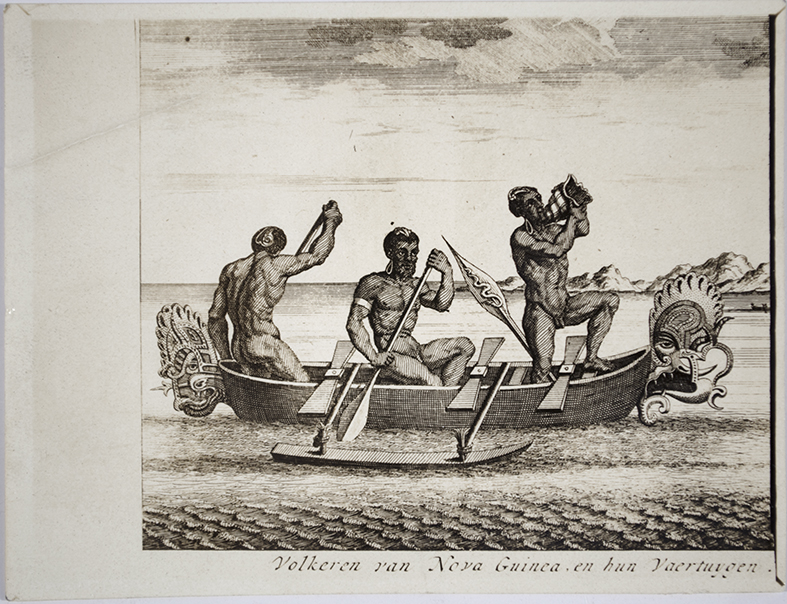
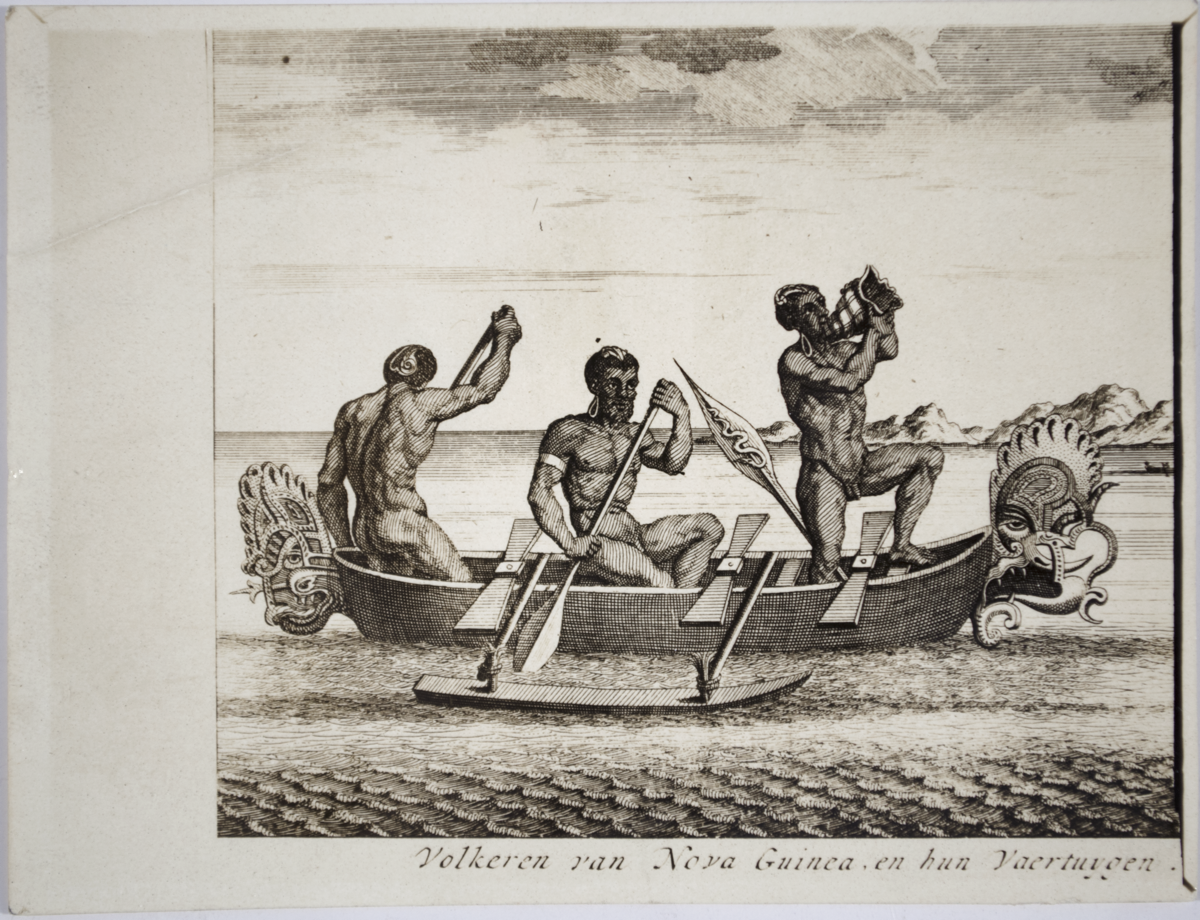
"People of New Guinea and their vehicles" [caption translated from Dutch]
Engraving of three New Irelander men and sharkcallers in a malangan war canoe, with the man on the bow of the boat blowing a raised triton shell. [from information provided by Taim Bipo Facebook group members, JD 03/08/2022]
Place
Oceania Australasia; Oceania Melanesia; Australia; Papua New Guinea; Torres Strait; ?Moa Island; ?New Guinea
Cultural Affliation
Named Person
Photographer
After Valentijn, François
Collector / Expedition
Haddon, Alfred Cort
Date
1726
Collection Name
Unmounted Haddon Collection
Source
?Templeton Crocker, Charles
Format
Print Black & White
Primary Documentation
Other Information
This print was found inside the envelope now numbered C290/1/14/. This envelope was inside drawer 1 now numbered C290/1/, or the first drawer of the entire brown cabinet, which was formerly numbered as batch 154 and now numbered C290/.
Facebook: Image published on PNG, Photo History, Taim Bipo group with the caption: "People of New Guinea and their vehicles" (original title in Dutch), 1726. Haddon Collection, Museum of Archaeology and Anthropology, University of Cambridge. An engraving from a Dutch book and one of the earliest depictions of New Guinea people."
36 Likes; [not sharable] 1 Comment, including:
"This is that famous engraving of the practice of shark calling. It depicts the first sighting of this practice by Dutch explorer Abel Tasman in 1516 along the western coasts of New Ireland (by Karabuspalau Kaiku)." [JD 27/07/2022]
Bibliographical Reference: In Nason, Patrick F. 'Sounding Sovereignty: The Politics of Presence in the Bismarck Archipelago', p.13 he notes, "Featured in Tasman’s journal is a detailed sketch of what is today referred to by indigenous New Irelanders as a malangan war canoe. In it are two bowtie-shaped timbers, and the man on the bow of the boat is blowing a raised triton shell. This is an early picture, or Lentanon, of what are today called"sharkcallers," and provides visual evidence that indigenous seafarers have for centuries inhabited offshore as well as coastal waters."
FM:195371
Images (Click to view full size):