IDNO
LS.26729.WHI
Description
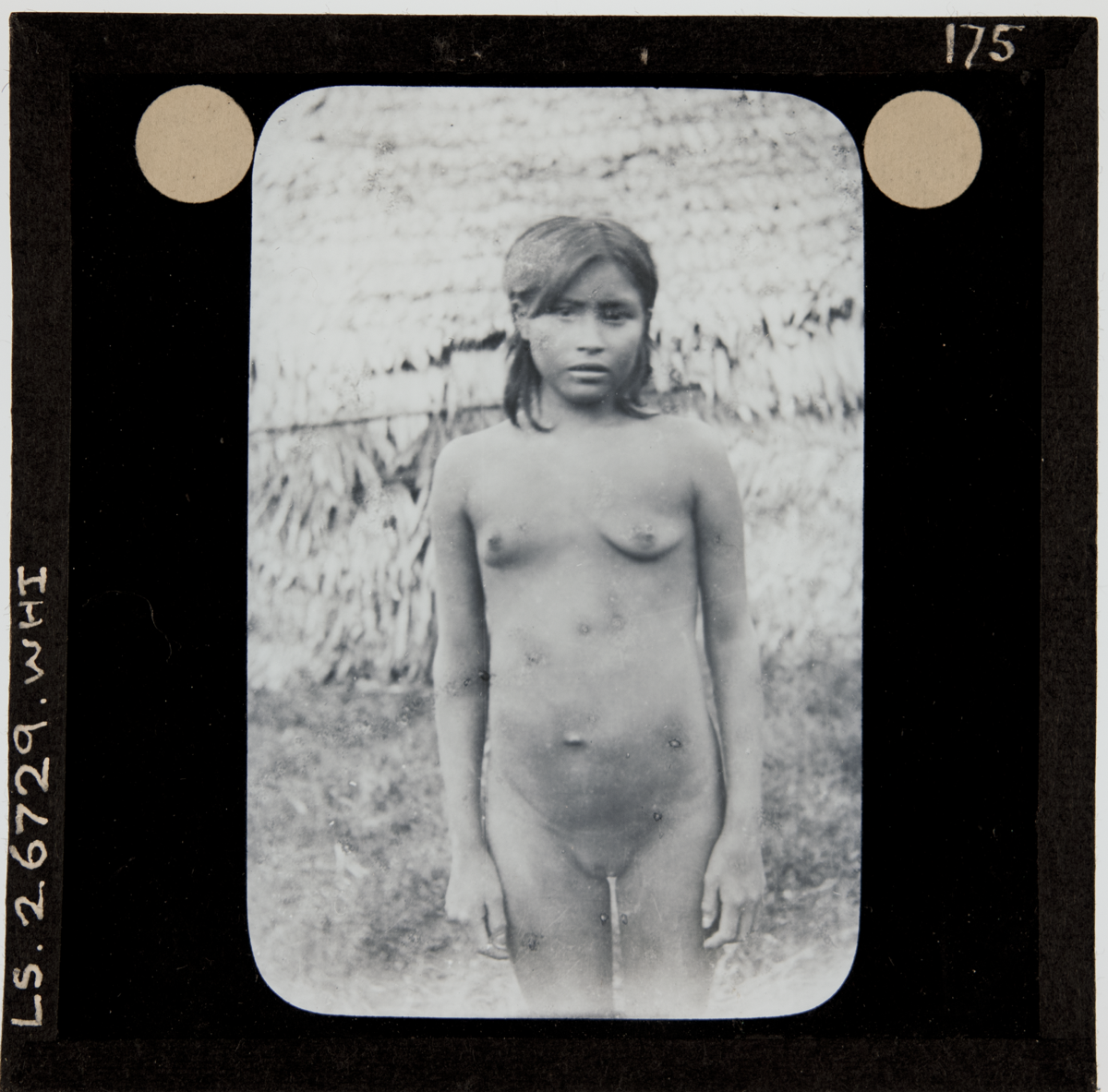
On catalogue card: "N.W. Amazon. 175.41.
A Menimehe captive".
On Catalogue Card for duplicate print P.9290.ACH1: "Menimehe captive".
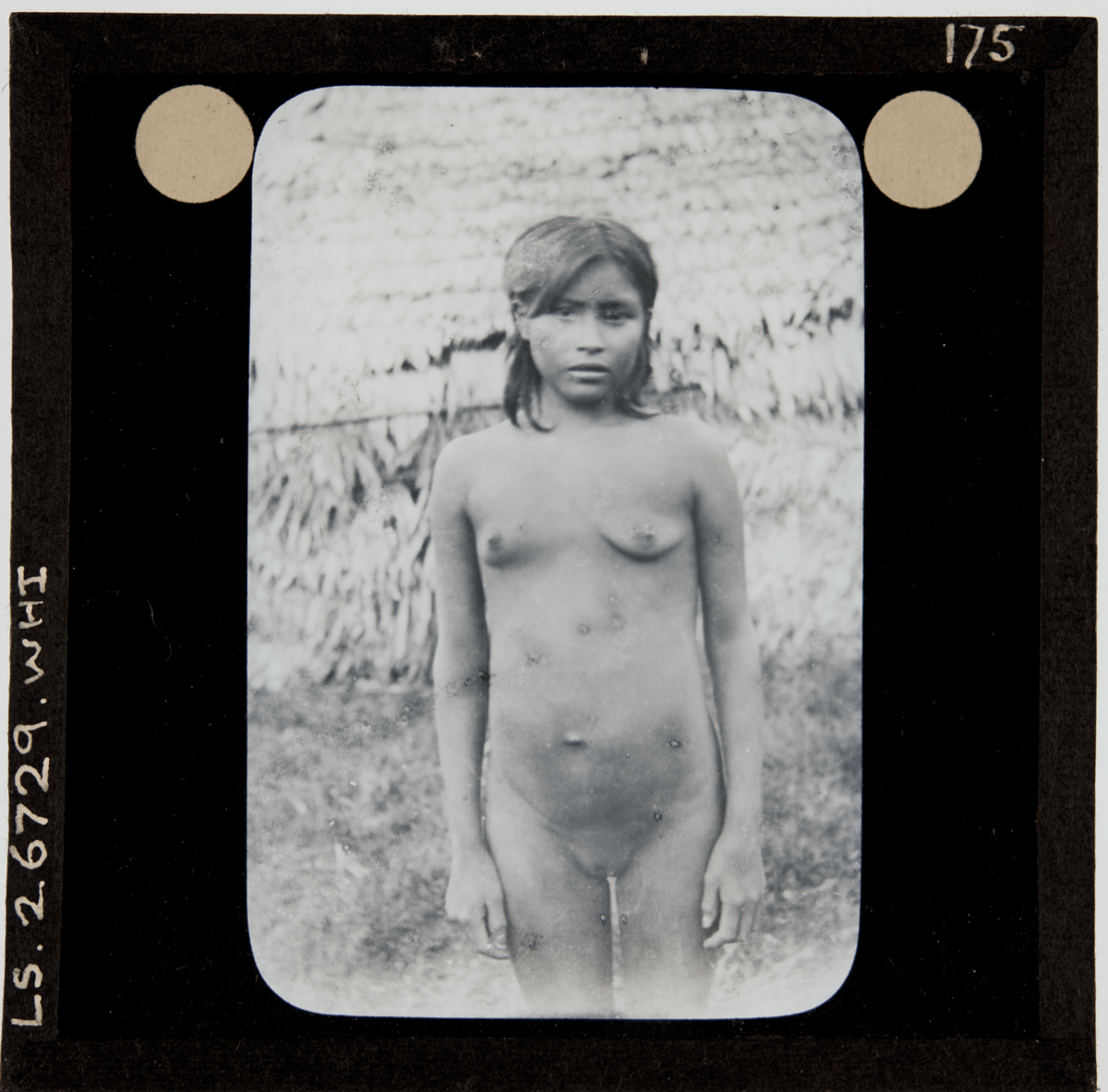
Three-quarter length portrait of a young woman, annotated as a 'Menimehe captive' standing outdoors facing the camera. Section-view of a malokas (Indian communal house) in background. [TC 09/06/1999, updated JD 01/10/2019]
Place
S America; Colombia; North West Amazon
Cultural Affliation
South American Indian; Menimehe; ?Witotoan
Named Person
Photographer
Whiffen, Thomas William
Collector / Expedition
Date
1908 - 1909
Collection Name
Whiffen CollectionTeaching Slide Collection
Source
Whiffen, Nöel H.
Format
Lantern Slide Black & White
Primary Documentation
Other Information
Publication: Image reproduced in Whiffen, T. W., 1915 as Pl. LIII with the caption "A Menimehe captive". [TC 01/06/1999]
Related Image: A duplicate print is at the RAI, reference 36133, and annotated by Whiffen in pencil on the reverse as "Menimehe (captive)."
Photocopies of Whiffen prints at the RAI are in the UCMAA archive, reference W19/1/3. See Whiffen Collection record for further details on RAI collection. [JD 02/10/2019]
Biographical Reference: This girl was probably captured during warfare. However, there appears to be a vast difference between the treatment of "prisoners" and "slaves". Whiffen describes the killing and anthropophagous consumption of "prisoners" (Whiffen, T. W., 1915: 119-124), but informs us that "slavery among the Indians themselves is little more than a name, for a slave belongs to a chief, and soon becomes identified with his family" (ibid: 60). He also states that "a woman slave may be purchased from the chief by the gift of some small present to his wife. After that the girl is free" (ibid: 61). Steward states that "young persons are taken captive and later merge into the community" (1963: 756). The fate of the girl depicted, then, is unclear. [TC 01/06/1999]
Biographical Reference: Although Whiffen’s book is primarily ethnographic, he also uses the methods of physical anthropology. He mentions physical appearance when discussing the differences between tribes and language groups (Whiffen, T. W., 1915: 57-58). In Appendix 1, (ibid: 269-279) His discussion of "physical characteristics", is illustrated with photographs. Appendix II postulates the "Mongoloid origin" of Amazonian peoples (ibid: 280-281), while Appendix IV is a series of "colour analyses and measurements" charts of physical statistics (ibid: 283-290). [TC 01/06/1999]
Source: In MAA Correspondence Box 1934 is a letter from Noel Whiffen donating his "brother's collection of lantern slides" to the museum, on behalf of the Whiffen family. Louis Clarke replied. The gift is also noted in the annual report for that year in the list of accessions (UCMAA 1934: 3), which mentions that "the collection of lantern slides has also been increased by gifts from ... Mr N. H. Whiffen ... "
For full details see Whiffen Collection record. [TC 09/06/1999, updated, JD 02/10/2019]
FM:161379
Images (Click to view full size):