IDNO
N.13196.GIJ
Description
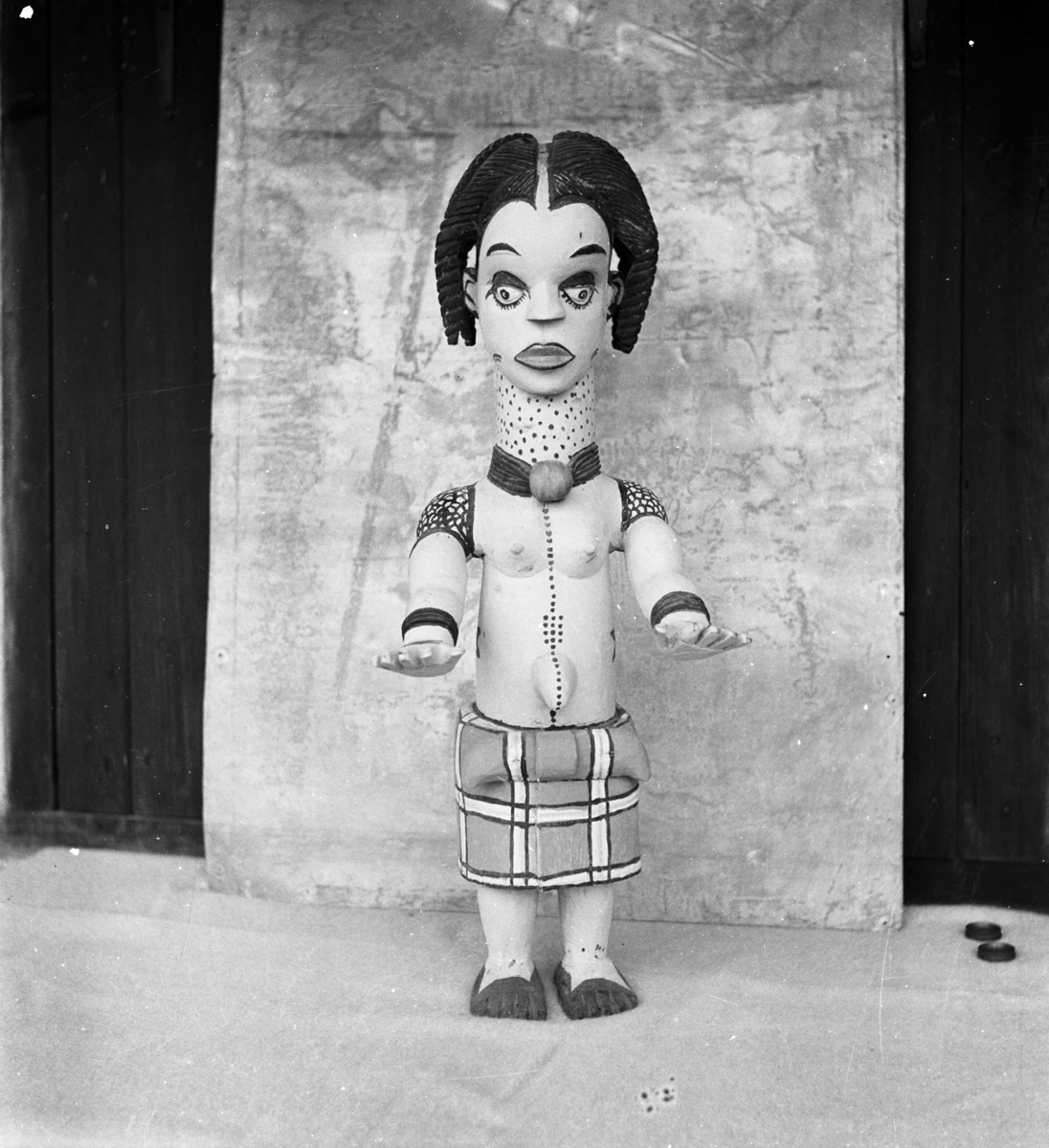
A modern Anang female doll figure. The doll is carved in wood and painted in a ‘naturalistic style’. The face consists of a large eyes accentuated with black eyebrows, nose, and lips with two black linear marks on either side of the mouth; the hair is painted black and parted in the middle with an elaborate braided coiffure, elongated neck painted with dots and adorned with a necklace. The arms are stretched forward and there are decorative designs around the shoulders, and a dotted linear line down the centre of the chest with a protruding umbilicus. She is dressed in a plaid waist cloth or wrapper and her feet are painted a dark colour.
Object documentation photograph.
Place
W Africa; Nigeria; South Eastern Nigeria
Cultural Affliation
Anang; Ibibio
Named Person
Photographer
Jones, Gwilliam Iwan (known as G.I.)
Collector / Expedition
Date
1932 - 1938
Collection Name
Jones Collection
Source
Jones, Gwilliam Iwan (known as G.I.)
Format
Film Negative Black & White
Primary Documentation
Other Information
This negative was kept in a film storage album labelled “IBIBIO & OKWU WALL” by G. I. Jones, and numbered “C12/” by the cataloguer.
Publication: Same image published on John McCall’s G.I. Jones website with the following information: [Source: www.siu.edu/~anthro/mccall/jones/, AF ]
1. Index to Ibibio, Ijo and Ogoni
2. Ibibio
3. Child’s doll (5th image).
Context: Jones writes about the shift from skin covered masks and sculpture to a more naturalistic approach. “The Modern Anang (Ibibio) style diffused into a ‘naturalistic style’ in which the hair, eyes and lips were painted in natural colours and in place of the covering of skin the face and neck were painted with clear varnish. The associated masquerade, which received different names in different areas, was spread widely to their Ibibio and Ibo neighbours. During the colonial period there was an increasing demand for Anang sculpture but primarily for masks, heads and figures in this modern naturalistic style. For it was a very successful compromise between the Traditional Anang (Ibibio) and the ‘traditional European’ style, meaning by the latter term Victorian naturalism and the classical Greek sculpture which inspired it. Europeans bought this sculpture because it looked sufficiently African but not too African. Nigerians bought it because it looked sufficiently modern and European. In response to this demand Anang carvers developed a minor local industry in the Ikot Ekpene district mass-producing inferior masks, heads, and dolls. The inferiority was due primarily for the buyers’ reluctance to pay for something better (Jones, 1984, pp. 184-185).
This catalogue record has been updated with the support of the Getty Grant Program Two. [Alicia Fentiman 15/1/2008]
FM:147846
Images (Click to view full size):