Accession No
Z 5417 E
Description
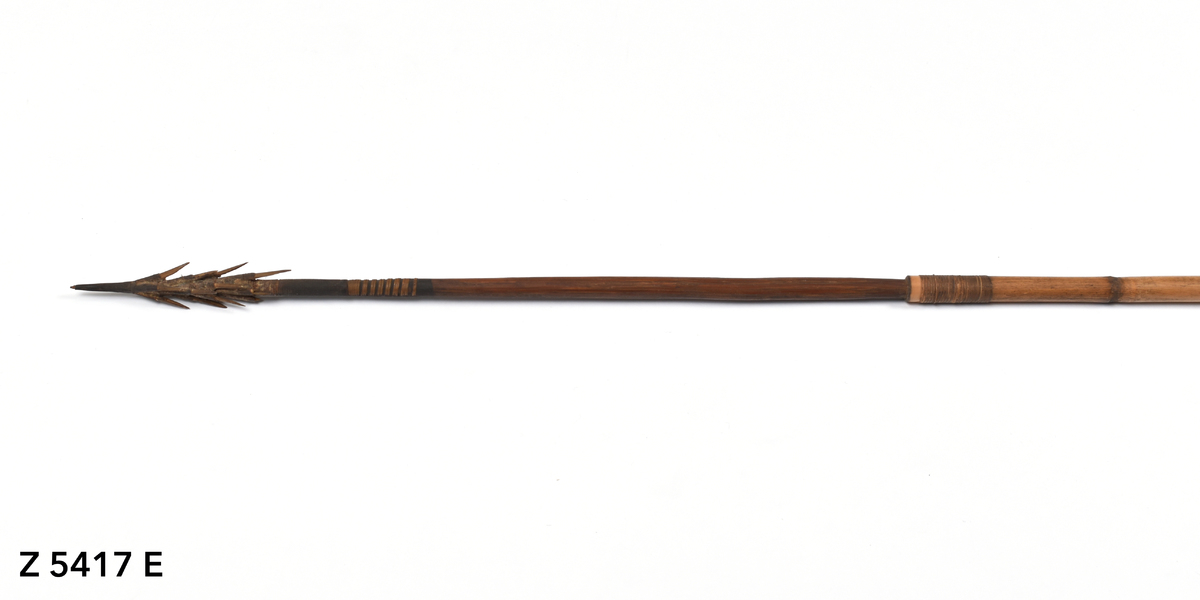
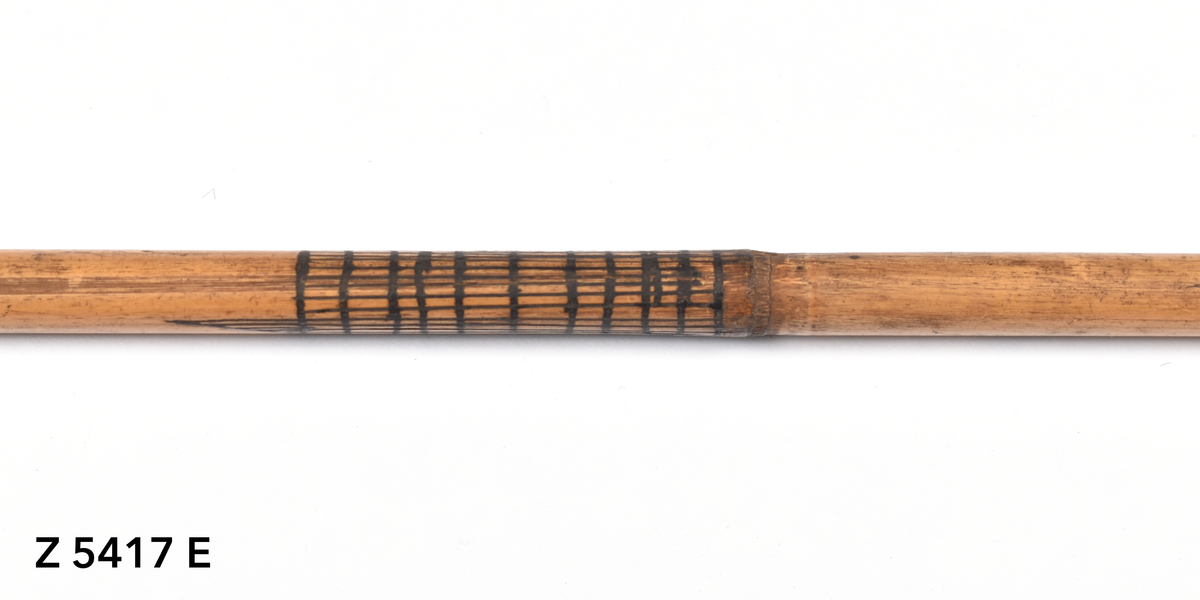
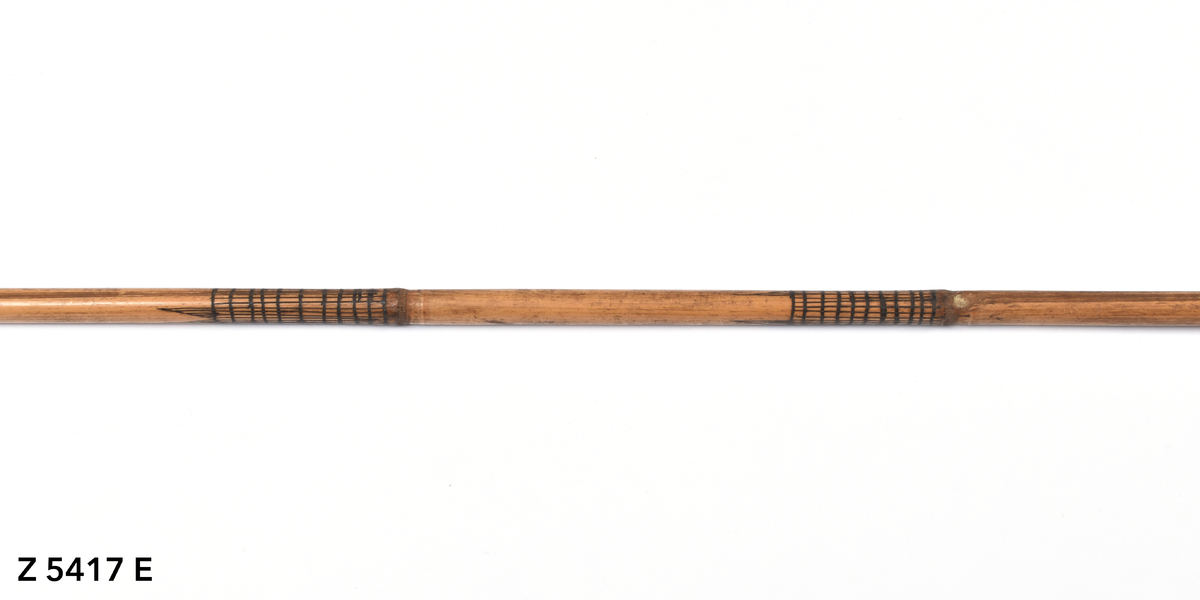
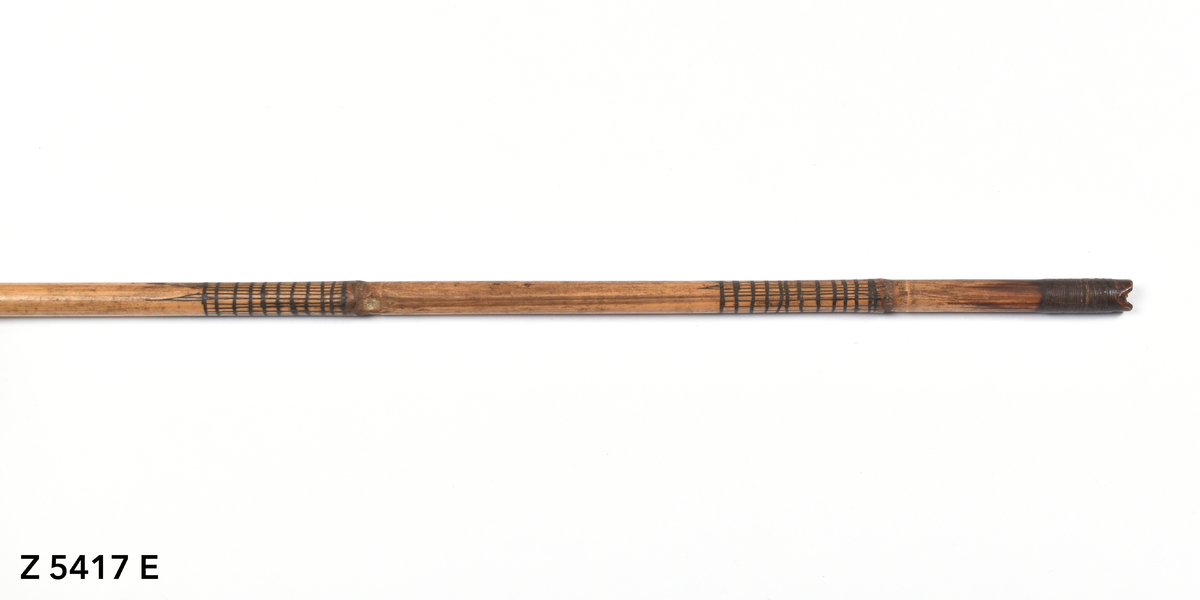
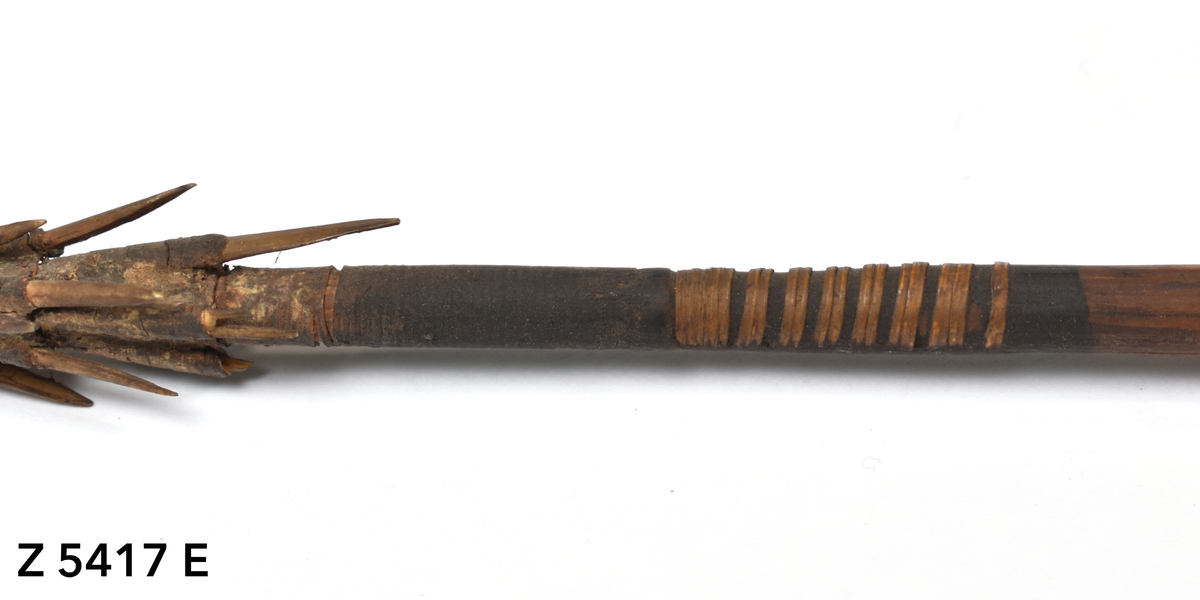
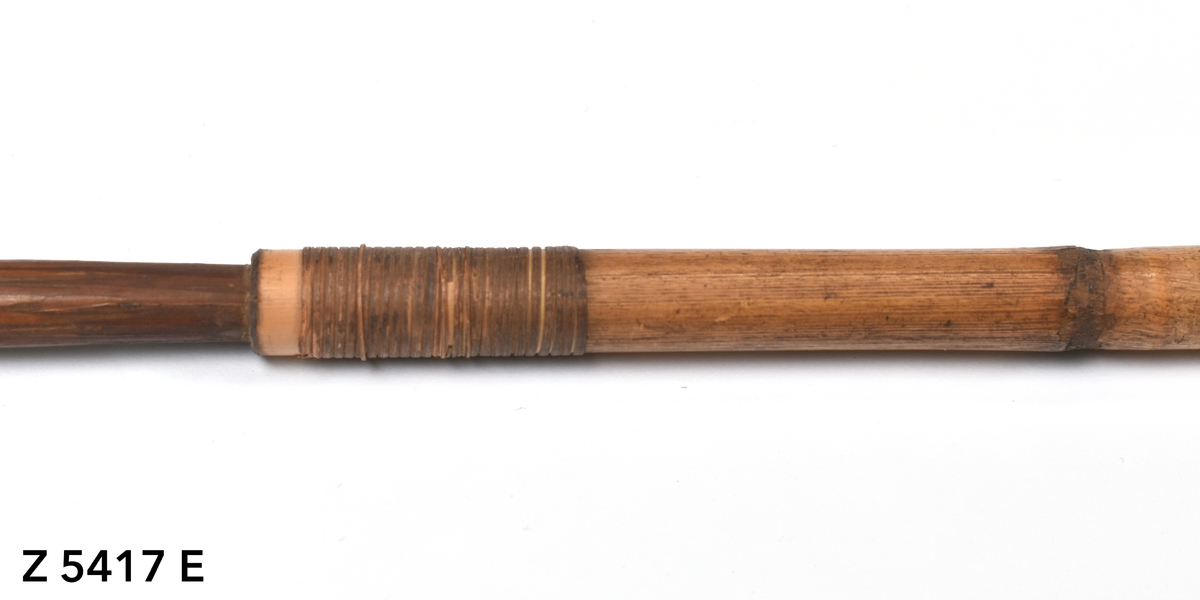
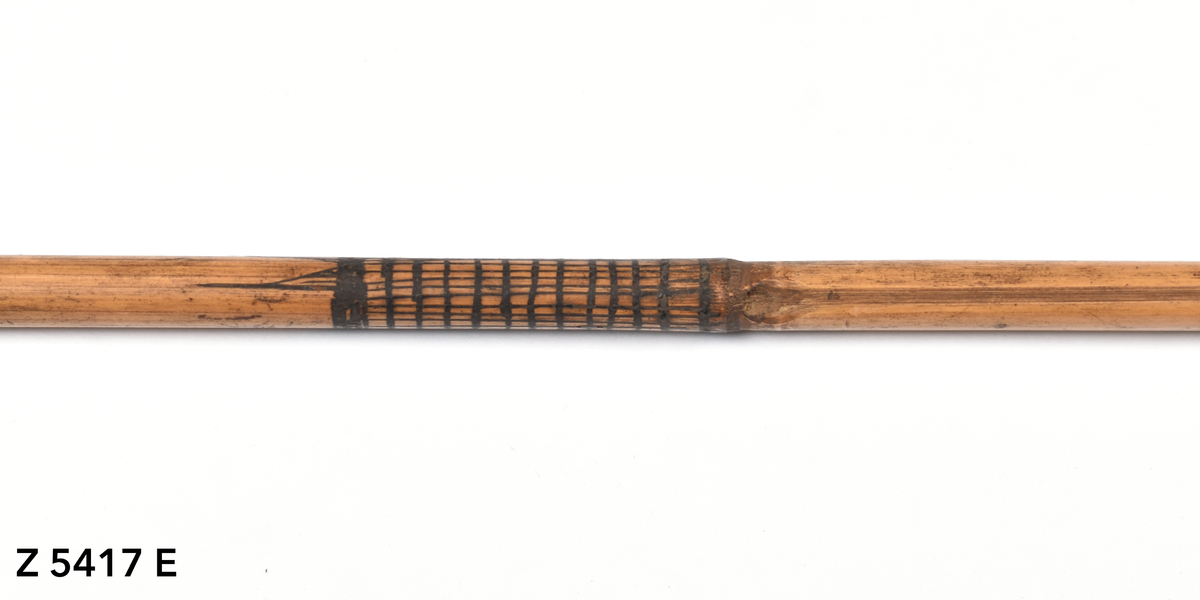
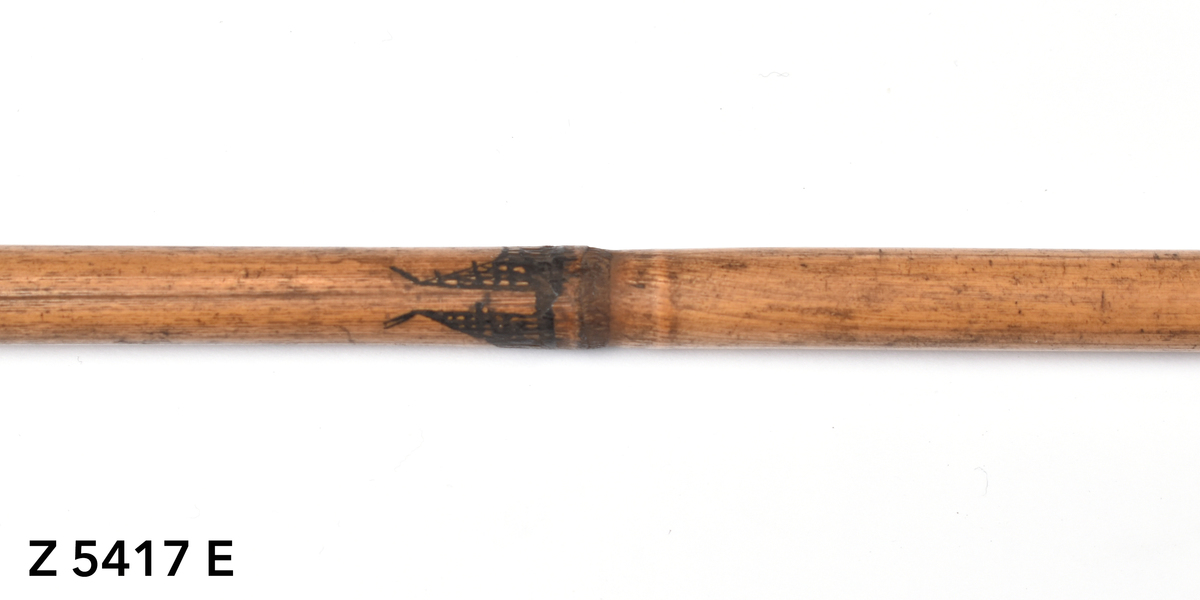
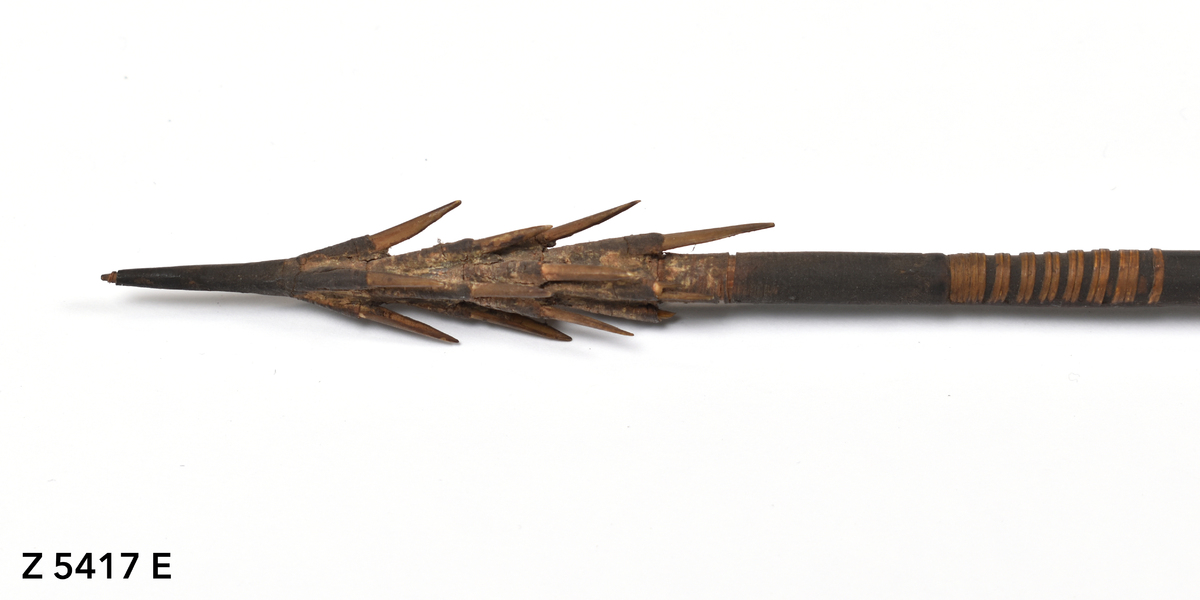
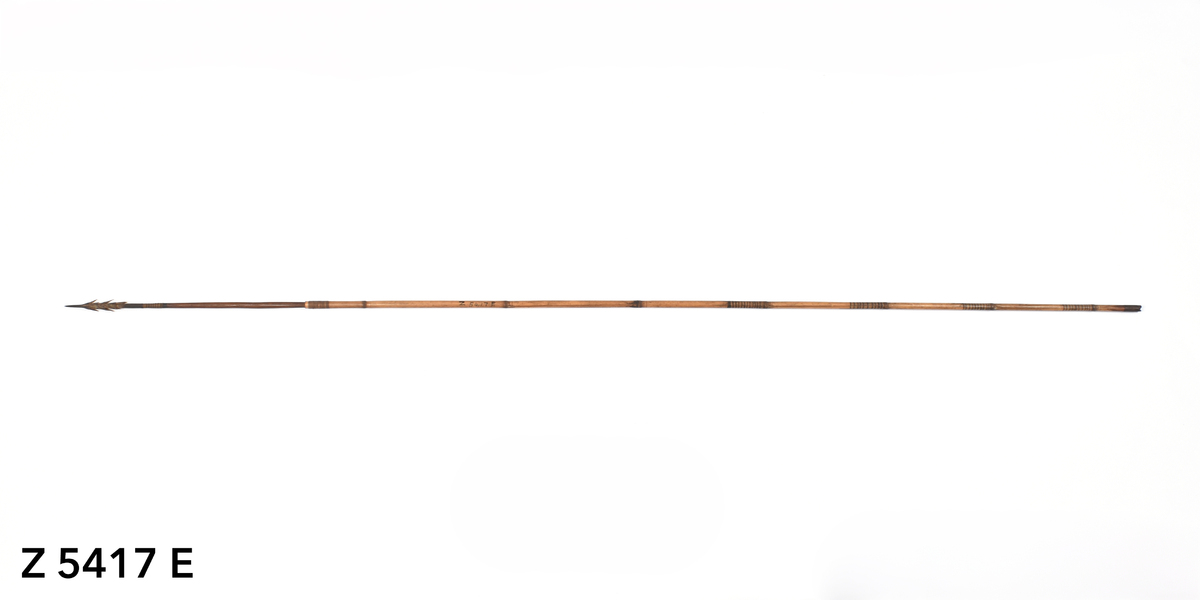
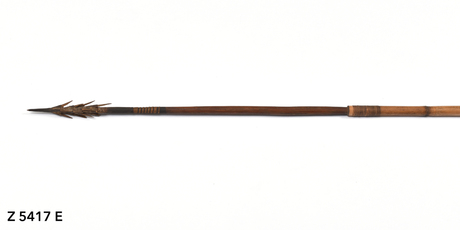
Arrow. Point of palm wood with four rows of four bone barbs lashed on with plant fibre. Some of the barbs are broken. The barbs are lashed onto the point with plant fibre covered in a thick dark paste (possibly gum or resin) and shows traces of white pigments (possibly lime). The tip of the point has lost its gum covering, revealing the yellow orchid fibre binding beneath. The point is inserted into a bamboo shaft. The top of the shaft is bound with plant fibre below the insertion point. The central part of the shaft is incised with a triangular pattern repeated four times. The lower part of the shaft shows four panels incised with a grid pattern and a repeat of the triangular pattern. The transition to the butt is bound with plant fibre covered in dark gum or resin. The butt is carved with a nock.
Place
Oceania; Melanesia; New Guinea; Papua New Guinea; Autonomous Region of Bougainville; ?Buka
Period
Source
Department
Anth
Reference Numbers
Z 5417 E
Cultural Affliation
Material
Bamboo; Wood; Pigments; Bone; Plant fibre
Local Term
Measurements
13mm x 1309mm
Events
Description (Physical description)
Z register for Z 5417 A-E: '5 arrows, bamboo with carved heads.'
Event Date
Author: maa
Context (Amendments / updates)
When it was entered into the Z register, this arrow was described as originating from Vanuatu [New Hebrides] but was given no further information in terms of geographical provenance or collection history.
However, the incised decoration on the shaft and the binding of the tip of the point with yellow orchid stem fibre make Buka a more likely geographical provenance for this arrow. The place field has been amended accordingly.
Event Date 12/2/2026
Author: Lucie Carreau
Description (Physical description)
Arrow. Point of palm wood with four rows of four bone barbs lashed on with plant fibre. Some of the barbs are broken. The barbs are lashed onto the point with plant fibre covered in a thick dark paste (possibly gum or resin) and shows traces of white pigments (possibly lime). The tip of the point has lost its gum covering, revealing the yellow orchid fibre binding beneath. The point is inserted into a bamboo shaft. The top of the shaft is bound with plant fibre below the insertion point. The central part of the shaft is incised with a triangular pattern repeated four times. The lower part of the shaft shows four panels incised with a grid pattern and a repeat of the triangular pattern. The transition to the butt is bound with plant fibre covered in dark gum or resin. The butt is carved with a nock.
Event Date 17/2/2026
Author: Lucie Carreau
FM:327962
Images (Click to view full size):