Accession No
1978.6.2
Description
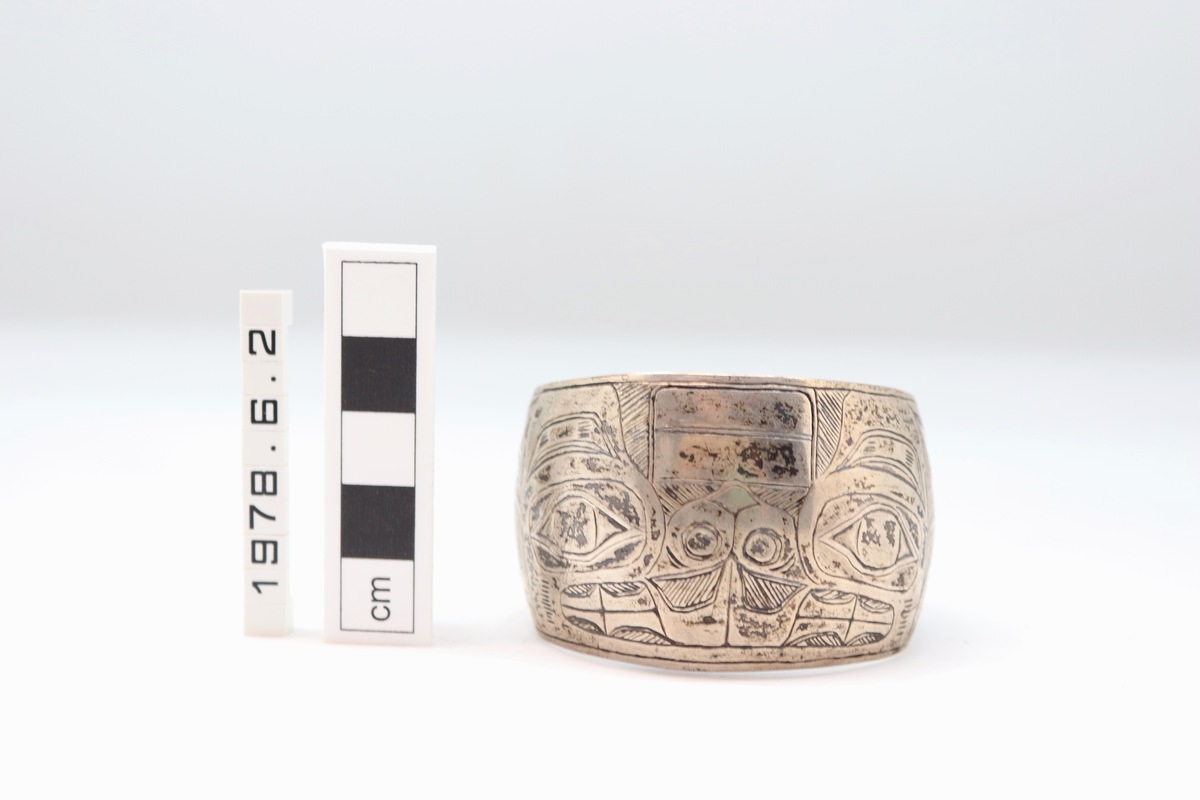
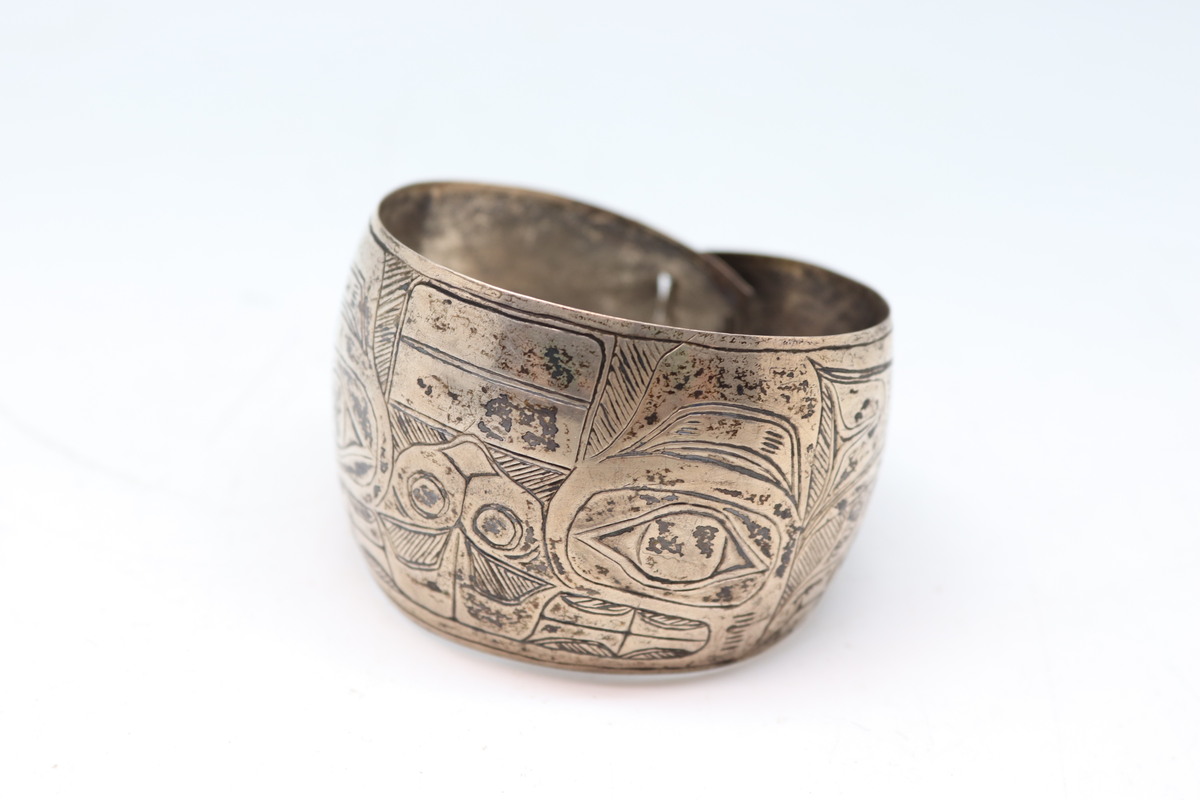
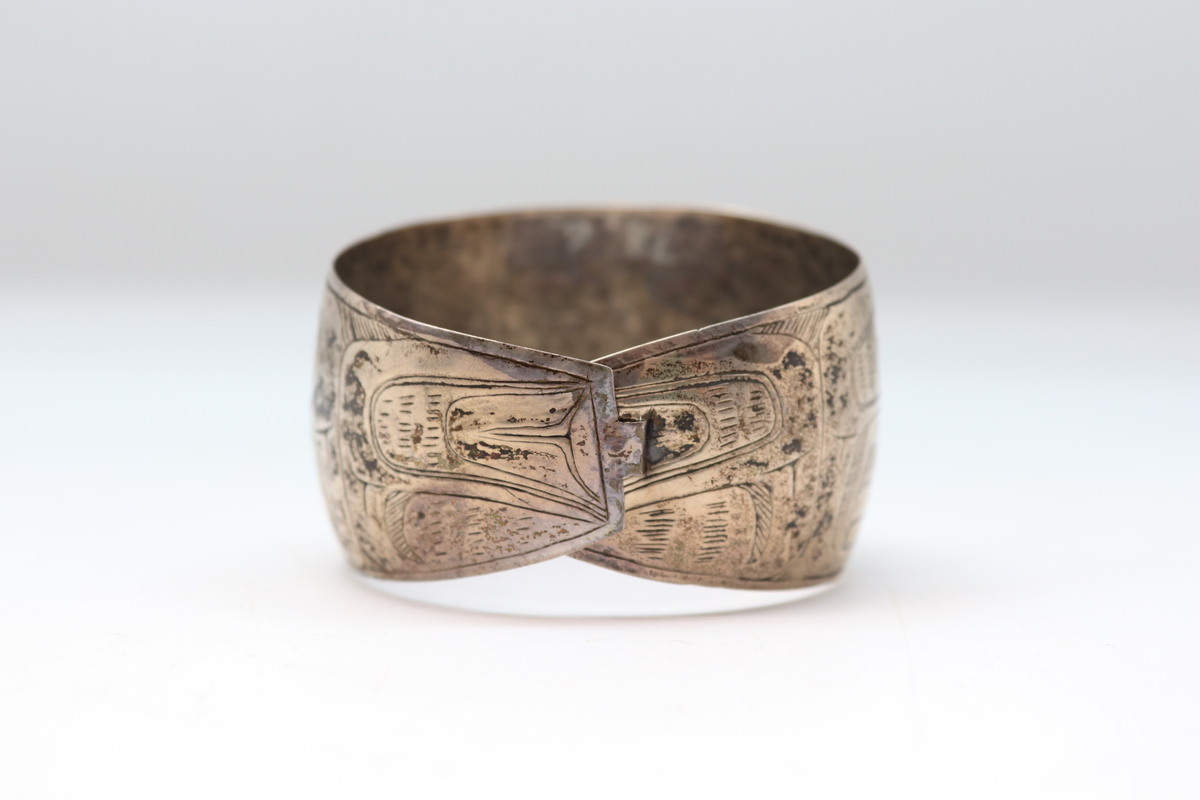
Bracelet. Of silver, incised with representation eagle with wing designs extending towards the clasps at the back. Only one clasp, made of small flanges.
Place
Americas; North America; Canada; British Columbia
Period
20th century
Source
Newall, Robert Stirling [executors; donor]; Newall, Robert Stirling [collector]
Department
Anth
Reference Numbers
1978.6.2; MAA: 1978.6
Cultural Affliation
Northwest Coast; Kwakwaka'wakw [Kwakiutl]
Material
Metal; Silver
Local Term
Measurements
50mm x 38mm x 60mm
Events
Description (Physical description)
Two silver bracelets incised with crest designs. One bracelet has a full face beaver expertly incised with lined shading and strong formlines, and the other has a split- representation eagle with wing designs extending towards the clasps at the back. The clasps are made of small flanges which are bent through small holes to secure the bracelet together.
Event Date 1978
Author: maa
Context (Display)
On display in the North West Coast cube case, labelled no.9, Maudslay Hall, from 1990 onwards.
Event Date 1990
Author: Guey-Mei Hsu
Context (Amendments / updates)
The original European tribal names and, where possible, current tribal names have both been given in separate GLT fields.
Event Date 1/12/1992
Author: Guey-Mei Hsu
Context (Analysis)
It seems hard to assign a provenance to bracelets based on the style of carving, but these have been given a Kwakiutl or Kwakwaka' wakw provenance presumably by the collector despite seeming to be more northern in style.
The style of carving and shape of these bracelets leads me to suggest they are fairly old, perhaps around 1900. Once silver coins became easily available on the Northwest Coast the carvers transfered their techniques to silver and produced some very fine work. The bracelets were worn at ceremonial events and were distributed as potlatch payments. According to Nancy Harris in The Box of Daylight (Ed. Bill Holm, 1983, University of Washington Press: Seattle and London) page 133-134, the silver jewelry was popular amongst both the indigenous and the settler populations. 'By 1890, every village of any size seemed to have its own resident smith and the best of these made regular pilgrimages to the trade centres of Victoria, Sitka and Fort Simpson to sell their wares.' The silver bracelets have continued to be popular and are still worn in abundance during potlatches and celebrations along the coast. The bracelets are also still a saleable item for the art and tourist market.
Event Date 1/12/1992
Author: maa
FM:327762
Images (Click to view full size):