Accession No
1947.426 B
Description
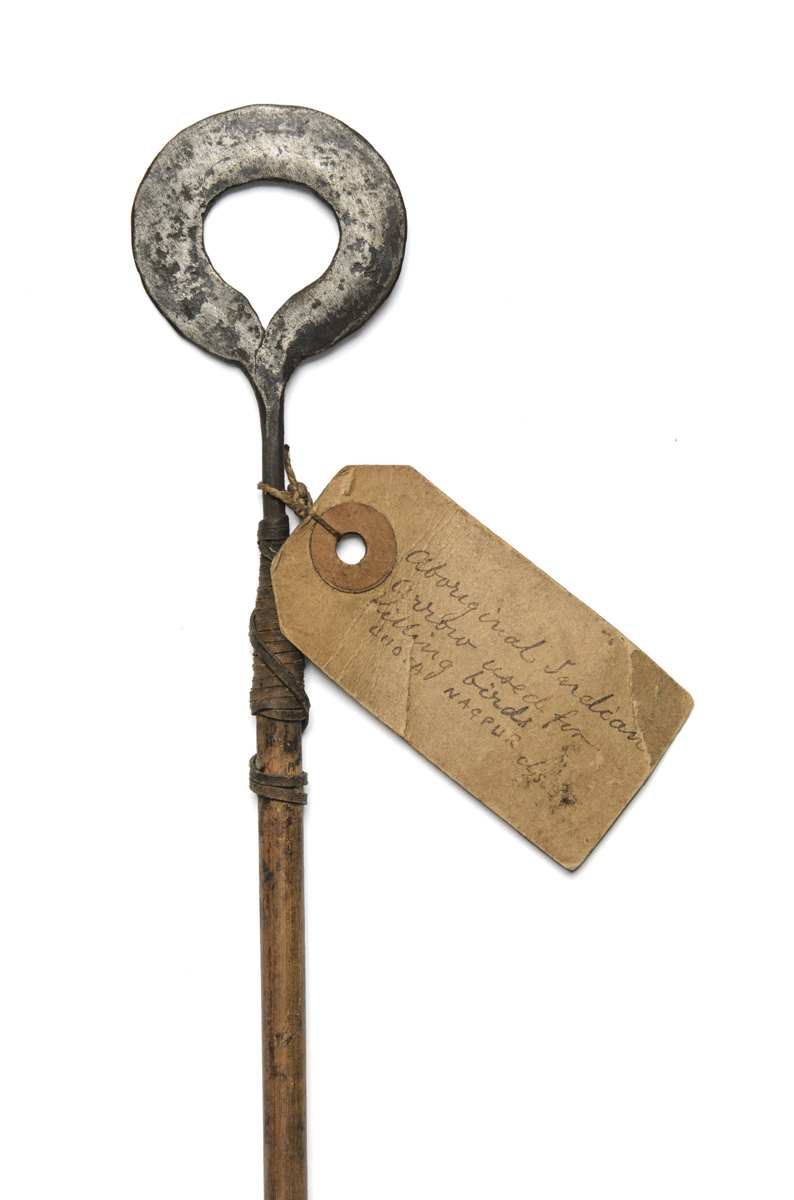
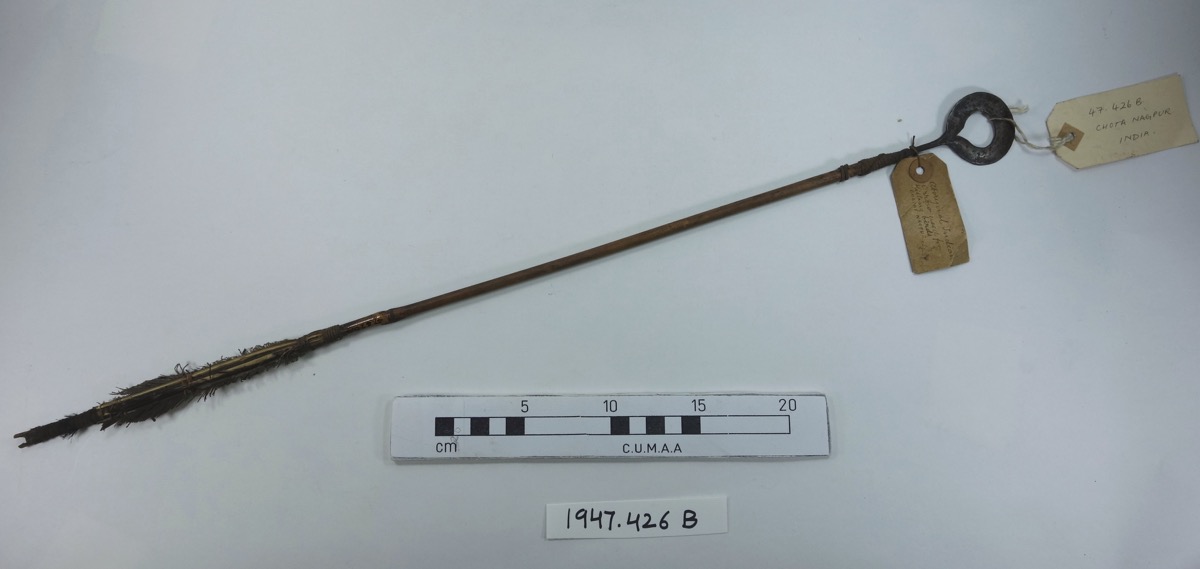
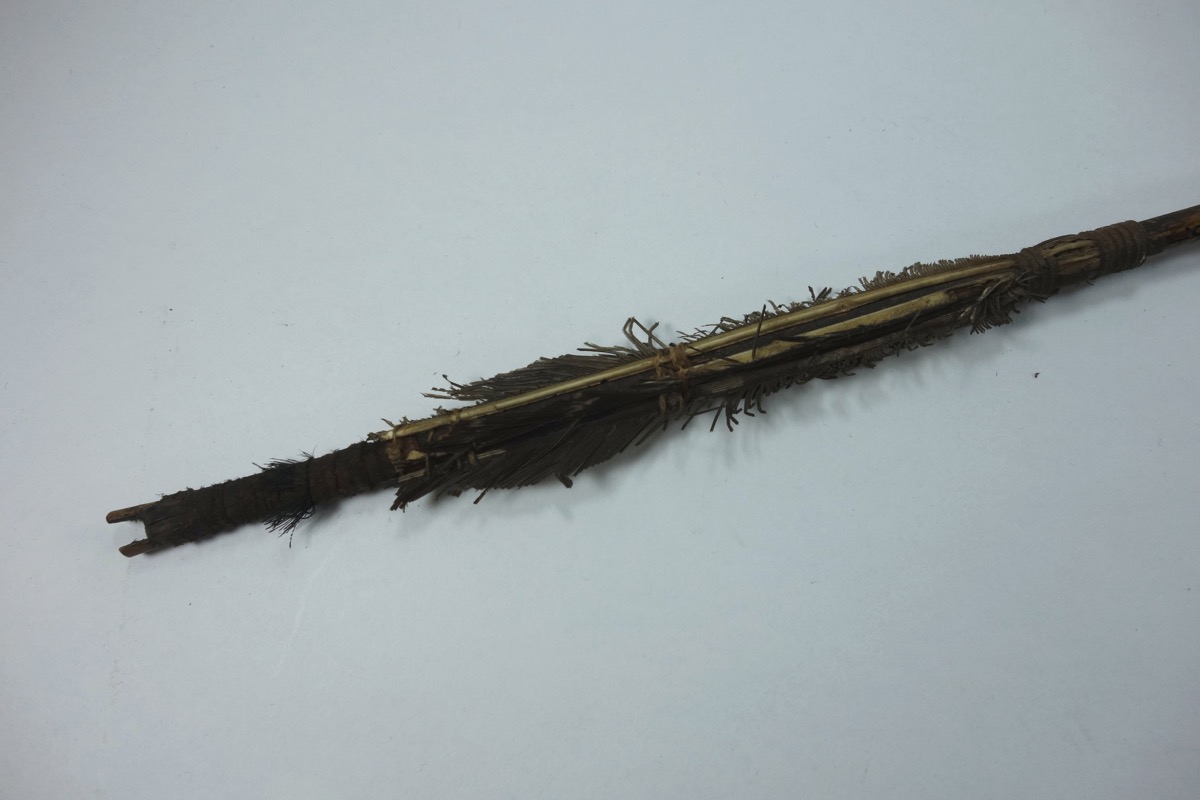
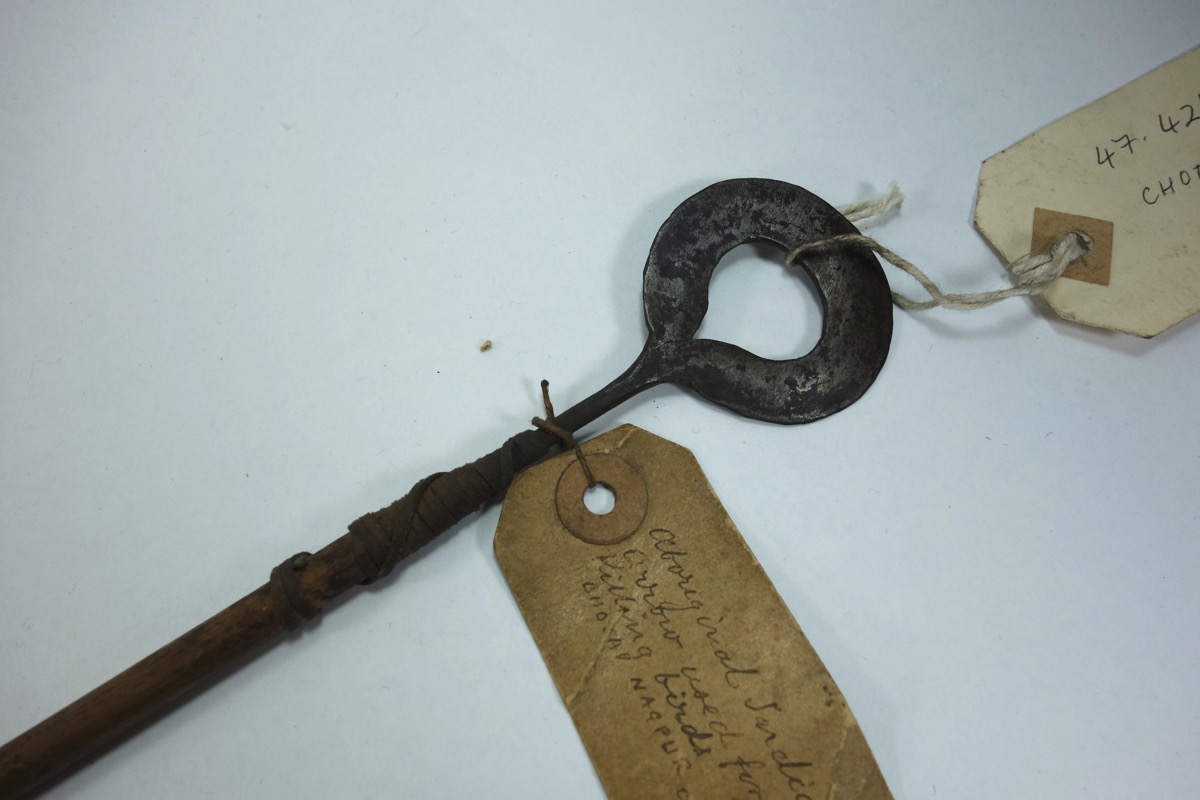
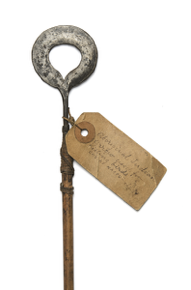
Two arrows with iron heads and cane shafts, used for shooting birds. A) crescent-shaped head. Feathering destroyed, but apparently was like B. B) ring-shaped head. Five-fold feathering bound at the ends.
Place
Asia; South Asia; India; Chota Nagpur
Period
Source
Cobbett, Louis (Dr) [bequeather]
Department
Anth
Reference Numbers
1947.426 B
Cultural Affliation
Material
Cane; Metal; Iron; Feather
Local Term
Measurements
Events
Context (CMS Context)
A: l. 76 cm x w. 10.7 cm
B: l. 60.4 cm x w. 4.4 cm
Event Date
Author: maa
Description (CMS Description)
Two arrows with iron heads and cane shafts, used for shooting birds. A) crescent-shaped head. Feathering destroyed, but apparently was like B. B) ring-shaped head. Five-fold feathering bound at the ends.
Event Date 1/8/1995
Author: maa
Context (CMS Context)
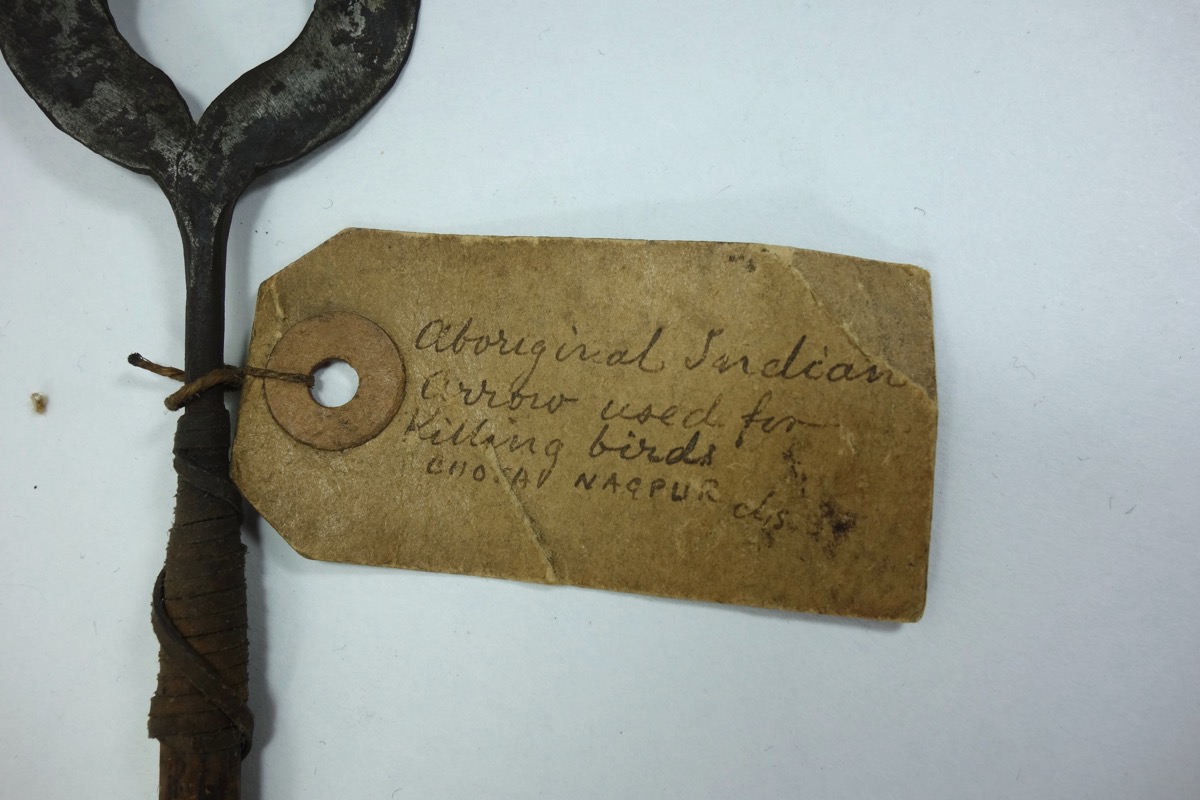
Label formerly attached to A:
Aboriginal Indian arrow used for killing birds
CHOTA NAGPUR d/s
Event Date 7/10/2016
Author: Mark Elliott
Context (CMS Context)
Label attached to B:
Aboriginal Indian arrow used for killing birds
CHOTA NAGPUR dis
Event Date 7/10/2016
Author: Mark Elliott
Description (Display)
'Another India: Explorations and Expressions of Indigenous South Asia' 07/03/2017 - 22/04/2018 MAA exhibition label text reads:
The ‘Santhal Trophy’
In February 1856 the Illustrated London News carried an account of the suppression of the Santal rebellion in Chota Nagpur, which Santals today commemorate as the Hul. One of the illustrations provided by the author, Captain Walter Sherwill, was this extraordinary assemblage entitled simply Santhal Trophy.
The Trophy presented hunting tools such as bows, arrows and axes as well as drums as war loot - weapons that were evidence of Santal resistance and savagery. Most of these ‘weapons’ would have had peaceful use outside of the Hul, when sticks and hoes were also taken up in the struggle against landlords and the government.
This reconstruction of Sherwill’s Trophy from the collections at MAA questions the perception of these ‘weapons’, then and now. These objects have been transformed under different gazes at different times. They tell stories of historical struggle, and become symbols of Santal identity and Adivasi resistance today.
4. Two bird arrows
The extraordinary shape of these arrow heads, one circular and one crescent shaped, is explained on the label attached to one as related to their use in killing birds. Once again the group who made and used these is unknown - simply an ‘aboriginal’ people of Chota Nagpur. The crescent head resembles an inverted Santal ganare apari, illustrated in Sherwill’s trophy, which was apparently used in war rather than hunting.
Chota Nagpur
Dr Louis Cobbett bequest 1947.426 A-B
Event Date 22/3/2017
Author: Remke Velden
Exhibition (Li Ka Shing Gallery)
EXH.2017.2 | Another India: Explorations and Expressions of Indigenous South Asia
Event Date 8/3/2017
Author: Remke Velden
Context (Amendments / updates)
From Dr Louis Cobbett, an English pathologist and University Lecturer in Bacteriology, 1907-1929.
The 1946-7 Annual report notes 'Cobbett, the late Dr L.: Large collection of archaeological and ethnological objects, mostly from Oceania and Africa, but including pottery vessels from Peru and Mexico'.
The register notes 'Cobbett Coll.' for 1947.270-275; 1947.279-301; 1947.407-8 and 'Cobbett bequest' for 1947.476- 485; 1947.620-625; 1947.638.
However, 1947.5- 18 is recorded as 'd.d. [donated] Dr L. Cobbett' suggesting some of the collection may have been gifted before his death in March 1947.
Records have been annotated to follow the details given in the register but the exact timing and status of the donation and whether it was gifted or bequested is not fully clear.
Event Date 23/10/2020
Author: rachel hand
FM:327533
Images (Click to view full size):