Accession No
TEMP.03841.2
Description
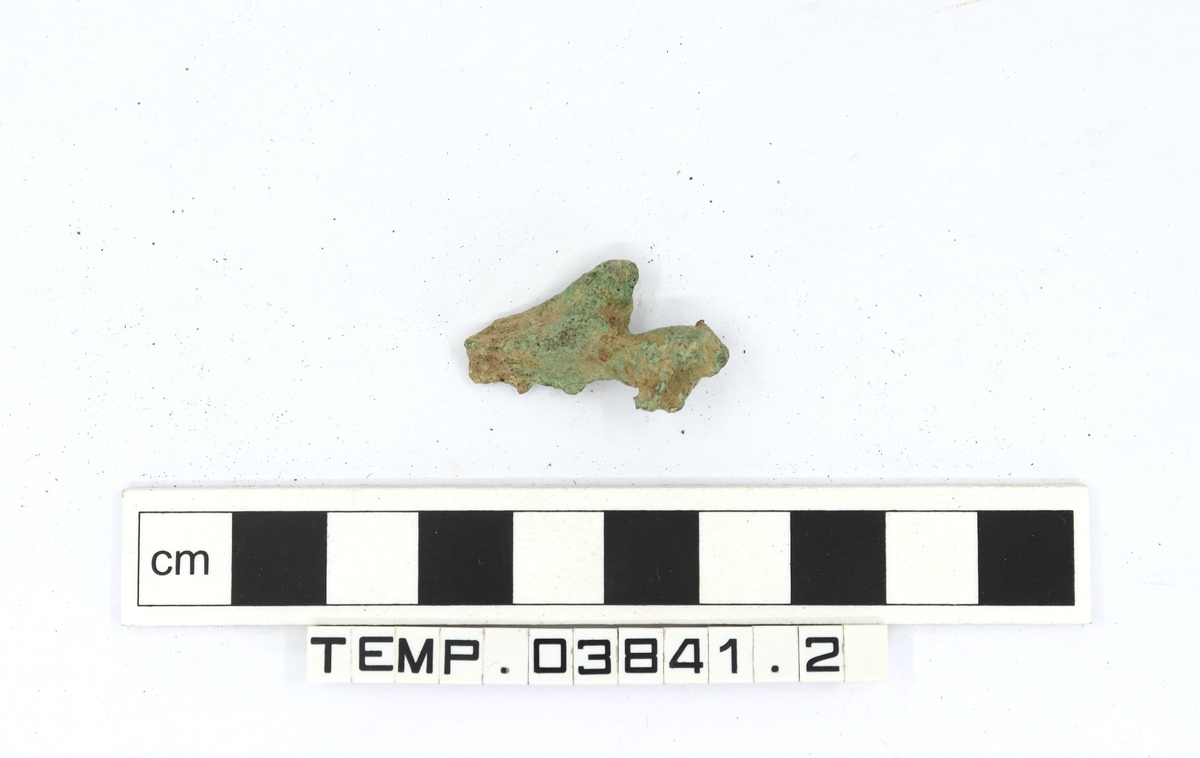
Slag. More or less distorted and corroded copper-green coloured fragment of metal, mostly showing signs of having been cooled quickly from the molten state. Could represent effects of a fire on some coins.
Place
Europe; Northern Europe; British Isles; England; Cambridgeshire; [Huntingdonshire]; Great Staughton
Period
Roman
Source
Greenfield, Ernest [excavator]
Department
Arch
Reference Numbers
TEMP.03841.2
Cultural Affliation
Material
Metal; Copper alloy; ?Bronze
Local Term
Measurements
Events
Context (Acquisition Details)
Material from the 1958-1959 excavations was donated to the museum in 1975. A note in the accession register indicates that some of that material left the museum and was 'returned by D of E after preparation for publication in 1985'. This material appears to have been separated from the rest of the collection for analysis and specialist reports before it was donated to the museum, it was likely later given to the museum (possibly in 2007) to join the rest of the collection.
Event Date
Author: Lily Pencliffe
Context (Field collection)
Roman villa and bath house excavated by Ernest Greenfield 1958-1959. Room 2, L2. SL3. RF105. Small finds number: 19.
Event Date 1958
Author: Lily Pencliffe
Context (References)
Greenfield, E., Poulsen, J., and Irving, P. V., 1995. 'The Excavation of a Fourth-century AD Villa and Bath-House at Great Staughton, Cambridgeshire, 1958 and 1959', Proceedings of the Cambridge Antiquarian Society, vol. 83. pp.124-125.
Event Date 1995
Author: Lily Pencliffe
Description (Physical description)
Description from specialist report by L. Biek and P. R. Payne: 'Slag. More or less distorted and corroded copper-green coloured fragment of metal, mostly showing signs of having been cooled quickly from the molten state. Could represent effects of a fire on some coins.'
Event Date 15/8/2025
Author: Lily Pencliffe
Context (Related Documents)
See GO3/1/28.
Event Date 15/8/2025
Author: Lily Pencliffe
FM:327430
Images (Click to view full size):