Accession No
2020.8.3-8
Description
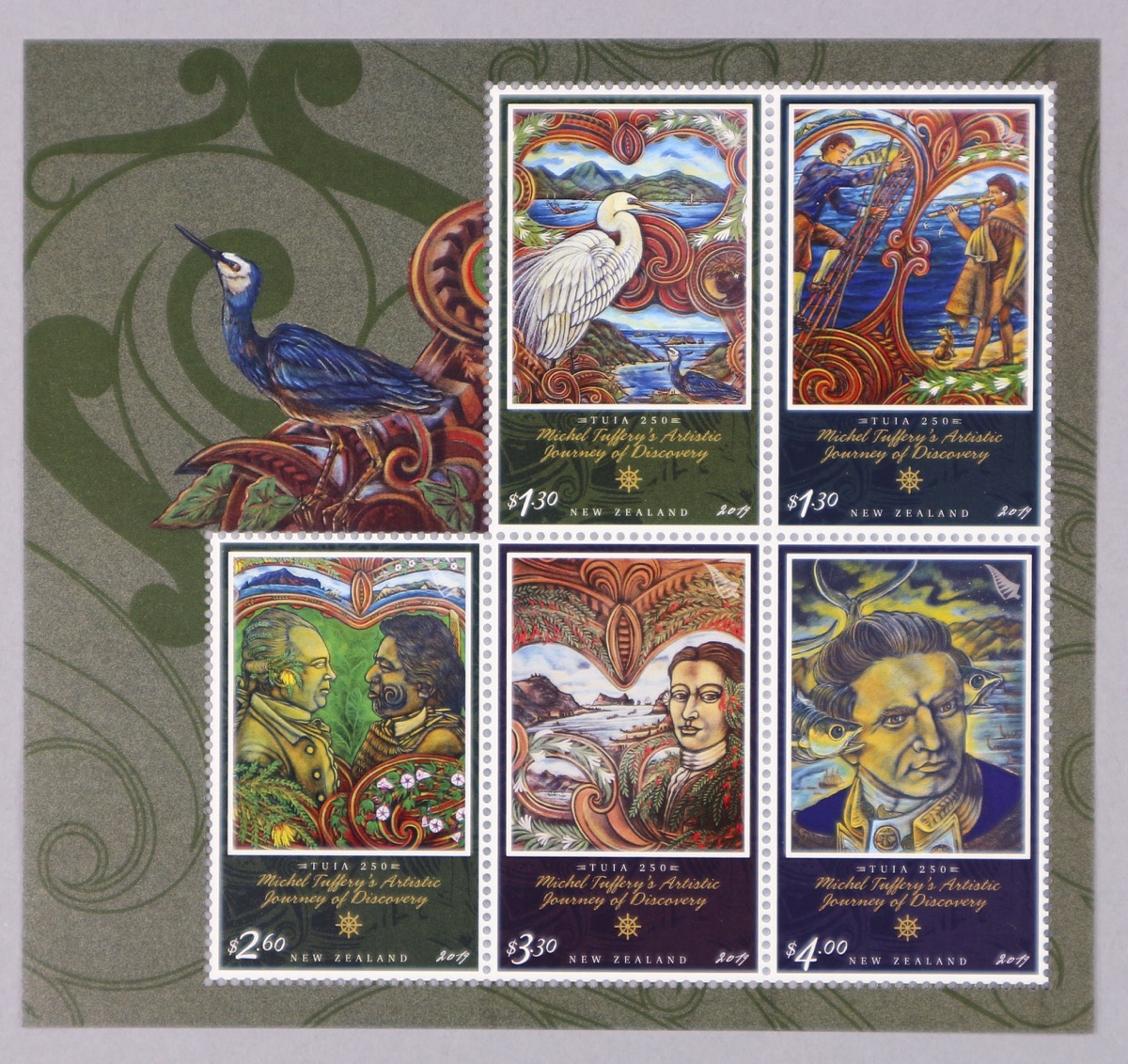
Commemorative pack of five offset lithograph stamps from New Zealand Post Tuia 250: Michel Tuffery's Artistic Journey of Discovery. Based on Tuffery's five original artworks in response to his discoveries about where his personal history meets that of these first encounters, when Tupaia guided Lieutenant James Cook and the Endeavour from Tahiti to New Zealand Aotearoa in 1769
Place
Oceania; Polynesia; Aotearoa New Zealand
Period
21st century
Source
Hand, Rachel [collector and donor]
Department
Anth
Reference Numbers
2020.8.3-8; MAA: MN0218.19-24
Cultural Affliation
Material
Paper; Plastic
Local Term
Measurements
207mm x 123mm
Events
Context (Field collection)
Donated by Rachel Hand, Collections Manager for Anthropology.
Event Date 16/10/2019
Author: rachel hand
Context (References)
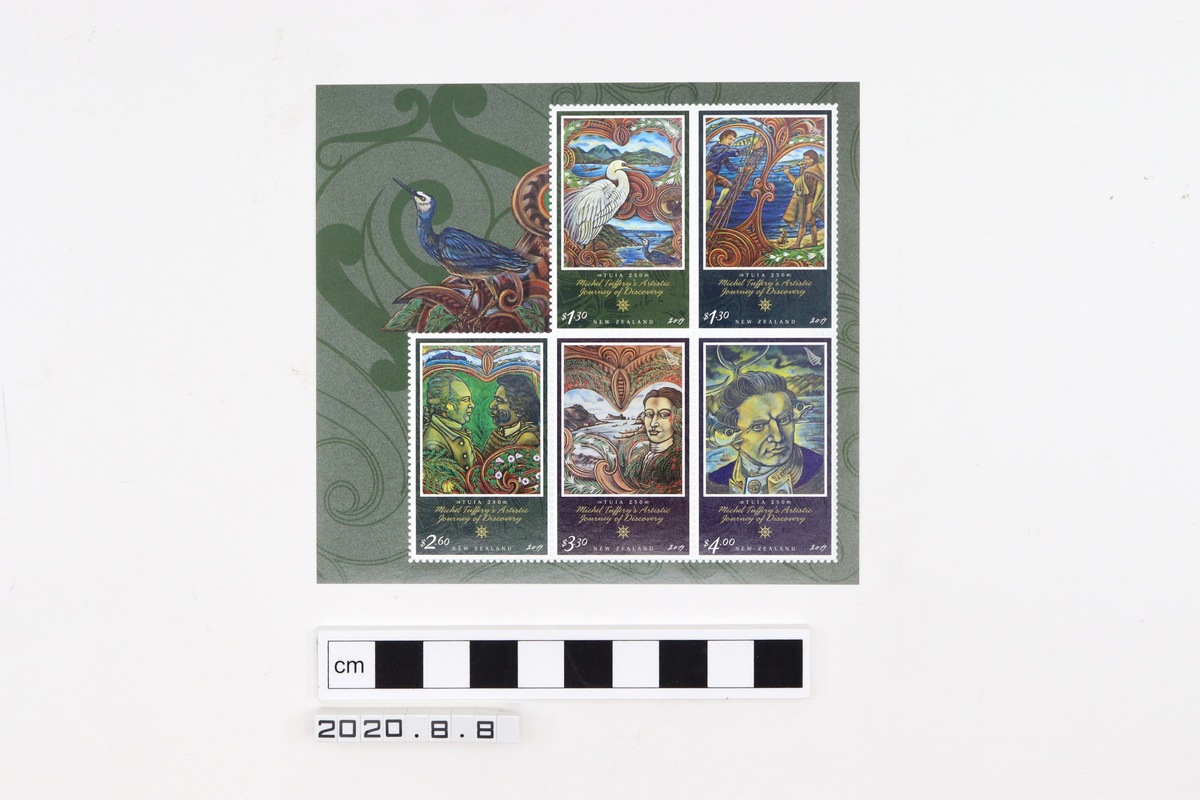
Issue Date: 02.10.2019. Designed by Saint Andrew Matautia, New Zealand Post, Wellington, New Zealand. Printer: Southern Colour Print, Dunedin, New Zealand. Process: Offset Lithography. Size: 30mm x 48mm (vertical). Values: $1.30 x 2, $2.60, $3.30, $4.00
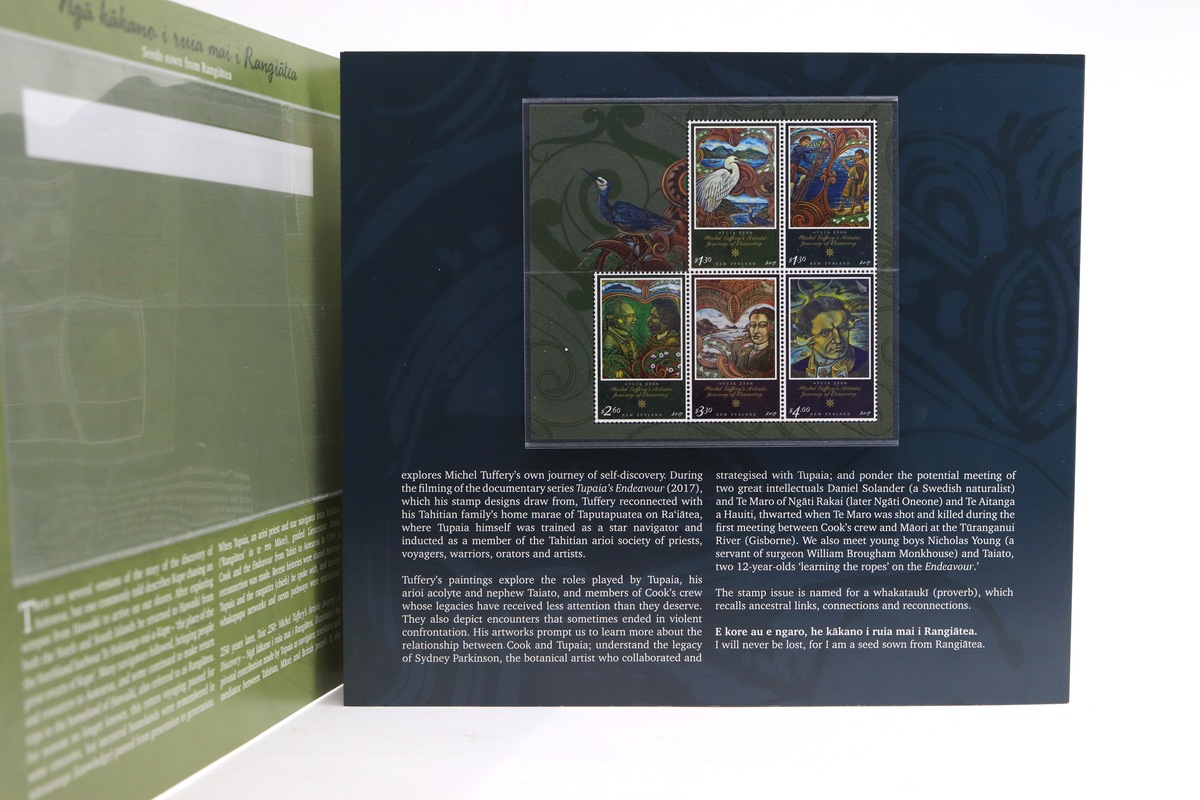
Tuffery’s paintings explore the roles played by Tupaia, his arioi acolyte and nephew Taiato, and members of Cook’s crew whose legacies have received little attention. The history of Tupaia and these first encounters between Europeans and Māori are included in this presentation pack, written by University of Auckland Senior Research Fellow Dr. Billie Lythberg.
"Michel Tuffery’s Artistic Journey of Discovery
Ngā kākano i ruia mai i Rangiātea- Seeds sown from Rangiātea
This series of artworks has been honoured as a set of 5 stamps to commemorate Tuia 250.
When Tupaia, an arioi priest and navigator from Ra‘iātea, guided Lieutenant James Cook and the Endeavour from Tahiti to Aotearoa in 1769, a reconnection was made between Māori and their ancestral homelands. As featured on these stamps, New Zealand artist Michel Tuffery has created original artworks in response to his discoveries about where his personal history meets that of these first encounters.
The messenger from Raiatea to Uawa
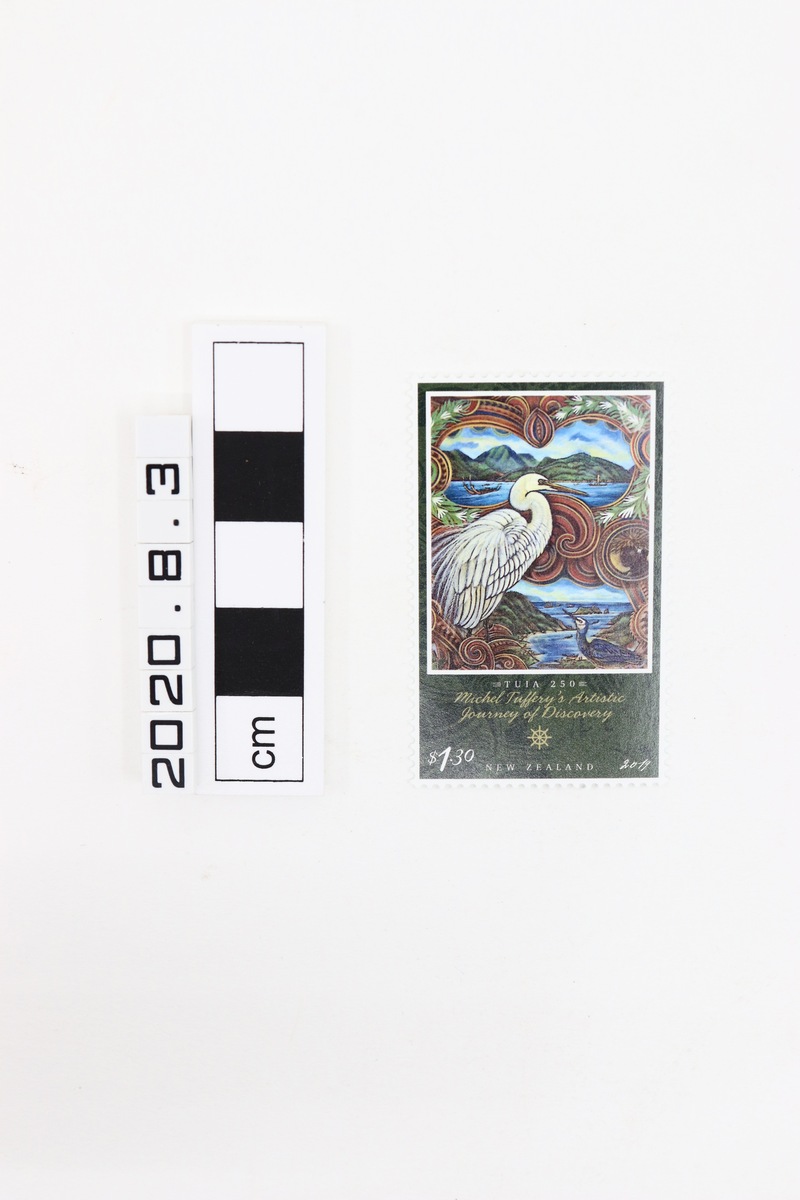
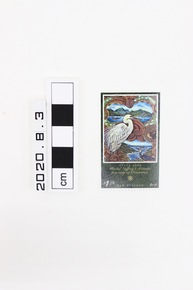
Elegant kōtuku (Ardea modesta), uncommon in Aotearoa, appeared while Tuffery was drawing at Taputapu‘atea marae in Ra‘iātea and again in Ūawa. Here, the white heron is a messenger of connection looking towards Opoutama, the site of significant exchanges between Tupaia and Ūawa tangata whenua, also known as ‘Tupaia’s Cave’. The painting’s carved framework depicts the mouth of the poupou of Hinematioro, a wall panel from a wharenui being built on Pourewa Island at the time of the Endeavour’s visit for a young chieftain from one of Te Aitanga-a-Hauiti’s most senior lines. Possibly presented to Tupaia, the poupou of Hinematioro is now in Tübingen, Germany, and is visited by Hauiti descendants on journeys of reconnection.
Te Maro and Solander, two intellectuals from opposite sides of the world, 1769
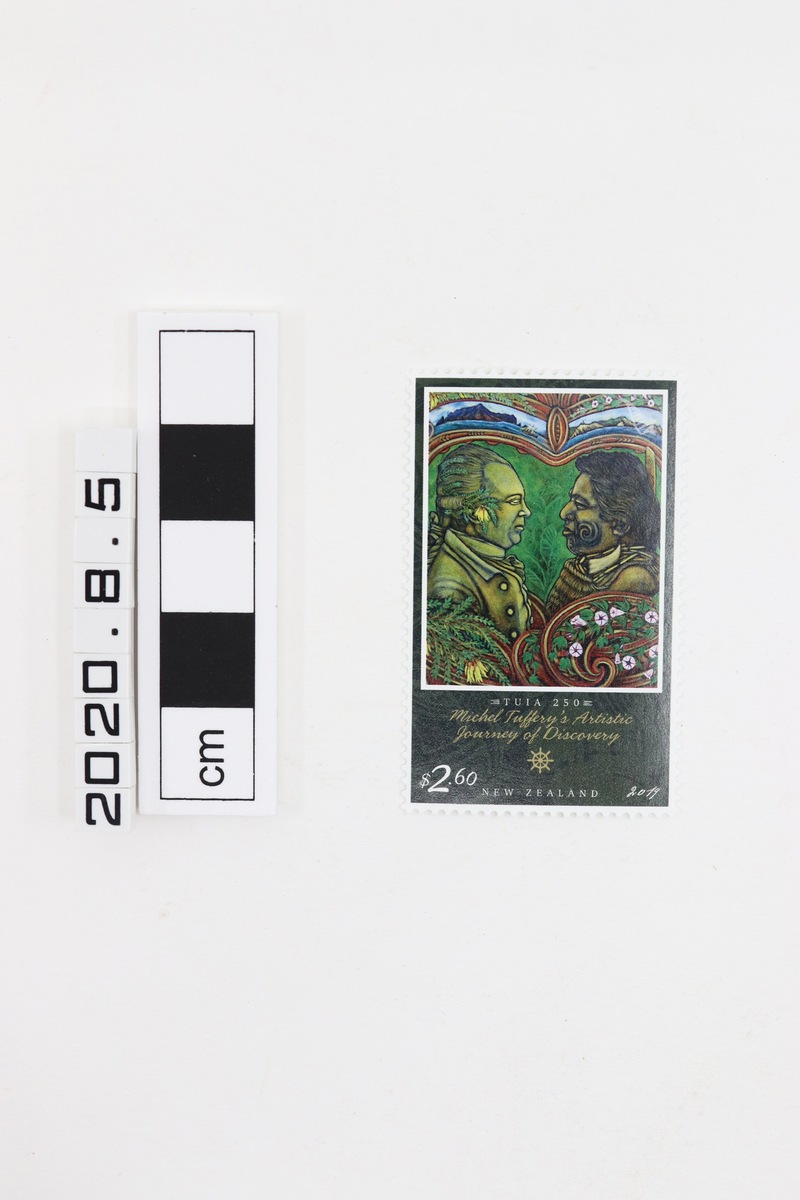
Te Maro of Ngāti Rakai (later Ngāti Oneone) and Te Aitanga a Hauiti was a learned man, trained in the whare wānanga (house of learning) Puhi Kai Iti, an expert in reading nature and a master producer of cultivated foods for his people. Daniel Solander was a Linnaean disciple, commited to cataloguing the natural world. What cross-pollination of knowledge was thwarted when Te Maro was shot during the first meeting of Māori and British, at the Tūranganui River. A descendant of Te Maro, Nick Tupara, is depicted here: the living face of this tipuna and a reminder of the legacy of this tragic first meeting.
Taiato and young Nick, the adventurers arrival in Aotearoa, 1769
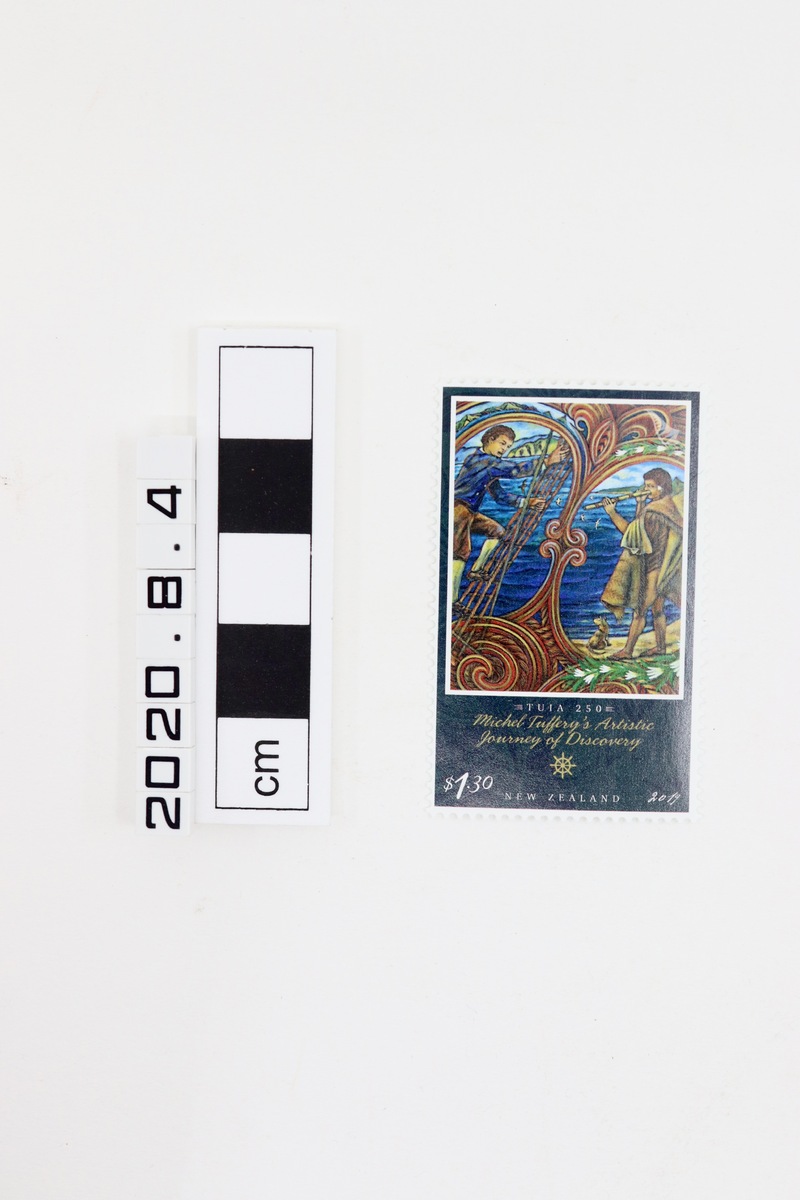
When Nicholas Young sighted land from the Endeavour’s masthead on 6 October 1769, earning a gallon of rum, Cook added ‘Young Nick’s Head’ to the headland Te Kurī a Pāoa, named for the dog of the captain of the Horouta waka. Taiato, the nephew of Tupaia and an arioi acolyte, appears as he was drawn by Parkinson in a tiputa poncho and playing a vivo noseflute. These 12-year-old boys from different sides of the world were on a shared, often perilous adventure. When the Endeavour reached Batavia (Jakarta), after a short and exciting exploration of this cosmopolitan city, Taiato sickened and died. Tupaia was inconsolable, and died shortly after.
Parkinsons Kākābeak (Clianthus Puniceus) 1769 at Uawa outside Tupaia’s Cave
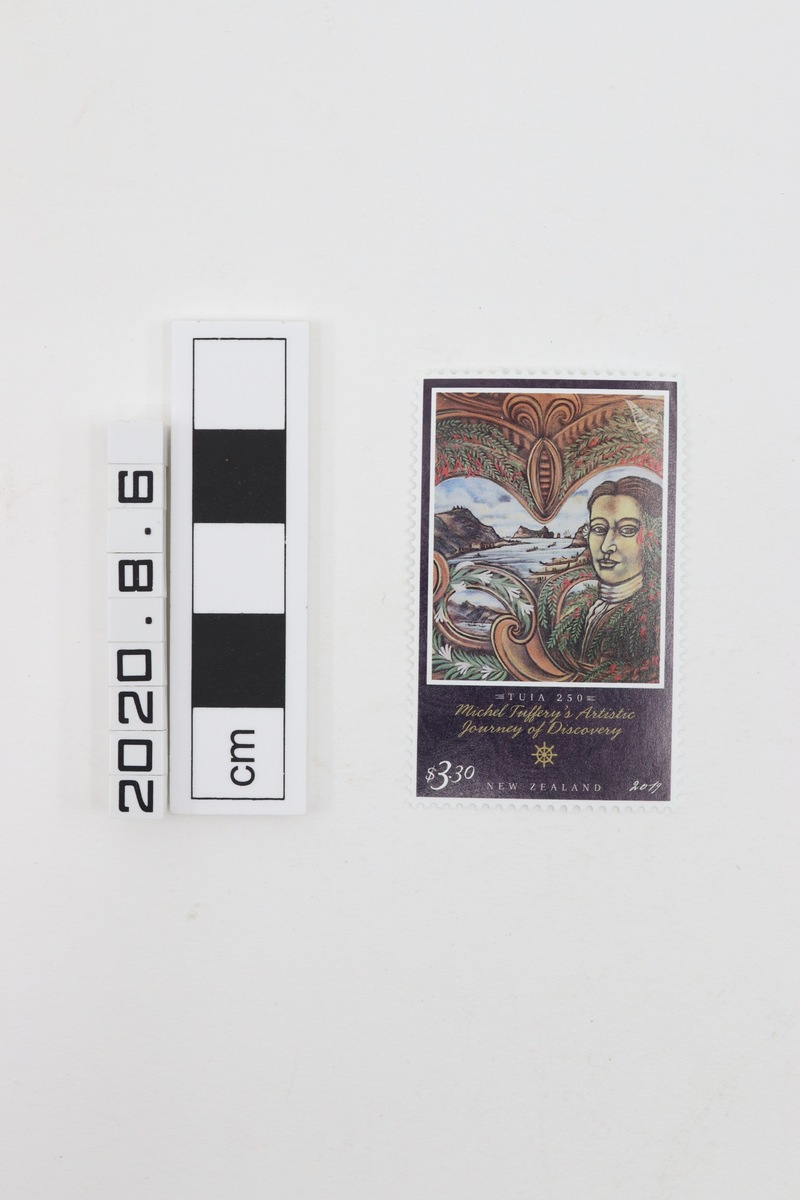
White blossoms of Tahitian tiare maori (Gardenia taitensis) join the vibrant red ngutukākā/kākābeak (Clianthus puniceus) of Aotearoa in this portrait of natural history artist Sydney Parkinson, which celebrates his relationship with Tupaia. Male members of the Tahitian religious society known as arioi, to which Tupaia belonged, were often skilled in dyeing and decorating barkcloth. An artistic exchange occurred when Tupaia was instructed in the use of watercolours, producing significant paintings, and Parkinson learned the names of Tahitian dyes and dye-making plants. In the background, waka are pulled up at Opoutama, in Ūawa, where Tupaia left charcoal cave drawings and Tahitian text still visible today.
Cookie in Te Wai Pounamu meets Cook Strait
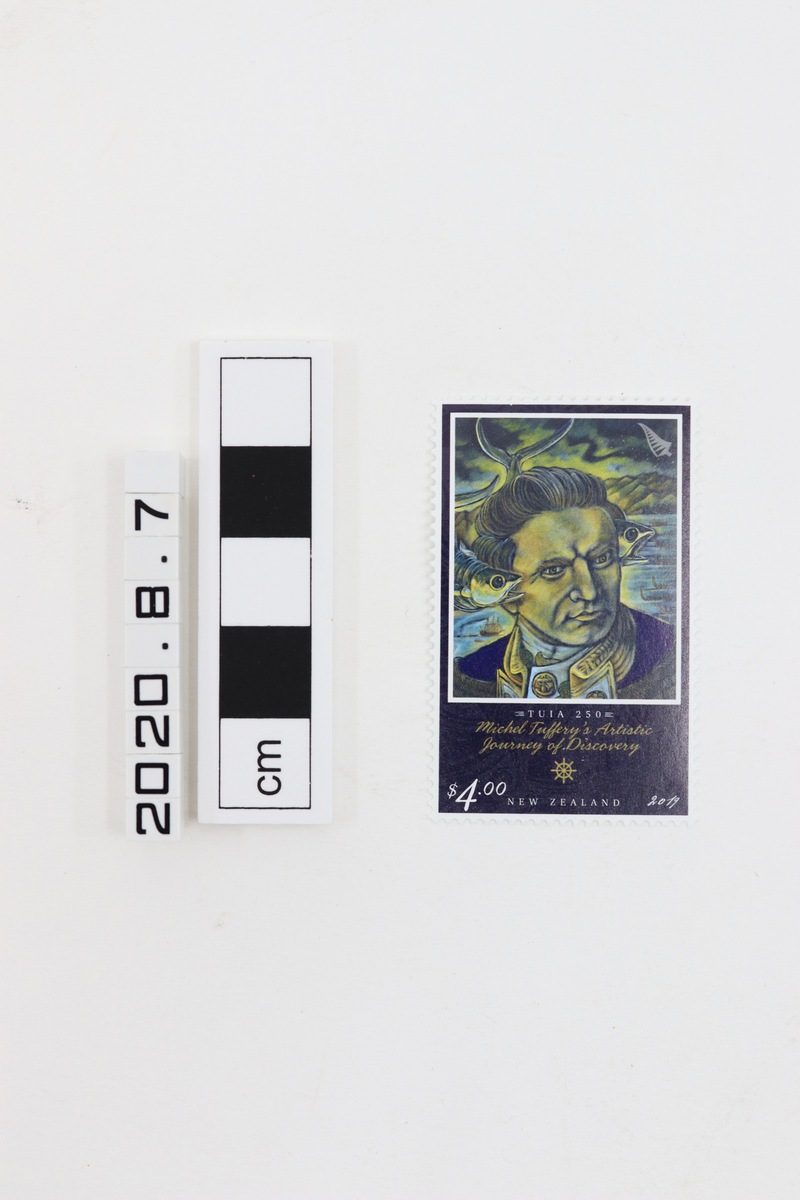
Despite the importance of Tupaia to Cook’s first voyage, as navigator, interpreter, artist and a man of high rank who commanded respect where ‘Kuki’ and his crew could not, no portrait survives of him. Here we see Tupaia as migratory tuna fish, bound into Cook’s hair, guiding the voyage and translating between people long separated yet always connected—seeds sown from Ra‘iātea. A hei tiki pendant given to Tupaia and now in the Royal Collection (UK) peeks from Cook’s collar; his shoulders are draped in the star navigator’s fine taaniko-bordered cloak, now in the Pitt Rivers Museum (UK); and British barks face Māori waka in the background of Tōtaranui/Queen Charlotte Sound."
Details taken from Michel Tuffery’s Artistic Journey of Discovery, https://micheltuffery.co.nz/shop-2/paintings-for-sale/ accessed 10/8/2020
Event Date 2/10/2019
Author: rachel hand
Description (Physical description)
Commemorative pack of five offset lithograph stamps from New Zealand Post Tuia 250: Michel Tuffery's Artistic Journey of Discovery.
2020.8.1- a booklet on the history of Tupaia and Lieutenant James Cook’s journey from Tahiti to New Zealand. The title page features a detail of 'Not another Kuki story' with Tupaia as migratory tuna, guiding Cook on his voyage, headed 'Michel Tuffery’s Artistic Journey of Discovery presentation pack'.
Titled 'Ngā kākano i ruia mai i Rangiātea/ Seeds sown from Rangiātea' page 2 features 2020.8.2- The first day cover with a set of 5 gummed stamps and a drawing of the Endeavour, one of a series of sketches drawn by Michel Tuffery over his time travelling and researching the history of this ship’s journey to Aotearoa New Zealand. The stamps are as described individually below:
Five individual stamps (2020.8.3-7) secured to pages 3-4, viz:
2020.8.3- $1.30 'A messenger from Ra’iāte'. The white heron/ kōtuku is a messenger of connection looking towards Opoutama, a site of significant exchanges between Tupaia and Ūawa tangata whenua.
2020.8.4- $1.30- 'Taiato and Young Nick, the adventurers arrive in Aotearoa, 1769'. Tupaia’s nephew Taiato appears here alongside a fellow 12-year-old boy from the other side of the world. It was Nicholas Young who sighted land from the Endeavour’s masthead on 6 October 1769.
2020.8.5- $2.60 'Te Maro and Solander, two intellectuals from opposite sides of the world, 1769'. Te Maro’s descendent Nick Tupara is depicted here in place of his ancestor who was killed at this tragic first meeting of Māori and British at the Tūranganui River.
2020.8.6- $3.30 'Parkinson at Opoutama, 1769'. White blossoms of Tahitian tiare maori join Aotearoa’s vibrant red ngutukākā/kākābeak in this portrait of natural history artist Sydney Parkinson that celebrates his relationship with Tupaia.
2020.8.7- $4.00 'Not another Kuki story'. Tupaia is shown as a migratory tuna, guiding Cook on his voyage and translating between people long separated yet always connected – seeds sown from Ra’iātea. A heio tiki pendant given to Tupai peeks from beneath Cook's collar; Cook's shoulders are draped in the star navigator's taaniko-borded cloak; and British barks face Maori waka in the background of Tōtaranui/Queen Charlotte Sound.
On the fifth page is 2020.8.8, the miniature sheet features a detailed section of the Kōtuku painting featured on one of the two $1.30 stamps, and the miniature sheet first day cover continues the green, koru pattern background of the miniature sheet.
Event Date 16/12/2019
Author: rachel hand
Context (Amendments / updates)
The stamps are based on Tuffery's five original artworks in response to his discoveries about where his personal history meets that of these first encounters, when Tupaia guided Lieutenant James Cook and the Endeavour from Tahiti to New Zealand Aotearoa in 176. This is a limited edition and is one of only 2,000 produced, a uniquely numbered limited edition is the ultimate collector’s item for this issue. Each includes a unique numbered miniature sheet, a unique first day cover signed by Michel Tuffery, a colour separation of the Not another Kuki story stamp, and a booklet on the history of Tupaia and Lieutenant James Cook’s journey from Tahiti to New Zealand.
Event Date 11/8/2020
Author: Katrina Dring
FM:327090
Images (Click to view full size):