Accession No
2025.24
Description
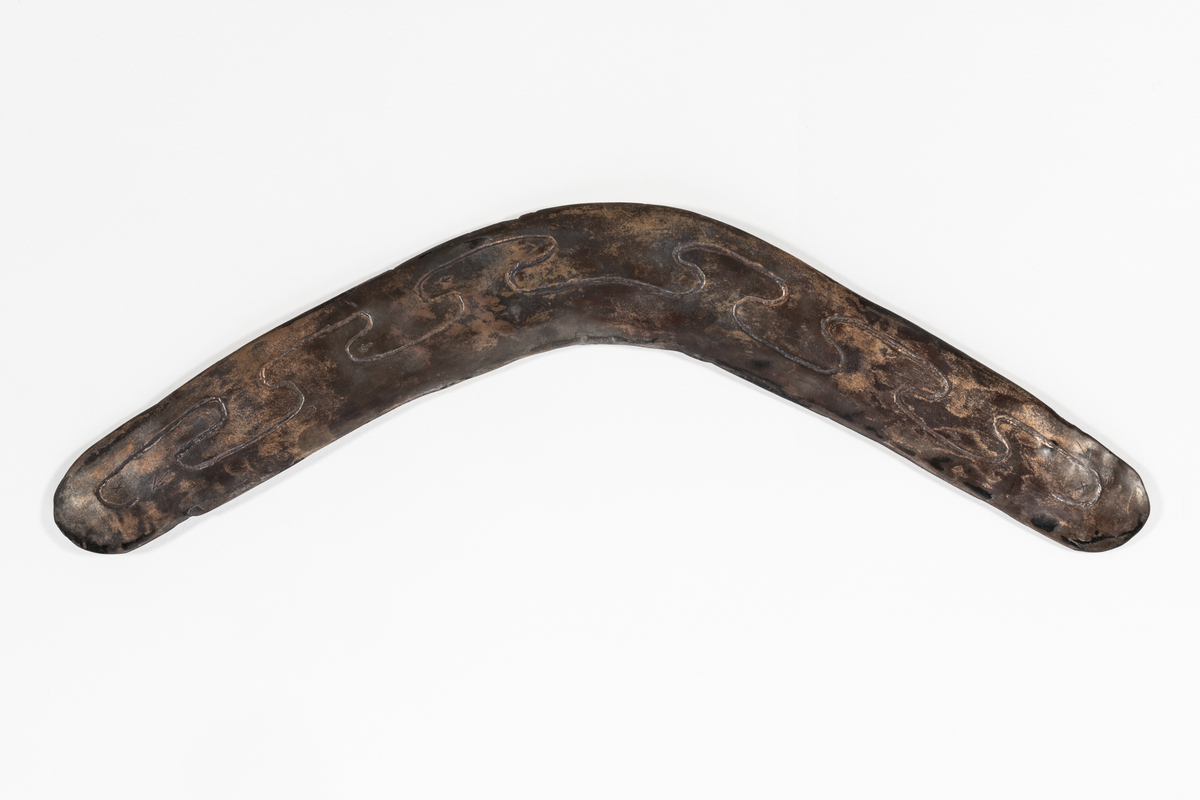
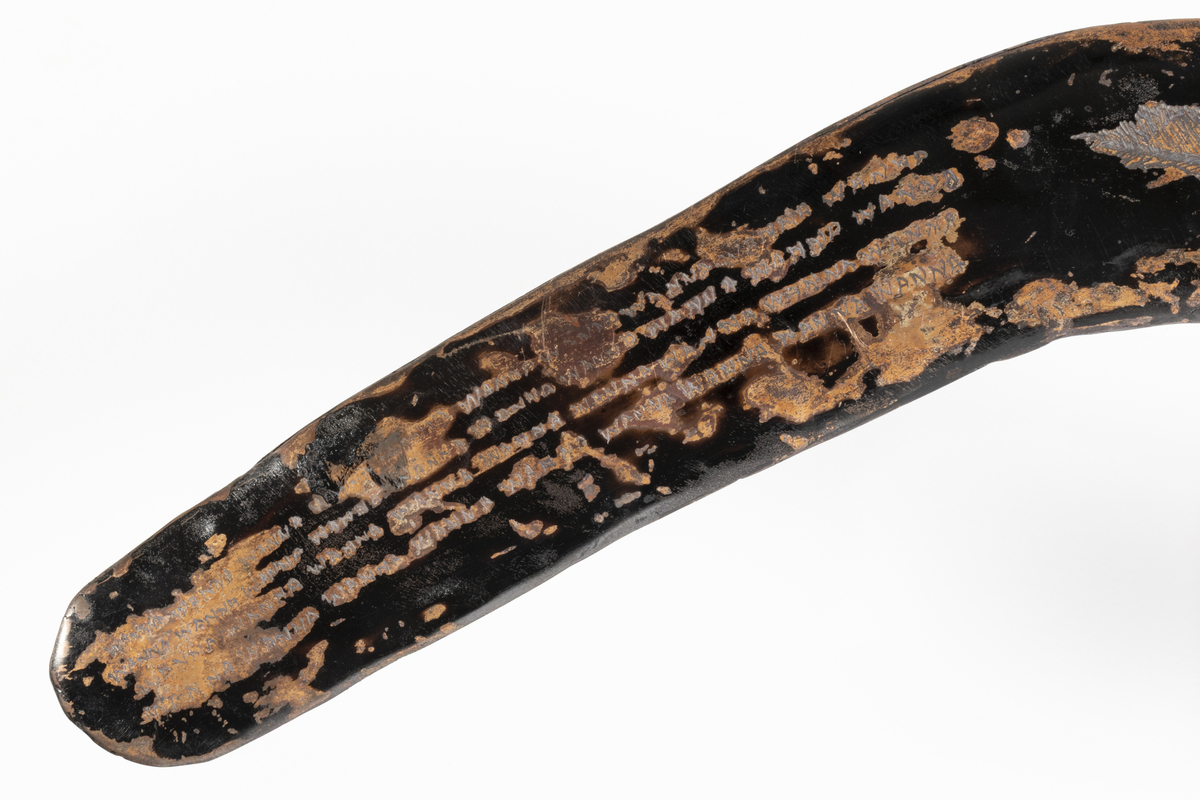
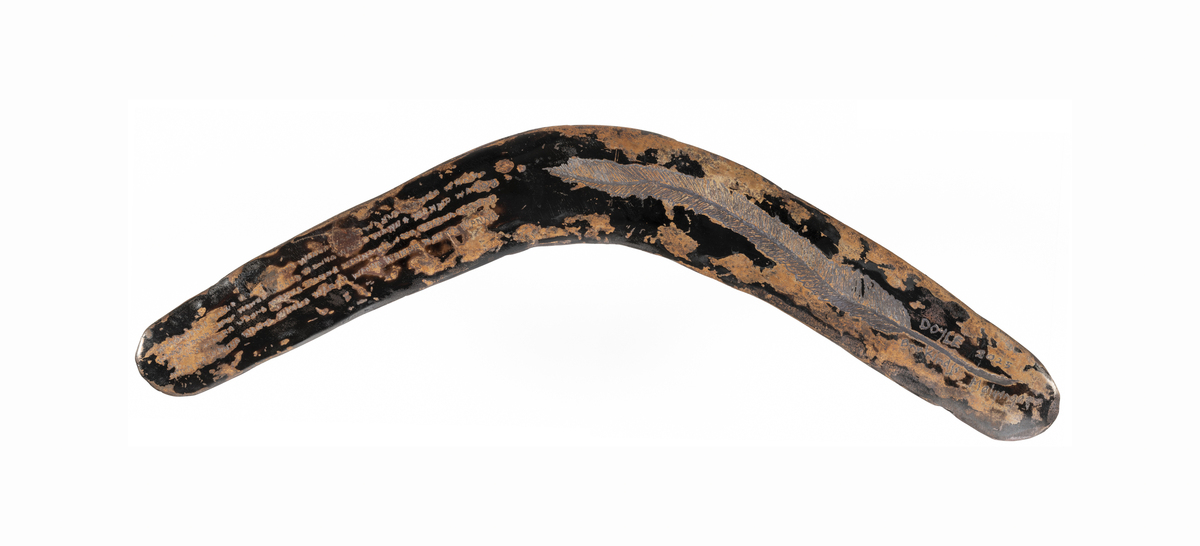
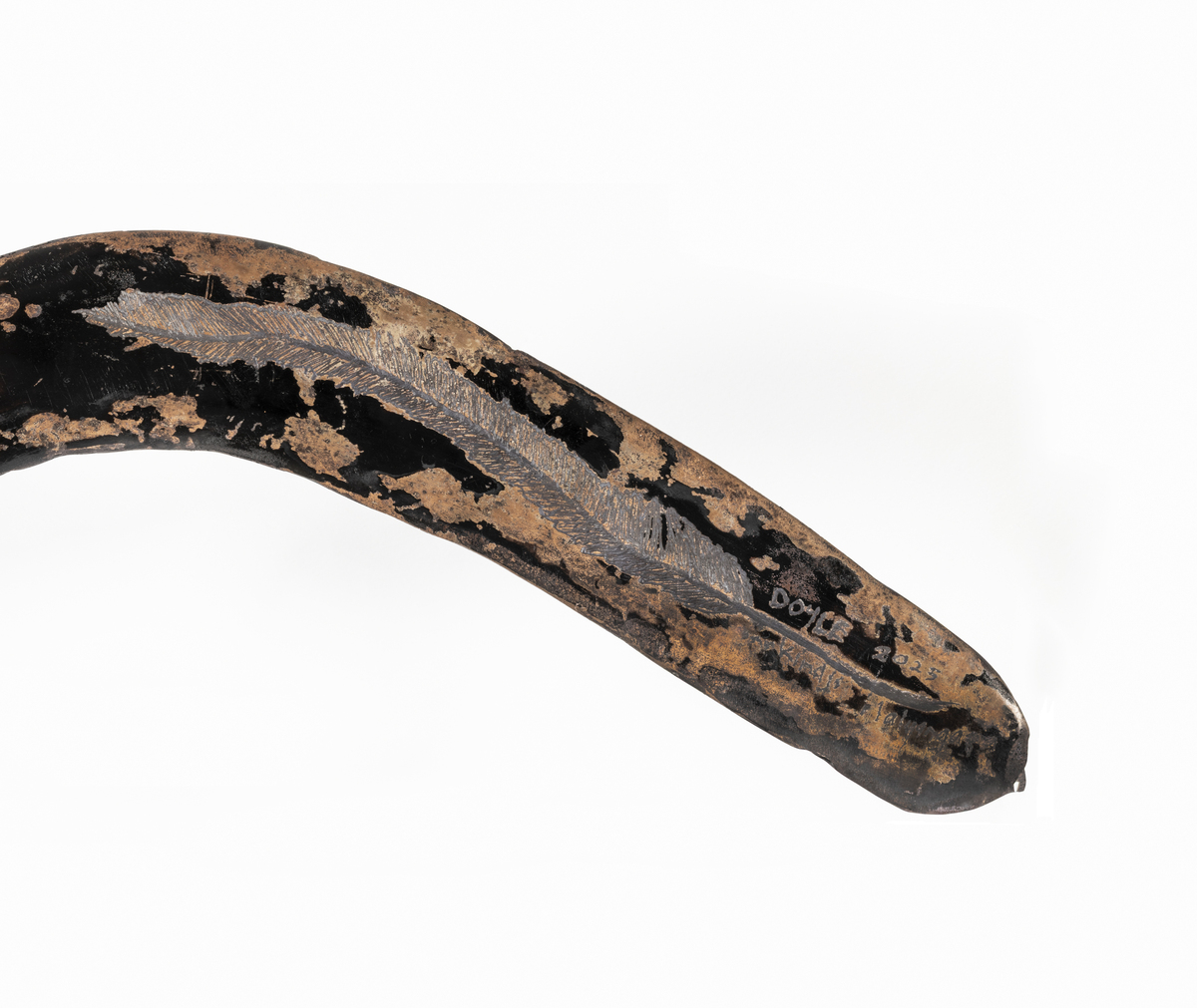
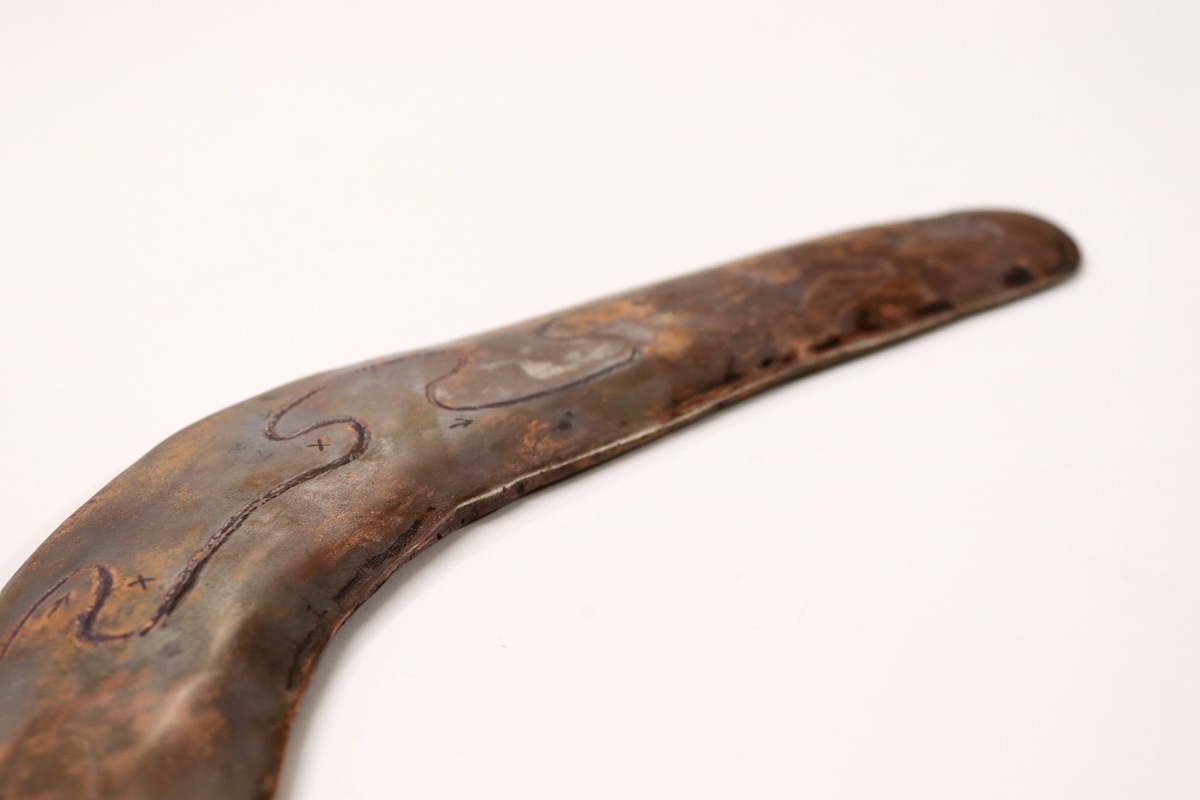
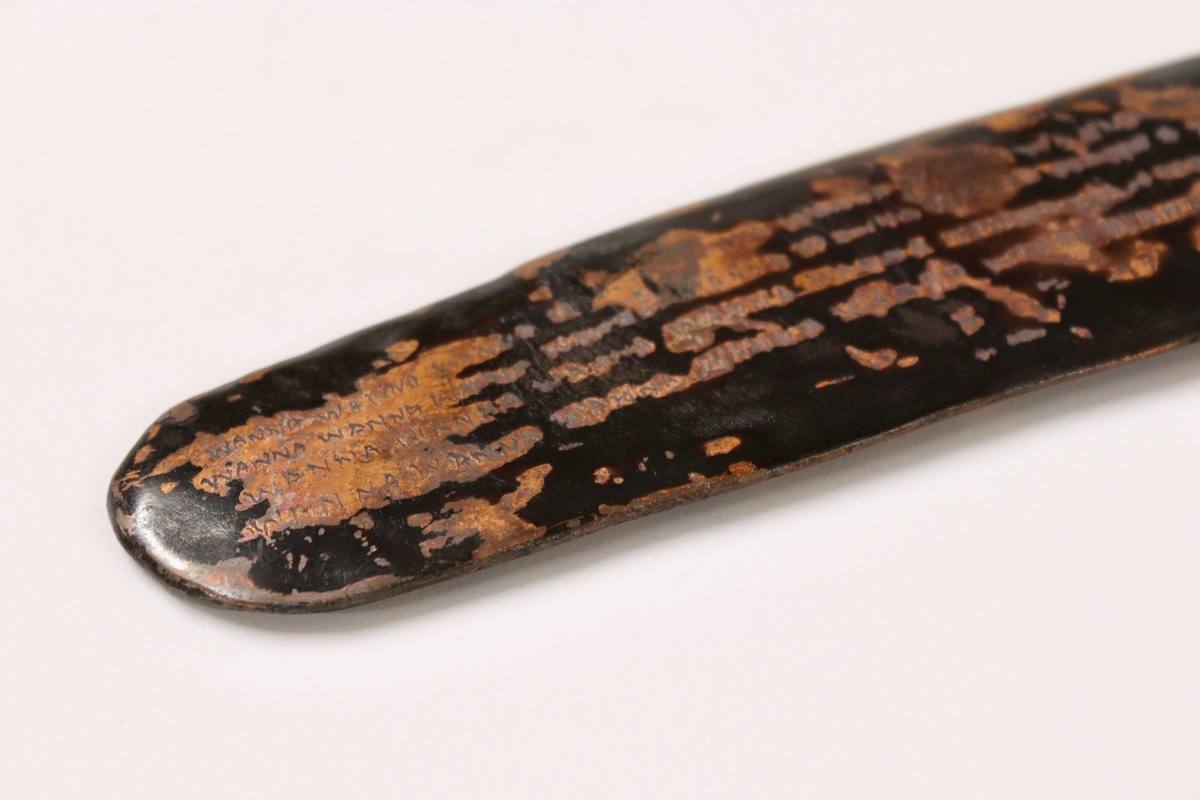
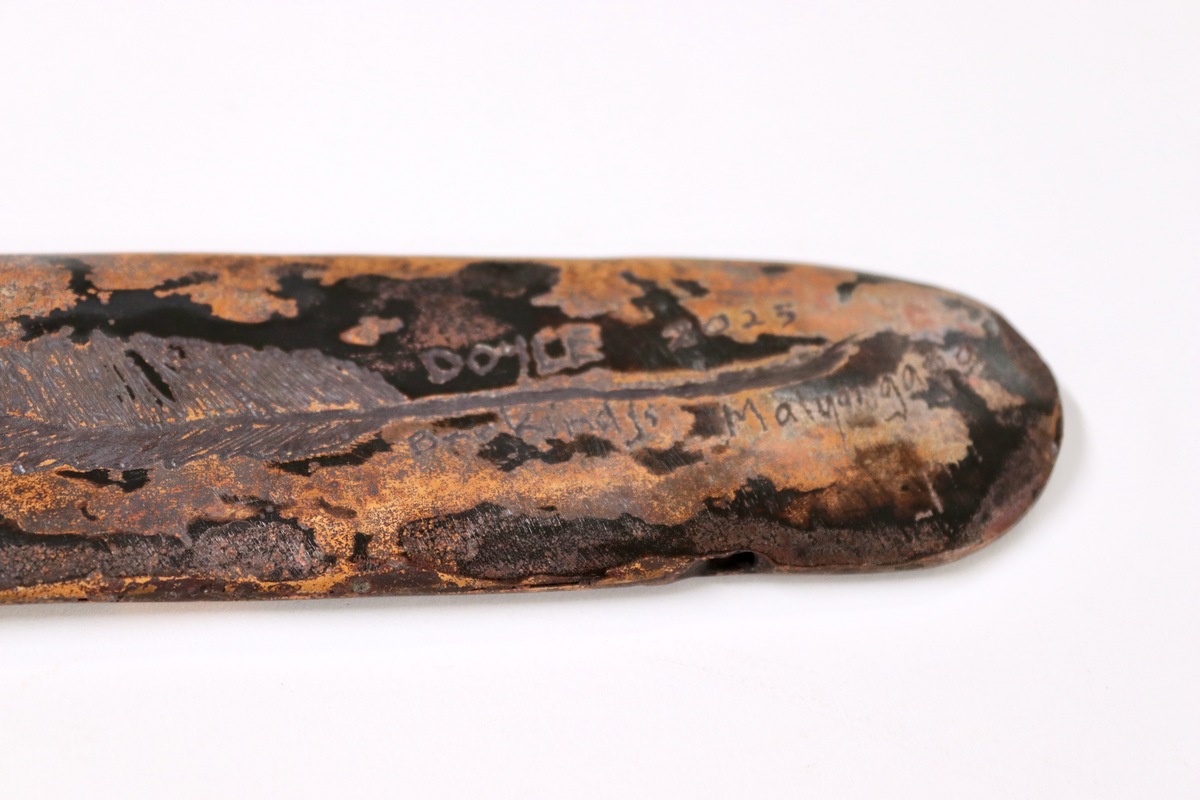
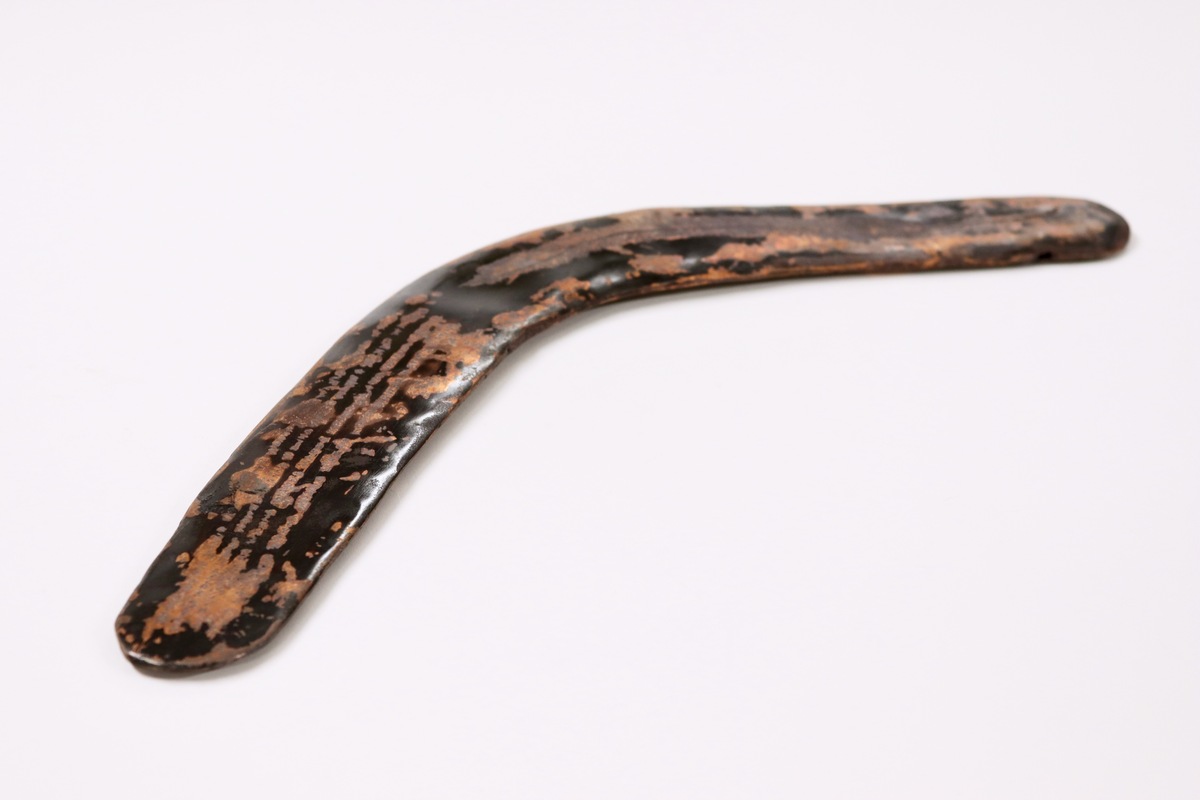
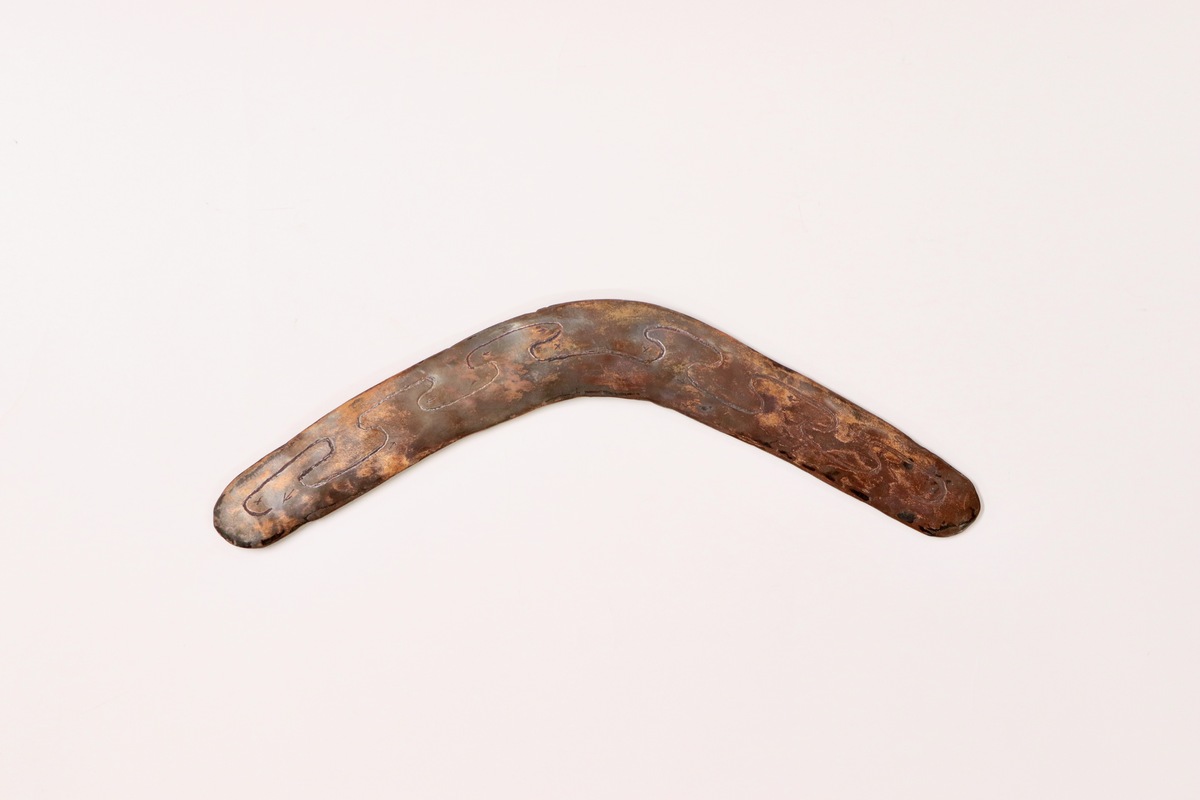
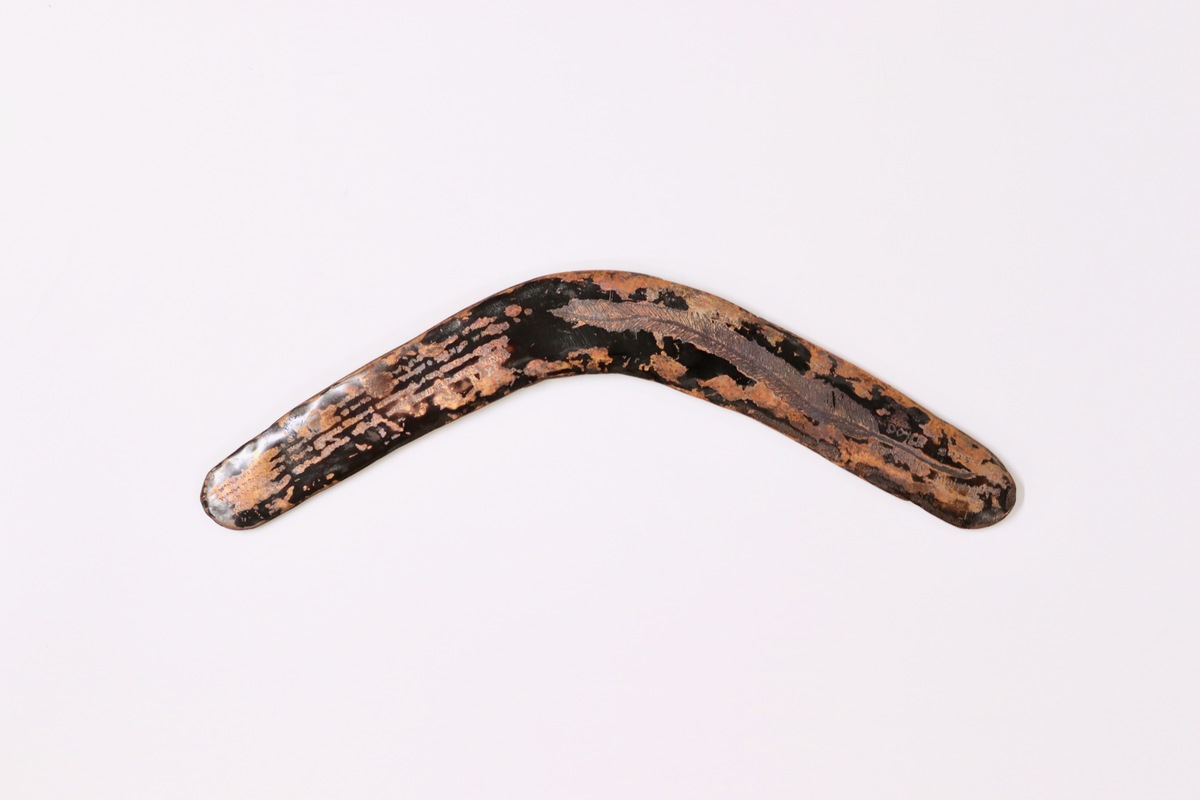
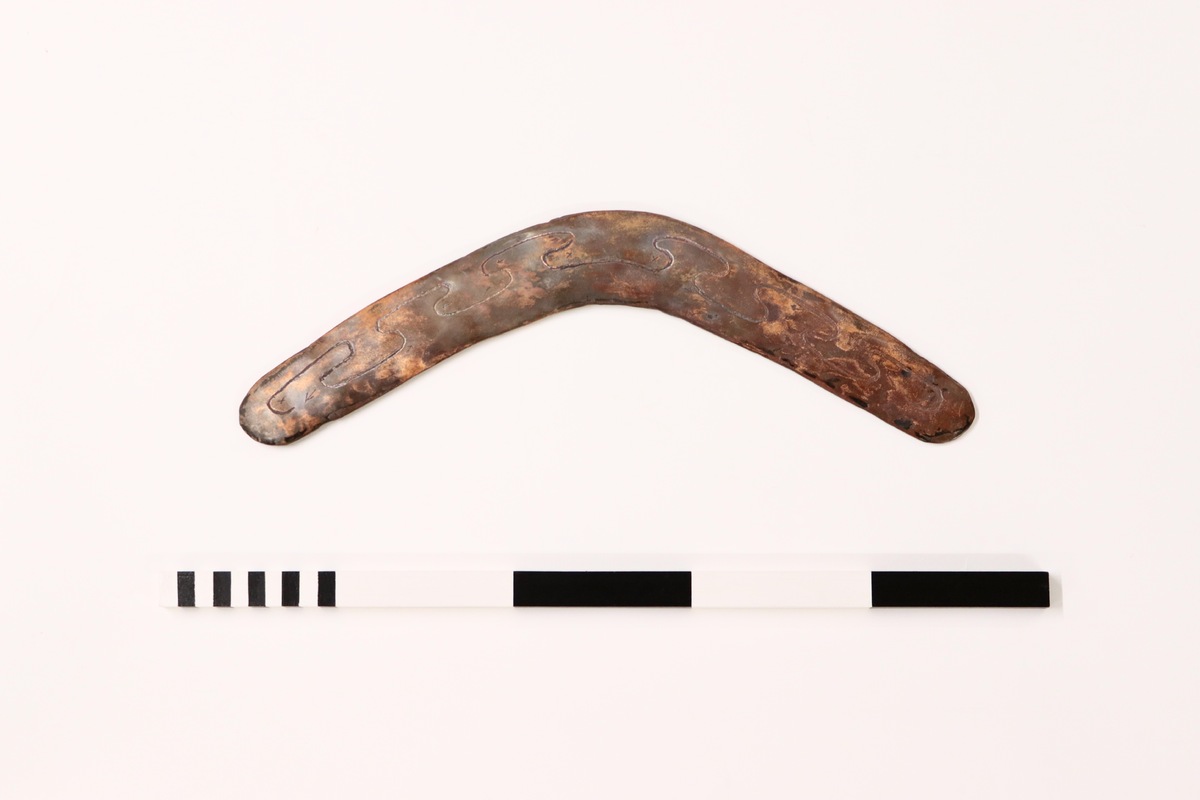
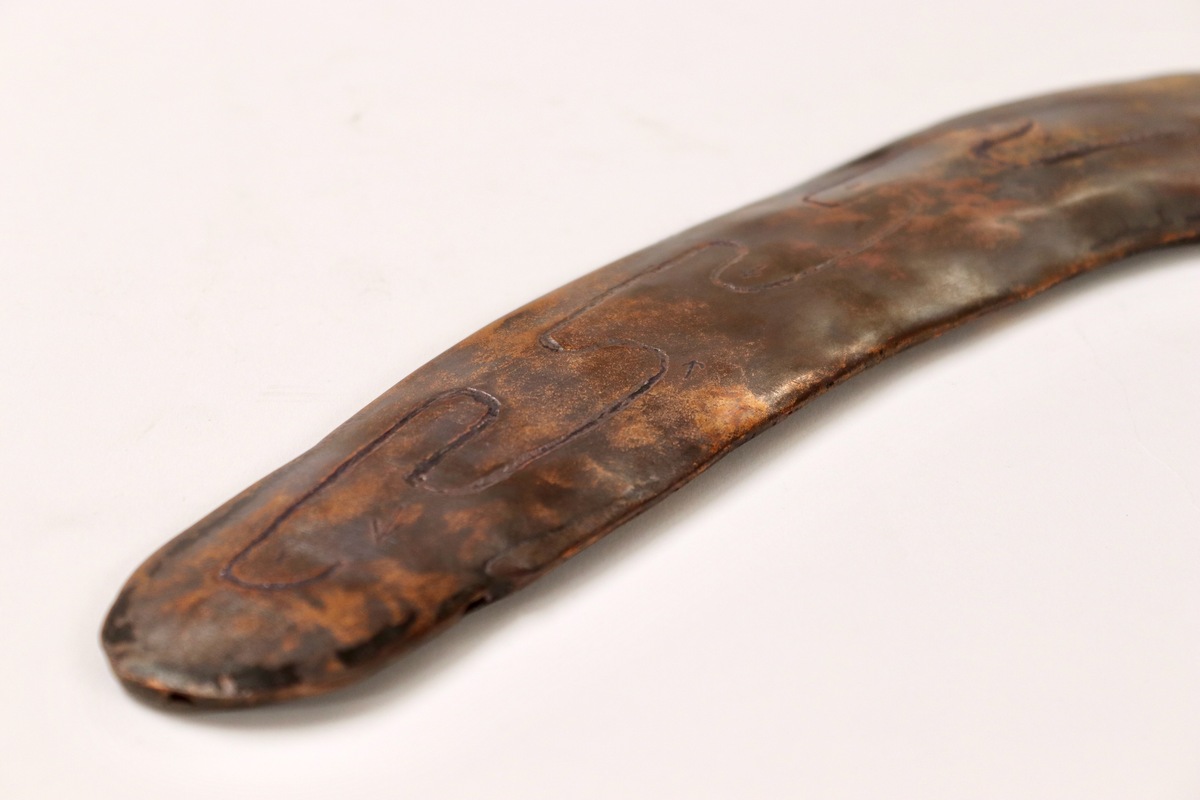
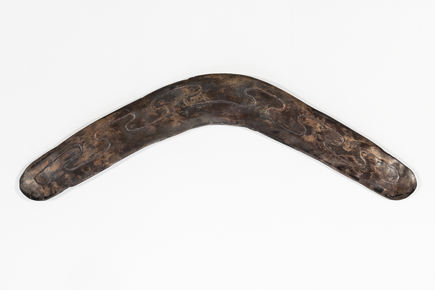
Ngaratya Kirra-thika (Together on Country) by Barkindji/Malyangapa artist David Doyle, 2025. Copper wanna (boomerang) engraved on one side with the flowing lines of the Baaka (Darling River), emu tracks, and outlying hunting camps. Reverse with dark heat patina and the word wanna repeated in four curved lines across half of surface. Other half has engraved emu feather and David’s signature.
Place
Oceania; Australasia; Australia; New South Wales; Darling River; Menindee
Period
June 2025
Source
Doyle, David [artist]; Foster, Eleanor [collector]; Crowther-Beynon Grant [mometary donor]
Department
Anth
Reference Numbers
2025.24; MAA: MN0352
Cultural Affliation
Barkindji/Malyangapa
Material
Copper
Local Term
wanna
Measurements
Events
Context (Analysis)
“Ngaratya Kirra-thika” by Barkindji/Malyangapa artist David Doyle was commissioned with the support of the Crowther-Beynon Fund. The piece reflects David’s experience working with historical collections at MAA and ongoing research relationships nurtured in Cambridge, United Kingdom, and on Barkindji Country, New South Wales, Australia.
David is an award-winning artist who works in diverse mediums and has exhibited across Australia. He first visited Cambridge in June 2024 as part of the National Museum of Australia Encounters Fellowship, a programme which supports First Nations cultural practitioners to visit institutions in Australia, New Zealand and the UK. He was eager to view material that came from his Country in Far West NSW including a significant collection from the region in MAA attributed to Frederic Bonney who was a pastoralist on Momba Station on the Paroo-Darling River from 1865-1881. Some of David’s ancestors, members of the Quayle family, are recorded as having lived at Momba Station in Bonney’s time and into the twentieth century.
David was particularly interested in the engravings on wooden artefacts and many of the wanna, or boomerangs, collected from Momba Station show detailed designs. These include 1922.247, 1922.248, 1922.249, 1922.250, 1922.252, 1922.253, 1922.254, 1922.255, 1922.256. PhD Candidate Eleanor Foster had been researching this collection for over a year, and worked alongside Anthropology Curator Eve Haddow, and Anthropology Collections Team, Rachel Hand and Guey-Mei Hsu, to support David’s visit to the collection.
Many notes were taken during this visit based on David’s knowledge of specific materials and designs, adding to MAA collections documentation. David reflected on the experience that: '[it was] amazing to be able to see some of those things hands on. It was as good as I could have imagined, these items being brought out. Initially I was handling [the collection] as valuable museum pieces. And then towards the end of it, I was holding them as valuable Aboriginal artefacts. That may sound the same, but it isn’t.'
Eleanor visited Far West New South Wales for fieldwork trips in 2024 and 2025, spending time with David and other Barkindji people to learn about the Country and the significance of Barkindji material culture collections. In May 2025, Eleanor and David were successful in receiving a Crowther-Beynon grant to commission a piece for MAA’s collection.
After brainstorming possible works and gaining great inspiration through spending time together on Barkindji Country at Menindee and Kinchega National Park, David decided to revisit a copper wanna he had cast earlier in his arts career.
As David recalled: 'I made this wanna about three years ago using a sheet of copper I found in my mum’s shed. I started engraving ‘wanna’ but left it incomplete as it didn’t fit with the project that I wanted it to at the time. When we started talking about this project for Cambridge, and about incorporating different materials into the piece, it came straight back.'
The copper came from the same sheet that David had used to weld a wanna for the Elder’s Honours Board at Kinchega National Park. He reflected that this connected the wanna now in Cambridge to his ancestral Country and home in Broken Hill, New South Wale, where it was fabricated.
The process of making the wanna involved cutting out two pieces of copper and sanding down the edges. It was then welded together using copper wire. After sanding the piece again to ensure it was smooth like wooden boomerangs which are designed to glide through air, David engraved a pattern based on carved wanna he had seen in MAA and other museums. He included emu footprints and outlying camps to represent the travels and experiences shared with Eleanor along the Baaka (Darling River). The whole piece was then heated with fire, leading to a dark heat patina pattern on one side.
David reflected: 'It worked out well that I’d actually left one whole side vacant originally because it allowed me to put that design on that I’ve been fascinated with. But then I got a little bit stuck again, you know, what would I turn the rest into? And I just realised, I see how excited that you [Eleanor] got around the emu’s and they are a fascinating creature. And I thought, you know, we actually drove up the river and there were emus all around it, so why not? And I went with it. So, the little Xs on the corners are little outlying camps and the emu footprints are just here and there. I didn't want to overdo it because the [wanna] that I saw in Cambridge weren’t overdone. And, of course, the back of it, I’d already started with the Wanna repetition because it looks like a design that I’d seen on a different one, and then I went with an emu feather down the side just to finish it off.'
The multiple colours on the copper wanna also reflect the landscape as David and Eleanor experienced it over April-May 2025. The red earth was interspersed with bluish-grey scrub that sprouted following heavy rain. The yellows, pinks and blues also reflect the colour of Baaka at sunset, which is a place for fishing, sharing, and reflection.
When asked how he hoped MAA visitors might engage with Ngaratya Kirra-thika, David shared: 'I’d like to think that people will be able to see the Bonney collection and potentially this together, so that they’ll be able to see one is a reflection of the other and that our culture is still continuing. You know, we haven’t stopped when colonisation started.'
Event Date 17/6/2025
Author: Eve K Haddow
Context (Analysis)
Artist Statement by David Doyle (Barkindji/Malyangapa): This copper boomerang, engraved with the flowing lines of the Baaka, emu tracks, and outlying hunting camps, is a record of time spent on Country — moments shared between people walking, learning, and listening together.
Titled Ngaratya Kirra-thika — Together on Country — the work reflects a personal and cultural journey. It speaks of the emus we saw, the knowledge they carried, and the quiet significance of our presence on the land. We followed their movements, observed their place, and left our own marks, just as they did.
The engraved kalthi yapa (emu tracks) and river design are not only visual—they are part of a story about shared experience and memory. The wanna, or boomerang, traditionally used for hunting, becomes here a symbol of connection — between people, between past and present, and between movement and stillness.
As this work travels across the ocean to rest in a museum, it carries with it our footsteps, our stories, and our way of being on Barkindji Country. It reminds the viewer that Country holds memory, and that every mark made — human or emu — is part of its living story.
Ngaratya kirra-thika. Kalthi yaaninya. Yapa nganha-tha, kalthi-lu yapa-tha (Together, we were on Country. We saw the emus. We left our tracks, and so did they.)
Event Date 17/6/2025
Author: Eve K Haddow
Description (Physical description)
Ngaratya Kirra-thika (Together on Country) by Barkindji/Malyangapa artist David Doyle, 2025. Copper wanna (boomerang) engraved on one side with the flowing lines of the Baaka (Darling River), emu tracks, and outlying hunting camps. Reverse with dark heat patina and the word wanna repeated in four curved lines across half of surface. Other half has engraved emu feather and David’s signature.
Event Date 17/6/2025
Author: Guey-Mei Hsu
FM:327072
Images (Click to view full size):