Accession No
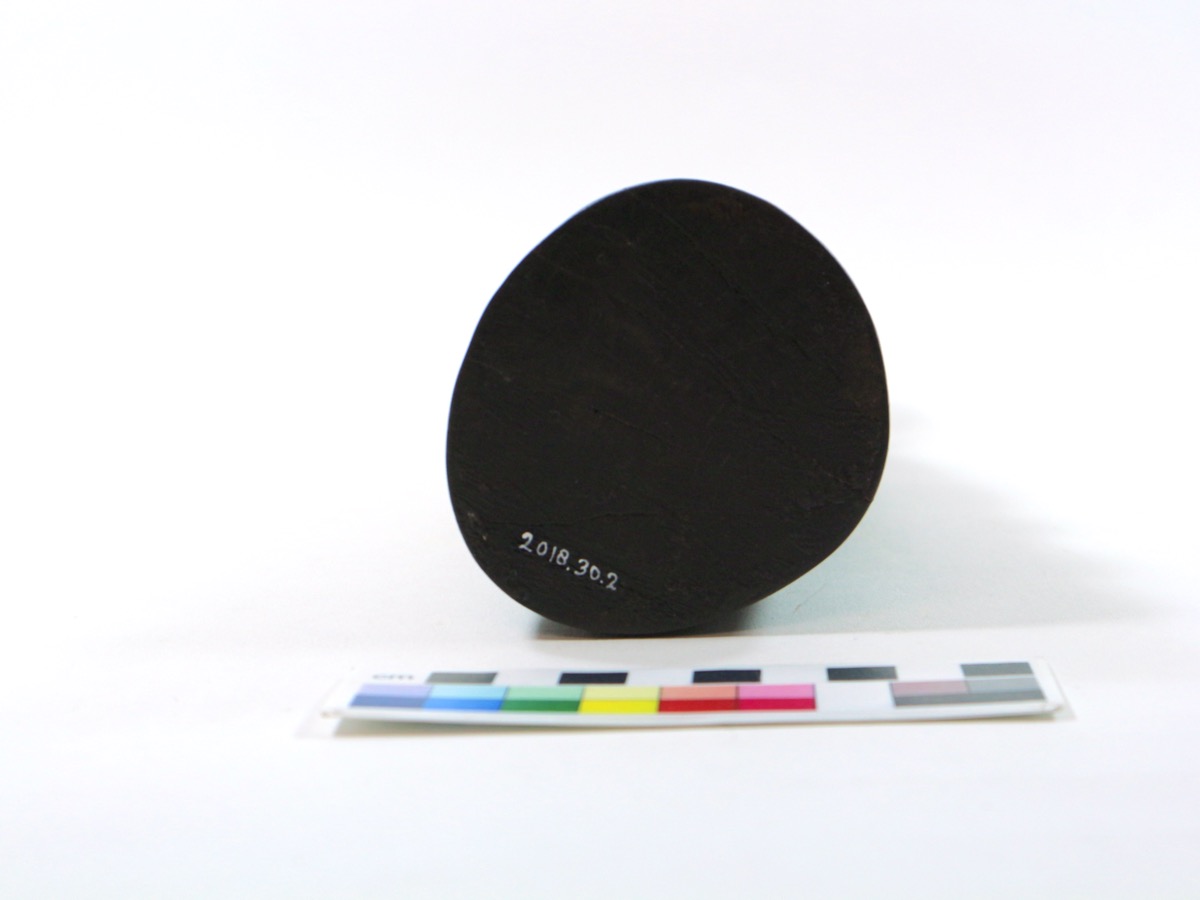
2018.30.2
Description
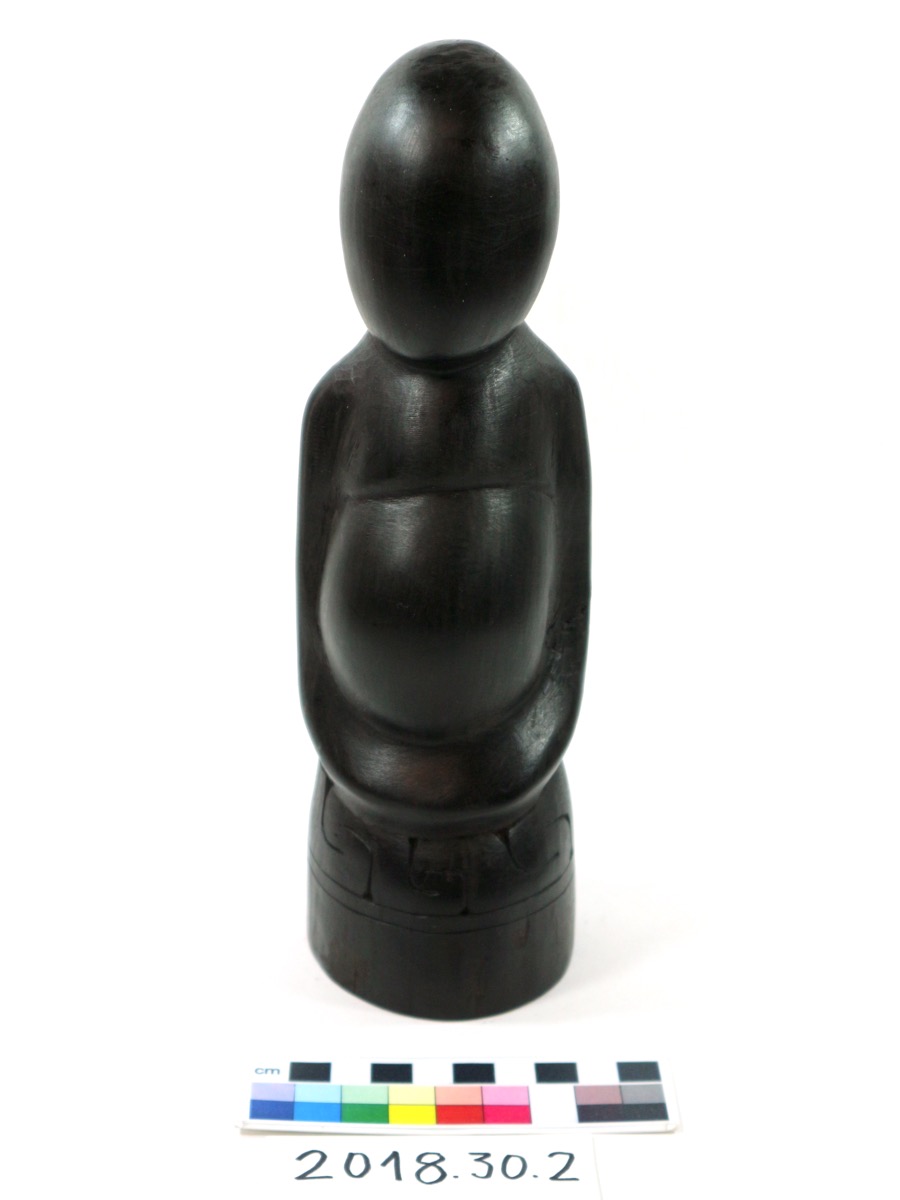
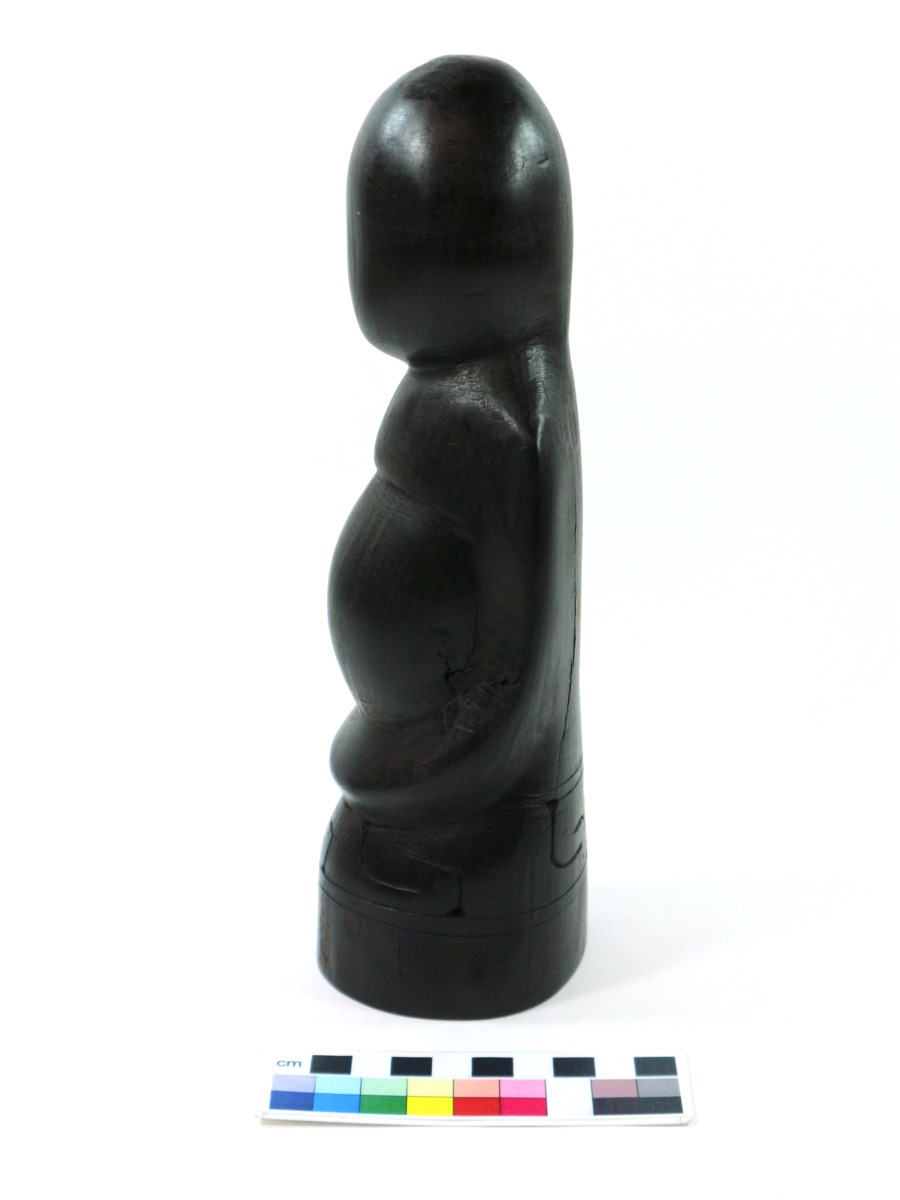
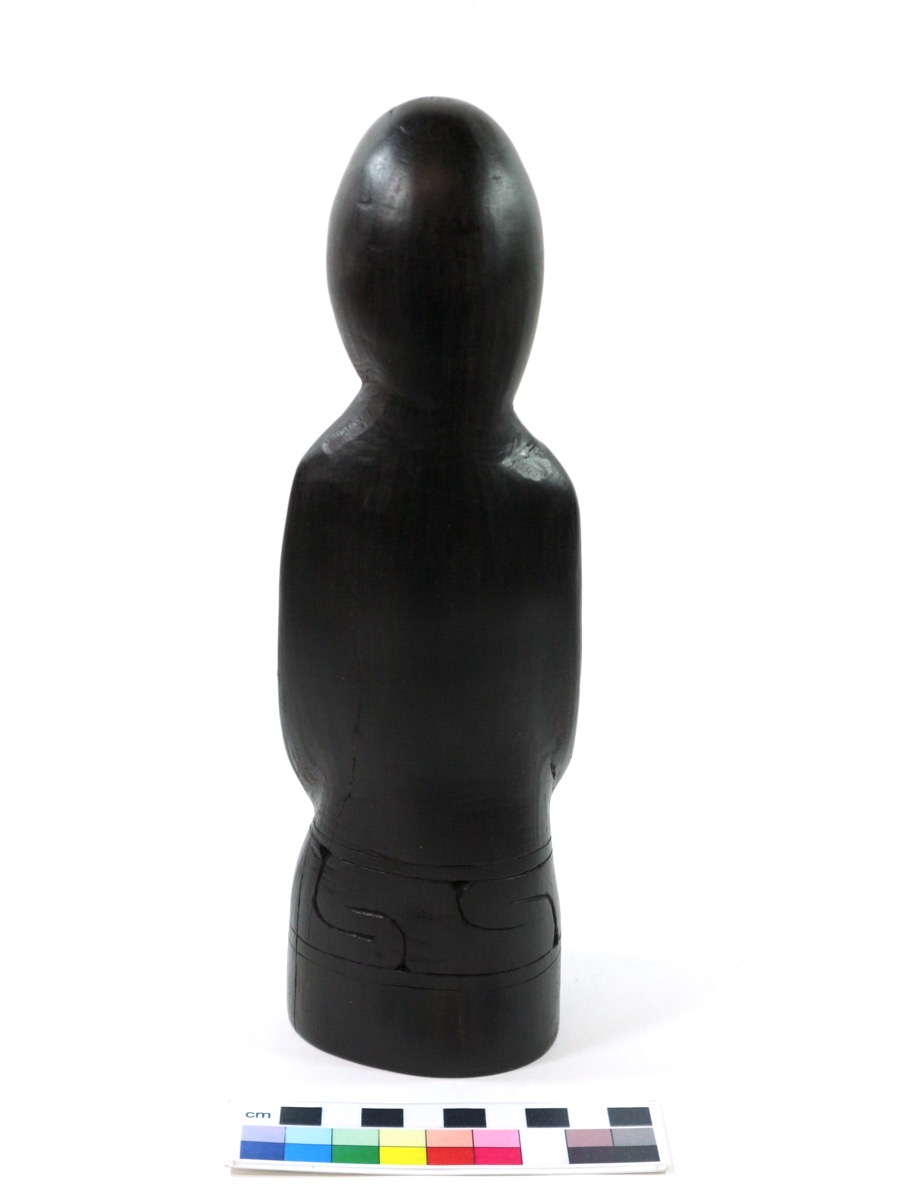
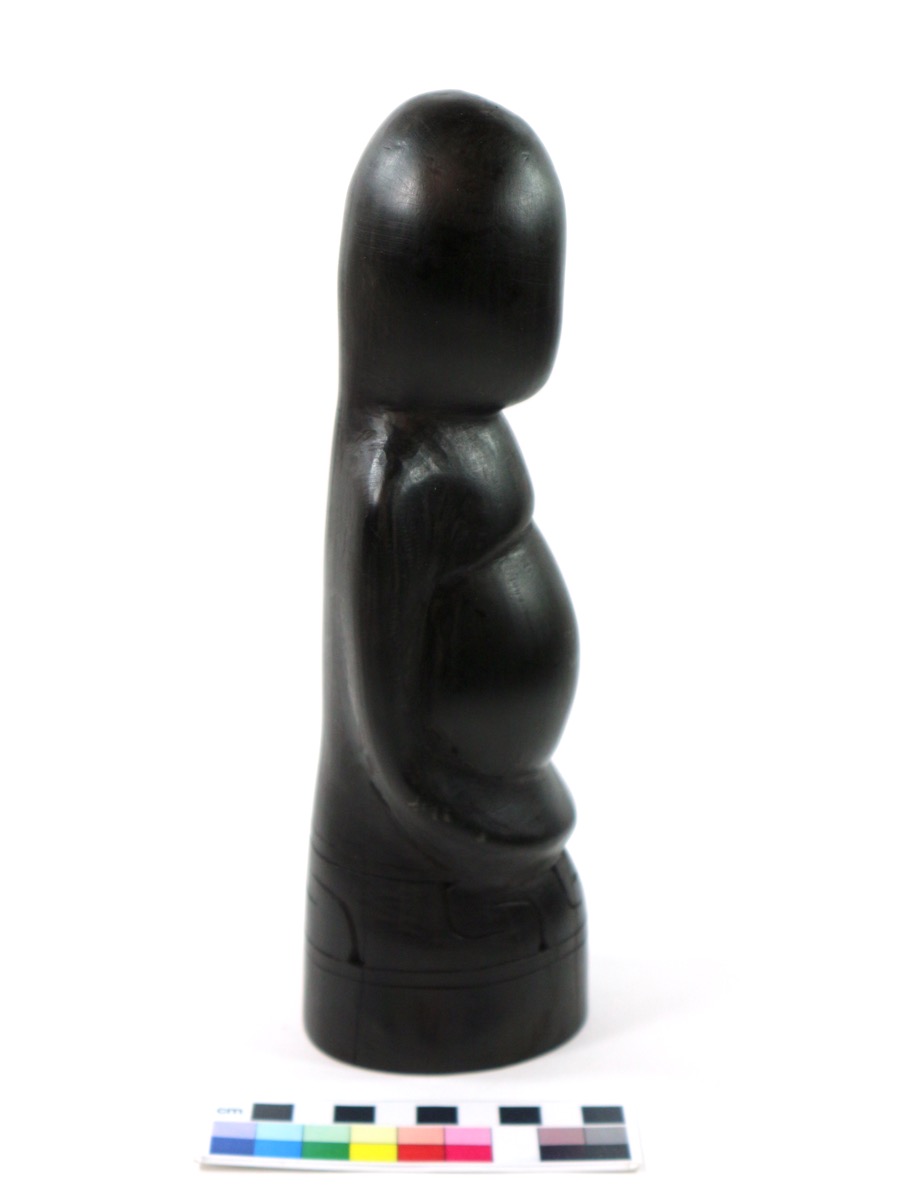
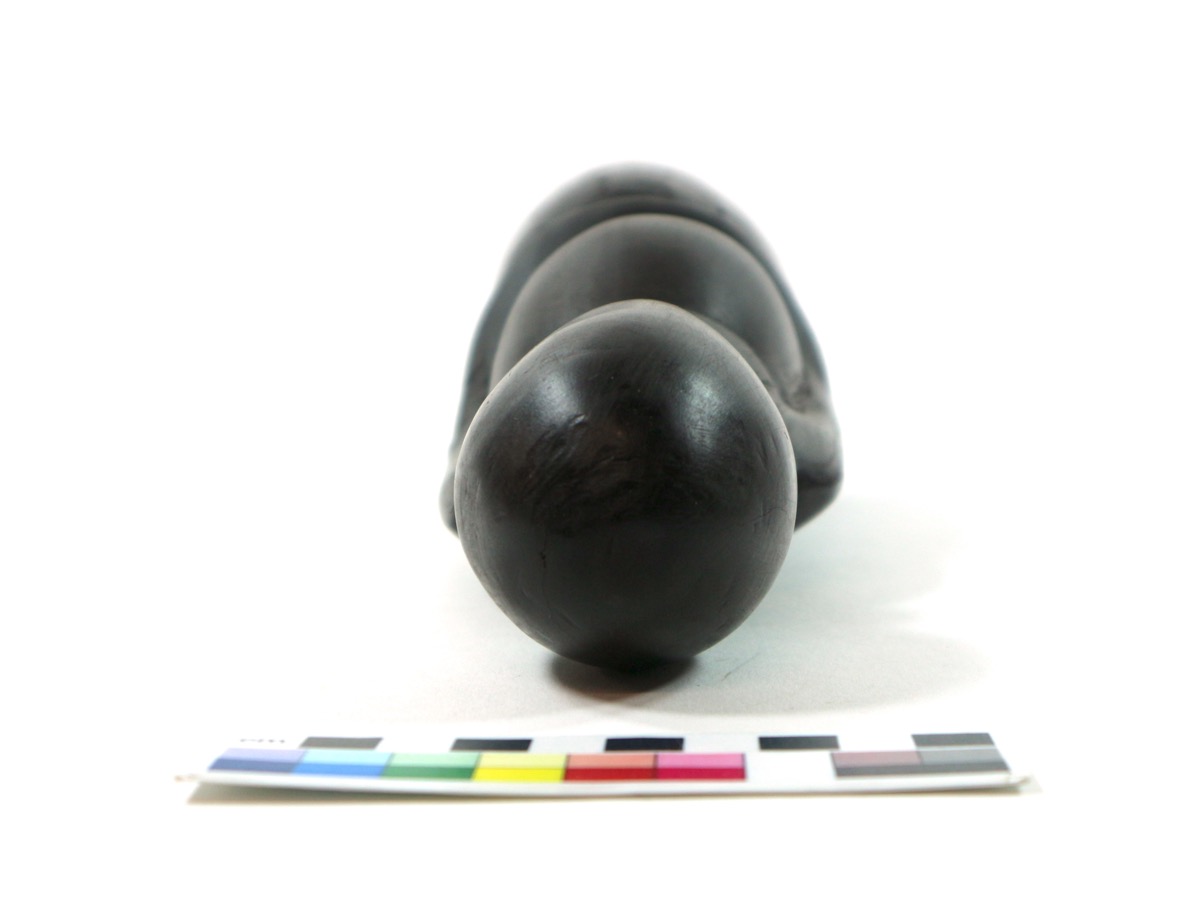
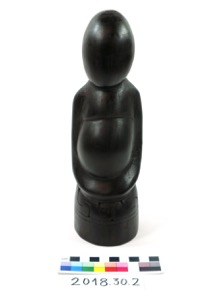
Polished ebony wood (gai) figure of Tudava's (the hero that killed the giant man-eater Dokanikani) pregnant mother Metigisi/Bolitukwa. Made by Patrick Maginiti.
Place
Oceania; Melanesia; Papua New Guinea; Milne Bay Province; Alotau
Period
Source
Jarillo de la Torre, Sergio (Dr) [collector]
Department
Anth
Reference Numbers
2018.30.2
Cultural Affliation
Material
Wood; Ebony
Local Term
Tokwalu [tourist art]
Measurements
53mm x 239mm x 53mm
Events
Description (Physical description)
Polished ebony wood (gai) figure of a newly-born Tudava (the hero that killed the giant man-eater Dokanikani) in his mother’s arms. Made by Patrick Maginiti.
Event Date 28/2/2018
Author: Remke Velden
Context (Production / use)
Part of a set of two figures with 2018.30.1. They are a representation of two founding heroes in Massim mythology. They represent a newly-born Tudava (the hero that killed the giant man-eater Dokanikani) in his mother’s arms (2018.30.1) and his pregnant mother Metigisi/Bolitukwa (2018.30.2).
The author, Patrick, claimed this to be a representation of a founding myth that belongs to his matriclan (Lukuba). Below is the story of Tudava as it was told to me by George Mwasaluwa of Obweria Village (note that there are different versions of this myth in different islands around the Massim. Although other names associated to this myth change, the name of Dokanikani the man-eater stays the same in all of them though).
“Dokanikani was a giant man-eater that turned to cannibalism after he tasted his niece's flesh (his sister's daughter – same sub-clan). They (Dokanikani and his sister) lived outside the village, feeding on coconut scraps, until the people of Liluta Village invited them to live in the village. MLABWEMA, KWAINAMA and TUDAVA sub-clans originated in Liluta. One day Dokanikani’s sister went looking for food and he killed his niece and ate her. He liked it. The sister came back and suspected something, she was so ashamed she left him and went to live in a cave. Meanwhile Dokanikani kept on eating people. A woman called BOLITUKWA lived in the cave too, hiding from Dokanikani. She was there because when everybody else left the island, scared that the giant might eat them, she couldn’t find any space in a canoe and was therefore left behind. At some point, water dripping from a stalactite fell into her vagina, making her pregnant. The baby was called TUDAVA. He grew up, and one day asked his mother, why are we in the cave? She told him why. TUDAVA was given magic by his mother. He could ‘read’ the plants and listen to and understand the birds' language. Thanks to the signs sent by plants and birds, TUDAVA could find Dokanikani. Then, through magic, he led the giant to a place where Dokanikani was disadvantaged and cut his throat. He then took his head to his uncles in KELI (maybe in Fergusson Island?). The uncles tell him to go to the gardens and invite people for a feast. Then they made mona (taro and coconut dumplings) and TUDAVA put the head of the giant in the clay pot. They ate the mona (all of them except for TUDAVA and one of the uncles) and saw the skull at the bottom of the pot at the end of the feast. What's this? It’s Dokanikani! He’s dead now. Now we can all go back to the Trobriand Islands!”
Different versions of this foundation myth are found in other parts of the Massim. An alternative version (SN 1 TUDAVA) can be found in the Leach Collection at the National Anthropological Archives (Smithsonian Institution).
The style of these two carvings is highly original: the figures have very abstract, barely suggested features. I never saw anything similar to this type of carving anywhere else in the Province. Patrick (the carver) has been living in Alotau for a long time and he may have been influenced in his style by foreign patrons.
Event Date 28/2/2018
Author: Remke Velden
Context (Field collection)
This object is part of a collection (2018.3-2018.38) made by Sergio Jarillo de la Torre between November 2008-June 2010 in the Milne Bay Province of Papua New Guinea. He was awarded a Crowther-Beynon Fund grant from the Museum of Archaeology and Anthropology (MAA) in 2008 to collect pieces for the museum.
The collection was gathered during fieldwork leading to a Doctoral Degree in Social Anthropology at the University of Cambridge. The collection and documentation of the objects was instrumental to Sergio’s research as it focused on material culture (woodcarvings and tourist art in particular) from the area. The collected objects also feature in one of the appendixes of his doctoral dissertation (Jarillo de la Torre, S. 2013. Carving the Spirits of the Wood. An Enquiry into Trobriand Materialisations. PhD Thesis. Cambridge).
The objects were collected from a variety of sites, ranging from Kiriwina in the Trobriand Islands (where Sergio was based for the duration of most of his fieldwork) to Budibudi (a remote archipelago in the easternmost part of the Milne Bay Province). The objects offer a good representation of Massim material culture, including tourist art, utilitarian objects and religious/ceremonial specimens, as well as some unique pieces (e.g. a canvas painting by the well-known Trobriand painter Martin Morobubuna, a canoe board from the remote Budibudi archipelago, some rare lime spatulas from Iwa and Gawa Islands).
Event Date 28/2/2018
Author: Remke Velden
Context (References)
Battaglia, D. 1990. On the Bones of the Serpent.
Event Date 28/2/2018
Author: Remke Velden
Context (References)
Jarillo de la Torre, S. 2013. Carving the Spirits of the Wood. An Enquiry into Trobriand Materialisations. PhD Thesis. Cambridge.
Event Date 28/2/2018
Author: Remke Velden
FM:279546
Images (Click to view full size):