Accession No
MN0126.98
Description
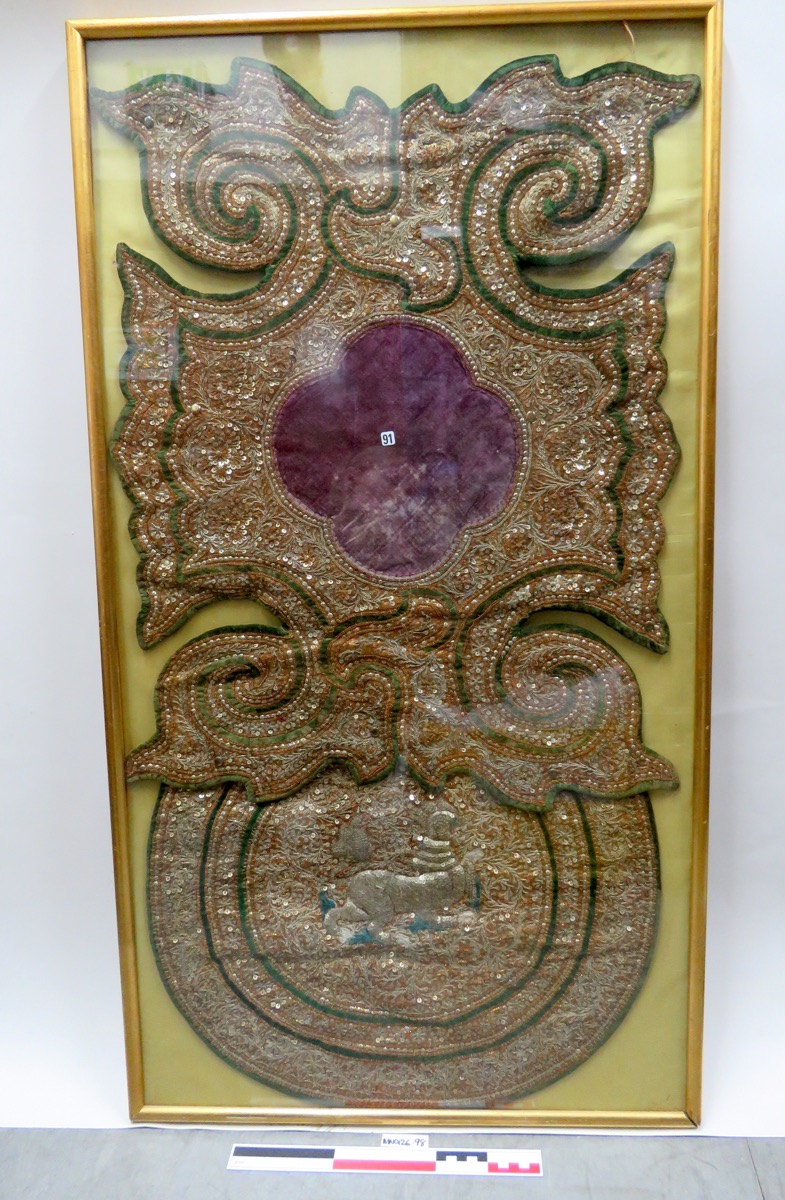
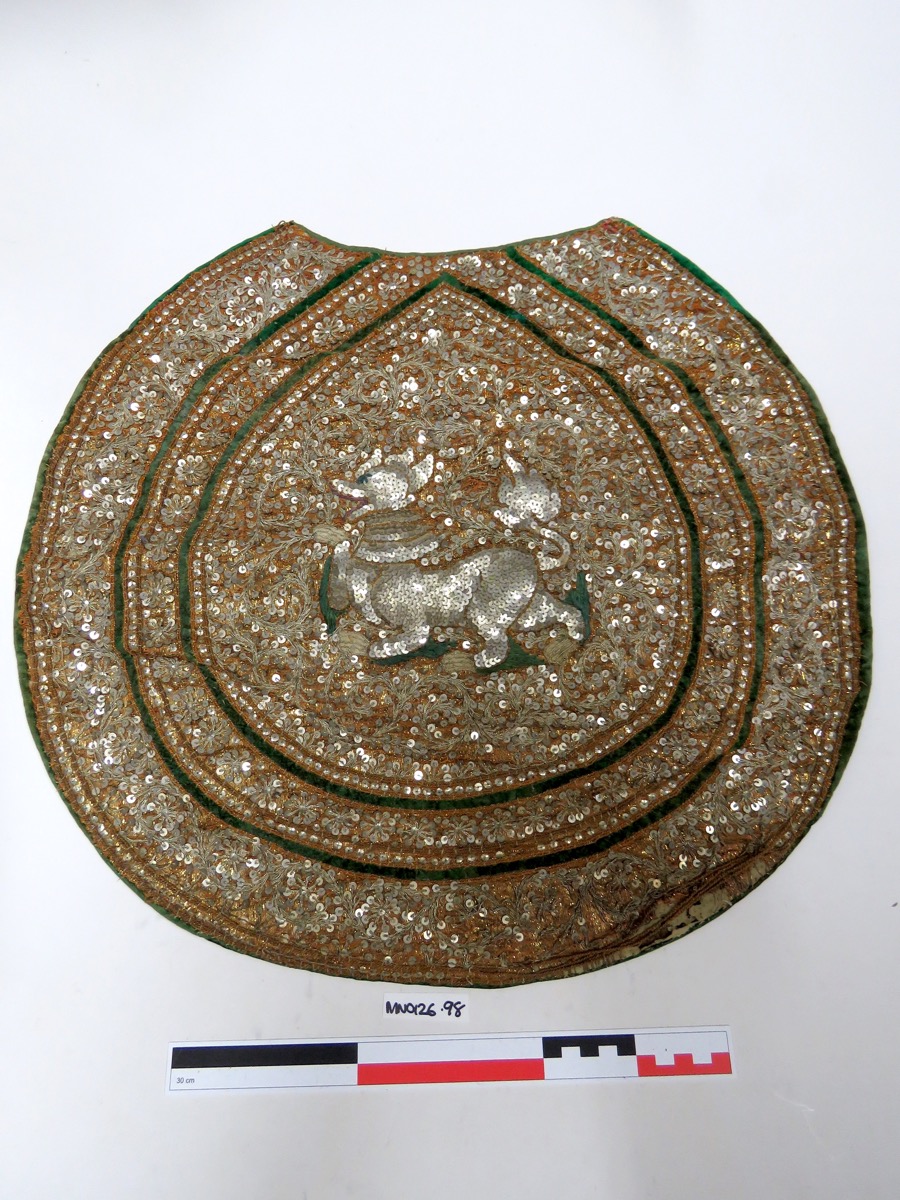
Saddle cloth originally used by an officer. This item consists of a central piece and two side pieces, although they are all distinct pieces the central piece and one side panel has been framed, the other side panel is seen separately. The decoration is primarily made up of sequins or glass beads.
Place
Asia; Southeast Asia; Myanmar
Period
Source
Singer, Noel Francis [collector and donor]
Department
Anth
Reference Numbers
MN0126.98; MAA: MN0126.98; 98; 91
Cultural Affliation
Material
Silk; Glass; Fibre
Local Term
Measurements
Events
Description (Labels & Markings)
Typed label adhered to frame reads '91', this is in relation to Singer's original inventory. However this number is incorrect. The description of 91 in the inventory states a 'framed painting on silk depicting Thebaw', this item is clearly not the one described. 98 on the inventory however does describe the item correctly. In addition, Singer's article 'Maha Bandula the Younger' (1994) displays the saddle cloth on page 105. The decision has been made to create this IDNO in relation to the correct description, and not the incorrect label adhered to the item.
Event Date
Author: Annie McKay
Context (References)
Singer, Noel Francis. 1994. 'Maha Bandula the Younger: Burmese Court Costumes in the West'. In Arts of Asia. Vol 24. p. 105.
Event Date 1994
Author: Annie McKay
Description (Physical description)
Saddle cloth originally used by an officer. This item consists of a central piece and two side pieces, although they are all distinct pieces the central piece and one side panel has been framed, the other side panel is seen separately. The decoration is primarily made up of sequins or glass beads. The two side panels depict a camari in the centre made from sequins. Around the centre figure are three circular pieces of cloth, possibly velvet where the outer rim is visible showing a green colour. The centre panel consists of a large piece of purple fabric, possibly velvet in the centre, with floral motif surround made out of sequins. The sides of the centre panel which would overlap the two side panels appear to be like fire in shape, the shape is often seen in correspondence with a naga dragon.
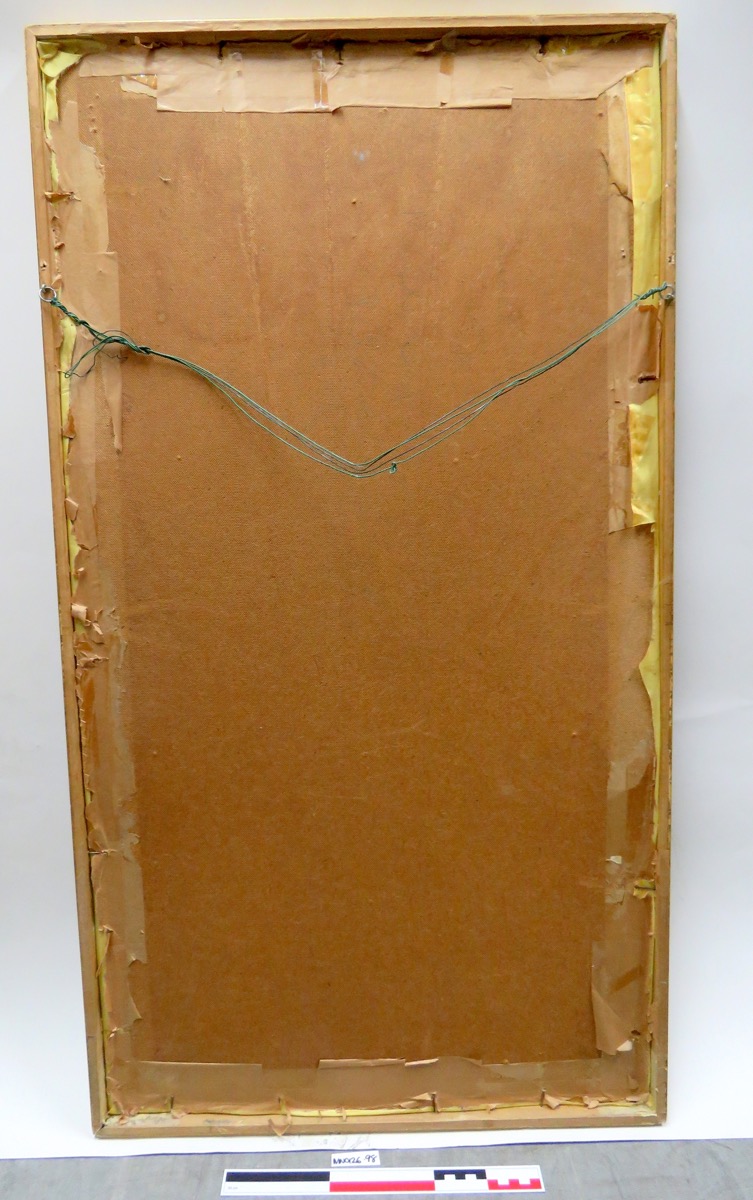
The centre and side panel are attached to the frame by what appears to be drawing pins. The back of the frame has a wire going across the width. The back panel is connected to the outer part of the frame through a large amount of tape.
Event Date 16/11/2017
Author: Annie McKay
Context (Amendments / updates)
The two parts in the frame were deframed and frozen.
Event Date 10/5/2018
Author: Remke Velden
FM:278659
Images (Click to view full size):