Accession No
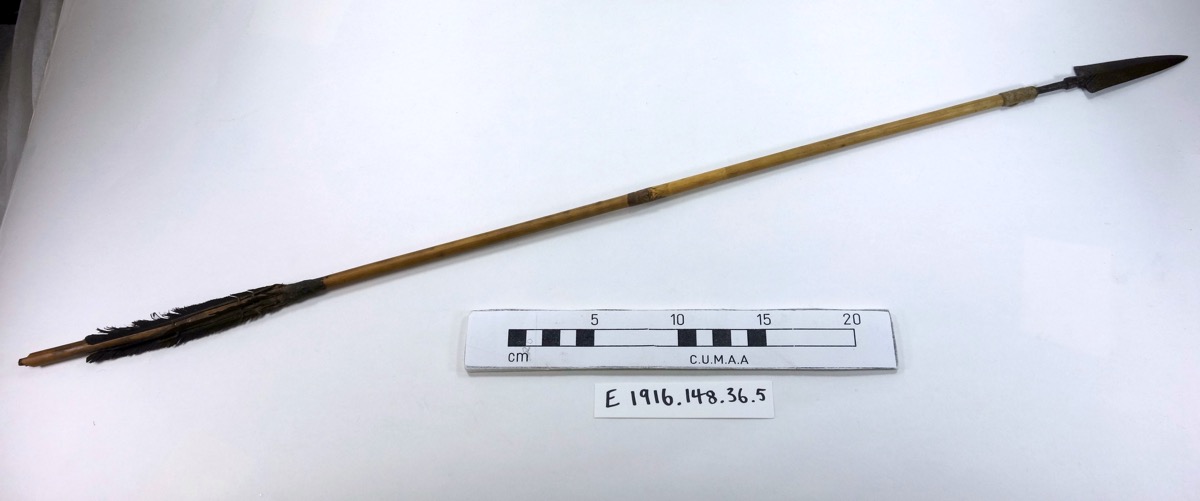
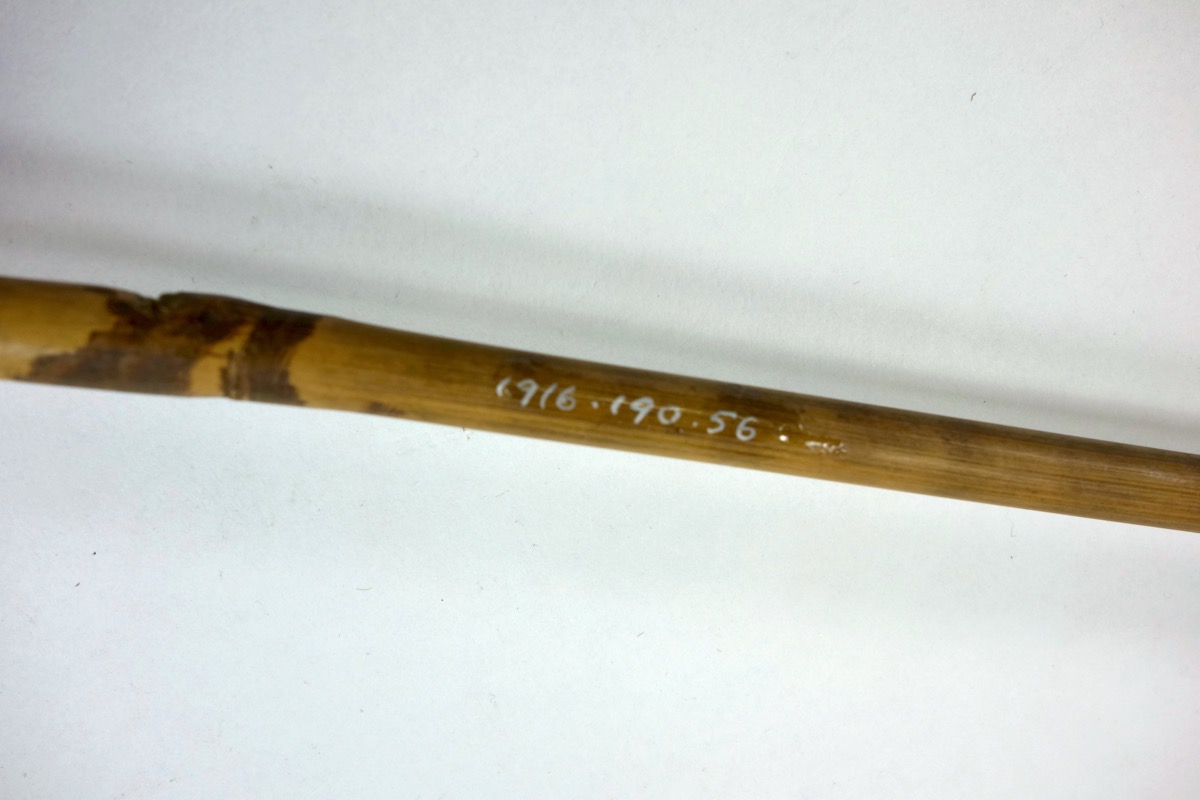
E 1916.148.36.5
Description
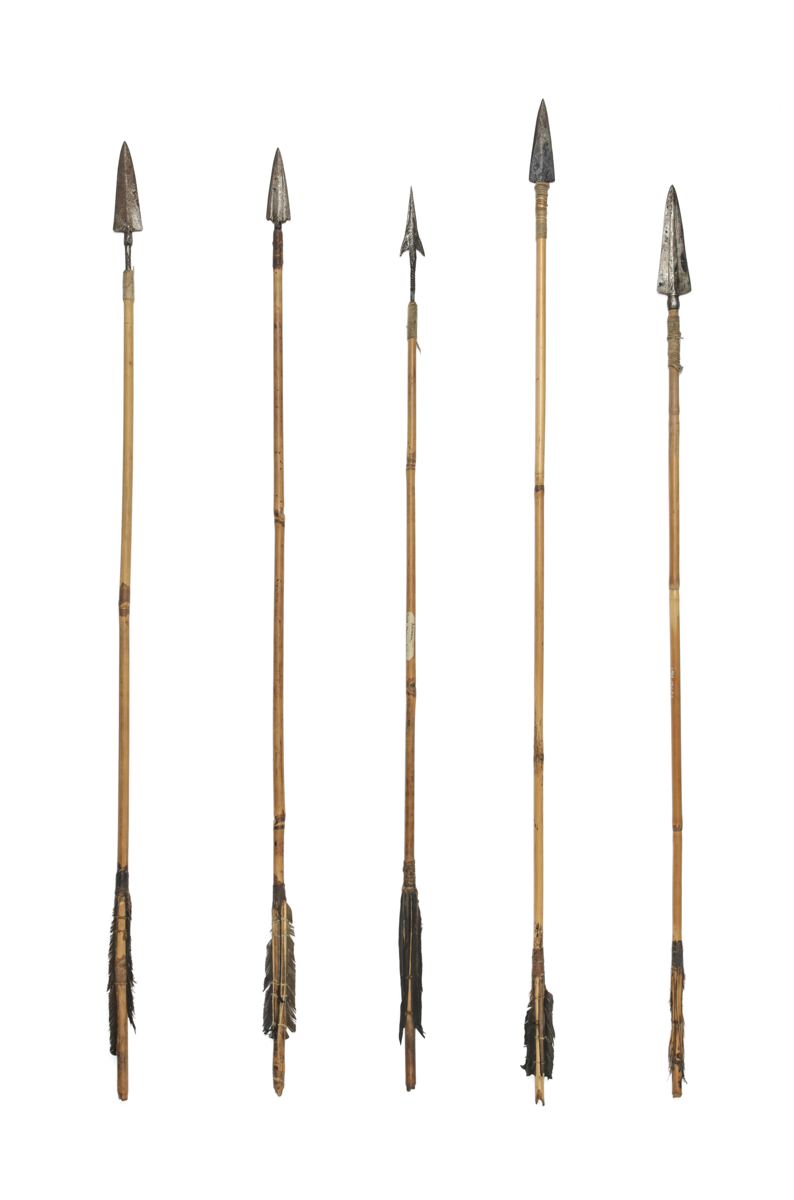
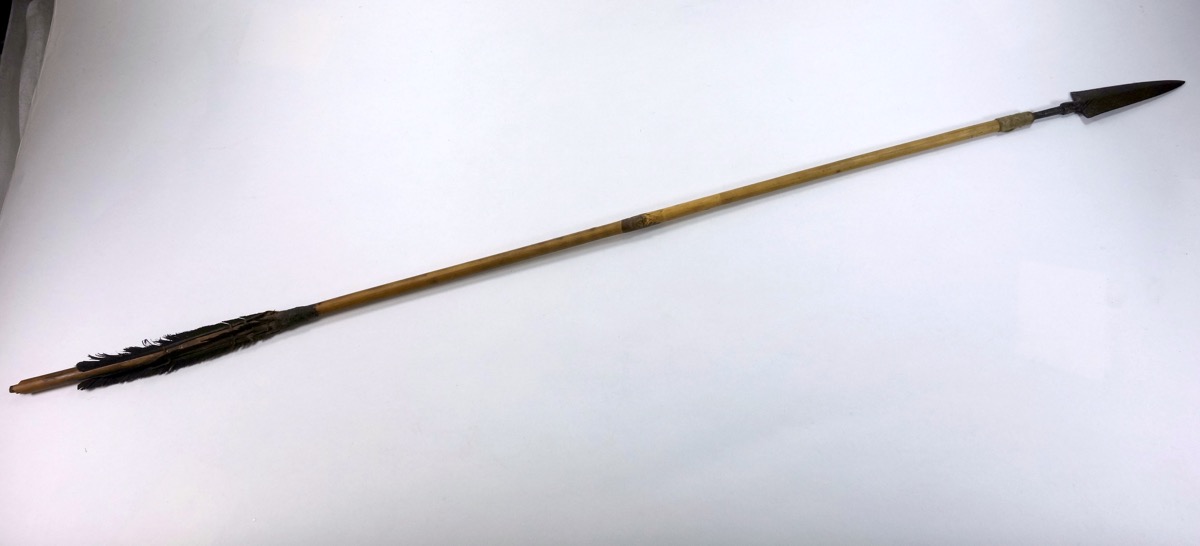
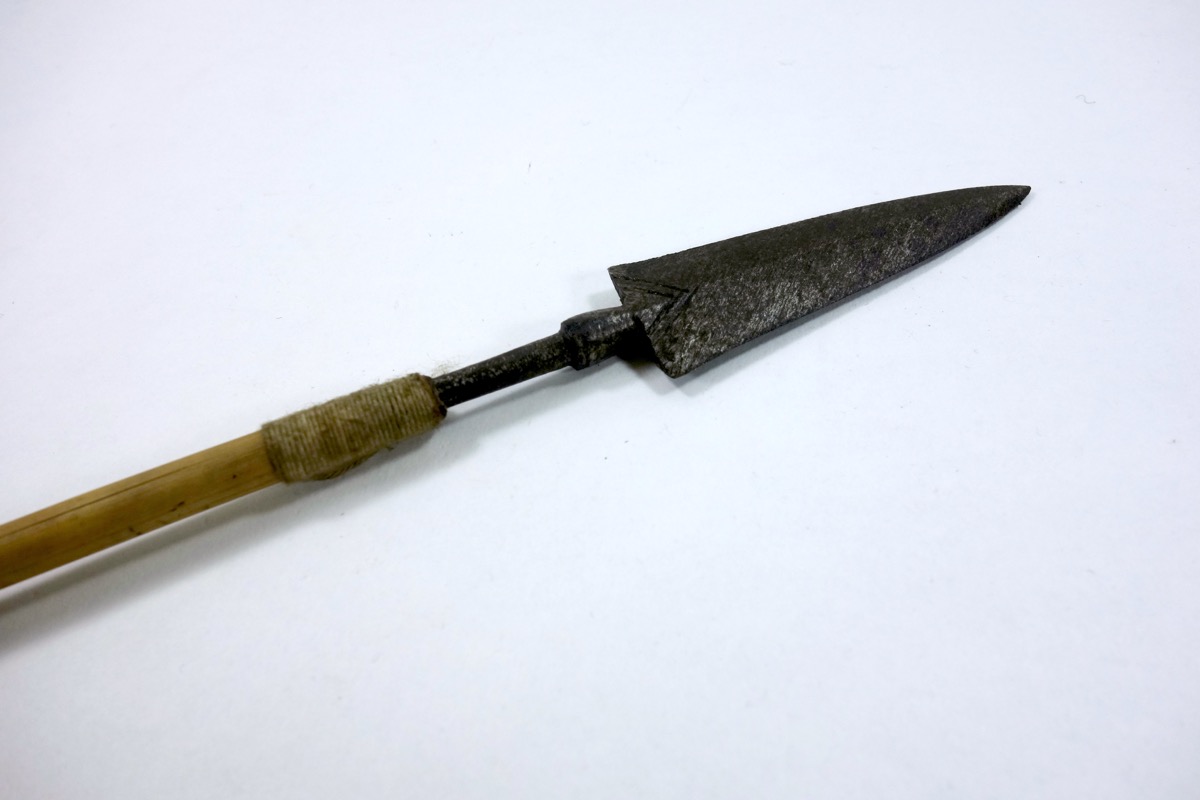
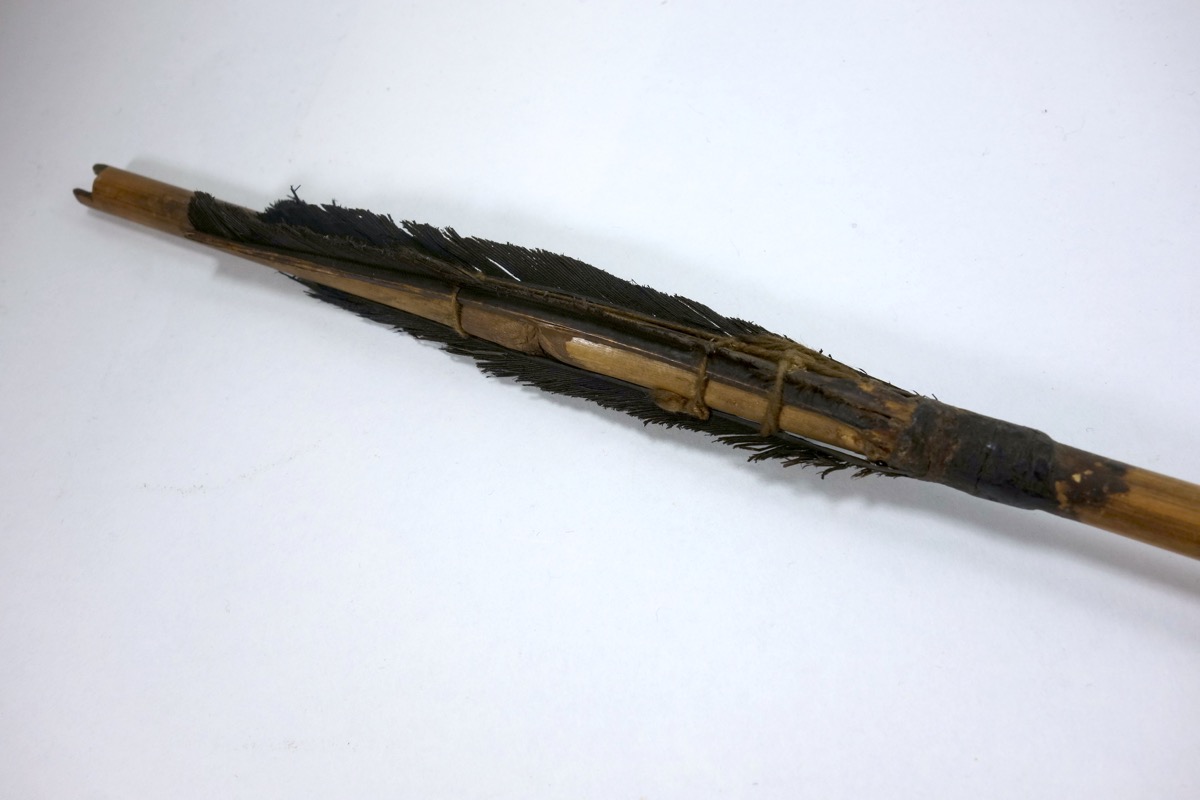
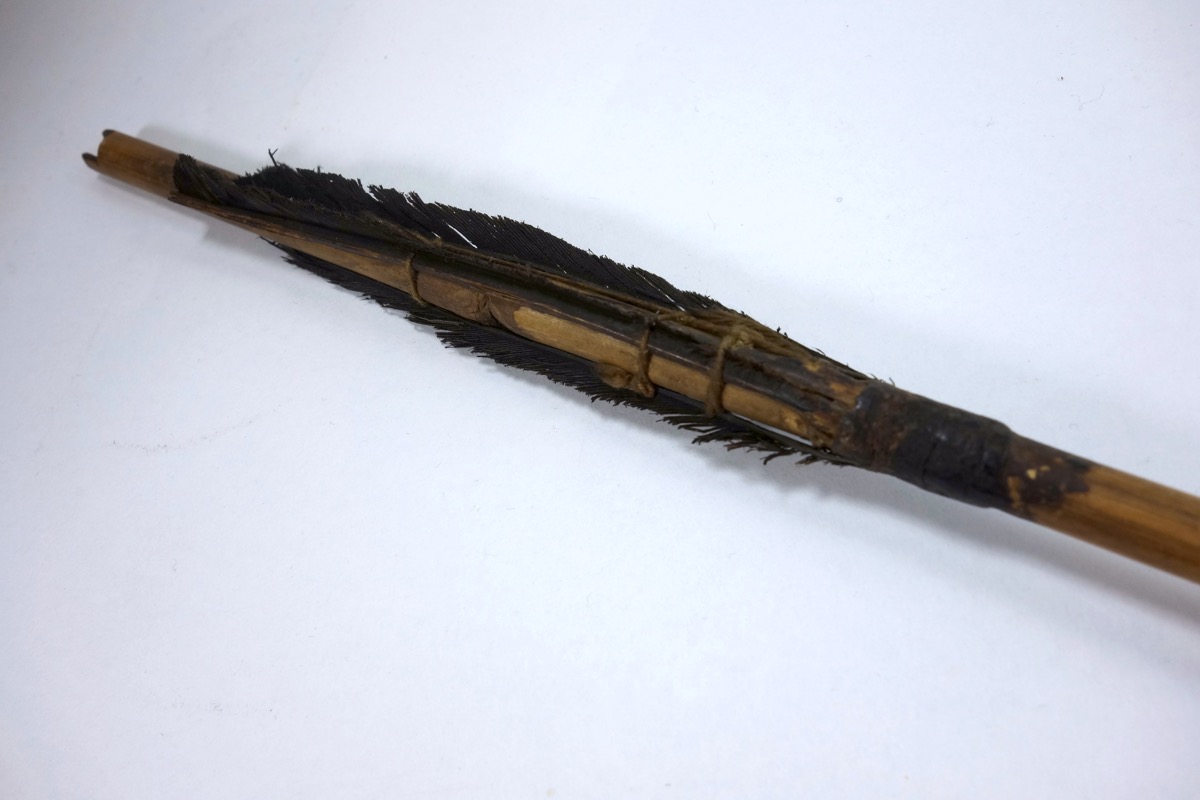
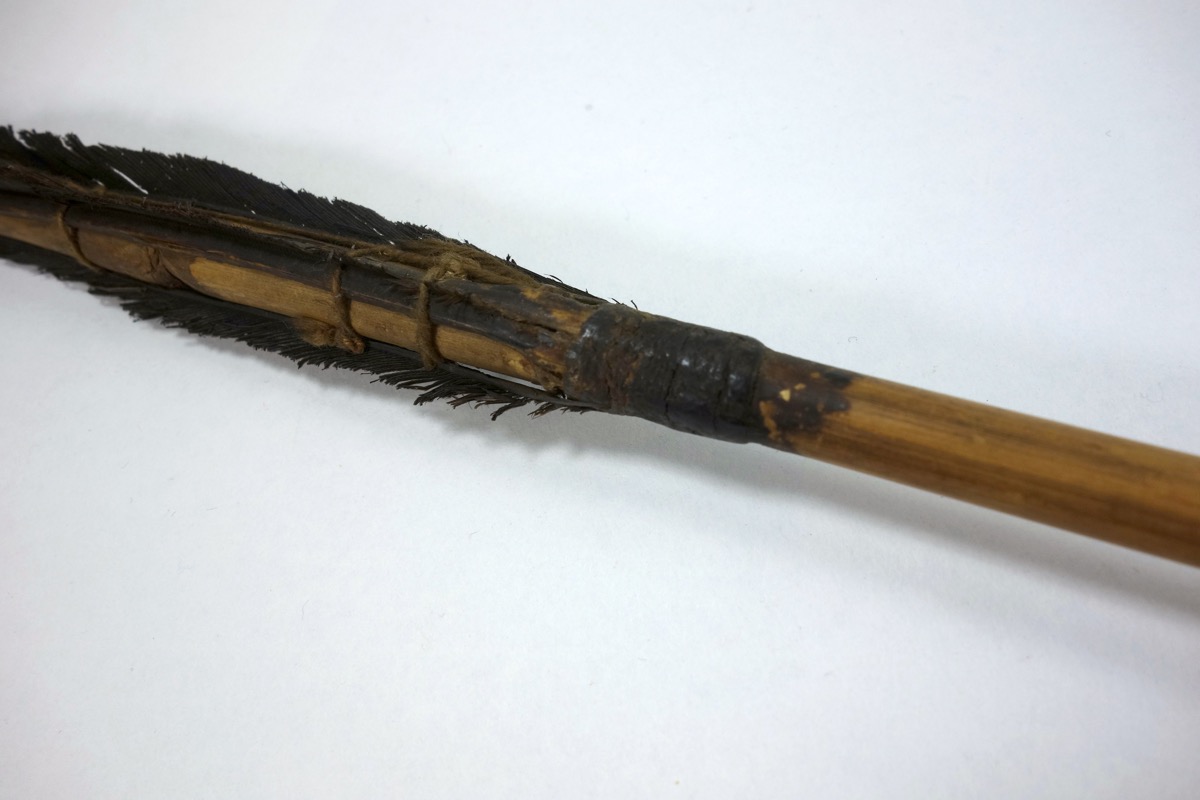
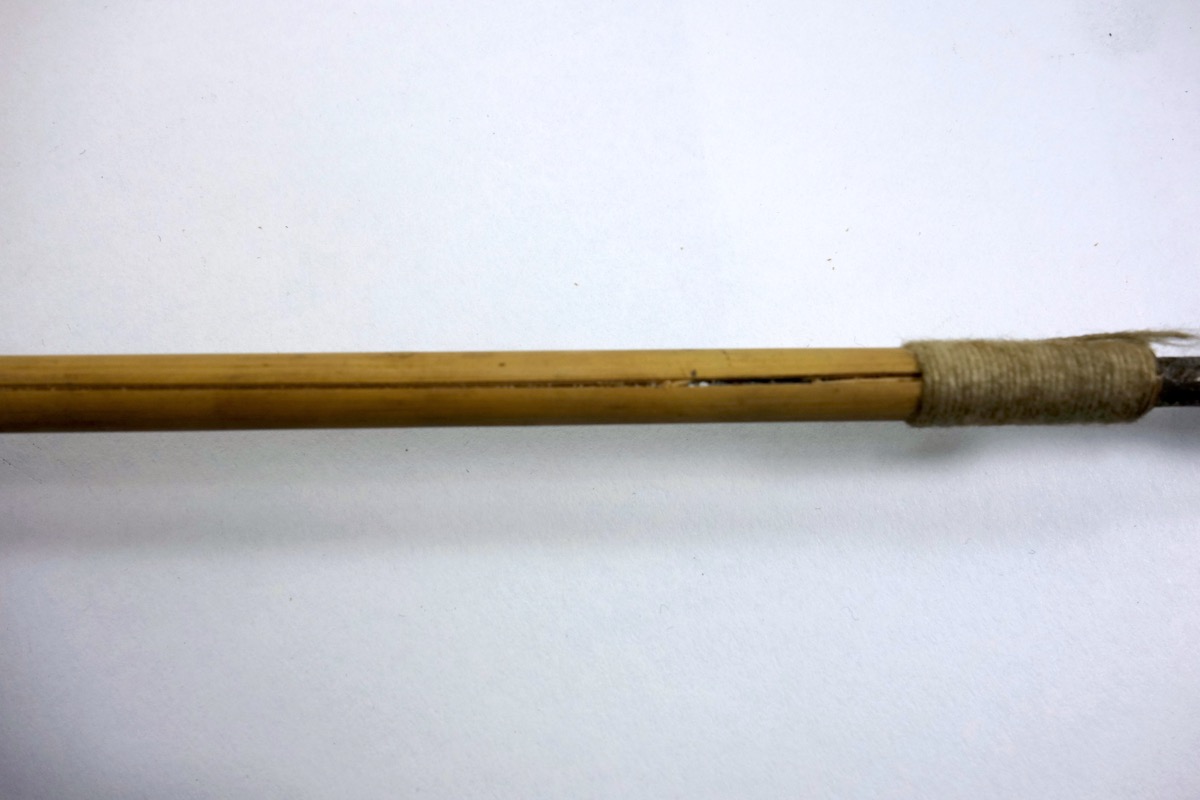
Ak' apari. Arrow, comprising a bamboo shaft, iron arrow-head and feather fletching. The head is fixed to the shaft with a wrapping of plant fibre string; The feathers are attached with plant fibre string, and secured with resin. There is a notch at the top of the arrow.
Place
Asia; South Asia; India; Chota Nagpur; Jharkhand; ?Santhal Pargana
Period
Source
Roy, Sarat Chandra [field collector]; Gait, Edward Albert (Sir) [donor]
Department
Anth
Reference Numbers
E 1916.148.36.5; MAA: AR 1916.190.36
Cultural Affliation
?Santal [Santhal]; ?Munda; ?Oraon
Material
Wood; Cane; Bamboo; Metal; Iron; Plant; Fibre; Feather; Resin
Local Term
Measurements
24mm x 20mm x 743mm
Events
Context (Acquisition Details)
Part of a collection of Indian material donated by Gait, numbered E 1916.148.1-87 (from the entry in the accessions register). These items were also numbered as AR 1916.190.1-87 (from the entry in the Annual Report). Some items have since been known only by their Annual Report number and so, for the sake of consistency, the whole collection has been entered on computer as AR 1916.190.1-87. Original accessions numbers are entered in the CRN field. (Alison McKeating, April 1995)
Event Date 22/3/1995
Author: Remke Velden
Description (Physical description)
Bamboo arrow.
Event Date 22/3/1995
Author: Remke Velden
Description (Physical description)
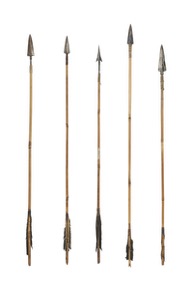
1: l. 71.5 cm x w. 2.8 cm
2: l. 78.5 cm x w. 2.2 cm
3: l. 70.4 cm x w. 2 cm
4: l. 74.5 cm x w. 2.4 cm
5: l. 73.9 cm x w. 2.1 cm
Event Date 7/10/2016
Author: Remke Velden
Context (Display)
'Another India: Explorations and Expressions of Indigenous South Asia' 07/03/2017 - 22/04/2018 MAA exhibition label text reads:
The ‘Santhal Trophy’
In February 1856 the Illustrated London News carried an account of the suppression of the Santal rebellion in Chota Nagpur, which Santals today commemorate as the Hul. One of the illustrations provided by the author, Captain Walter Sherwill, was this extraordinary assemblage entitled simply Santhal Trophy.
The Trophy presented hunting tools such as bows, arrows and axes as well as drums as war loot - weapons that were evidence of Santal resistance and savagery. Most of these ‘weapons’ would have had peaceful use outside of the Hul, when sticks and hoes were also taken up in the struggle against landlords and the government.
This reconstruction of Sherwill’s Trophy from the collections at MAA questions the perception of these ‘weapons’, then and now. These objects have been transformed under different gazes at different times. They tell stories of historical struggle, and become symbols of Santal identity and Adivasi resistance today.
2. Five arrows (ak’ apari)
These arrows, probably collected by Sarat Chandra Roy and donated to this Museum by the Governor of Bihar and Orissa, Edward Gait, could have been made and used by one of several Adivasi communities in Chota Nagpur. The Santal word for this kind of arrow is ak’ apari - ‘to cut open’. Used in hunting, they might also be used in war.
Santal, Munda or Oraon
Chota Nagpur, Jharkhand Collected by Sarat Chandra Roy Donated by Sir Edward A. Gait E 1916.148.36.1-5
Event Date 22/3/2017
Author: Remke Velden
Exhibition (Li Ka Shing Gallery)
EXH.2017.2 | Another India: Explorations and Expressions of Indigenous South Asia
Event Date 8/3/2017
Author: Remke Velden
Description (Physical description)
Ak' apari. Arrow, comprising a bamboo shaft, iron arrow-head and feather fletching. The head is fixed to the shaft with a wrapping of plant fibre string; The feathers are attached with plant fibre string, and secured with resin. There is a notch at the top of the arrow.
Event Date 28/2/2023
Author: Flo Sutton
Context (Amendments / updates)
'Asia; South Asia; India; [Chota Nagpur]; ?Jharkhand; ?West Bengal; ?Orissa; ?Chhattisgarh' has been entered as the place, as these are all contemporary regions corresponding to the historic region of Chota Nagpur.
Event Date 28/2/2023
Author: Remke Velden
FM:274583
Images (Click to view full size):