Accession No
2015.301
Description
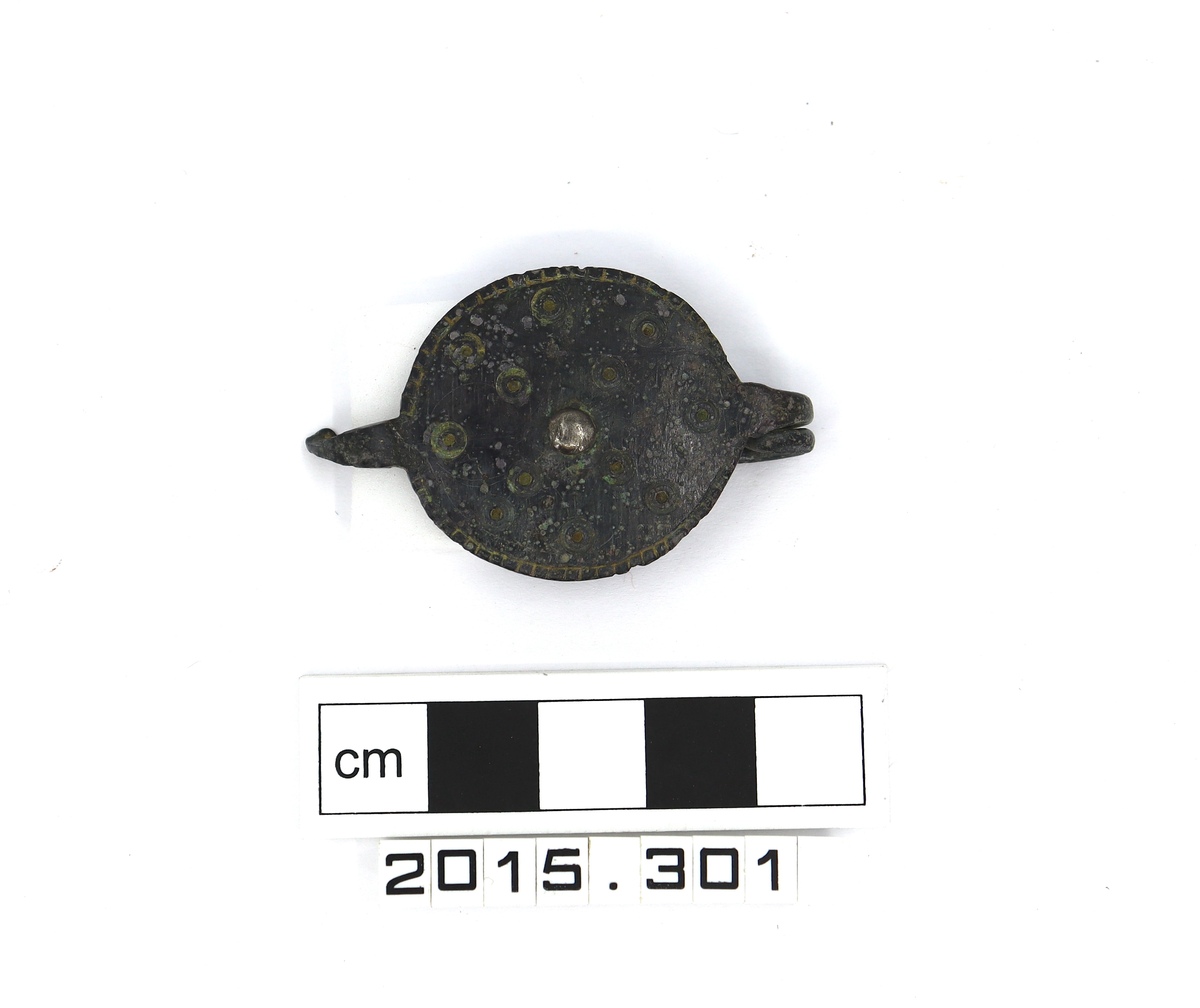
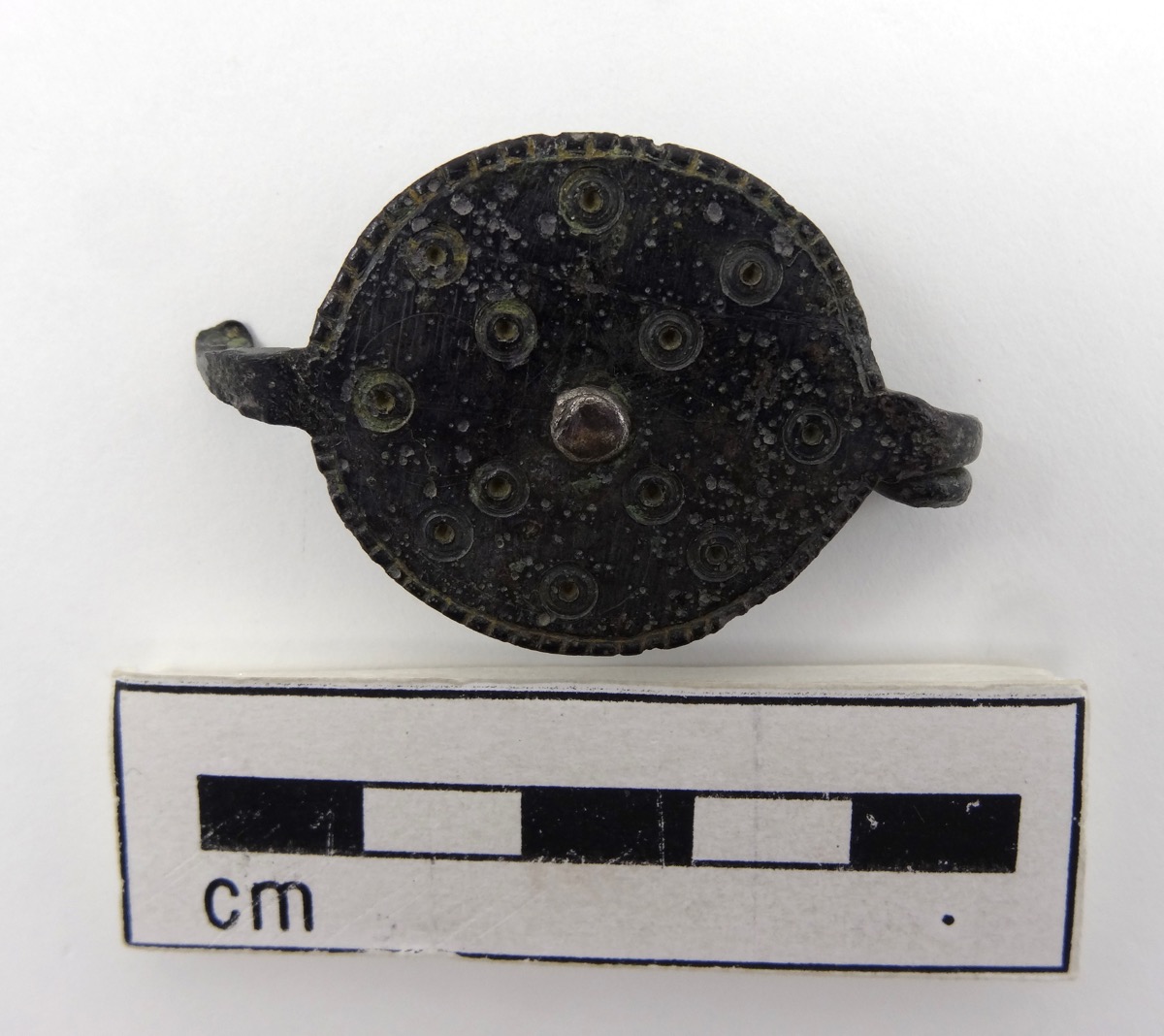
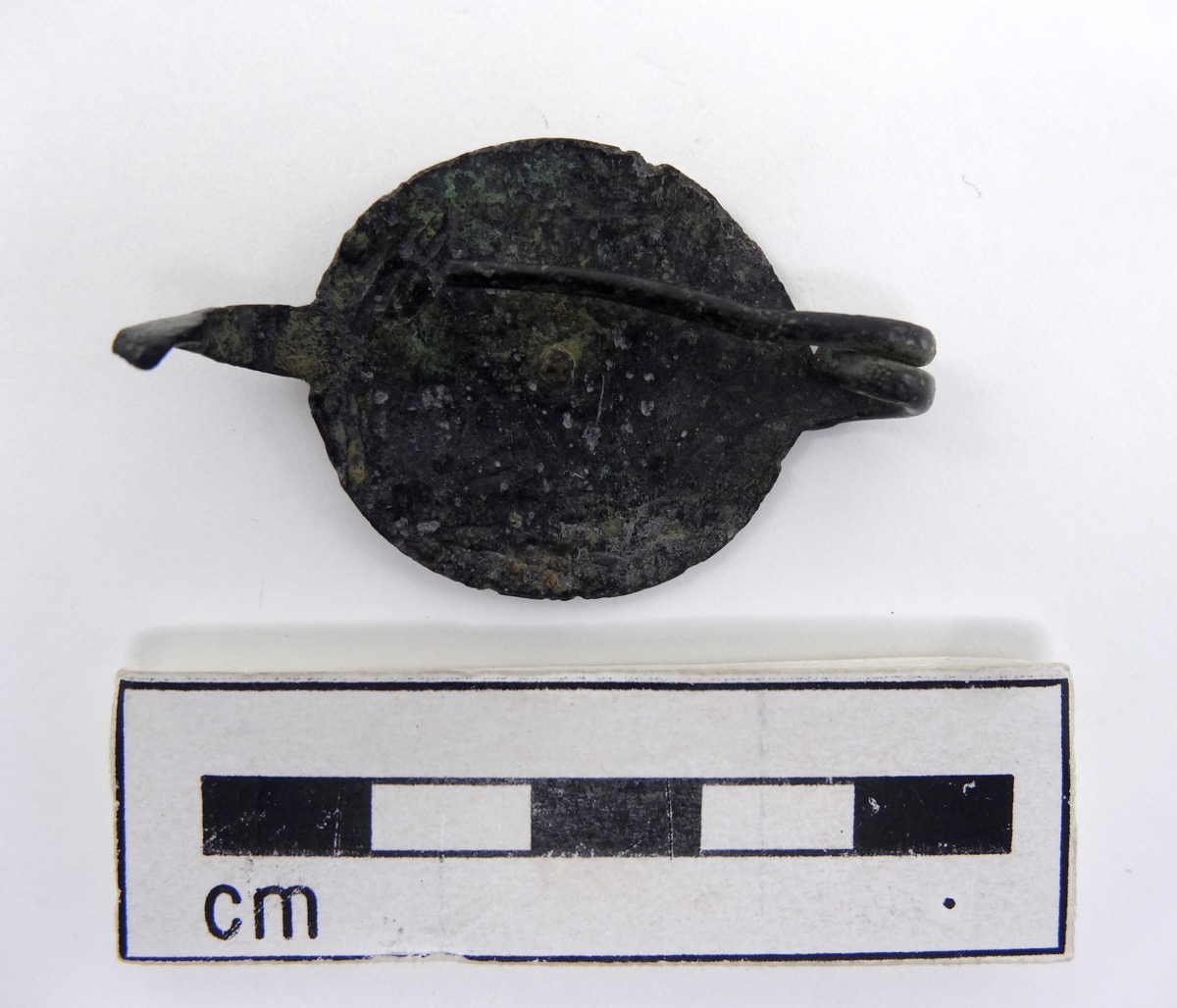
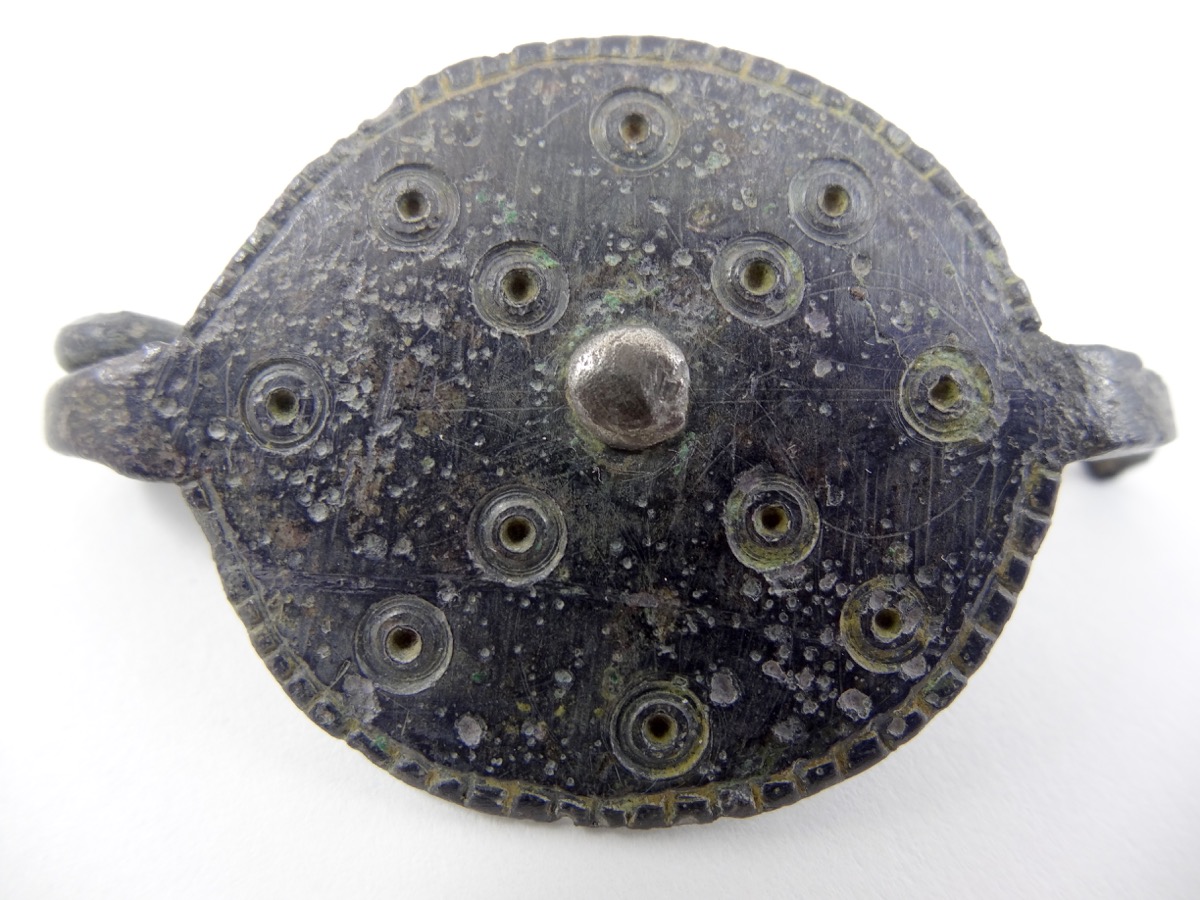
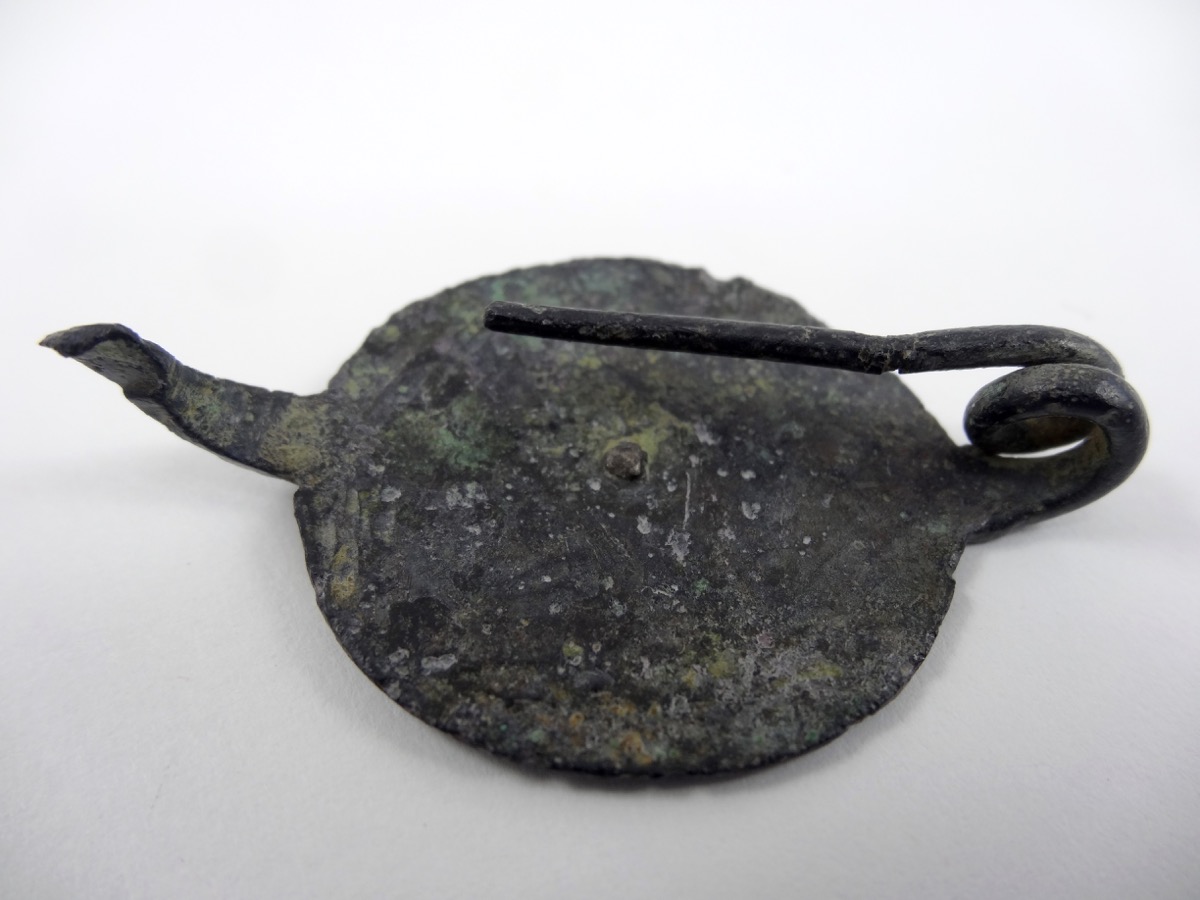
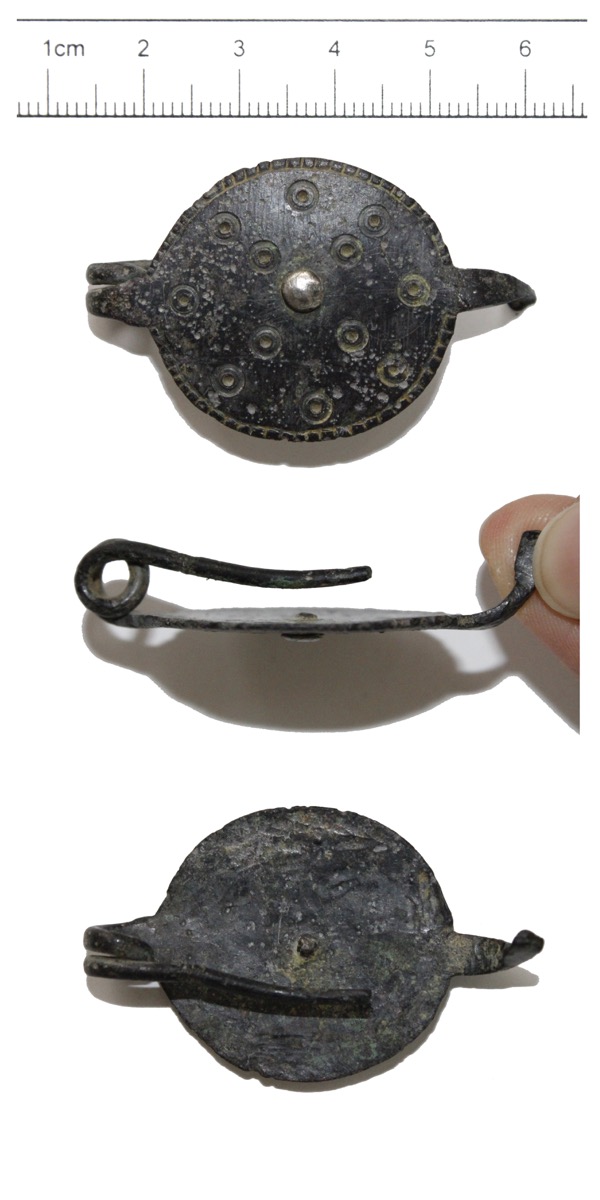
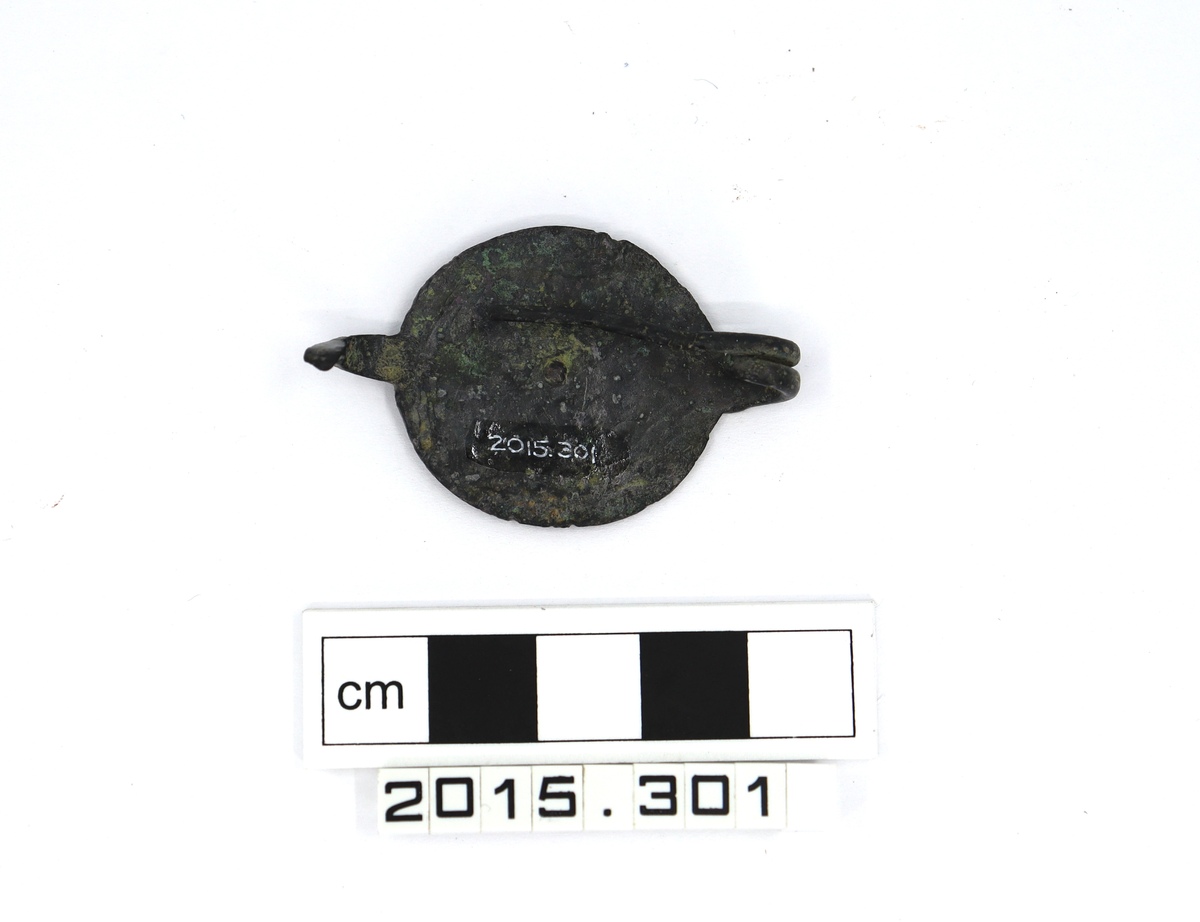
Bronze brooch with central silver stud. The flat, circular front is decorated with twelve ring-and-dot motifs and a grooved border. The brooch, except the silver rivet, is made in one piece, consisting of a circular plate, a coiled spring to one side tapering into a pin (now broken) and a catchplate, now incomplete.
Place
Europe; British Isles; England; Cambridgeshire; St Ives
Period
Anglo Saxon 8th century
Source
British Museum Treasure Trove
Department
Arch
Reference Numbers
2015.301; MAA: MN0054; Treasure 2013 T542; PAS CAM-C37AC3
Cultural Affliation
Material
Metal; Copper alloy; Bronze; Silver
Local Term
Measurements
30mm x 1mm x 47mm Weight 0.00745kg
Events
Context (Analysis)
In her report for HM Coroner, Helen Geake, PAS National Finds Advisor, also notes: 'The central stud is domed, and appears of shiny silver to the front, although the shaft of the rivet on the reverse is the same dark grey as the rest of the brooch. Analysis [see previous note] has shown the domed head on the front and the shaft on the reverse to be made from the same metal, so the shiny appearance of the front is presumably due to over-cleaning of the front.' (see full report for more details)
Event Date 2013
Author: Imogen Gunn
Context (Analysis)
In her report for HM Coroner, Helen Geake, PAS National Finds Advisor, noted: 'This form of one-piece brooch is a relatively newly identified middle Anglo-Saxon type. Examples are more commonly lozenge-shaped or long thin ovals, as found in excavations at Sedgeford, Norfolk and Flixborough, Lincs (Rogers in Evans and Loveluck 2009, 1-3). There are, in addition, at least twelve of this type on the PAS database; the present example is, however, the first circular one-piece brooch to have been recorded on the PAS database. These brooches tend to be flimsy, small and cheap; ring-and-dot motifs are common decoration, but occasionally more elaborate ornament (e.g. on HAMP-CEBED7 and NMS-829627) enables a date in the 8th century to be established with confidence. This combines well with the late 8th- to early 10th-century dates for contexts containing this brooch type at Flixborough. Most one-piece brooches have been found in the Midlands or East Anglia. NB: this is not the same brooch type as the 7th-century 'safety-pin' brooches mentioned by Rogers, but may have developed from it.
Copper-alloy or base silver brooches with central decorative studs of good pure silver are well known but rare finds from the middle Anglo-Saxon period. There are two recorded on the PAS database, NCL-771FB5 and NARC-E11208, both of which are large, well-made brooches dating to the 8th century. Other items, notably 9th-century strap-ends, also combine a copper-alloy body with silver rivets.
The present example, combining a cheap construction and small size with the prestigious design of a circular brooch with central silver stud, is an unusual and interesting brooch.' (see full report for more details)
Event Date 2013
Author: Imogen Gunn
Context (Analysis)
Non-destructive X-ray fluorescence analysis of the surface identified the metal disc and pin of the brooch as bronze, an alloy of copper with tin and impurities. The surface composition of the white-metal stud, and its pin where it protrudes through the disc to the back, is 70-73% silver, alloyed with copper and tin and approximately 1% gold (Department of Conservation and Scientific Research, The British Museum, File No. 7513-42, 12 November 2013). (see full report for more details)
Event Date 12/11/2013
Author: Imogen Gunn
Context (Field collection)
This brooch was found on 21 March 2013 by a metal detectorist, registered with the Portable Antiquities Scheme (CAM-C37AC3), declared Treasure Trove (2013 T542) and purchased by MAA following an inquest. The PAS record has been used as the basis for this record.
Event Date 21/3/2013
Author: Imogen Gunn
Description (Physical description)
Bronze brooch with separate central silver stud. Apart from the silver stud, the brooch is made in one piece, consisting of a circular plate, a coiled spring to one side tapering into a pin, and a catchplate to the other side. The edges of the flat circular plate are decorated with a grooved border within short transverse grooves, forming a ladder pattern which is interrupted by the projections which form the spring and catchplate. Within the border are 12 ring-and-dot motifs, neatly and evenly distributed with an outer ring of eight and an inner ring or square of four. On the reverse, the spring consists of one-and-a-half coils before the pin extends out towards the catchplate; it is incomplete, being broken just beyond the stud in the centre of the brooch. The catchplate is also incomplete, the hook at the end being damaged. The central stud is domed, and appears of shiny silver to the front, although the shaft of the rivet on the reverse is the same dark grey as the rest of the brooch.
Event Date 19/4/2016
Author: Imogen Gunn
FM:269118
Images (Click to view full size):