Accession No
Z 10855
Description
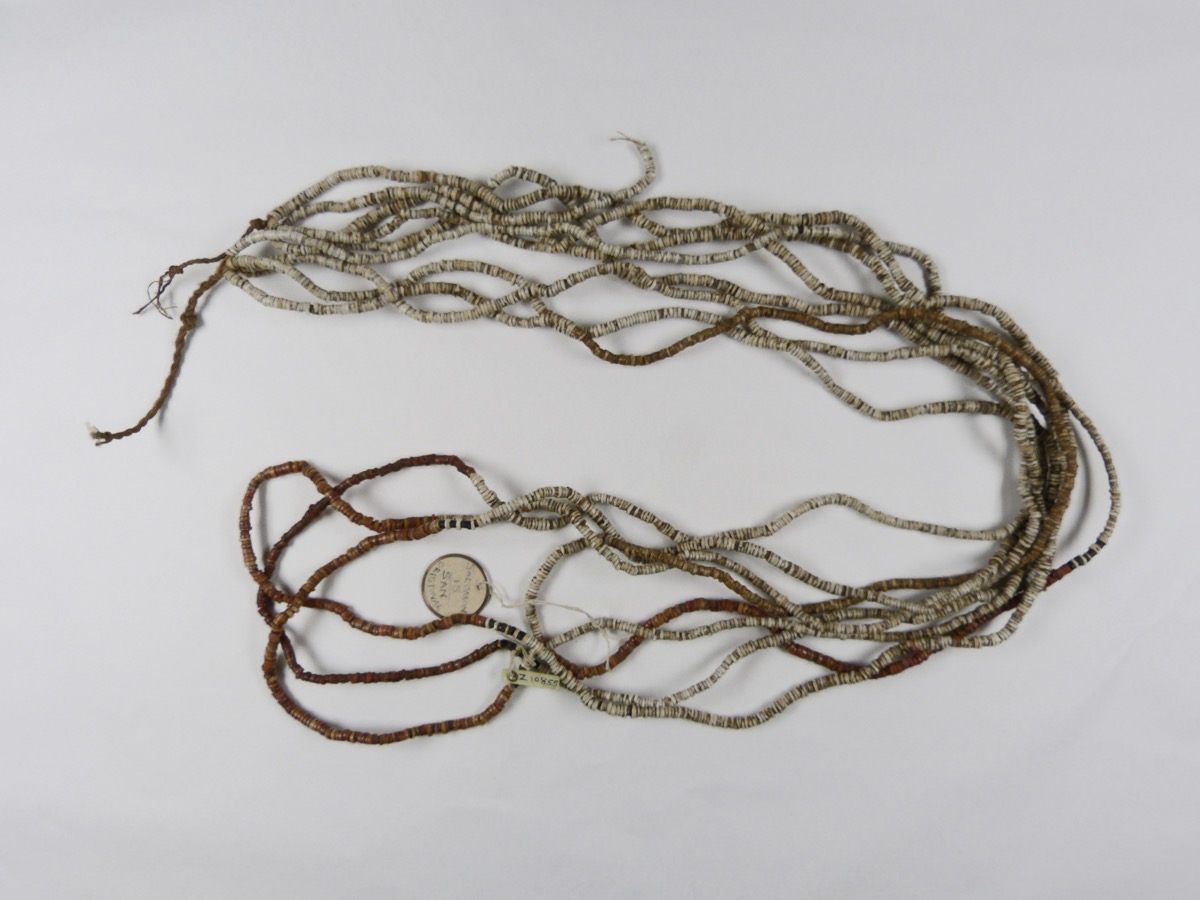
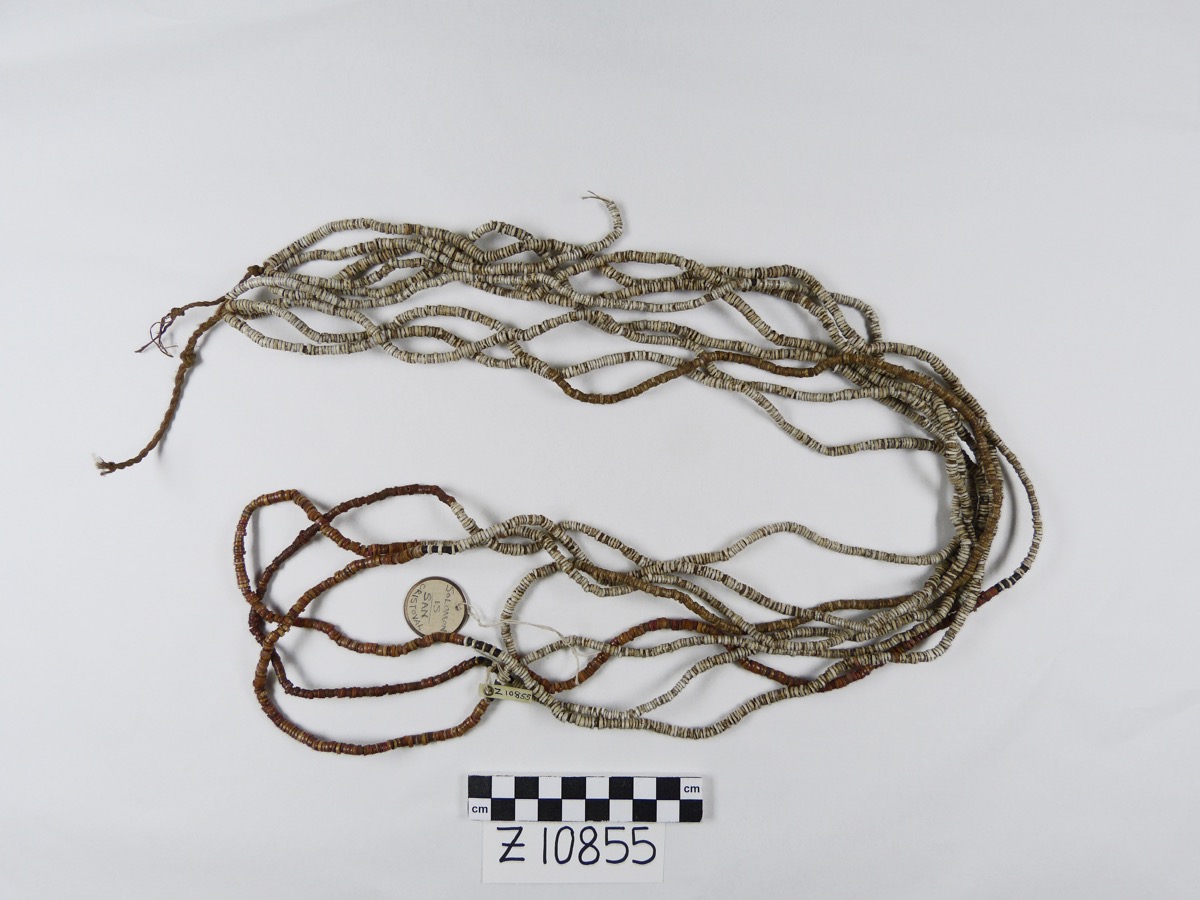
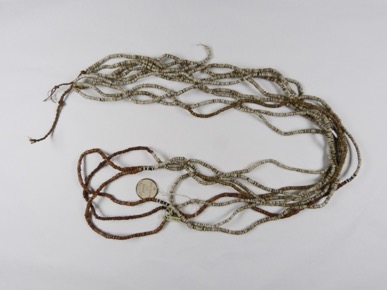
Shell money, currency necklace, formed of four (perhaps originally 5) strings of white shell, each containing a section of red shell. Two of the strings are broken and beads are falling off.
Place
Oceania; Melanesia; Solomon Islands; San Cristoval
Period
?20th Century
Source
Drew, Frederic Henry (Rev.) [collector]
Department
Anth
Reference Numbers
Z 10855; MAA: E 1911.145 [incorrect]; MX 0130
Cultural Affliation
Material
Plant; Fibre; Shell
Local Term
Measurements
1350mm
Events
Description (Labels & Markings)
An old label glued to the catalogue card reads: 'E 1911.145 [incorrect number]. Currency of low value, this hank of white shell beads equals 5 shilling. San Cristoval, Solomon Is. Drew Collection. Mus. Arch & Ethnology' in black ink. [added later:] 'Z 10855'. This is not the correct label for this object - E 1911.145 and Z 10855 are distinctive objects.
Event Date
Author: Lucie Carreau
Description (Labels & Markings)
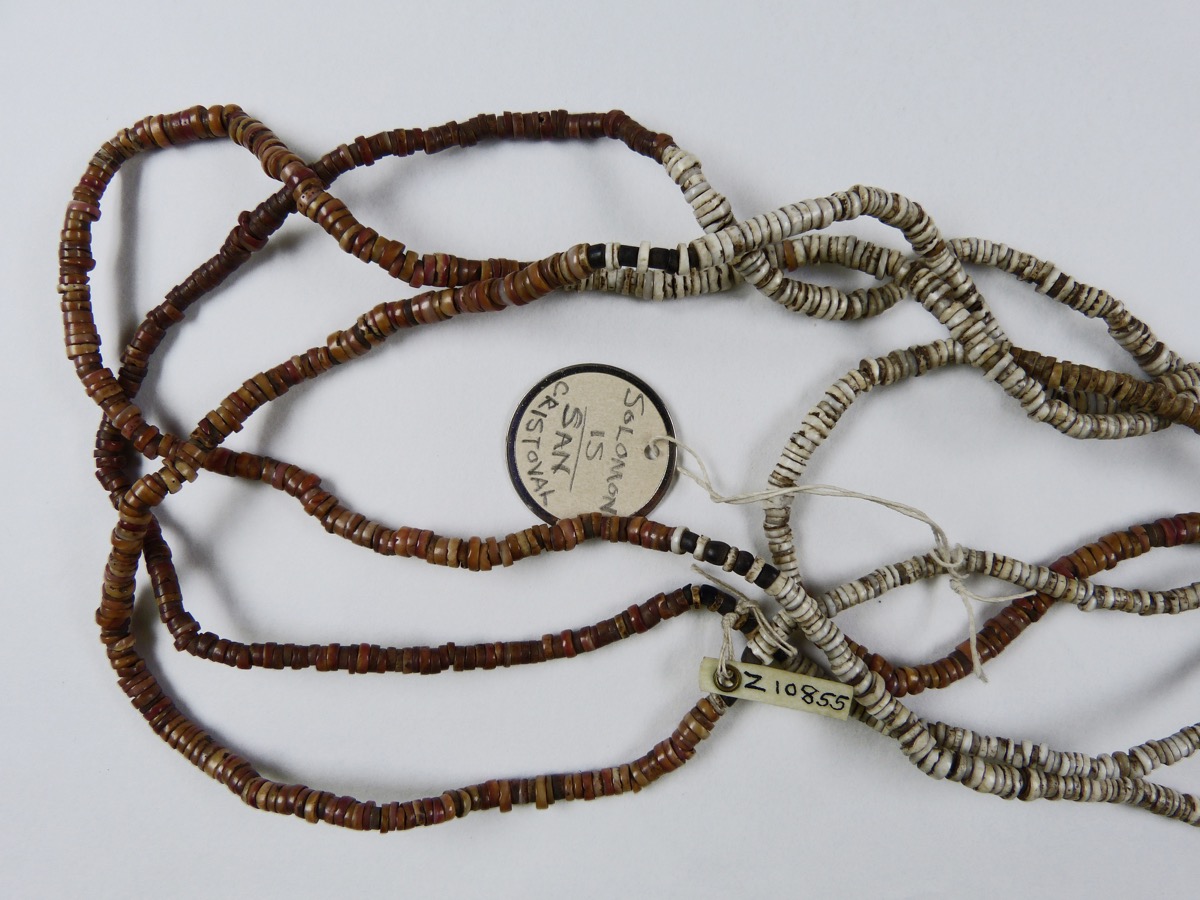
A small round label with metal rim attached to the object reads 'SOLOMON /IS / SAN / CRISTOVAL' in pencil.
Event Date
Author: maa
Description (Labels & Markings)
A small rectangular label reads 'Z 10855'.
Event Date
Author: Lucie Carreau
Description (CMS Description)
[From catalogue card:] 'Currency made of strings of small clam shell beads. The colours are pinkish red, brown and white. This currency is of low value. For instance, this hank of beads equalled 5/-in in 1911 when it was obtained.'
Event Date 21/9/2015
Author: maa
Context (CMS Context)
There is no record of a Drew object from the Solomon Islands numbered E 1911.145 in MAA's accession registers or the Blue Book. Other objects from the Drew collection have been labelled with incorrect numbers not matching any entries in MAA's registers.
Event Date 21/9/2015
Author: Lucie Carreau
Description (CMS Description)
Shell money formed of four (perhaps originally 5) strings of white shell, each containing a section of red shell. Two of the strings are broken and beads are falling off.
Event Date 21/9/2015
Author: maa
Context (Analysis)
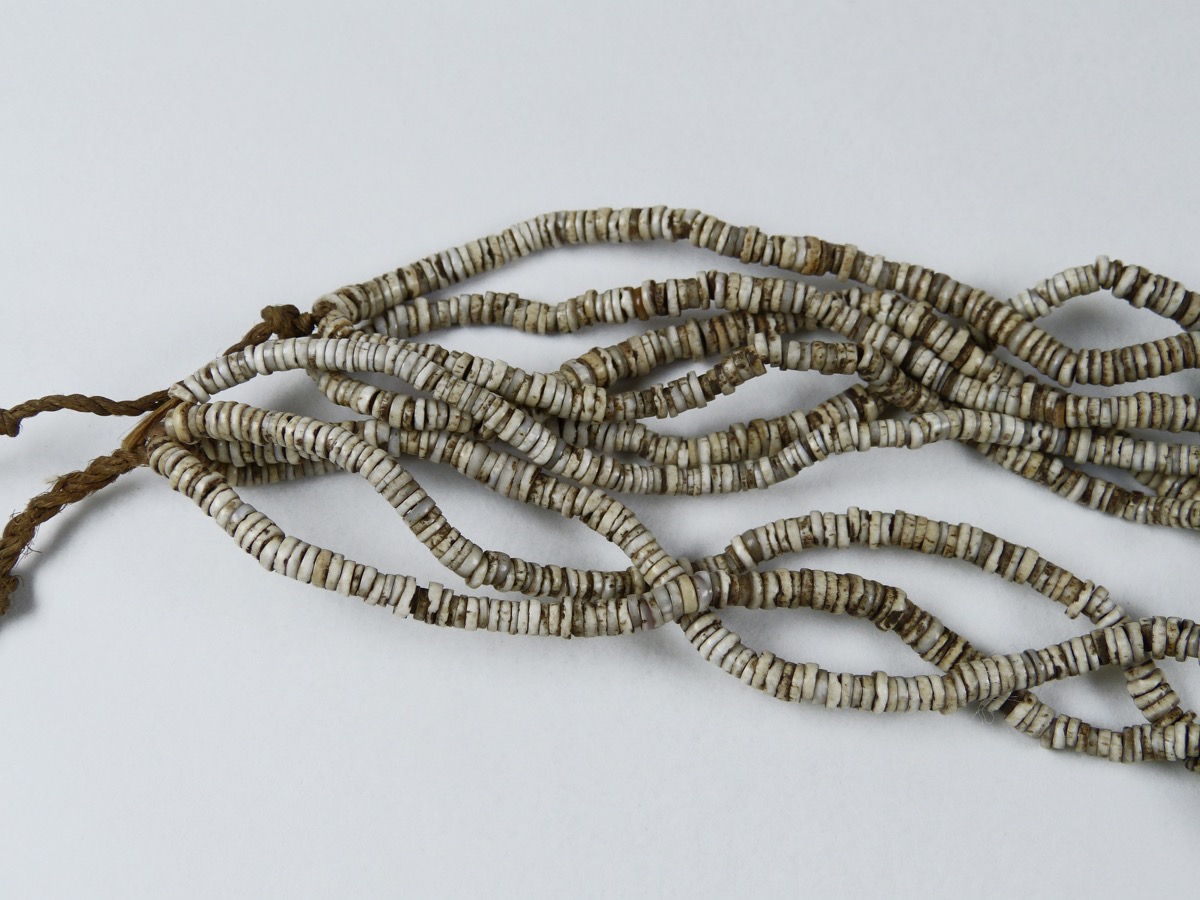
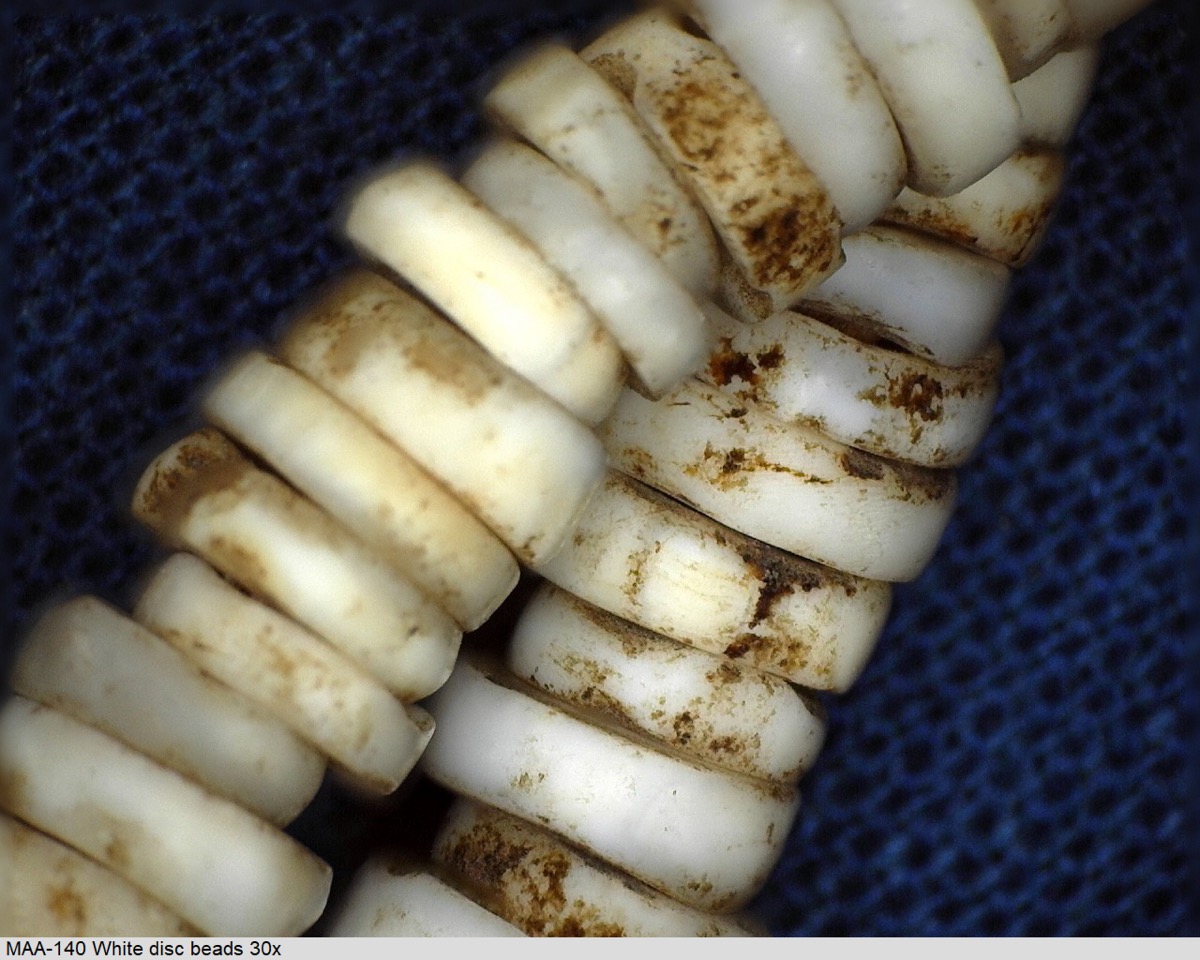
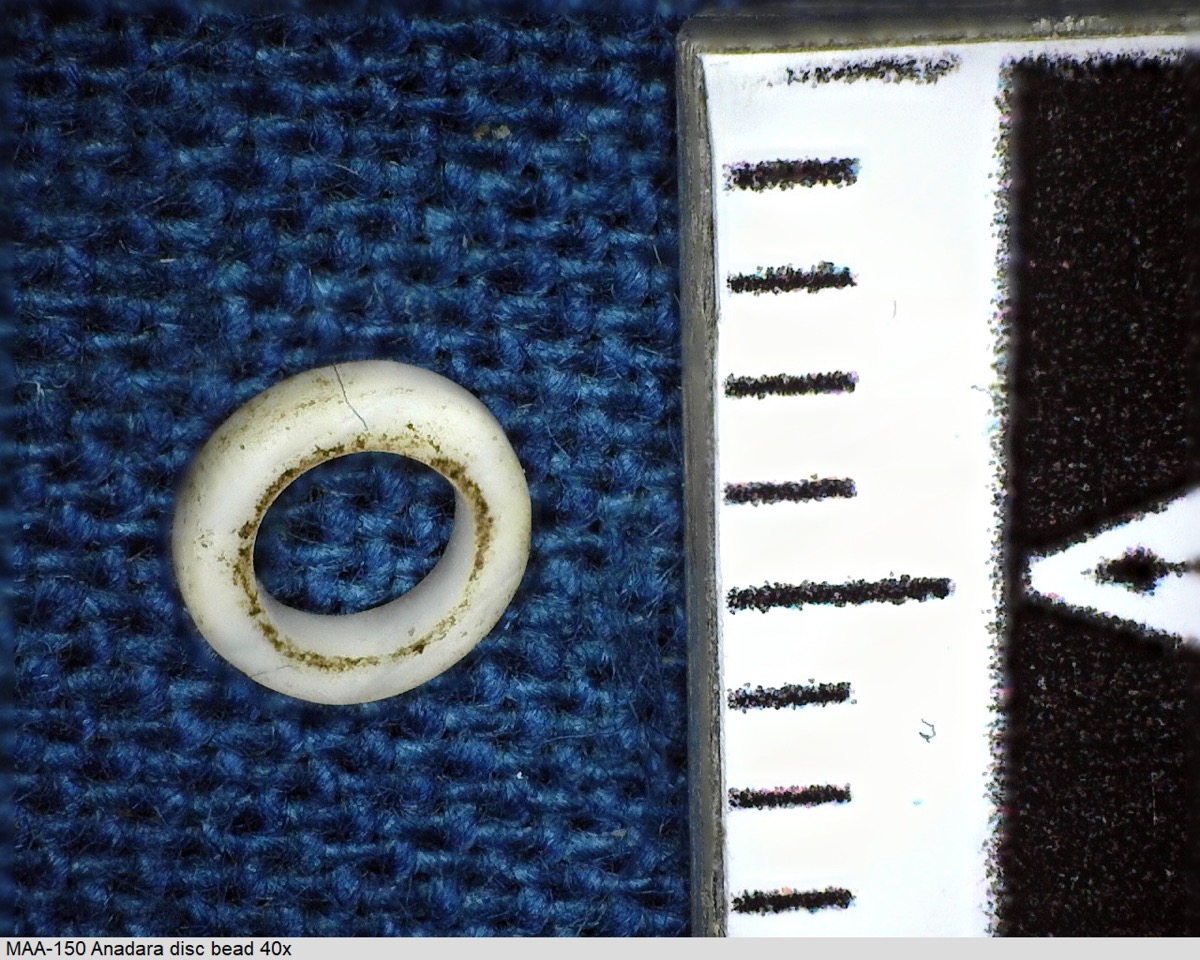
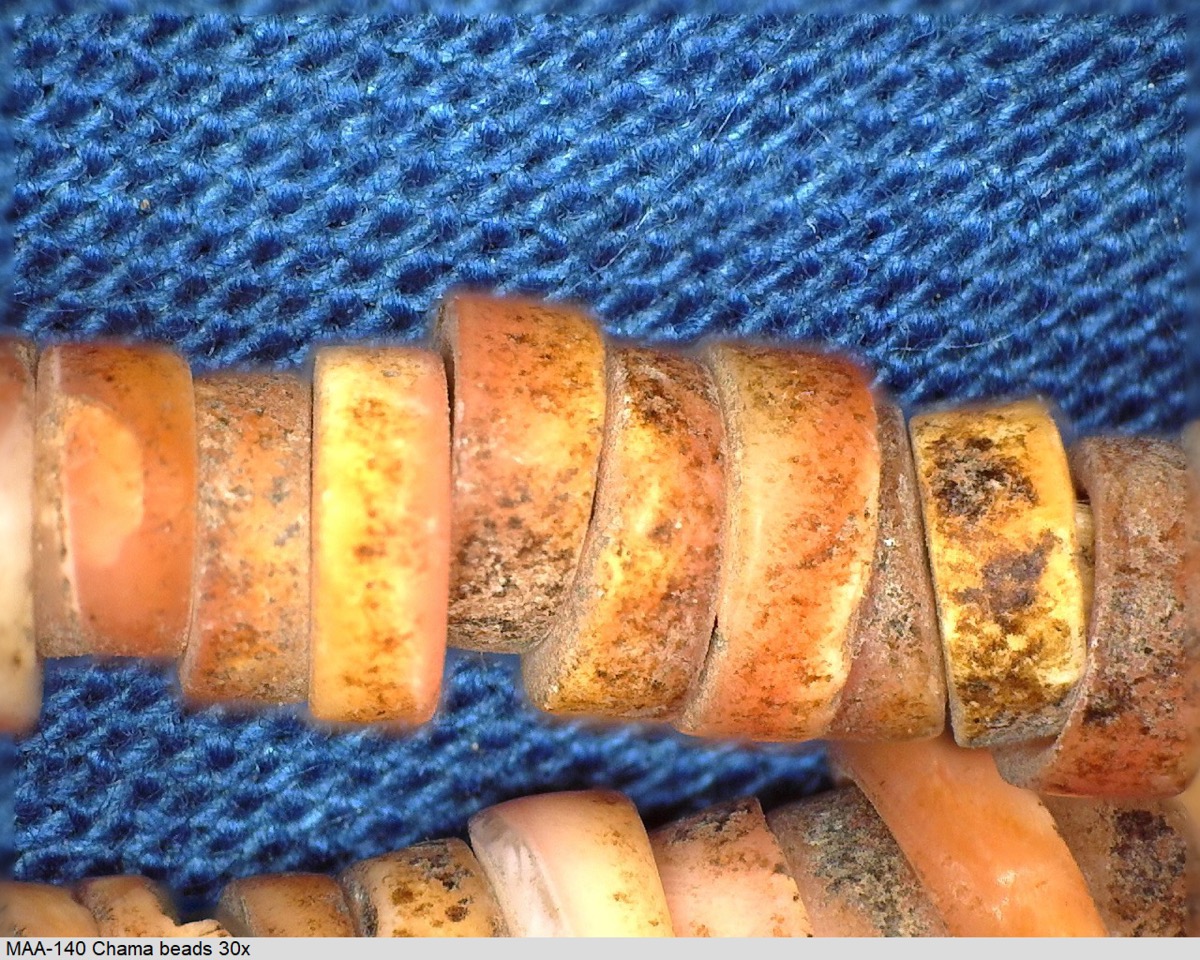
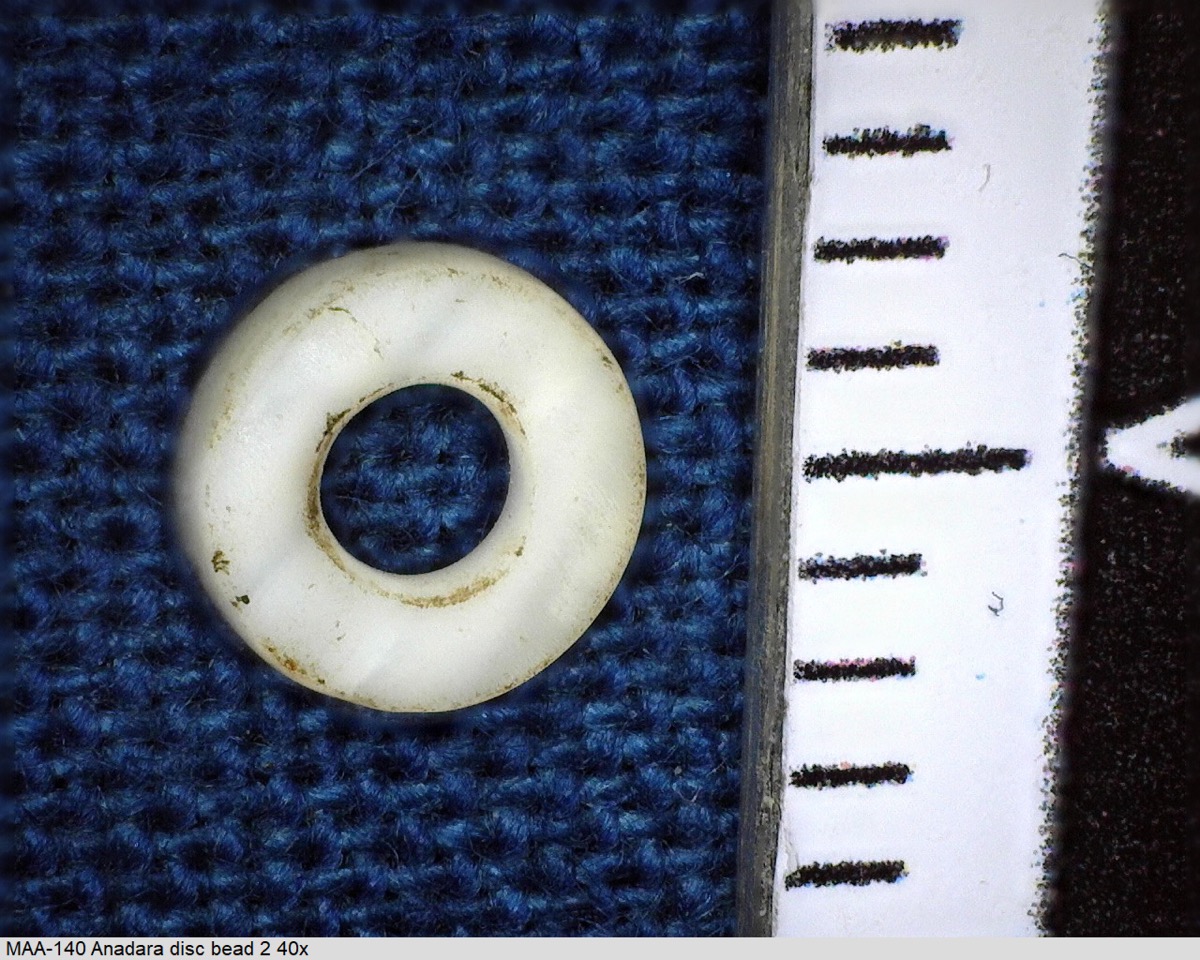
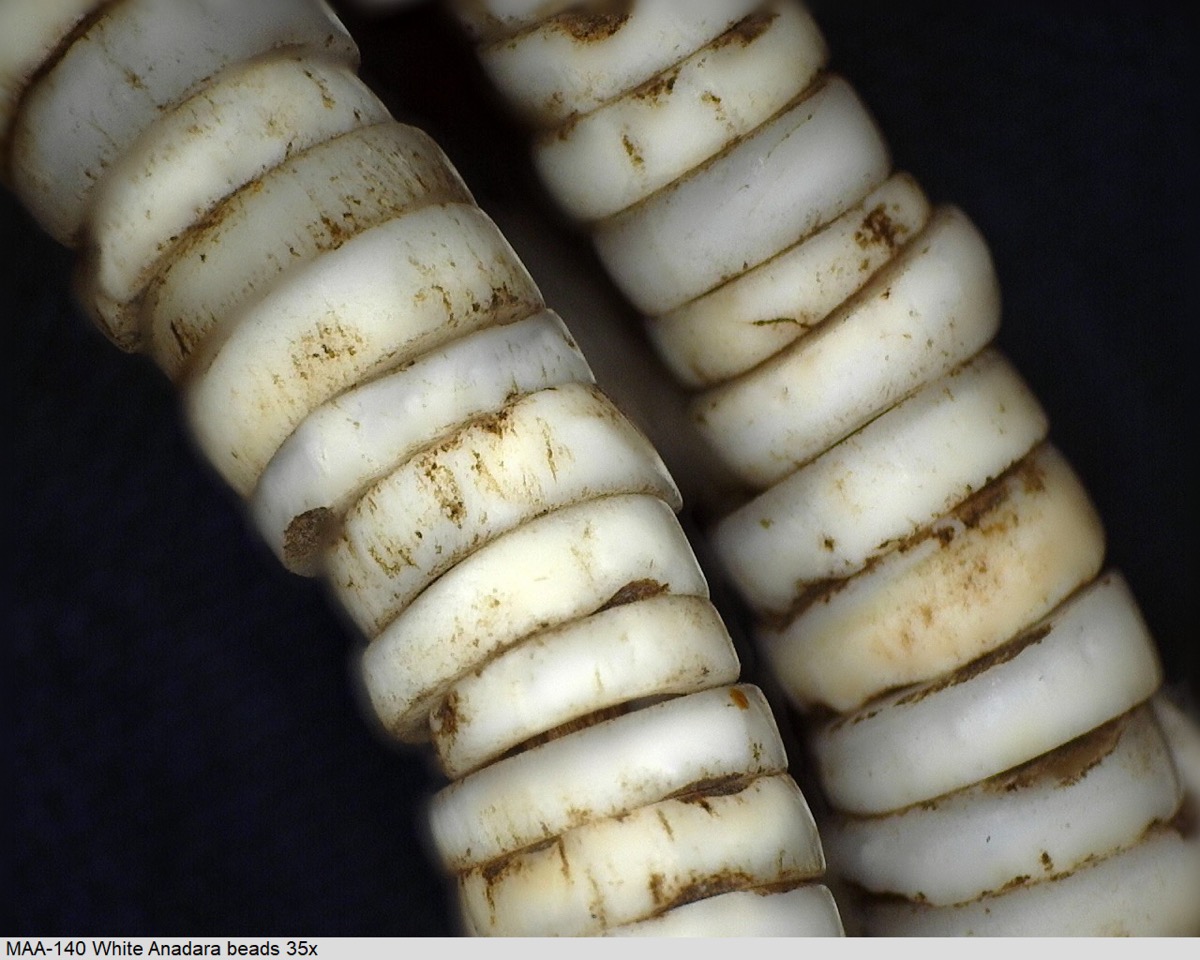
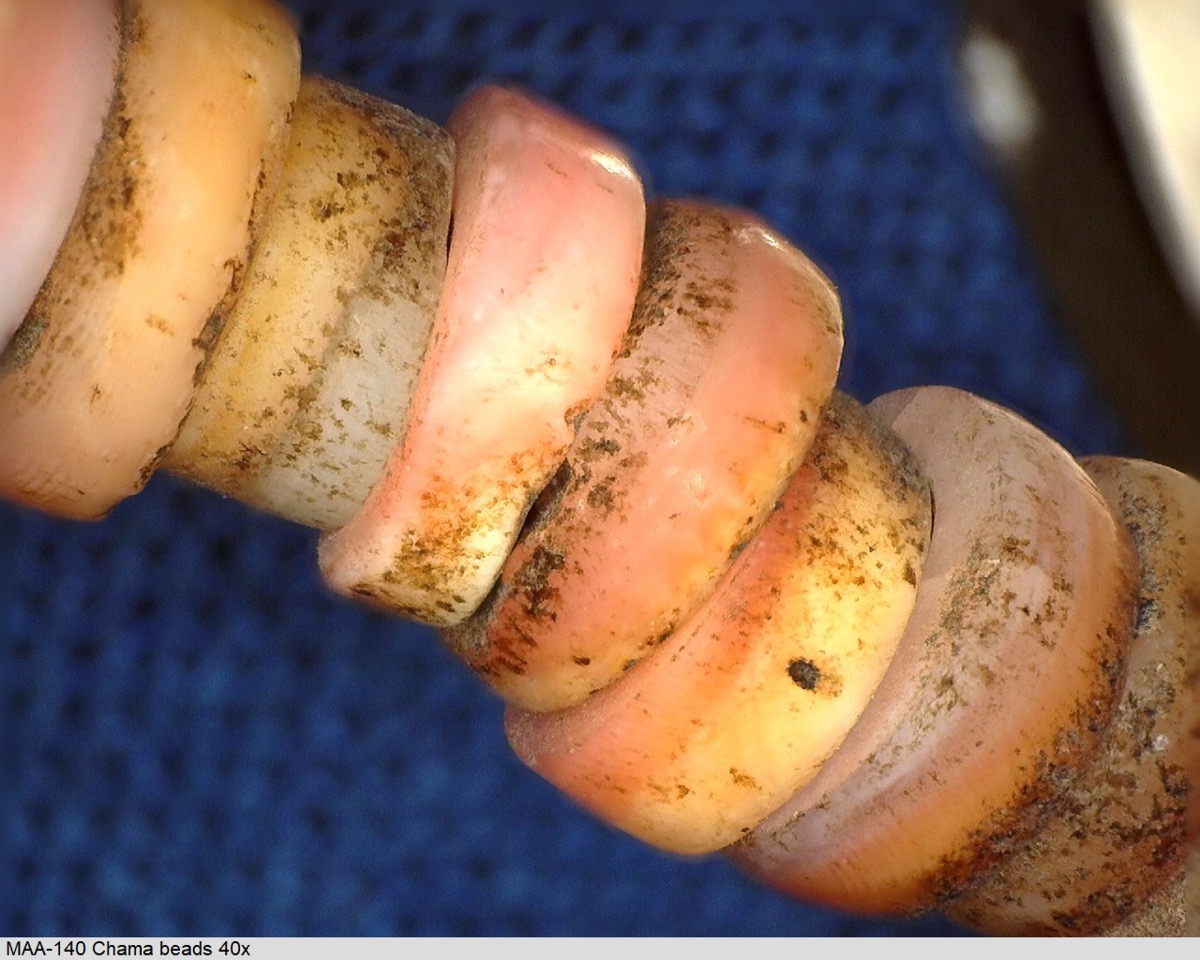
Multistranded necklace (n = 4) one of which is broken. Largely white shell discs of Anadara of a wide variety of sizes, thicknesses and conditions. At the centre of each strand is a zone of red/Chama shell beads and there are also a small number of individual Chama beads interspersed amongst the white beads. There's also a long zone on one strand that is made up of fawn (Benguina semiorbiculata) beads and very occasional dark brown seed beads near some of the Chama lengths. Amongst the white beads, most are identifiably Anadara but there are also a number of (generally smaller) gastropod spire beads interspersed. These are not in lots, but completely admingled with the Anadara.
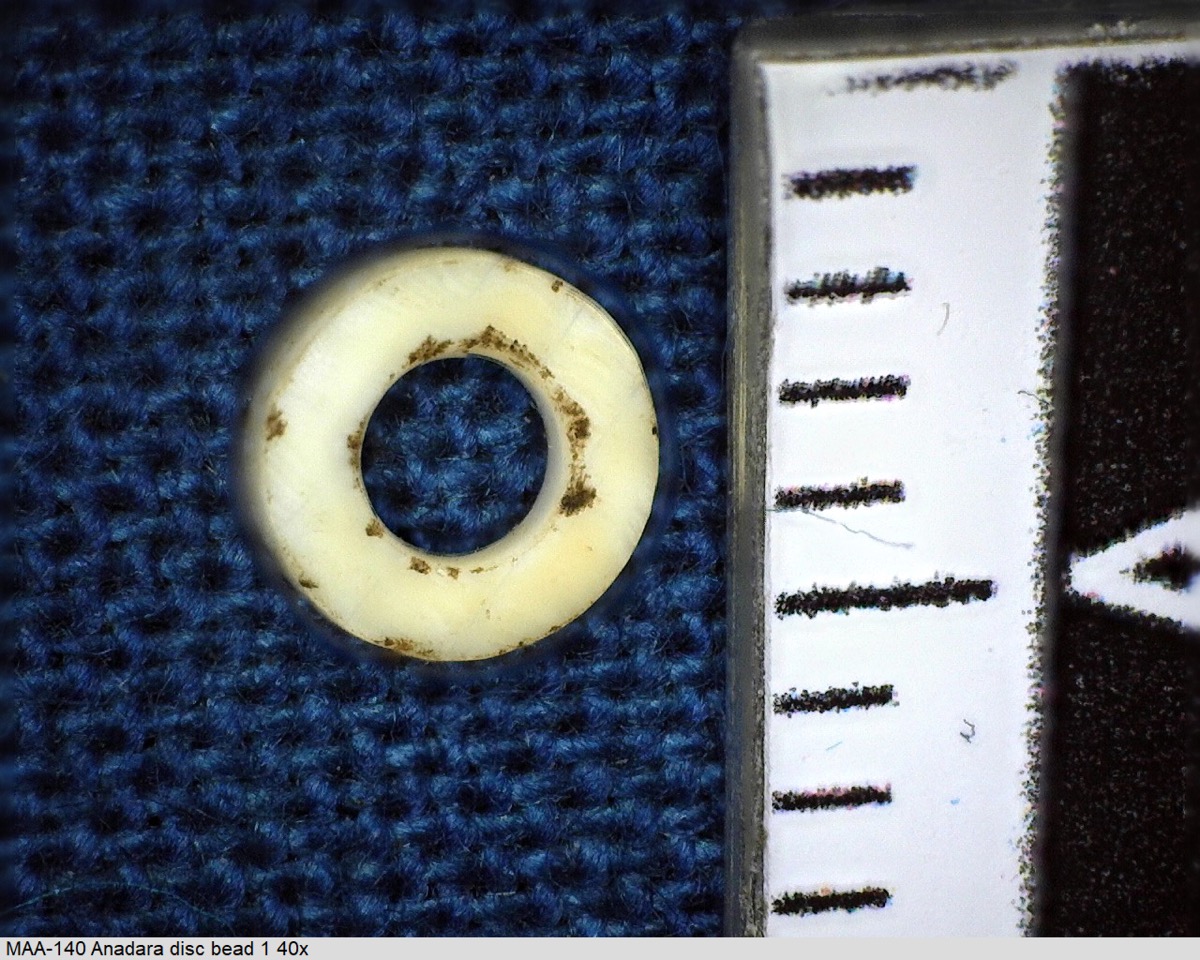
There's a small bag of detached beads. Four Anadara beads have been isolated for possible 14C dating and photographed individually.
Event Date 10/11/2017
Author: Katherine Szabo
Context (Analysis)
Four loose beads from this object, previously bagged separately for research by Kat Szabo, were sent away for radiocarbon testing (destructive) on her advice. This process was approved by the Museum Committee in February 2018.
Four shell beads were sent to Dr Fiona Petchey at the Waikato Radiocarbon Dating Laboratory, The University of Waikato, Gate 9, Hillcrest Road, Hamilton, 3240, New Zealand.
The beads will be radiocarbon dated via AMS radiocarbon analysis accelerator mass spectrometry, in order to determine their age and any potential reuse of shell beads from older heirloom shell money strands.
As the testing is destructive the samples will not be returned to MAA. An exit form was completed to document the process.
Event Date 14/2/2018
Author: Remke Velden
Context (Analysis)
Four white Anadara beads were submitted for analysis and radio carbon dating by Fiona Petchey at the Waikato radiocarbon lab, New Zealand. Initial results Reveal two very distinct clusters of beads.
Two of the beads were produced sometime after 1800, while the other two beads have a *maximum* age of 1680 and they were potentially manufactured as early as 1500AD, meaning at least 2 of the beads dated had been in circulation for at least 224 years prior to the collection of the object.
Event Date 29/4/2018
Author: rachel hand
FM:268643
Images (Click to view full size):