Accession No
Z 10980
Description
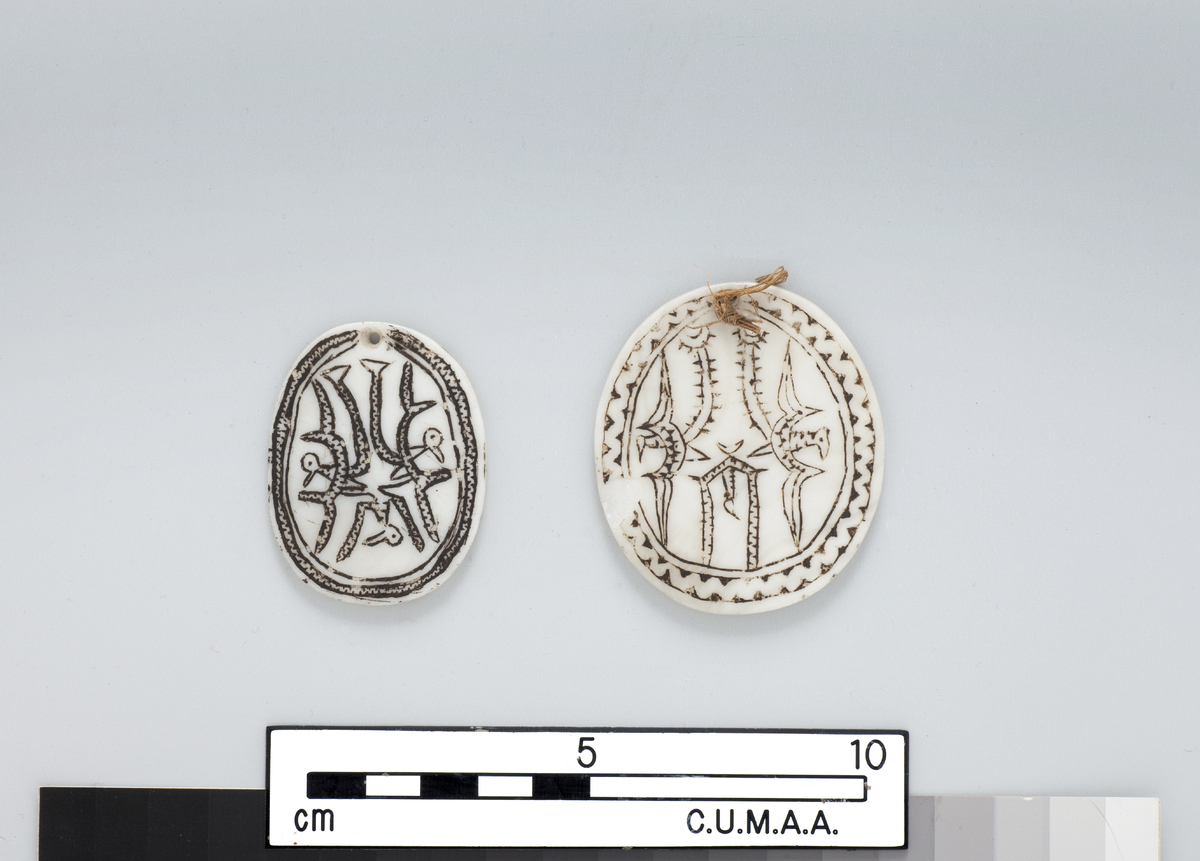
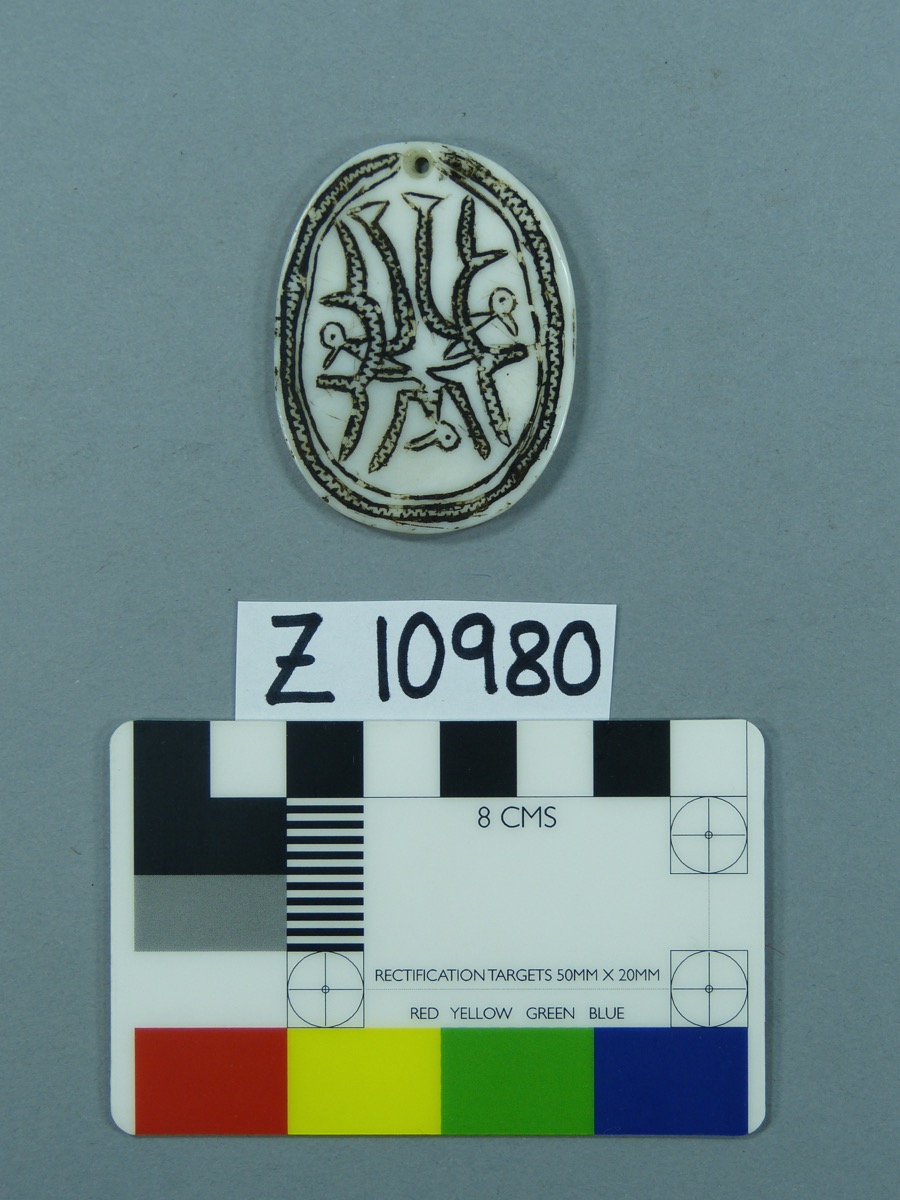
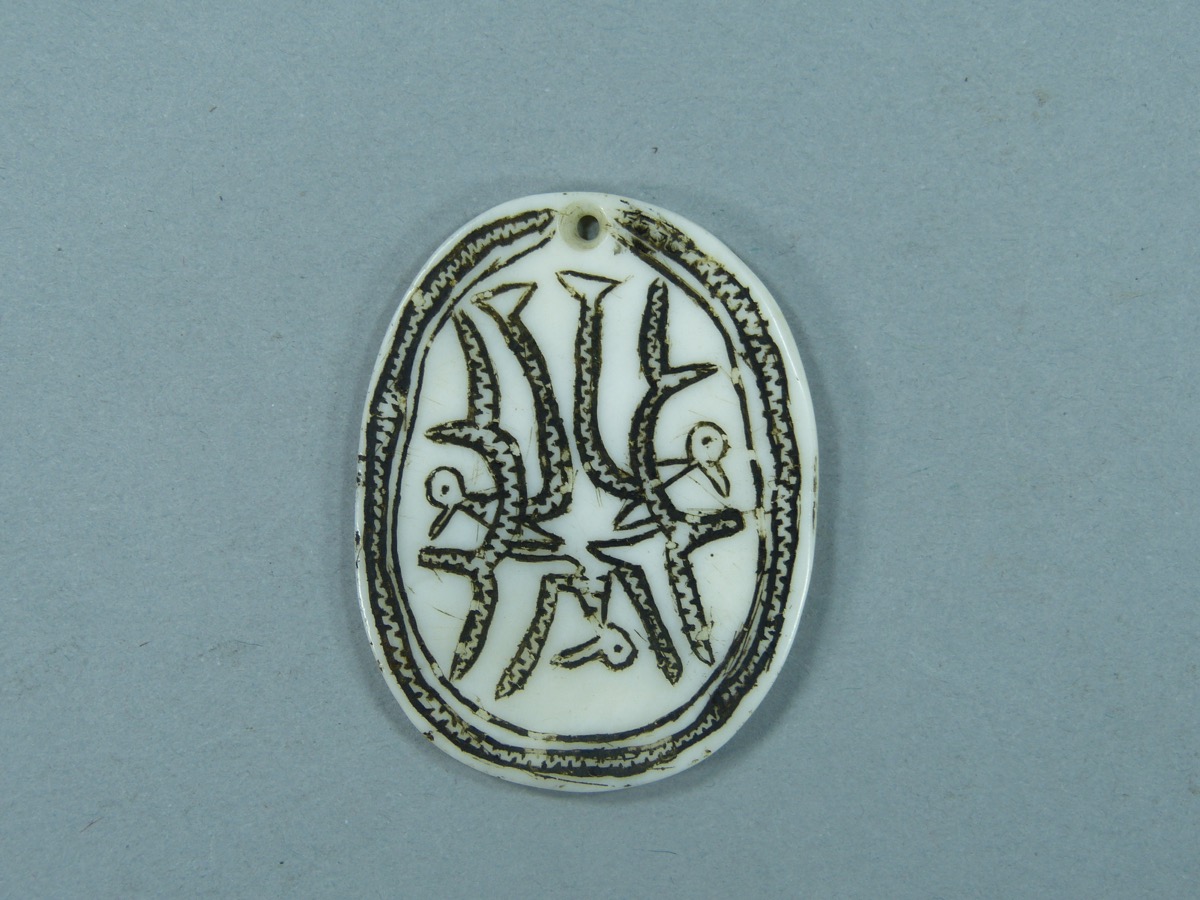
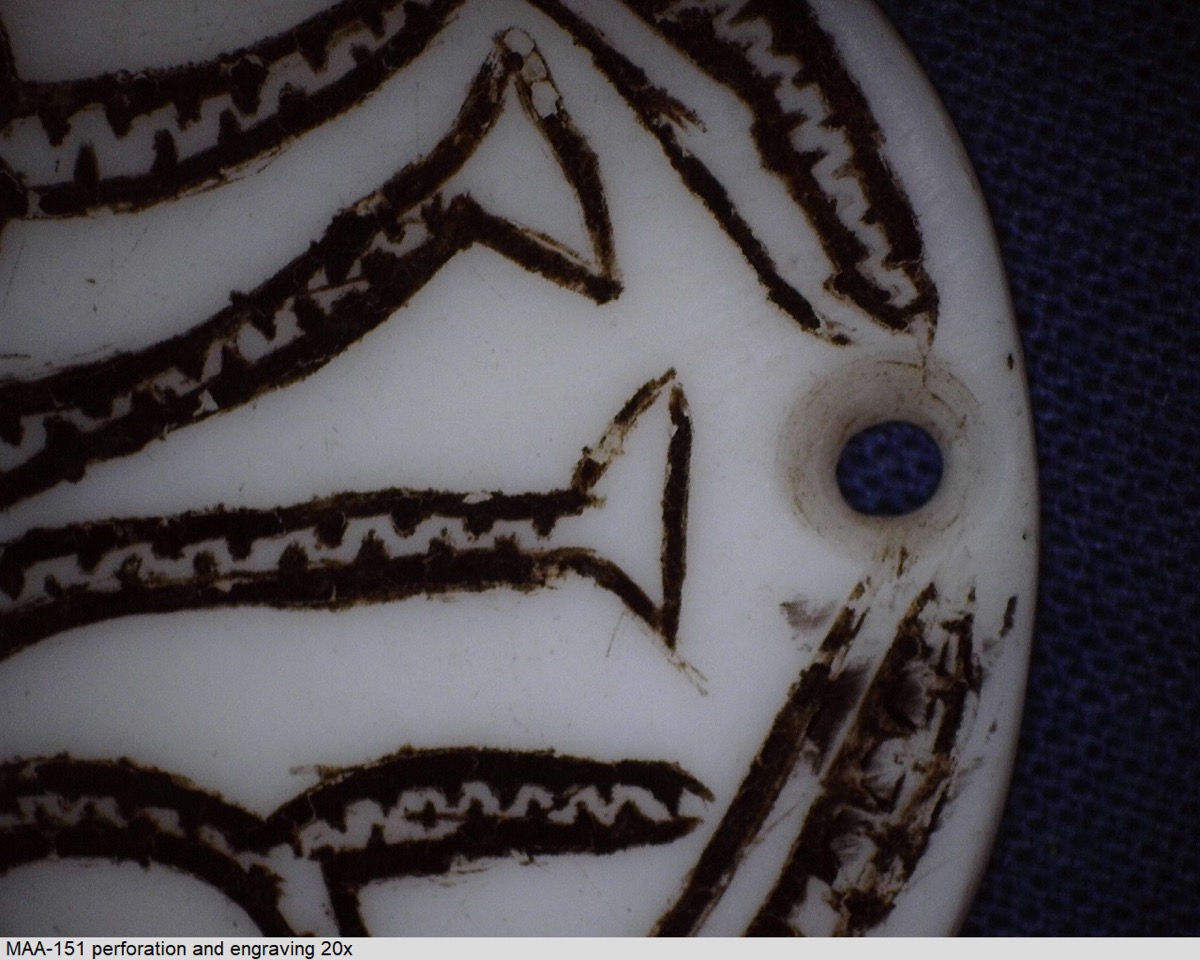
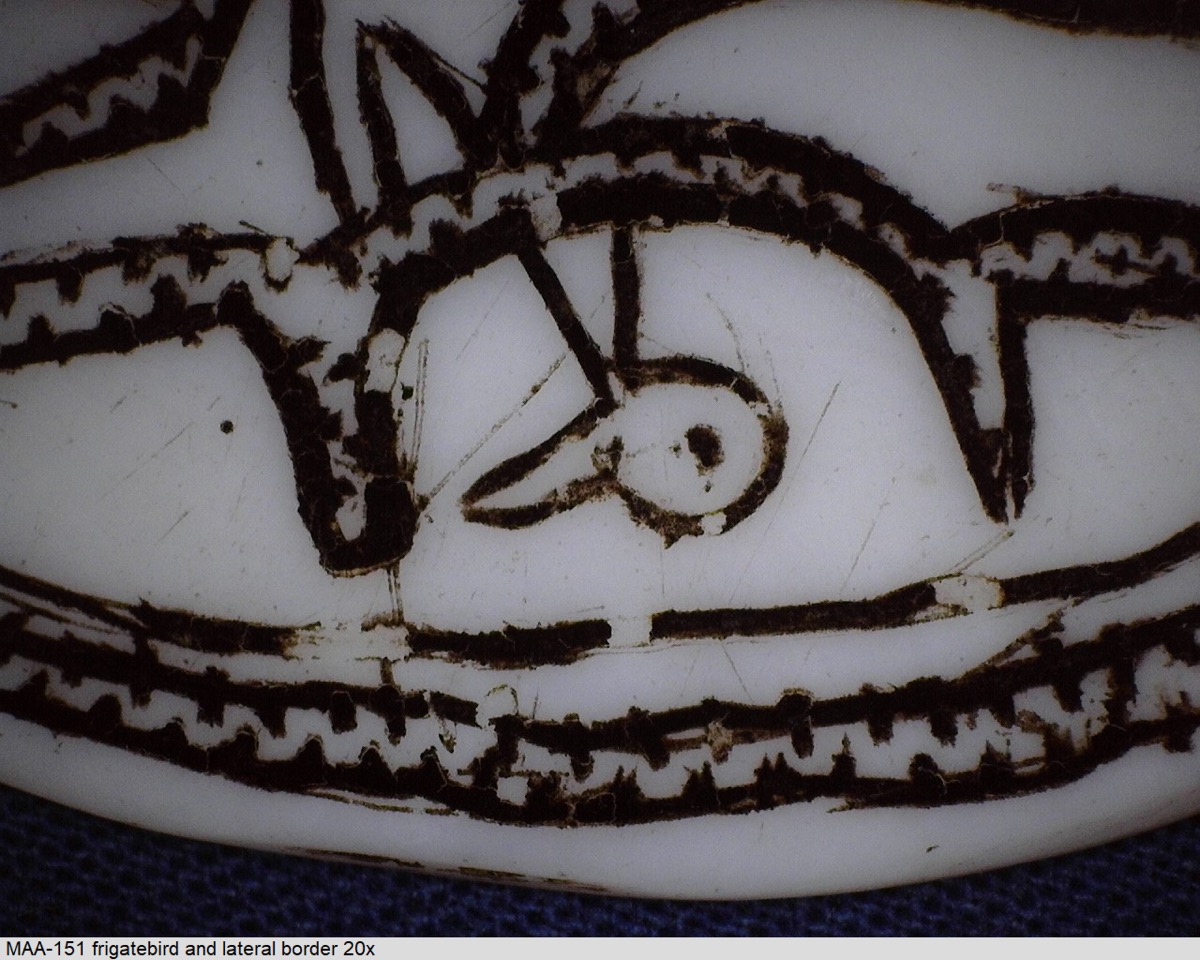
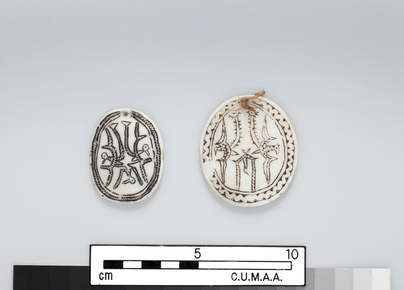
Oval pendant of Tridacna shell, thin and perforated at the top. One side is incised with 3 frigate birds and a border along the periphery. Incisions have been rubbed with black pigments.
Place
Oceania; Polynesia; Fiji; Viti Levu; Rakiraki District
Period
19th century
Source
von Hügel, Anatole (Baron) [field collector and donor]
Department
Anth
Reference Numbers
Z 10980
Cultural Affliation
Material
Shell
Local Term
Ulute [L. Carreau]
Measurements
39mm x 50mm
Events
Context (Related Documents)
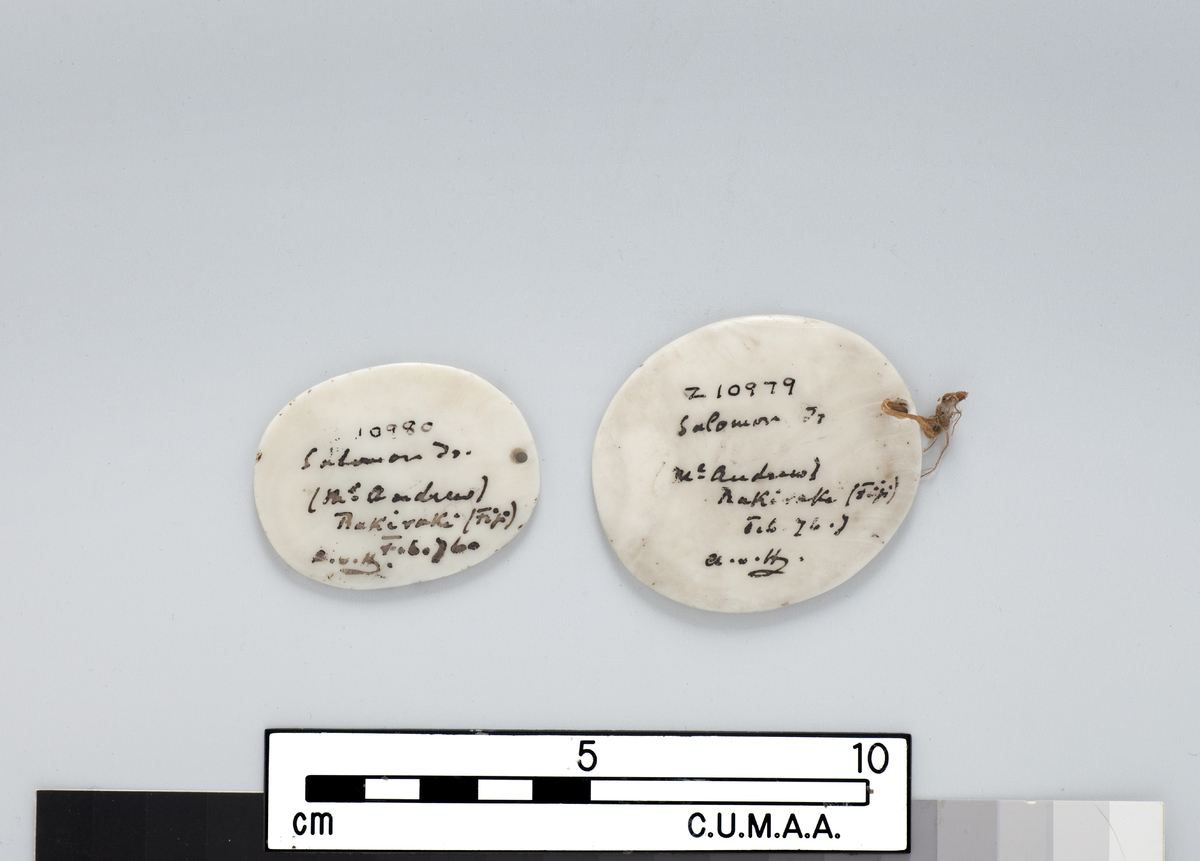
Catalogue card for Z 10980: 'Clam shell pendant with incised bird design on one face only obtained by Baron von Hügel at Rakitaki [sic], Fiji, from Solomon Islands Labourers'.
Event Date
Author: maa
Exhibition (Maudslay Gallery)
EXH.2018.4 | Pacific Currents
Event Date
Author: Remke Velden
Description (Labels & Markings)
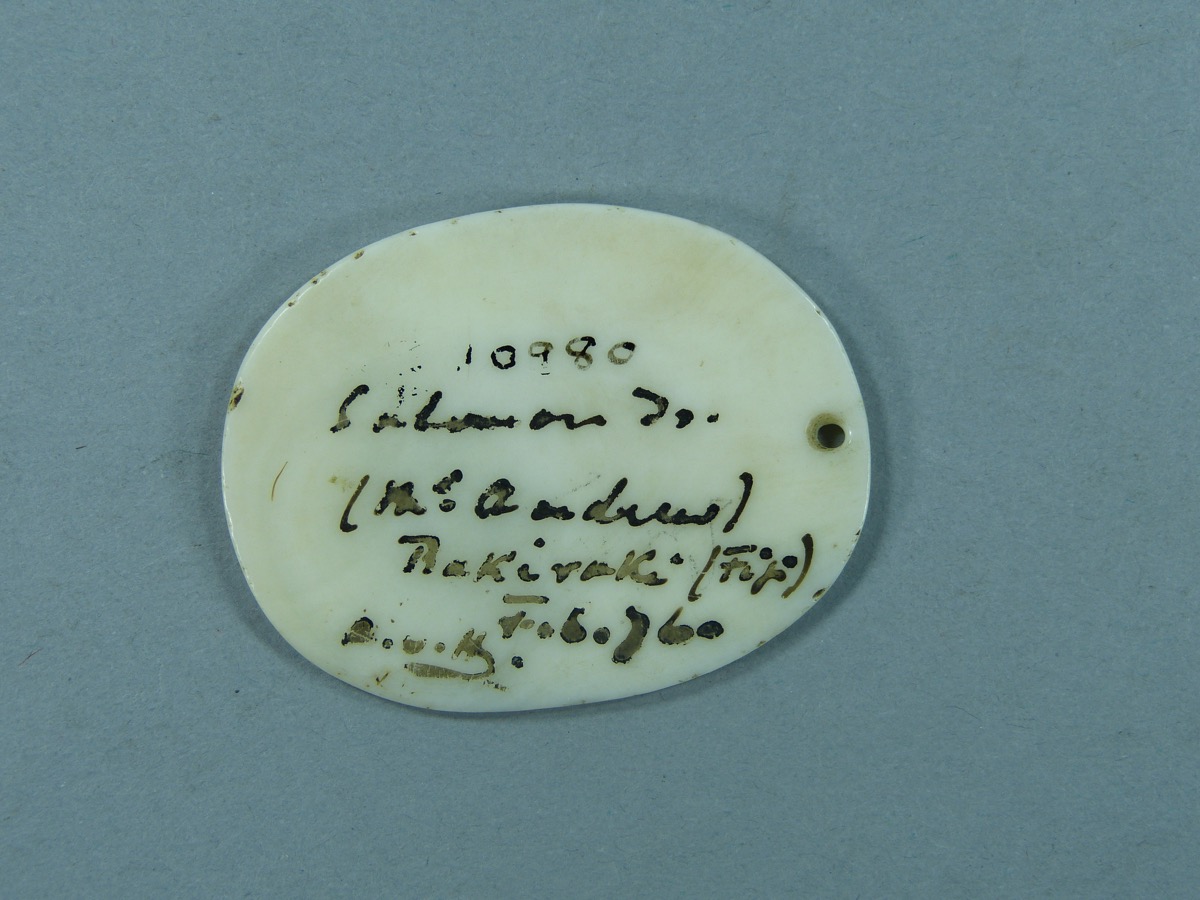
'Solomon Is. (Mr Andrew) Rakiraki (Fiji). Feb. 76. A.v.H.' inscribed in black ink in von Hügel's hand on the back of the object. [Transcribed by Lucie Carreau, 26/05/2015].
Event Date
Author: maa
Context (Field collection)
Collected by Anatole von Hügel in February 1876. The objects were obtained from indentured Solomon Islands labourers working on the plantation managed by Mr Andrew in Rakiraki, Fiji.
Event Date 2/1876
Author: Lucie Carreau
Description (Physical description)
Oval pendant of Tridacna shell, thin and perforated at the top. One side is incised with 3 frigate birds and a border along the periphery. Incisions have been rubbed with black pigments.
Event Date 26/5/2015
Author: maa
Context (References)
Illustrated in Lucie Carreau. 2016. Collections from the Solomon Islands. Cambridge: Museum of Archaeology and Anthropology. https://doi.org/10.17863/CAM.13275, p.10.
Event Date 2016
Author: Lucie Carreau
Context (Analysis)
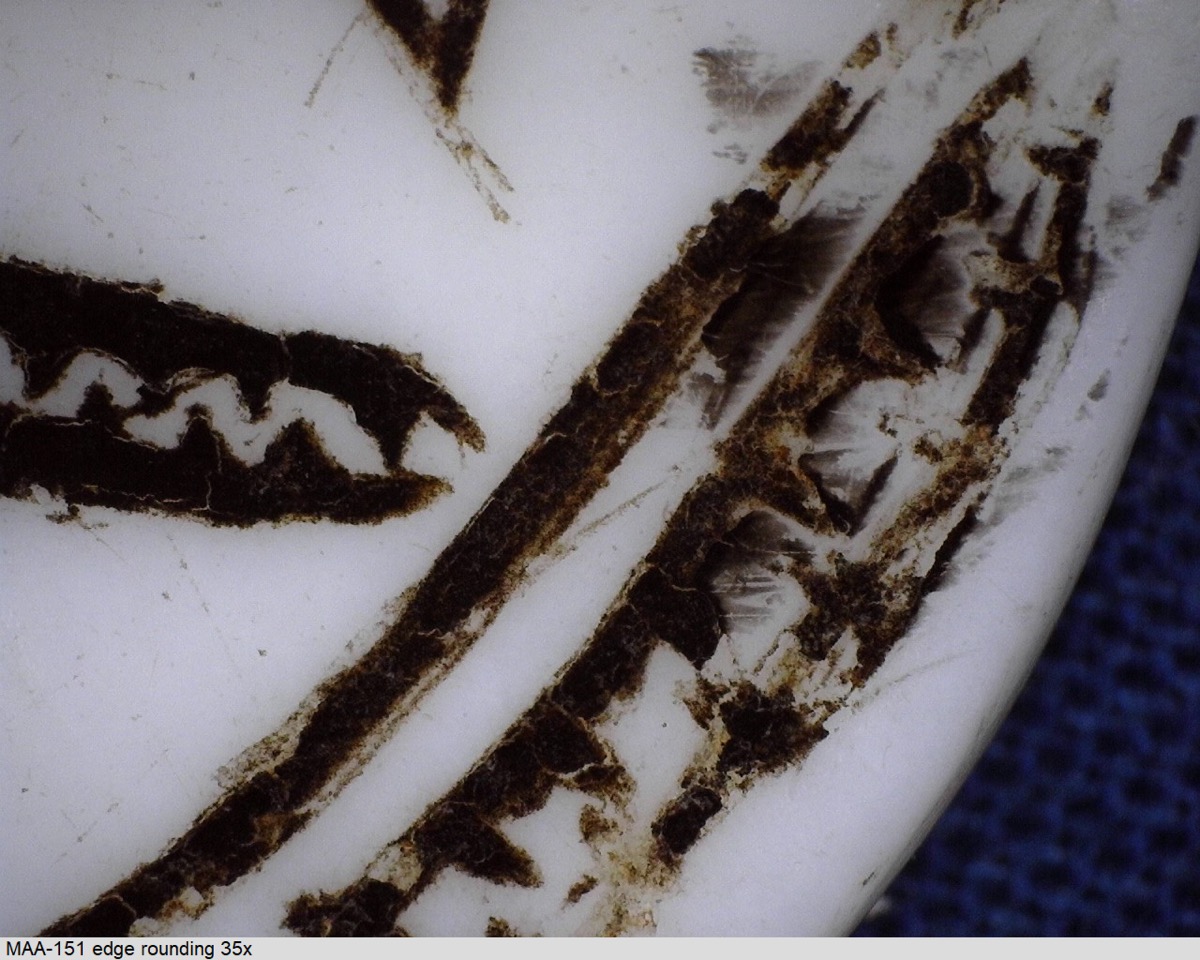
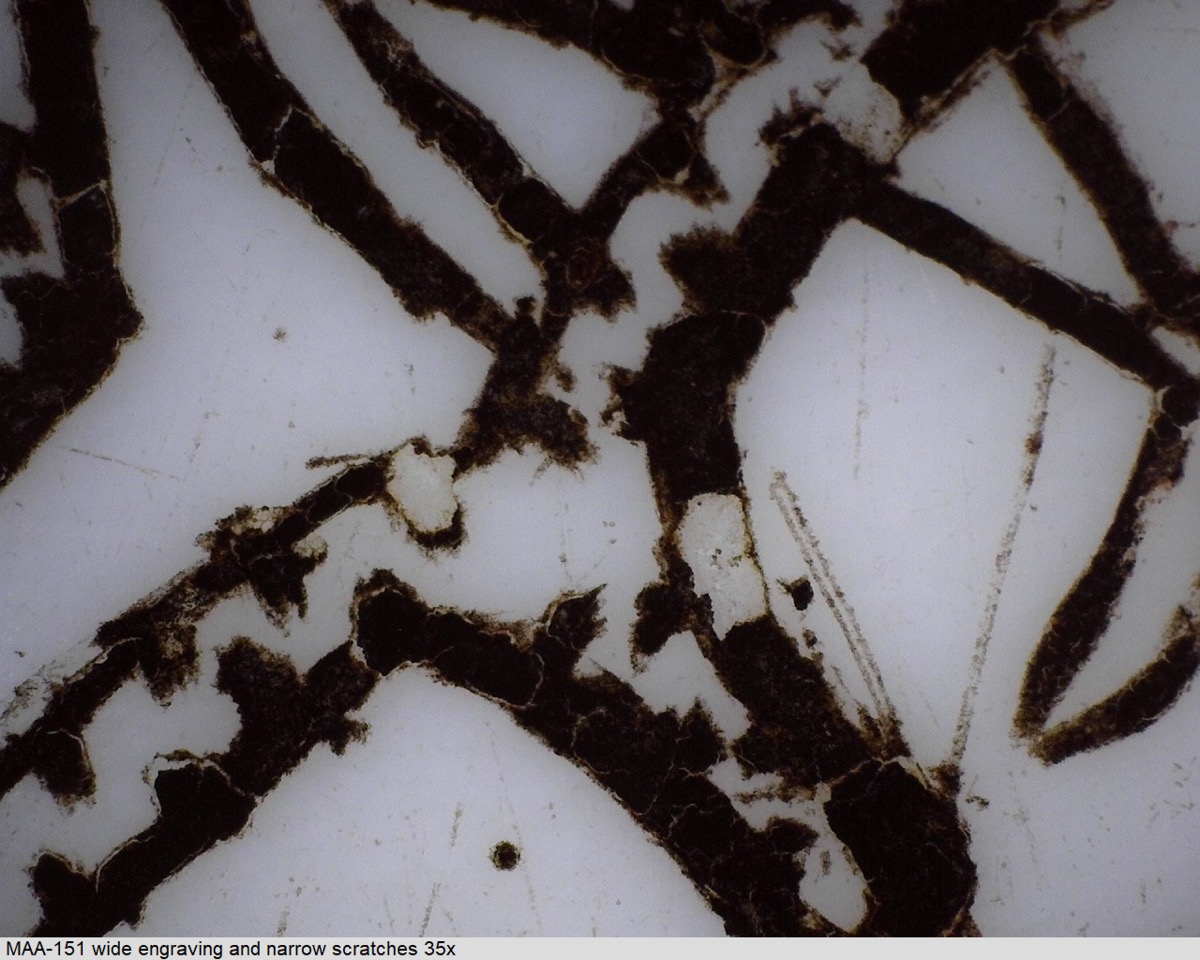
A small, bright white small Tridacna flat plaque with an oval outline. Three frigate-birds have been engraved and there is a double border with an incised line and zig-zag infilled border. There is a hole drilled near the top of the artefact with a wide bevel and notable use-wear. The engraved furrows then infilled with black matter are relatively wide, but where the engraving tool has slipped the mark is quite fine. This suggests that the furrow is created in a number of back and forth movements and is literally carved out. There is rounding around the edges and the object has clearly been used, but there is no patina or major rounding to indicate long-term use or heirlooming. It's entirely possible that this object was made on Fiji by a Solomon Islander as opposed to being transported there with a Solomon Islander.
Event Date 14/11/2017
Author: Katherine Szabo
FM:268273
Images (Click to view full size):