Accession No
2013.247
Description
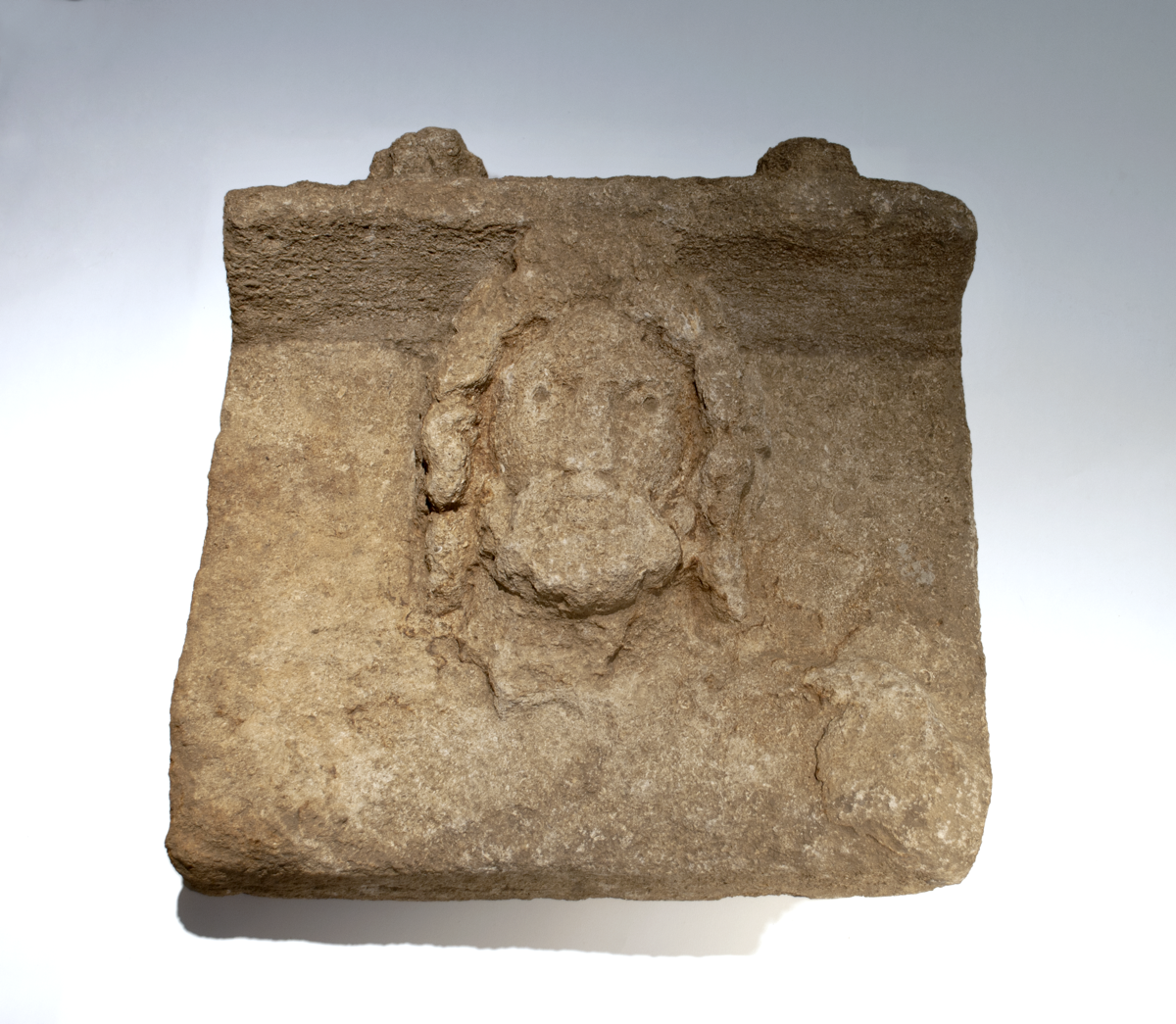
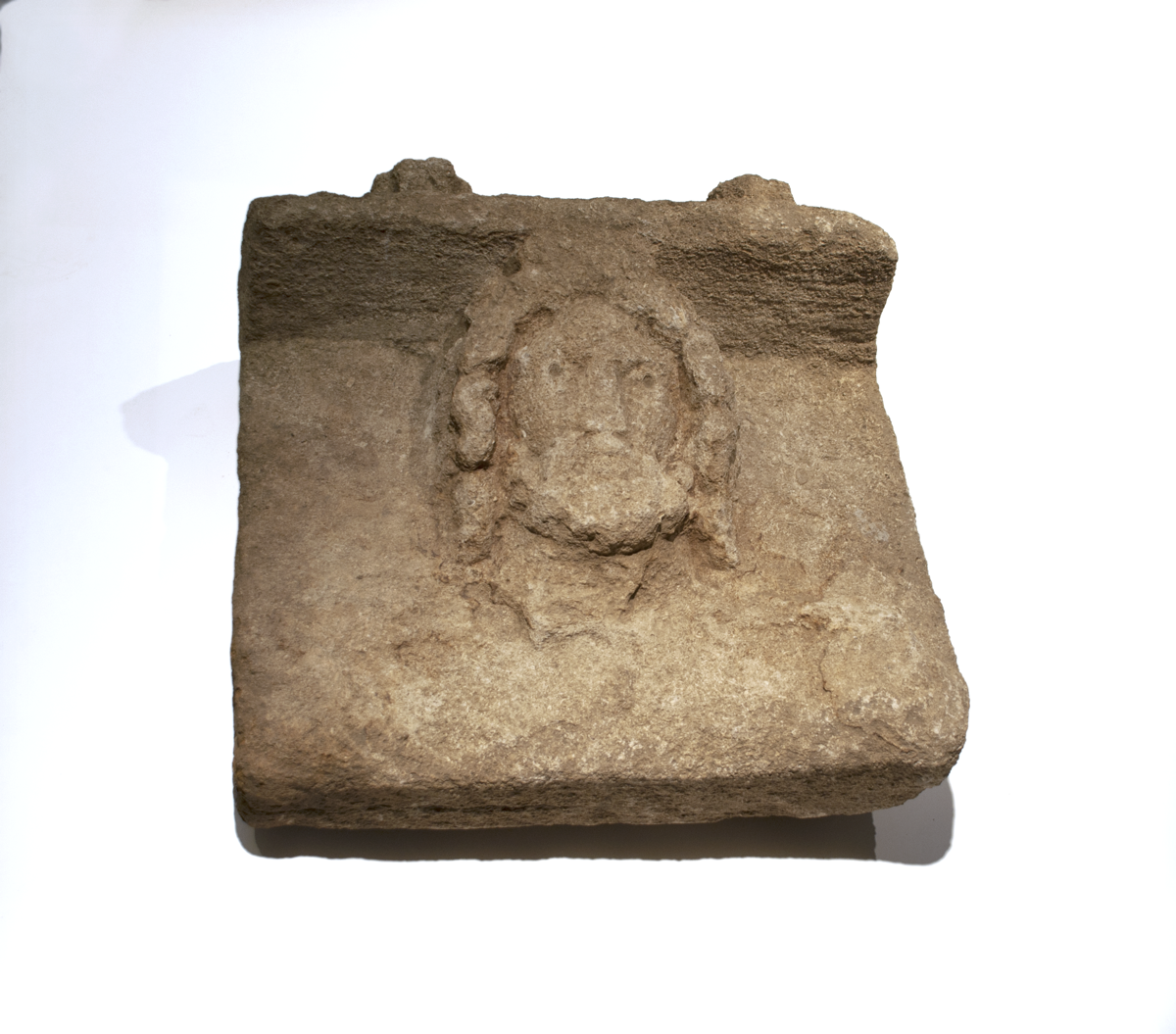
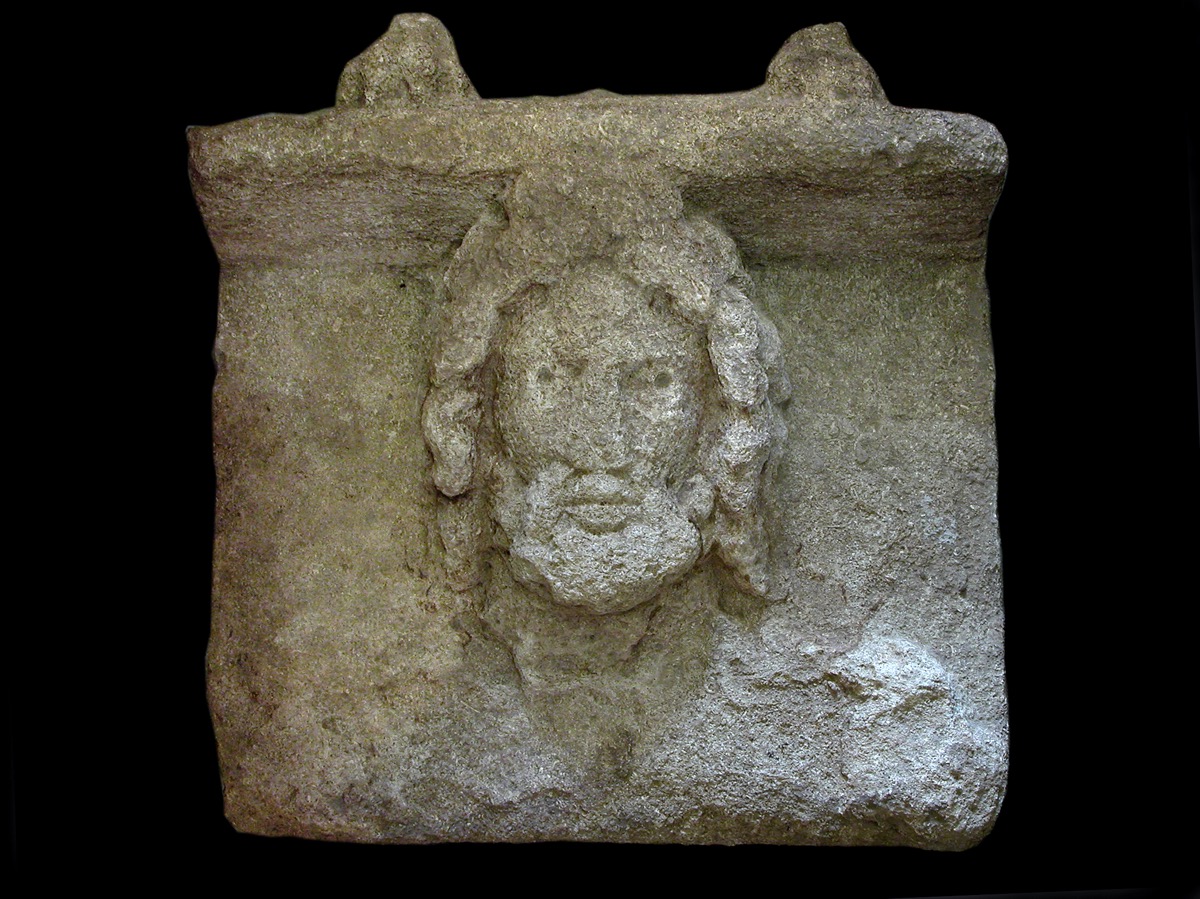
Bust of a god, possibly Jupiter or Pluto, carved in relief and projecting from a flat block. Carved of Upwell limestone. The face is neatly bearded, with long locks flanking the face and coif of hair above the forehead; the eyes have drilled pupils. The bust's shoulders are bare. The block is topped with a moulded cornice, on which rest two moulded paws, probably from a lion, sphinx or griffin whose body has since broken away.
Place
Europe; British Isles; England; Cambridgeshire; Earith; Colne Fen; Earith Quarry; The Camp Ground
Period
Roman 2nd century 3rd century 4th century
Source
Hanson Aggregates [donor]; Cambridge Archaeological Unit [excavator]
Department
Arch
Reference Numbers
2013.247
Cultural Affliation
Material
Stone; Limestone
Local Term
Measurements
280mm x 425mm x 195mm Weight 56.0kg
Events
Context (Field collection)
This bust was excavated by the Cambridge Archaeological Unit (CAU) in 2001 at The Camp Ground, Earith Quarry, Colne Fen. The quarry is owned by Hanson Aggregates, who donated the sculpture to MAA in 2013. For details of publication, see Bib.
Event Date 2001
Author: maa
Context (Analysis)
Henig (2013) believes that this sculpture was once part of a larger monument: 'the sides of the block were simply shaved down... and it is evident that there were once contiguous blocks to the left and right and presumably below' (p. 228). Christopher Evans believes that the sculpture was perhaps re-purposed in its current state as a grave marker, and a disturbed body was found nearby. It could also possibly have been used as ballast for boats arriving in the port.
Event Date 2013
Author: Imogen Gunn
Context (References)
Evans, Christopher. (2013). Process and History: Romano-British Communities at Colne Fen, Earith. Cambridge Archaeological Unit: Cambridge.
Event Date 2013
Author: Imogen Gunn
Context (References)
Henig, M. (2013). 'The Jupiter Bust' in Process and History: Romano-British Communities at Colne Fen, Earith. pp. 228-230, fig. 3.33.
Event Date 2013
Author: Imogen Gunn
Description (CMS Description)
Bust of a god, probably Jupiter, carved in relief and projecting from a flat block. Carved of Upwell limestone. The face is neatly bearded, with long locks flanking the face and coif of hair above the forehead; the eyes have drilled pupils. The bust's shoulders are bare. The block is topped with a moulded cornice, on which rest two moulded paws, probably from a lion, sphinx or griffin whose body has since broken away.
Event Date 18/12/2013
Author: maa
Context (References)
Catling, Chris. October (2014). 'Excavating Earith. Was the Roman Fenland an Imperial Estate?'. Current Archaeology, Issue 295, pp 28-35. Figured.
Event Date 2014
Author: Imogen Gunn
Context (References)
Coombe, P., Hayward, K., & Henig, M. (2021). 'The Sculpted and Architectural Stonework from Stanwick Roman Villa, Northamptonshire'. Britannia, 52. p. 234
Event Date 2021
Author: Imogen Gunn
Context (Analysis)
In his Britannia article, Martin Henig (2021) reassesses this sculpture and rather than Jupiter he believes it may well be an underworld god, his brother Pluto/Hades.
Event Date 2021
Author: Imogen Gunn
Description (Physical description)
Bust of a god, possibly Jupiter or Pluto, carved in relief and projecting from a flat block. Carved of Upwell limestone. The face is neatly bearded, with long locks flanking the face and coif of hair above the forehead; the eyes have drilled pupils. The bust's shoulders are bare. The block is topped with a moulded cornice, on which rest two moulded paws, probably from a lion, sphinx or griffin whose body has since broken away.
Event Date 13/2/2023
Author: Imogen Gunn
FM:267420
Images (Click to view full size):