Accession No
2008.113
Description
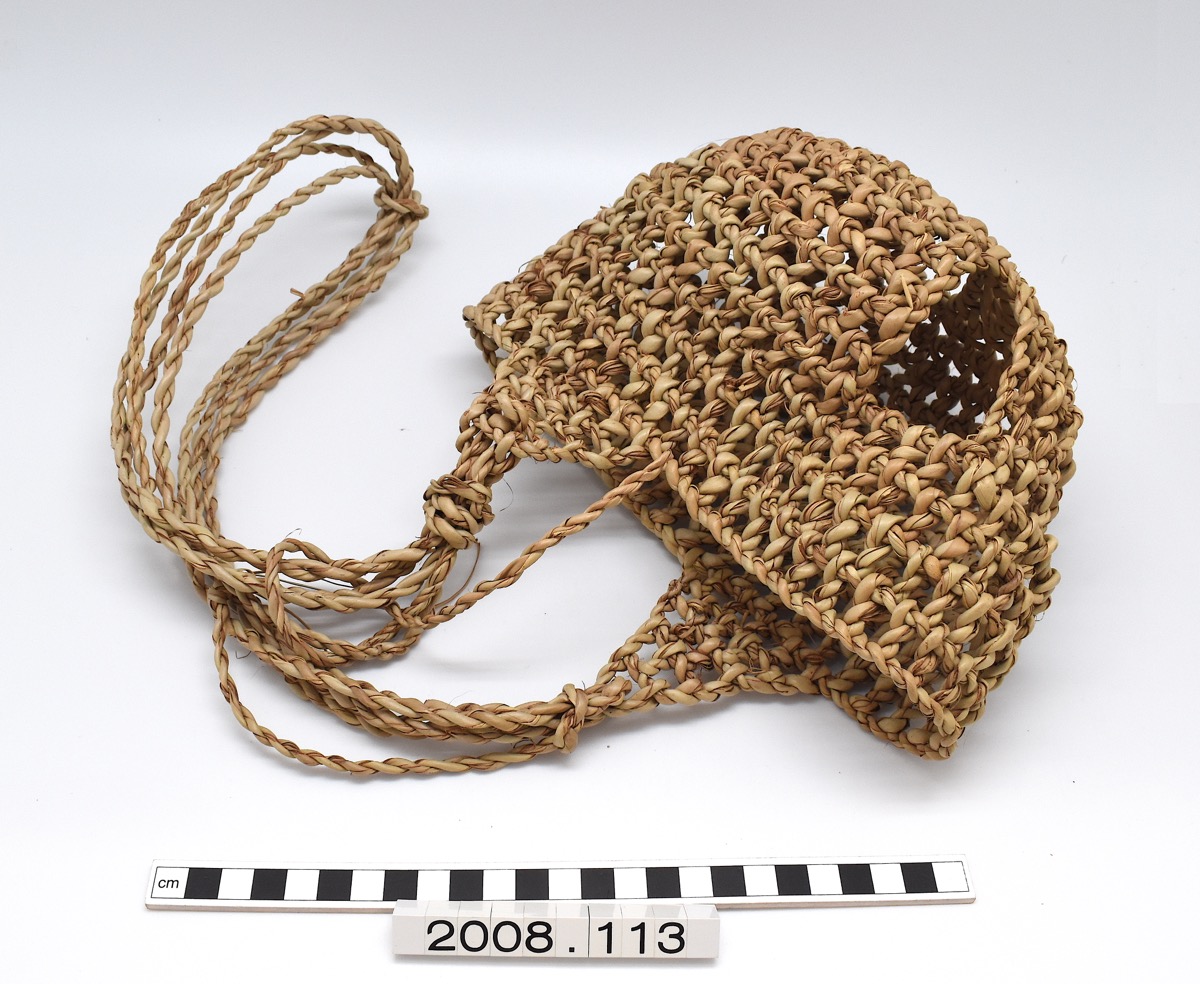
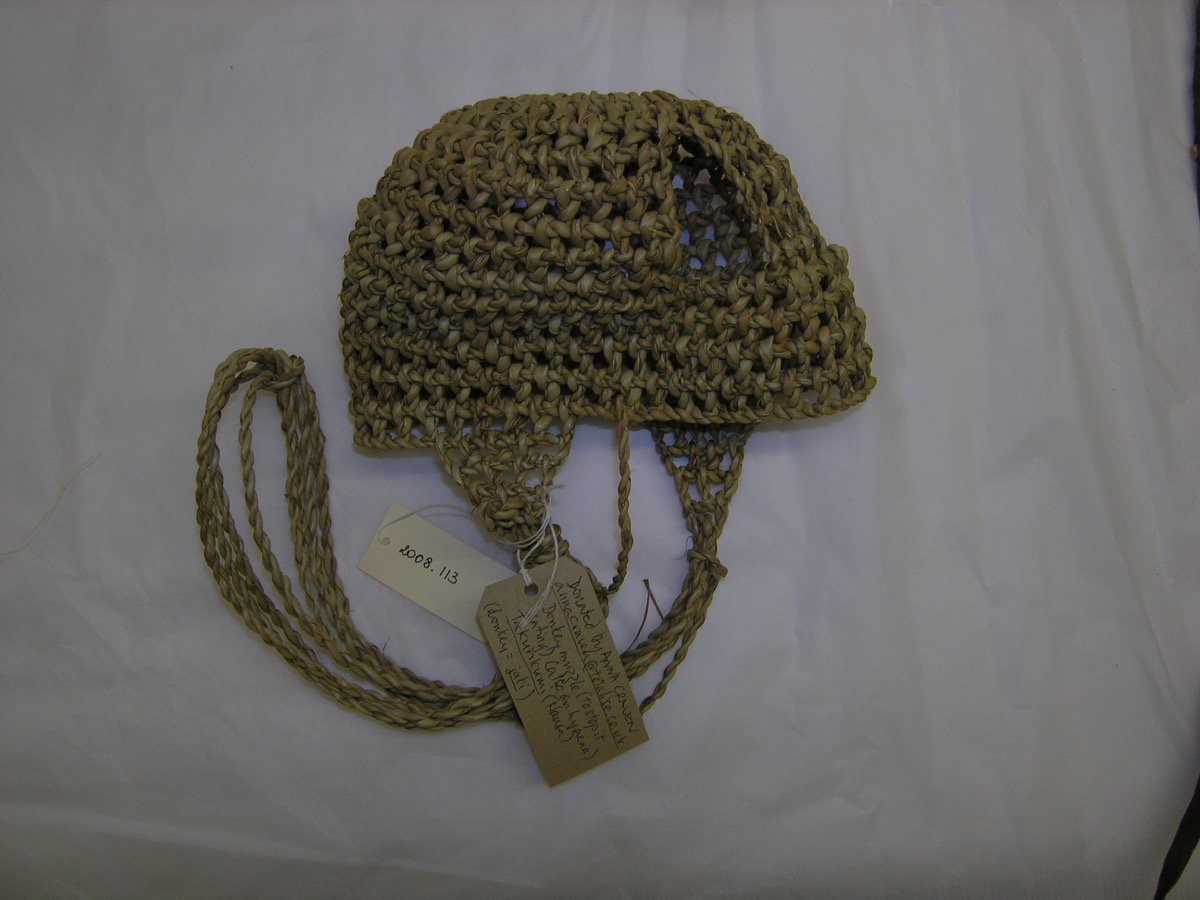
Takunkumi. Netted donkey muzzle made from asabari plant fibres. It is rounded, and has two triangular holes in one side, likely for the donkey's nostrils. There are two triangular protrusions on opposite sides of the rim, which are connected with four twisted plant fibre cords, which presumably hold the muzzle in place.
Place
Africa; West Africa; Nigeria; Northern Nigeria; Kano
Period
Source
Craven, Anna [field collector and donor]
Department
Anth
Reference Numbers
2008.113
Cultural Affliation
Hausa
Material
Plant; Fibre
Local Term
takunkumi (muzzle in Hausa); Jaki or jakii (Donkey)
Measurements
270mm
Events
Context (Field collection)
Bought by Anna Craven in Kano market in the early 1970s.
Event Date
Author: Lucie Carreau
Context (Analysis)
The plant fibres from which this object is made come from the Strophanthus hispidus DC. [family APOCYNACEAE]. The plant is called 'asabari' in Hausa.
Event Date
Author: Eleanor Beestin-Sheriff
Context (Production / use)
Used to stop the donkey from eating whilst working.
Event Date
Author: maa
Description (Physical description)
Netted donkey muzzle made from plant fibres of the Strophanthus hispidus DC. [family APOCYNACEAE] which is called asabari in Hausa. Muzzle is circular in shape with two openings. The bottom rim has two knotted triangles from which twisted plant fibre cords are hanging going from one rim to the other in a large loop.
Event Date 18/12/2008
Author: maa
Context (Analysis)
Label attached to the muzzle that notes 'Donkey muzzle, (to stop it eating) (also on hyaena) TAKUNKUMI (Haus) (Donkey =
jaki) Made of asabari plant used for mats (? palm) Kano market ?1970.
Notes from Anna Craven 3 October 2009 , Acquired probably in 1970, at Kano market.
The muzzle is called a takunkumi (Hausa) and is used on donkeys (Jaki or jakii -Hausa), but can also be used on also hyenas which can be used as performing animals.
Probably made from Raphia sudanica, raphia palm which is used for mats, rope (leaves) etc. Asabari may refers to bark from the palm which is used for blinds etc.
Event Date 6/5/2015
Author: Rachel Hand
Description (Physical description)
Takunkumi. Netted donkey muzzle made from asabari plant fibres. It is rounded, and has two triangular holes in one side, likely for the donkey's nostrils. There are two triangular protrusions on opposite sides of the rim, which are connected with four twisted plant fibre cords, which presumably hold the muzzle in place.
Event Date 3/9/2021
Author: Eleanor Beestin-Sheriff
FM:265782
Images (Click to view full size):