Accession No
E 1916.143.82
Description
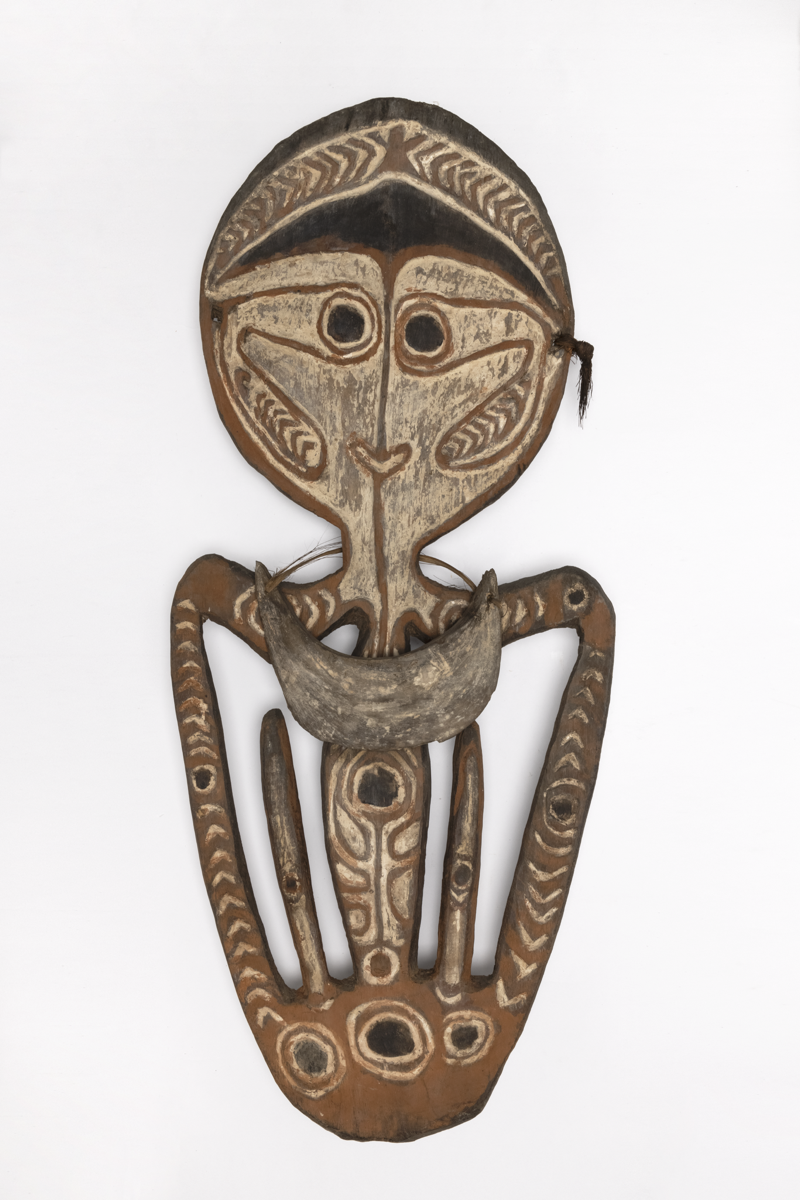
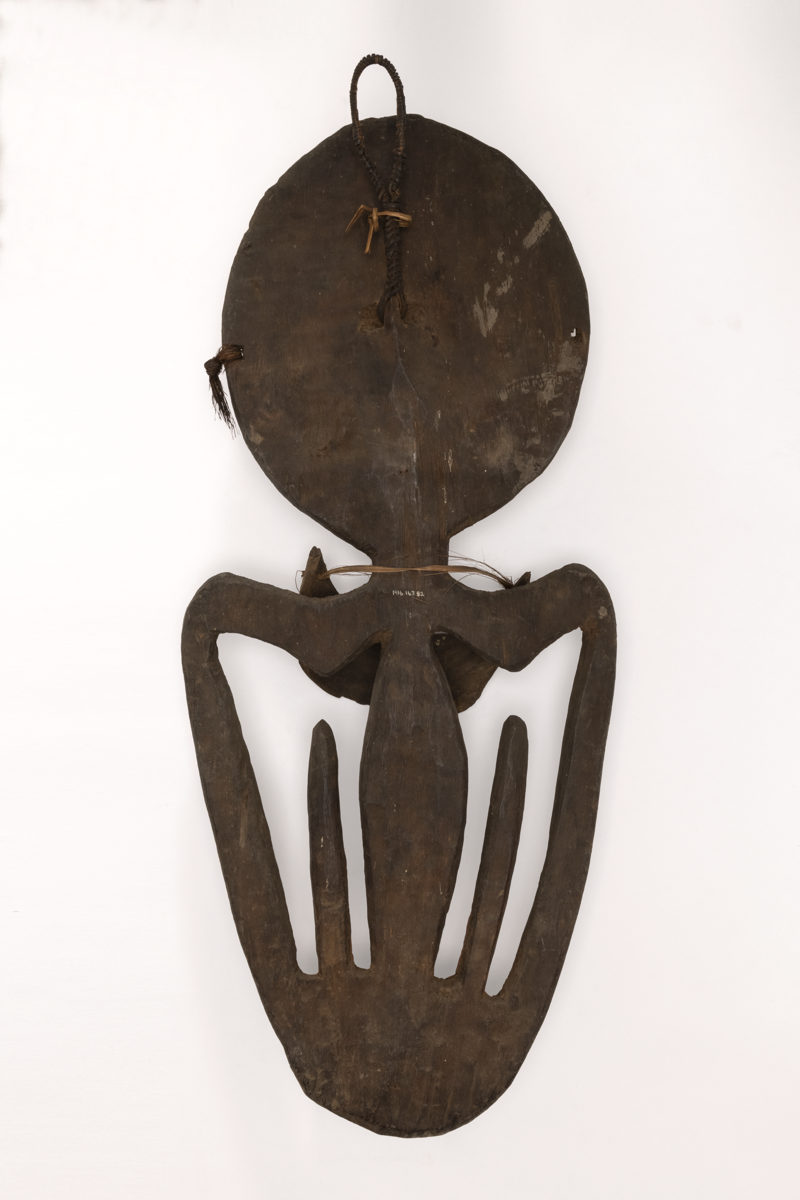
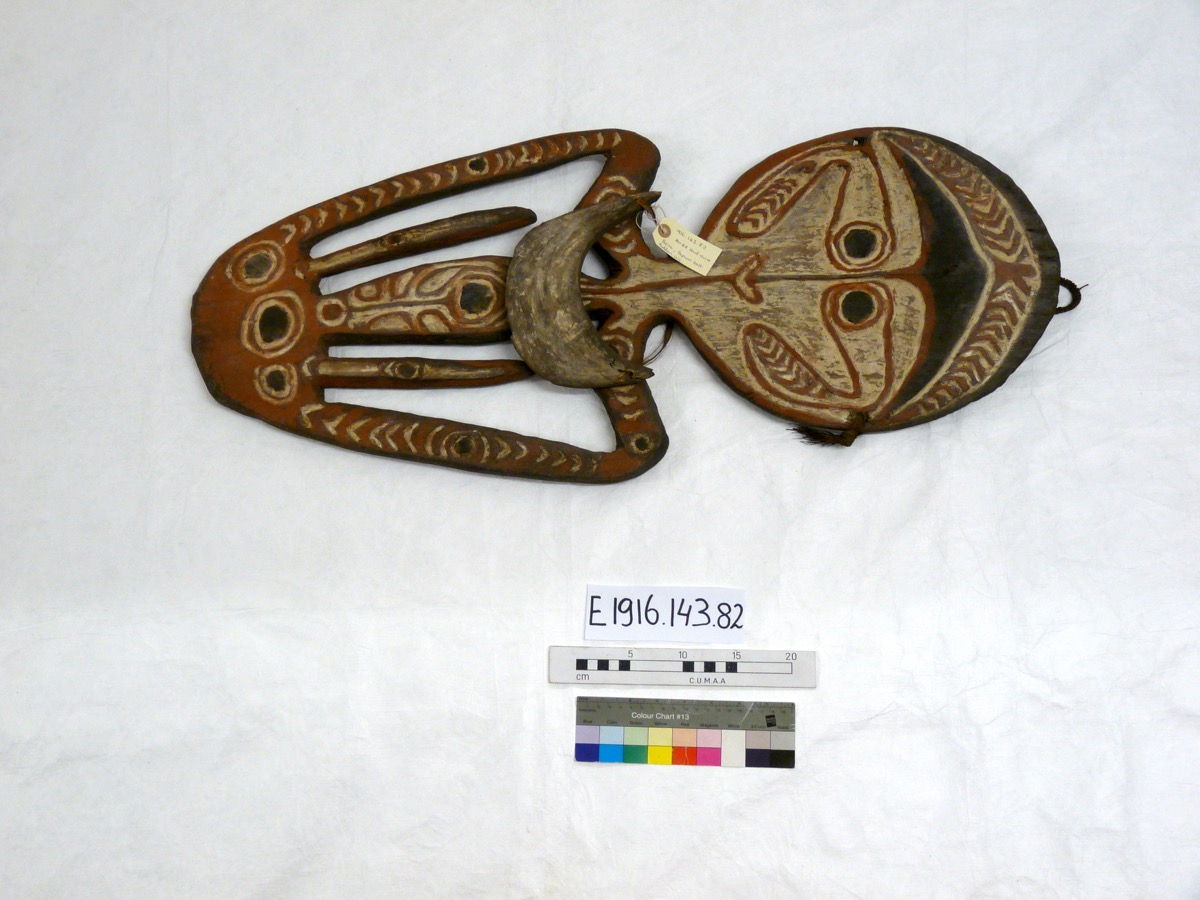
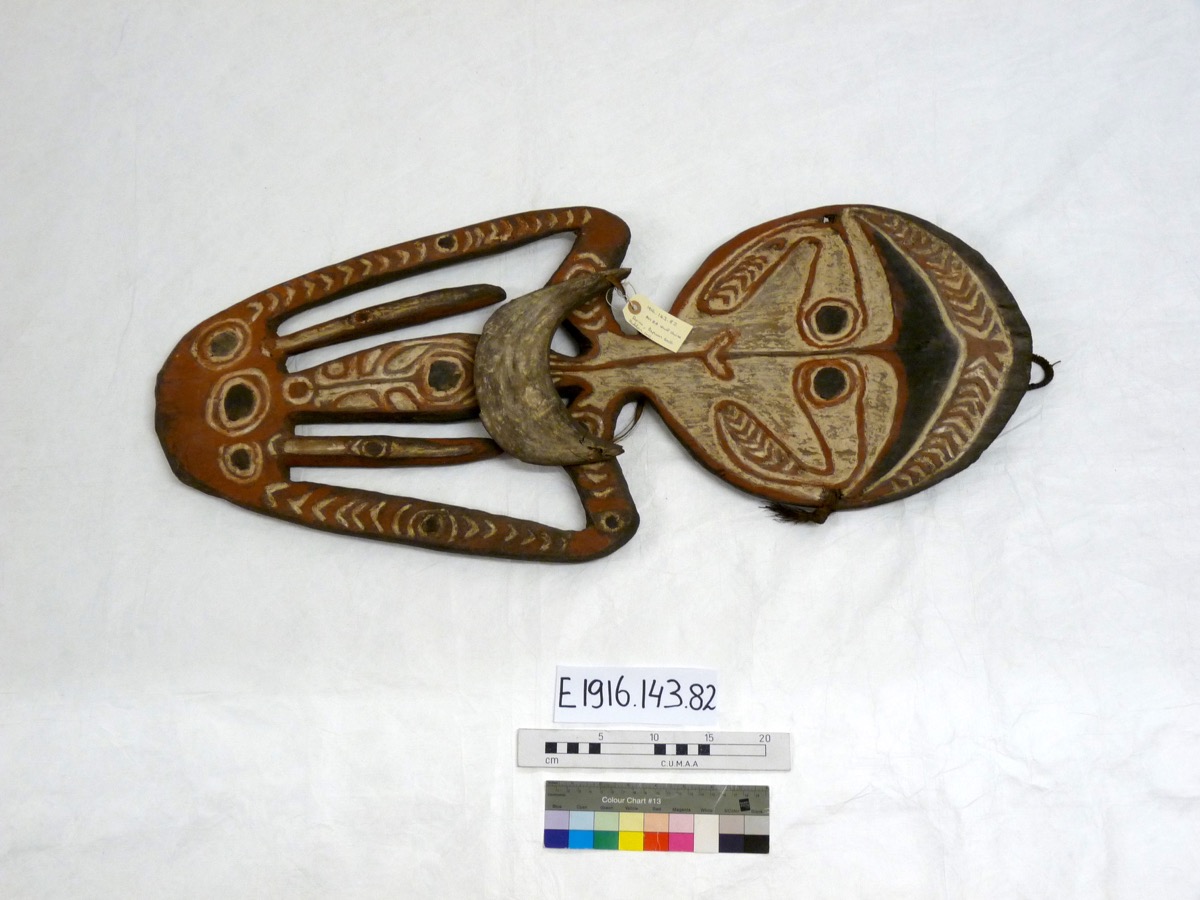
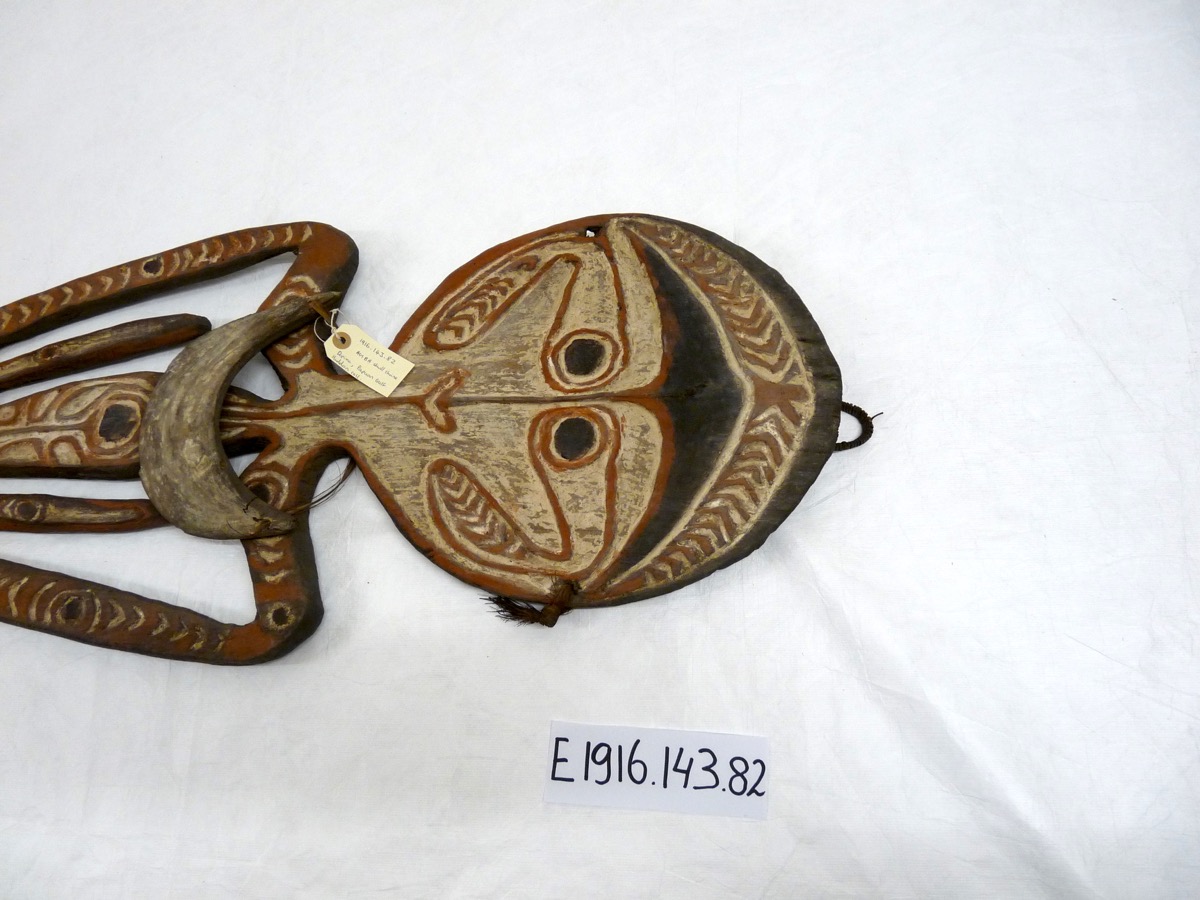
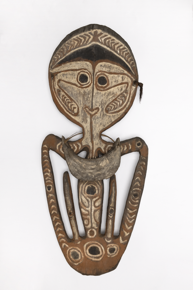
Agiba. Carved board representing a human, to the hooks (?flexed legs) of which skulls of human victims are attached. The agiba is tied to 2 posts and in front of it is a shelf, pepe, on which the skulls, oro, or opuoro, rest.
Place
Oceania; Melanesia; Papua New Guinea; Papuan Gulf; Goaribari Island; Dopima
Period
Source
Haddon, Alfred Cort
Department
Anth
Reference Numbers
E 1916.143.82; MAA: Z 9371
Cultural Affliation
Kerewa Tribe
Material
Wood; Pigment
Local Term
Board: Agiba; Shelf: pepe; Skulls: oro or opuoro
Measurements
6mm x 870mm x 360mm
Events
Loan (Exhibition)
Initial enquiry only
Event Date
Author: maa
Context (Related Documents)
Duplicate catalogue card notes 'Agiba. Probably an ancestor shrine. In front is the original shelf, Pepe, on which rest human skulls, oro or opuoro, probably of enemies or victims, these being attsched by long loops to the hooks of the Agiba. The whole is lashed to the poles which reach from the floor to the roof.'
Event Date 1916
Author: maa
Context (References)
Haddon's photograph of 'agiba with skulls 50-60 in number (2 bought)' (Haddon 1918). is MAA P.47921.ACH2.
Illustrated in Haddon, A.C. (1918) "The Agiba Cult of the Kerewa Culture" in Man, pp. 177- 183, p. 178, Fig. 2.
Event Date 1918
Author: rachel hand
Context (References)
Haddon, A.C. (1918) The Agiba Cult of the Kerewa Culture, in MAN XVIII (Dec 1918), No. 99.
Haddon and his daughter, Kathleen Rishbeth arrived in the Papuan Gulf on October 7th, 1914. They spent two weeks in the Delta Division, the administrative division that covered the western side of the Papuan Gulf before leaving the region for Port Moresby. Haddon accompanied Assistant Resident Magistrate H.C. Cardew to Goaribari Island without Kathleen Rishbeth from October 10 - 12.
In Haddon's papers. On Oct. 12, 1914 at Dopima, Goaribari island Haddon visited a dobu (men's house) and "photographed agiba with skulls 50-60 in number (2 bought)".
Event Date 1918
Author: maa
Description (CMS Description)
Agiba. Carved board representing a human, to the hooks (?flexed legs) of which skulls of human victims are attached. The agiba is tied to 2 posts and in front of it is a shelf, pepe, on which the skulls, oro, or opuoro, rest.
Event Date 8/2/2011
Author: maa
Context (Display)
'Exhibited: Agiba board on display (Left Grid: No. 4.) in Gifts and Discoveries, LKS Gallery from 25 May 2012- 17 February 2013
Event Date 2012
Author: Rachel Hand
Context (CMS Context)
Exhibited: Board on loan to 2 Temple Place, London, 30 January - 27 April 2014, and the Fitzwilliam Museum, Cambridge, 26 May- 27 July 2014, as part of the UCM exhibition, Discoveries: Art, Science and Imagination. Returned 4 August 2014.
Event Date 6/8/2014
Author: Remke van der Velden
Context (Related Documents)
Duplicate card for Z 9371 notes 'Agiba. Head-shrine' and 'Kerewa culture'
Event Date 2016
Author: maa
Conservation ()
CON.2013.153 |
Event Date 1/3/2016
Author: maa
Loan (Exhibition)
Initial enquiry only
Event Date 11/1/2017
Author: MAA Admin
FM:263677
Images (Click to view full size):