Accession No
2001.25
Description
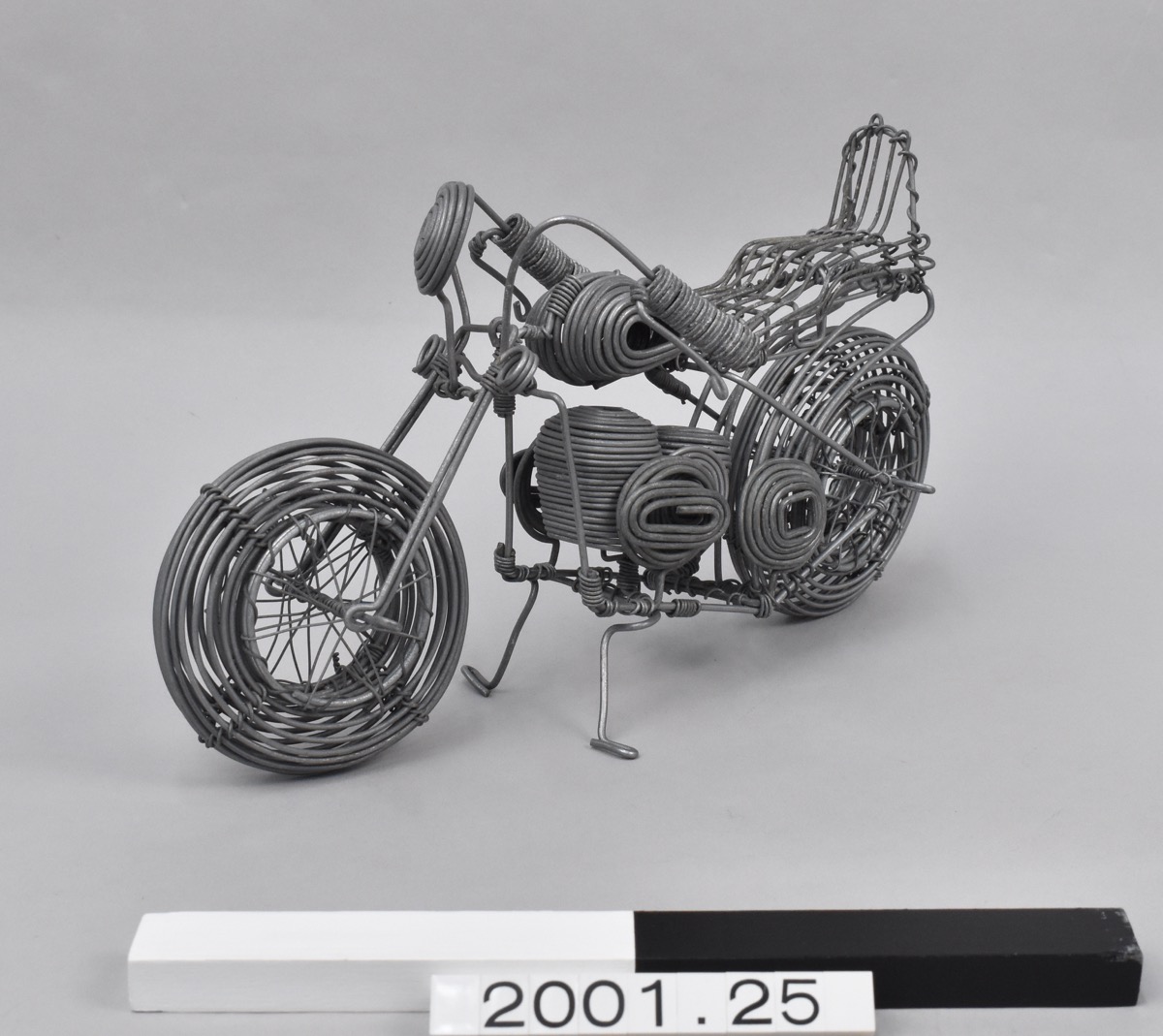
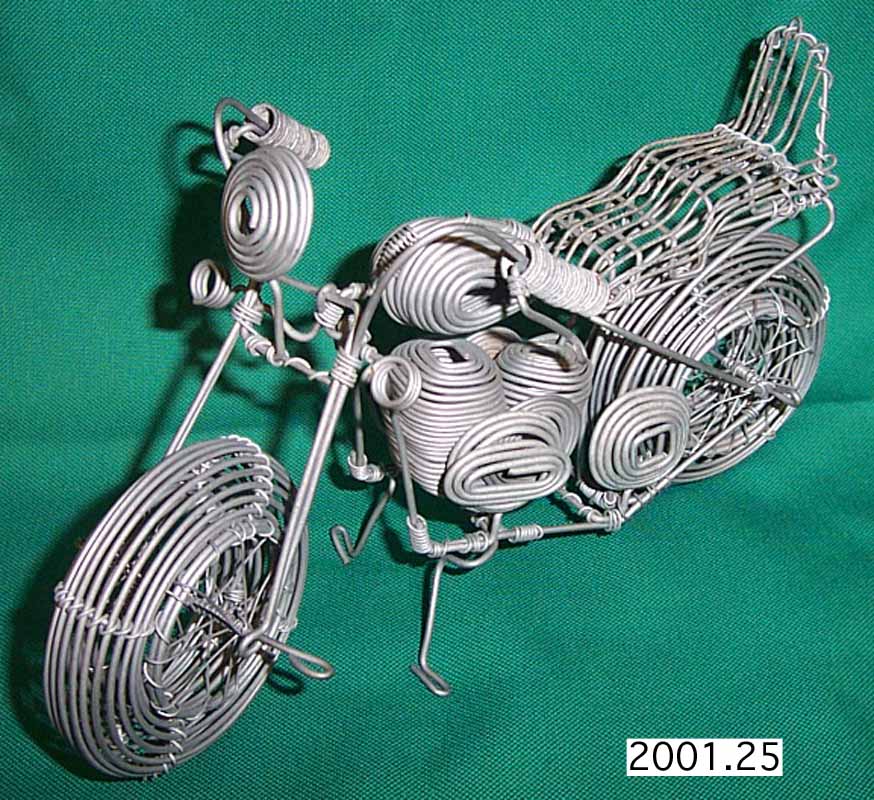
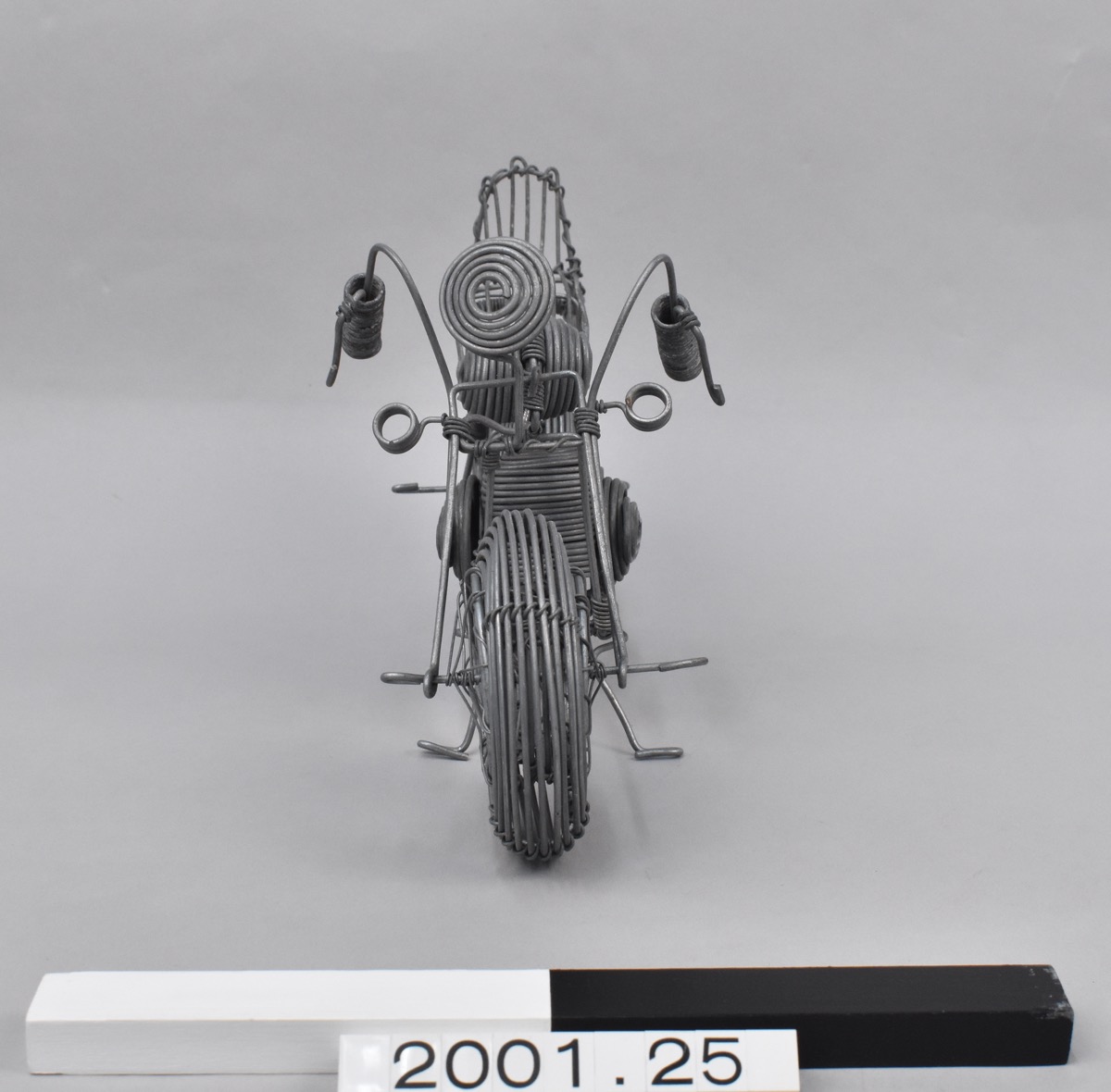
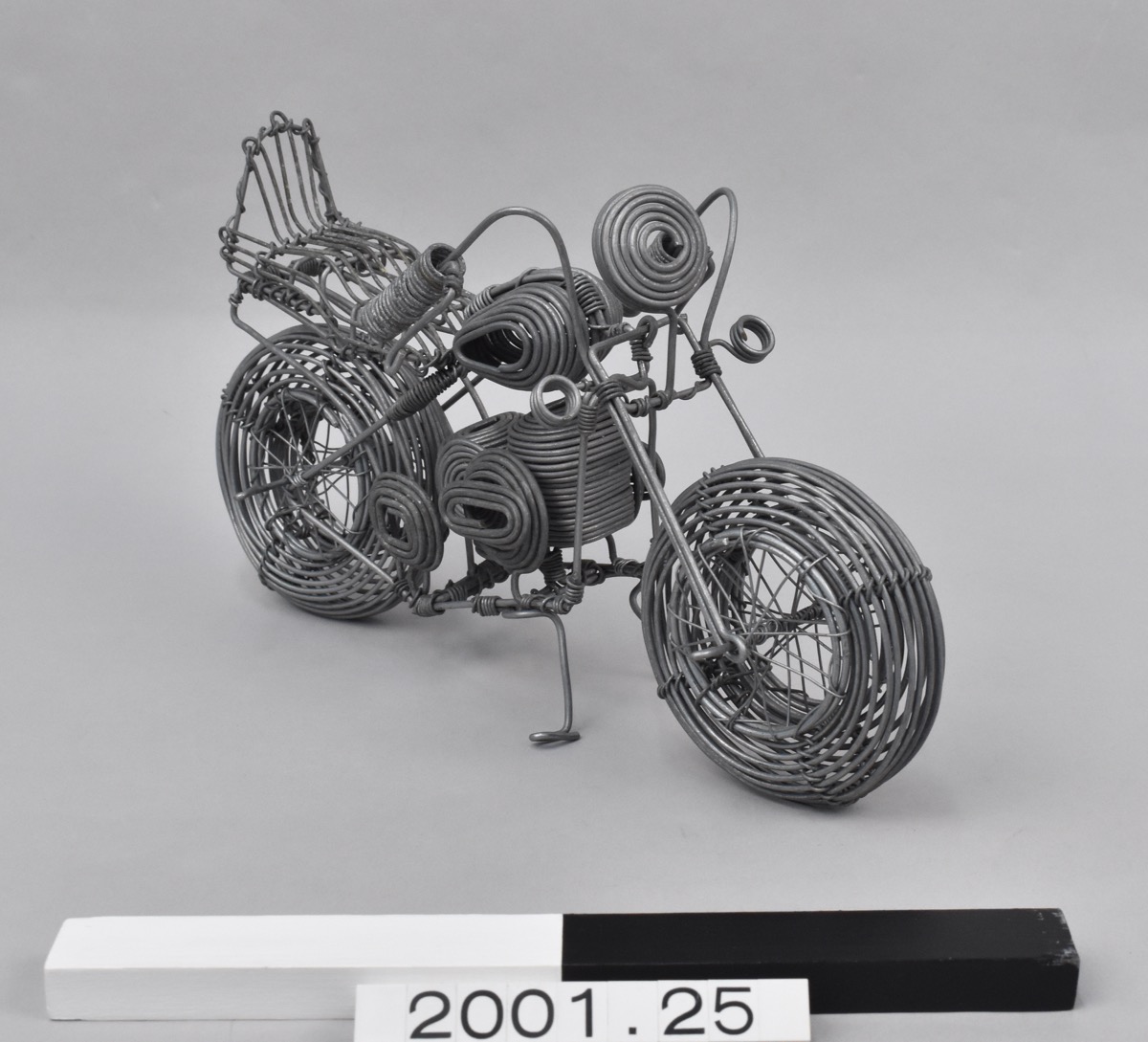
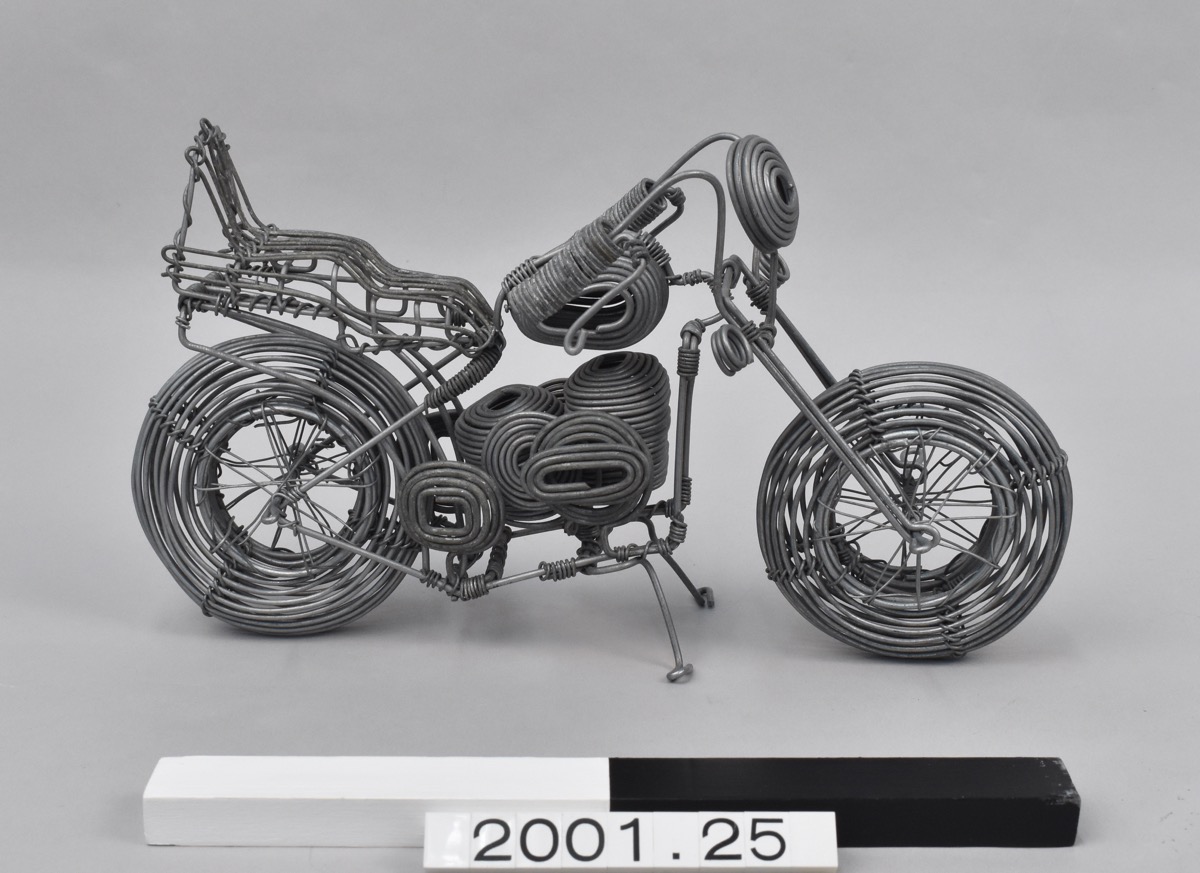
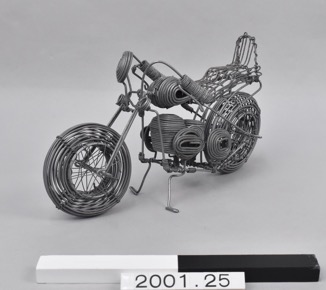
Wirework motorbike made by Raymond Sazilekhama. Various features are rendered including the petrol tank, engine, headlamp, handlebars, wheels and the seat. Some features like the tyres and the seat are made of open wirework, while others like the handles and the petrol tank are tightly worked. The motorbike is free-standing and balanced on two props. The wheels of the bike rotate and the handlebars turn. Made from at least three thicknesses of wire, all of a silver-grey colour.
Place
Africa; Southern Africa; South Africa; Cape Town; Rondebosch; 'Craft in the Park'
Period
Source
Sazilekhama, Raymond [maker] Tanner, Julia [collector]; Crowther-Beynon Grant [monetary donor]
Department
Anth
Reference Numbers
2001.25
Cultural Affliation
Xhosa
Material
Metal
Local Term
Measurements
Events
Context (Field collection)
This motorbike was purchased on 13 May 2000 at an outdoor craft market called 'Craft in the Park', in Rondebosch, Cape Town, from the maker at his stall.
This object was collected by Julia Tanner while undertaking fieldwork in South Africa from March-May 2000. The fieldwork was financed by MAA's Crowther-Beynon Fund, in order to research and update MAA's South African collections.
Event Date 13/5/2000
Author: Lucie Carreau
Context (Production / use)
The maker: Raymond Sazilekhama was born in Mqanduli, Transkei, South Africa. He currently lived in Mitchells Plain, Cape Town. He learnt the craft of wireworking while living in Zimbabwe for a period of 4-5 years. He produced a wide variety of wirework objects and sold them under the business name of 'Mixed Ideaz 2000'. These items included flowers, animals, photo frames, guitars and CD holders.
Event Date 2001
Author: Lucie Carreau
Context (Other)
Smaller and larger examples of wirework motorbikes were seen on sale in South Africa during the period of fieldwork (March-May 2000). There were also many other types of objects produced, such as saxophones, cars, animals and flowers, CD holders etc. Most of the wirework artists encountered during fieldwork were from Zimbabwe; only two were South Africans, including Raymond Sazilekhama. Wirework objects are another popular tourist item and are commonly available.
At the time of research (March-May 2000) the East London Museum had a display of wirework objects. The text accompanying the display read: 'Wirework - Among the Xhosa-speaking people wire obtained from European traders was traditionally used in the manufacture of items of adornment such as waistbands, bangles and anklets. More recently wire has been used in a range of creative alternative ways, some of which are exhibited here. These include toys made by children, items manufactured specifically for sale to the tourist market and objects produced for the mainstream art market...'. The wirework objects on display included egg cups, napkin rings, a candle-holder, a car and a bowl.
See exhibition programme in MAA archives, 'Durbs to Freo Wire and Metal Act. Perth International Arts Festival 2000. Exhibition of Zulu Art, 29 January-20 February', for an overview of contemporary South African crafts and a detail picture of a wirework motorcycle on the front page.
Event Date 2001
Author: maa
Description (Physical description)
Wirework motorbike. Various features are rendered including the petrol tank, engine, headlamp, handlebars, wheels and the seat. Some features like the tyres and the seat are made of open wirework, while others like the handles and the petrol tank are tightly worked. The motorbike is free-standing and balanced on two props. The wheels of the bike rotate and the handlebars turn. It is composed of at least three thicknesses of wire, all of a silver-grey colour.
Event Date 26/1/2011
Author: maa
Description (Physical description)
Wirework motorbike made by Raymond Sazilekhama. Various features are rendered including the petrol tank, engine, headlamp, handlebars, wheels and the seat. Some features like the tyres and the seat are made of open wirework, while others like the handles and the petrol tank are tightly worked. The motorbike is free-standing and balanced on two props. The wheels of the bike rotate and the handlebars turn. Made from at least three thicknesses of wire, all of a silver-grey colour.
Event Date 11/1/2023
Author: Annie Tomkins
FM:263649
Images (Click to view full size):