Accession No
E 1902.96
Description
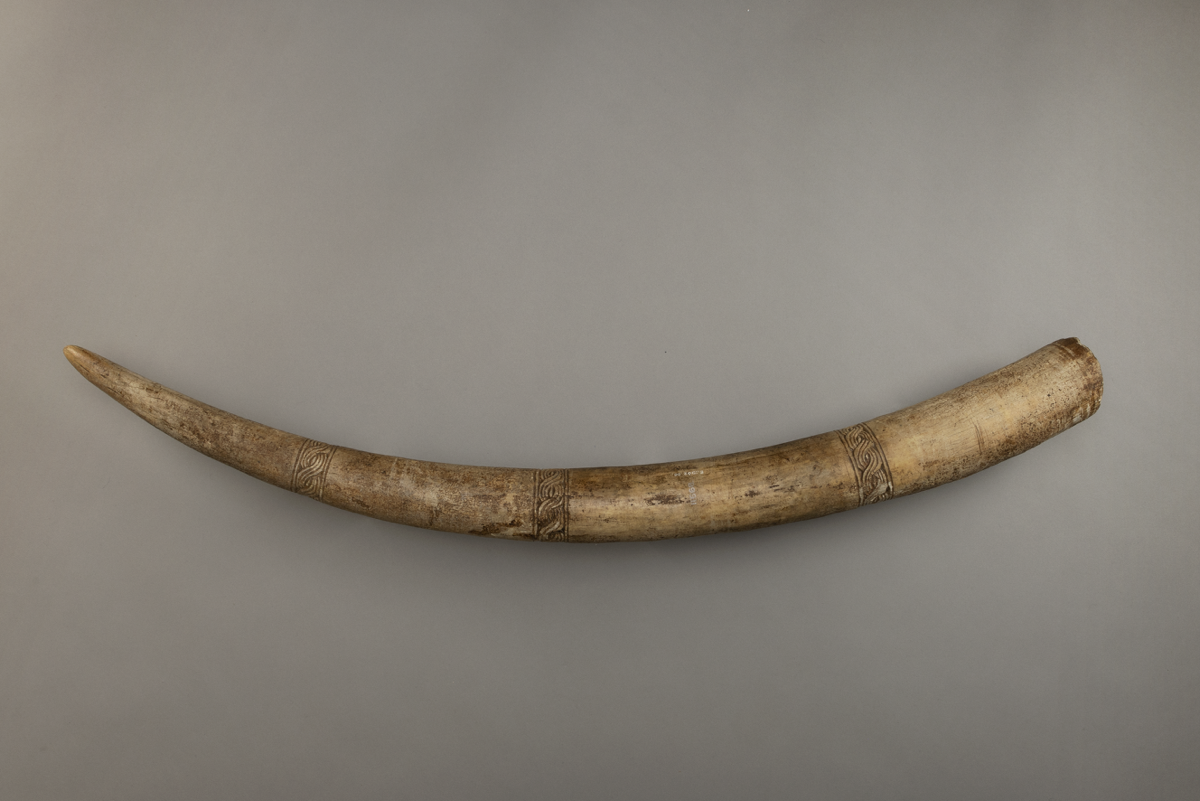
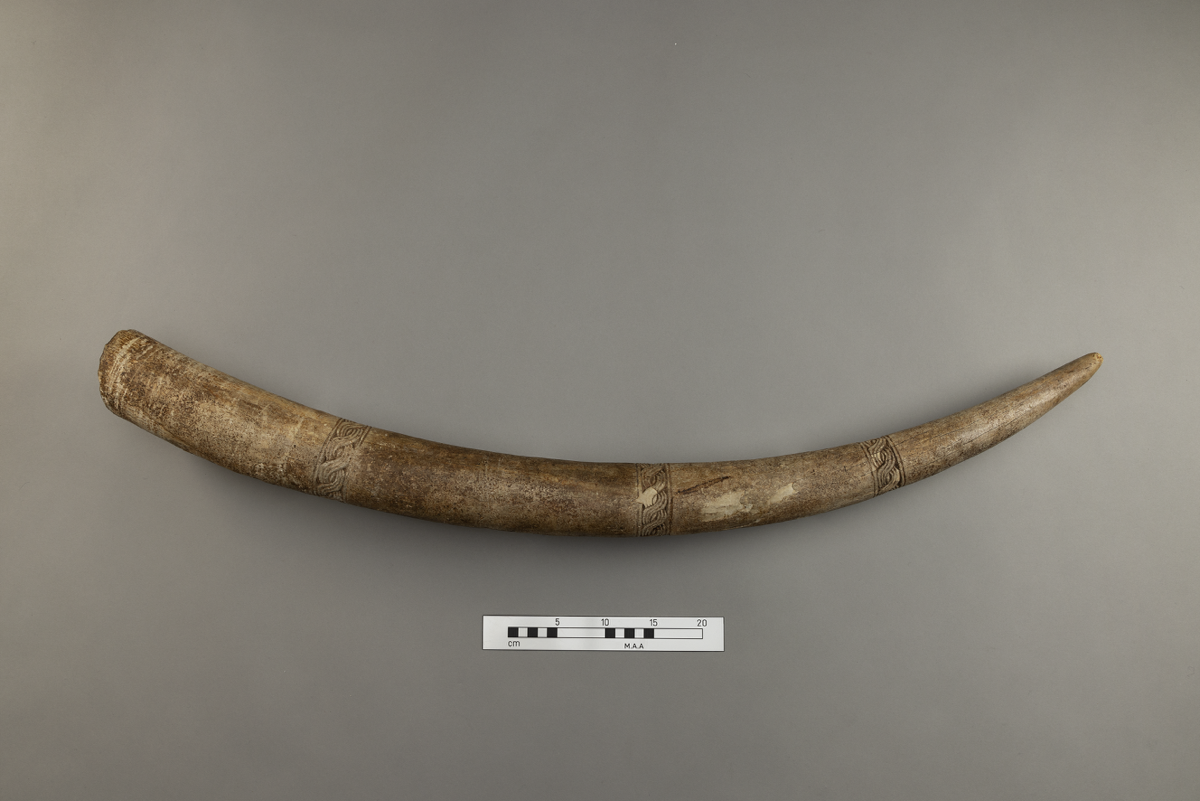
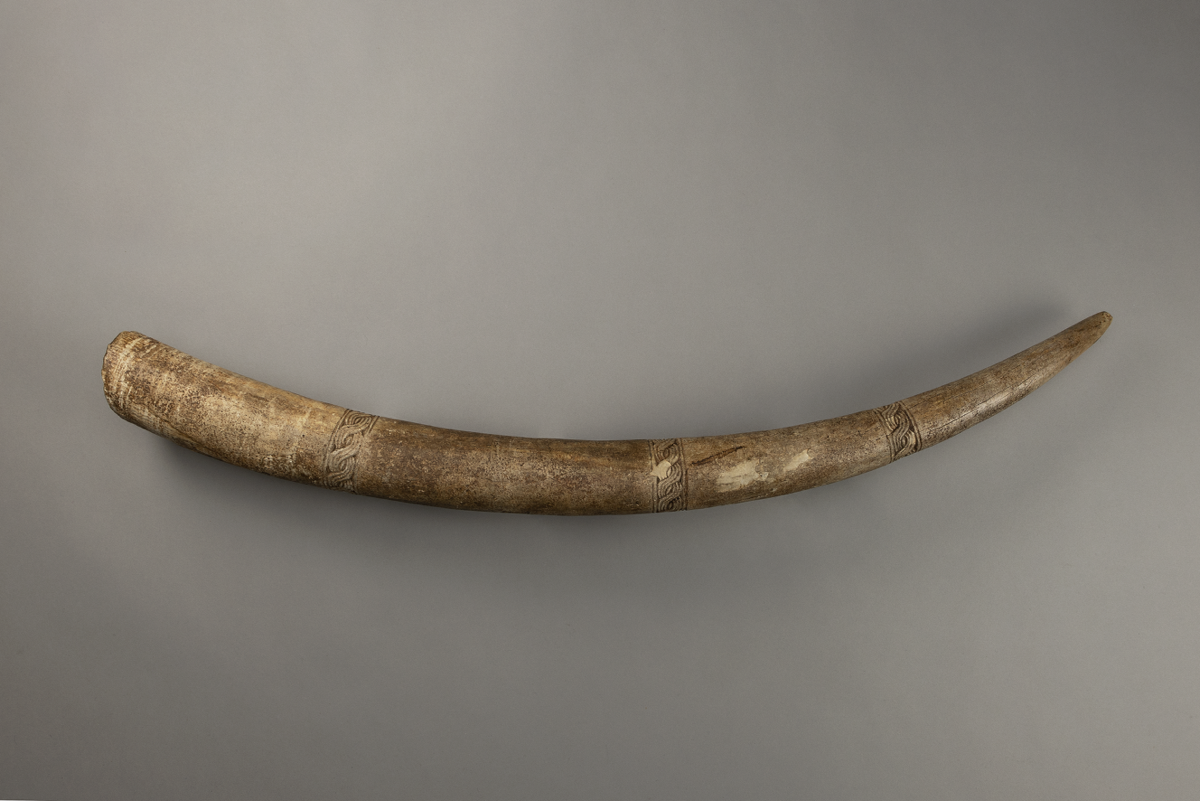
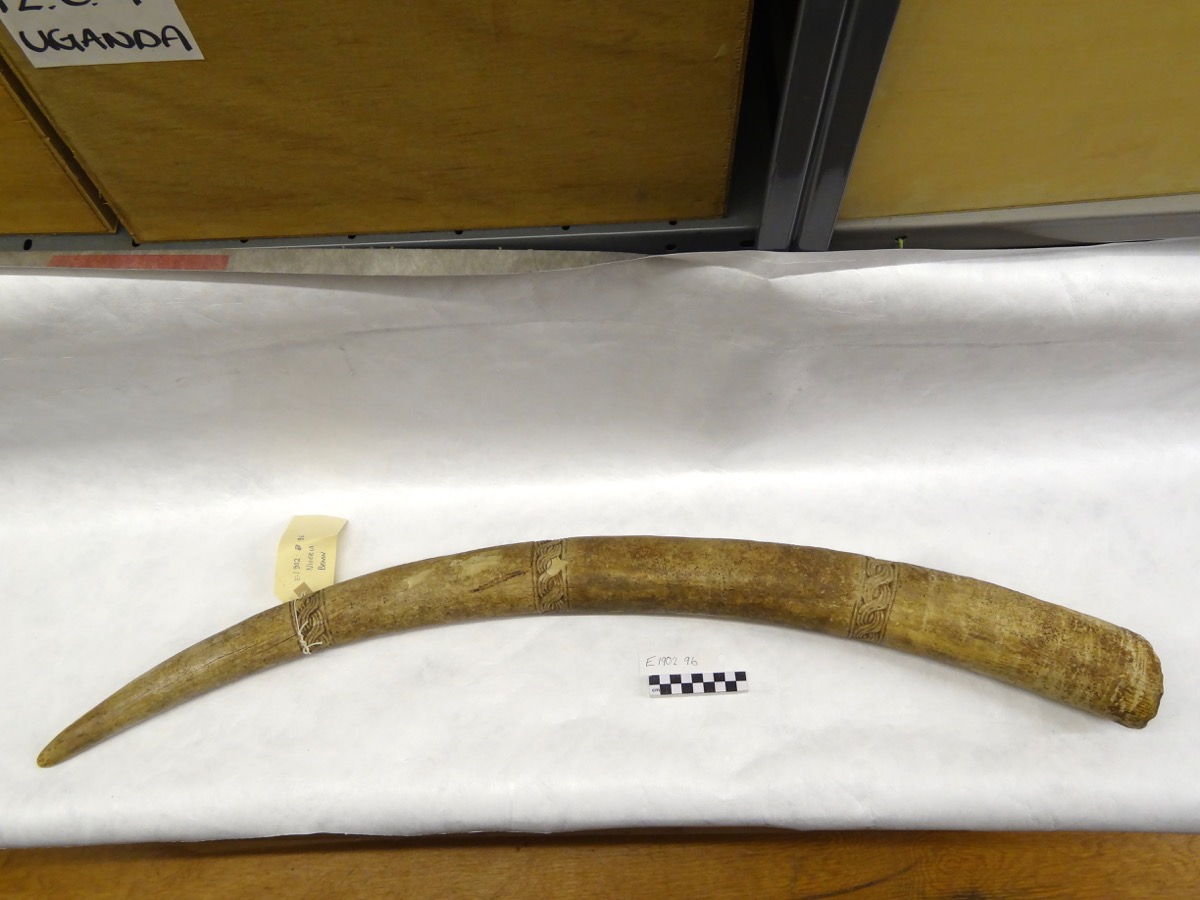
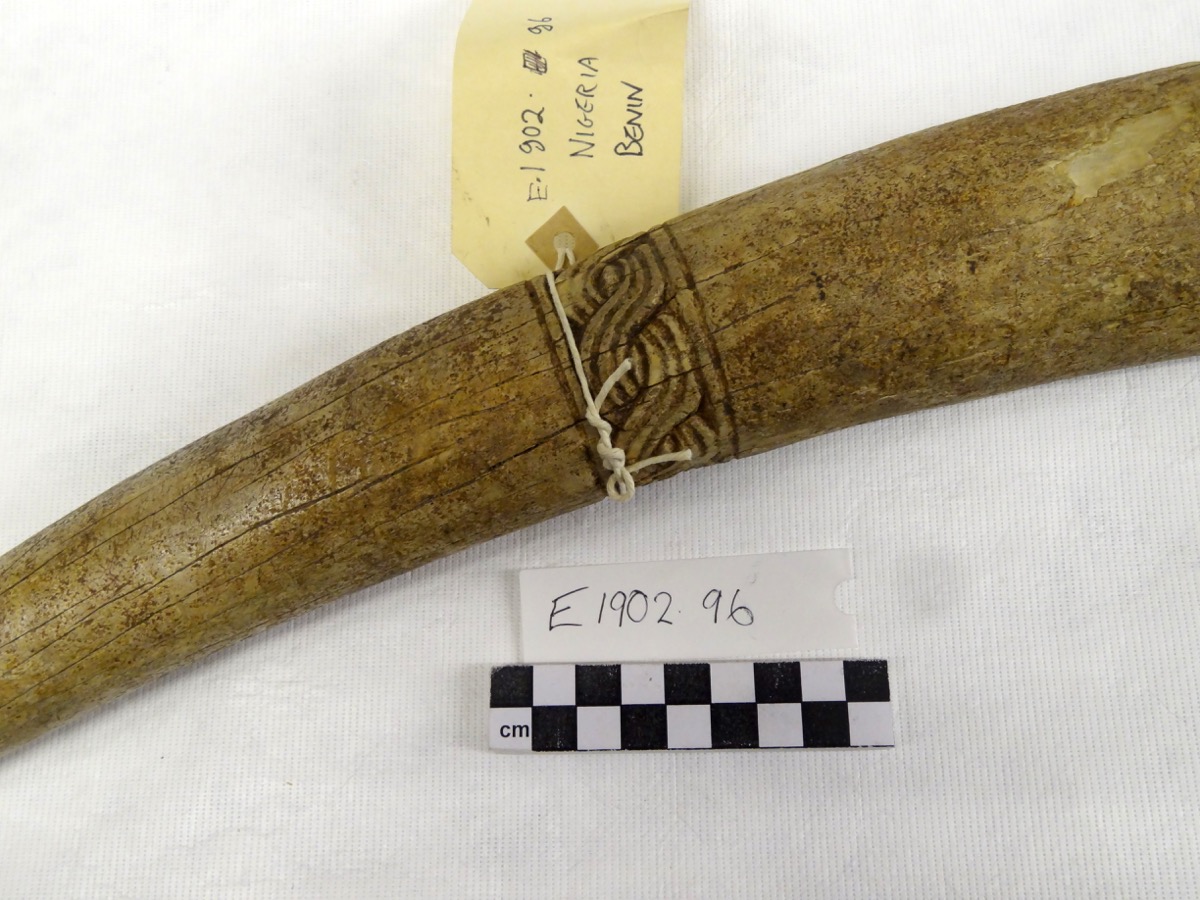
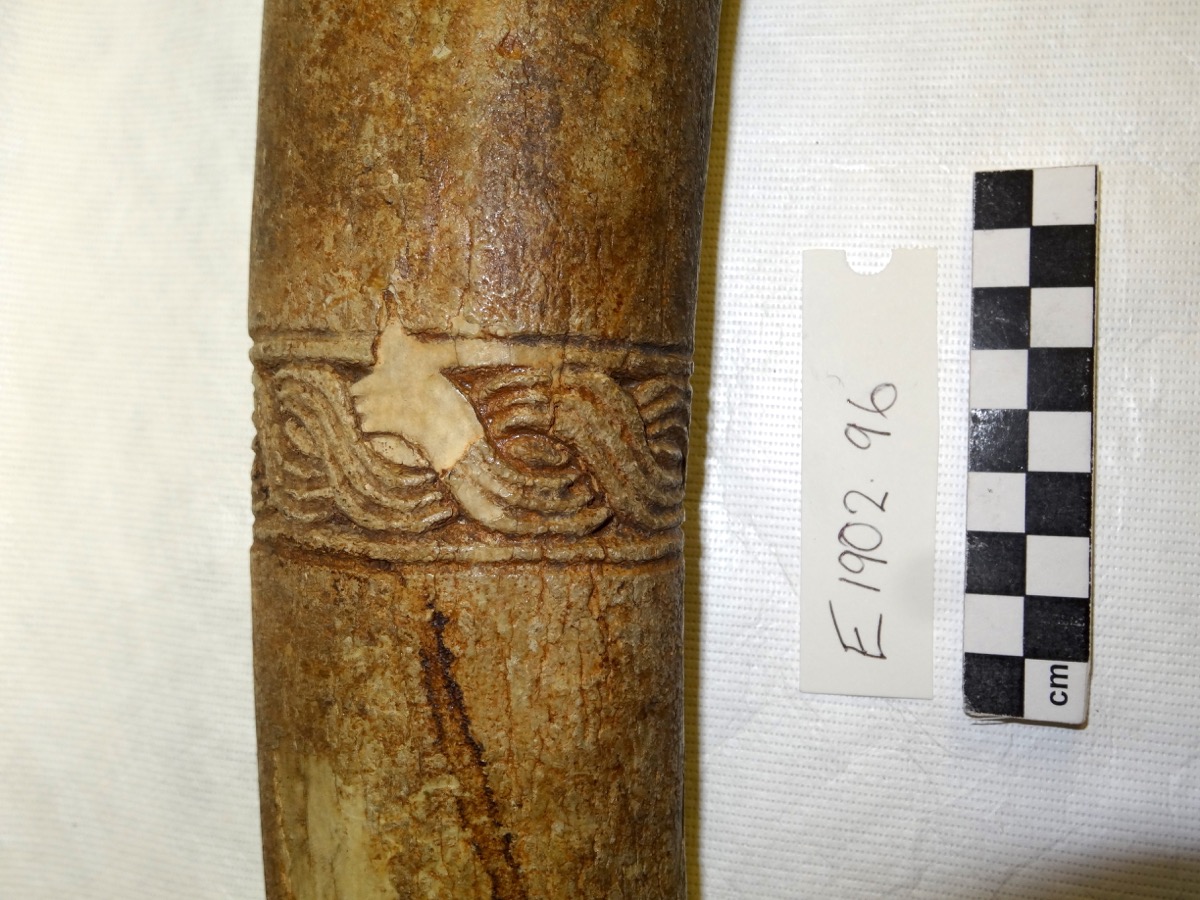
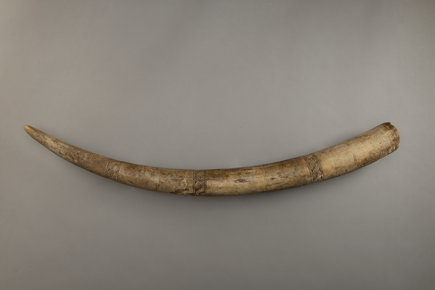
Aken’ni Elao. Altar tusk. Elephant's tusk carved with three encircling bands of interlaced strap work.
Place
Africa; West Africa; Nigeria; South Nigeria; Edo State; Benin City
Period
14th- 19th century
Source
National Commission for Museums and Monuments, Nigeria [owner and lender]; British Colonial Military Campaign on Benin [collector]; Stevens Auction Room [vendor]; Bevan, Anthony Ashley (Prof.) [monetary donor]
Department
Anth
Reference Numbers
E 1902.96; MAA: AR 1903.252
Cultural Affliation
Edo
Material
Ivory
Local Term
Aken’ni Elao [Edo]
Measurements
87mm x 76mm x 1097mm
Events
Context (Auction / Sale)
Catalogue card reads "Purchased Stevens, Professor Bevan's donation"
Event Date 2/6/2000
Author: maa
Description (Physical description)
Catalogue card notes: "An elephants tusk having three encircling bands of interlaced strap work. Midway between the two lower on the outer curve a symbol representing the Roman I is incised. Benin West Africa 1897 Expedition."
Event Date 2/6/2000
Author: maa
Context (Display)
Exhibited in the Open Storage display of Benin material in Andrews gallery from 19 July 2016.
Main label text noted:
Objects of remembrance.
Commemorative heads of bronze and brass were commissioned by the Oba (king) have been of Benin for shrines dedicated to deceased members of the royal house. They supported elephant tusks, often carved to record important events the heads either represent an Oba or Iyoba (Queen Mother) in ceremonial dress.
This consists of multiple strings of coral jewellery wound around the neck and nets of beads over the head as well as elaborate beaded head ornaments. The pupils of the eyes are formed from the iron rods that were used to support the claim old during casting. The two Iyoba (Queen Mother) heads with peaked hairstyles on the far right and left also have iron strips in their foreheads.’
Upper level
Tusks were supported by commemorative heads at shrines and sometimes carved with scenes depicting important events. The smaller task on the left (2016.1) collected in Nigeria between 1908 and 1932 by G.K. Weeks, features Benin regalia including the Eben (ceremonial sword). The larger tusk on the right (E1002.96) is carved with three interlaced bands, the mark of the royal carvers of Benin. It was taken from Benin in 1897 and sold at Stevens Auction Rooms in 1902.
Event Date 2017
Author: Rachel Hand
Context (Field collection)
Collected on the 1897 Punitive Expedition. Details added to the source field
Event Date 26/1/2017
Author: Eleanor Wilkinson
Conservation (Remedial)
CON.2017.3740 | Remedial
Event Date 17/2/2017
Author: Kirstie Williams
Context (Amendments / updates)
'Edo' is both a language and cultural group but the catalogue is presumed to have been using the term 'Edo as a cultural group. The term 'Benin' has been removed from the cultural group field.
Today Benin City is the capital of Edo State and so 'Edo State' has been used in the place field.
Event Date 30/5/2019
Author: rachel hand
Context (Amendments / updates)
E 1902.94- 115 are recorded in the Accession Register as acquired on the 'Benin, West Africa 1897 Expedition’ indicating they formed part of the spoils taken during the looting of Oba Ovonramwen Nogbaisi’s royal palace by British troops led by Admiral Sir Henry Rawson. This punitive expedition was a response to the ambush of a British party led by Acting Consul General James Philips which had sought to enter Benin City during Ague (Igue), the new year festival of renewal, against the wishes of the Oba.
E 1902.93- 115 are annotated in the Register as 'B. Stevens *Prof Bevan' indicating they were purchased at an undated 1902 auction at J.C. Stevens saleroom, 38 King Street Covent Garden, London, with money donated to the Museum’s Accessions Fund by Prof. Anthony Ashley Bevan.
Event Date 30/5/2019
Author: rachel hand
Context (Display)
Catalogue card reads, in blue biro: "1902. E 96 | AFRICA | WEST AFRICA / NIGERIA / An ELEPHANTS TUSK having three encircling bands of interlaced strap work. Mid way between the two lower on the outer curve a symbol resembling the Roman I is incised. L. 3'6". / Benin West Africa 1897 Expedition / Purchased Stevens / Professor Bevan's donation | 1903.252"
Red circular sticker in bottom right corner of card.
Event Date 24/8/2020
Author: Katrina Dring
Context (Amendments / updates)
The phrase 'British Colonial Military Campaign on Benin' has been added to the source field based on the recommendations of Digital Benin. This explicitly links the object to the capture of Benin City by British Navy Forces and members of the Nigerian Coast Protectorate Forces on 18 February 1897. This replaced the previous term 'Benin Expedition'.
The period field has been updated to the '14th-19th century'.
(https://digitalbenin.org/provenance/139; accessed 10.3.2023)
Event Date 27/3/2023
Author: Rachel Hand
Conservation (Monitoring)
CON.2024.5835 | Monitoring
Event Date 5/1/2024
Author: Stephanie De Roemer
Context (Other)
One of 99 objects on deposit from the National Commission for Museums and Monuments (NCMM), Nigeria (pending a physical return to Nigeria).
Event Date 27/1/2026
Author: Jan-Henrik Hartung
Context (Other owners)
In July 2022, the University of Cambridge agreed to repatriate 116 artefacts, including this object, taken from Benin City by the British military in February 1897. A legal transfer of ownership to the National Commission for Museums and Monuments, Nigeria, took place on 27 January 2026.
The source field has been updated accordingly.
Event Date 27/1/2026
Author: Jan-Henrik Hartung
Context (Display)
New free-standing yellow label added to the display case in February 2026 which noted:
‘In July 2022, the University of Cambridge agreed to repatriate 116 artefacts taken from Ben in city by the British military in February 1897. Arrangements are being made to physically return the collection. The artefacts in this case taken during military action are on loan from the National Commission of museums and monuments, Nigeria’.
Event Date 1/2/2026
Author: Rachel Hand
FM:128043
Images (Click to view full size):