Accession No
Z 6123
Description
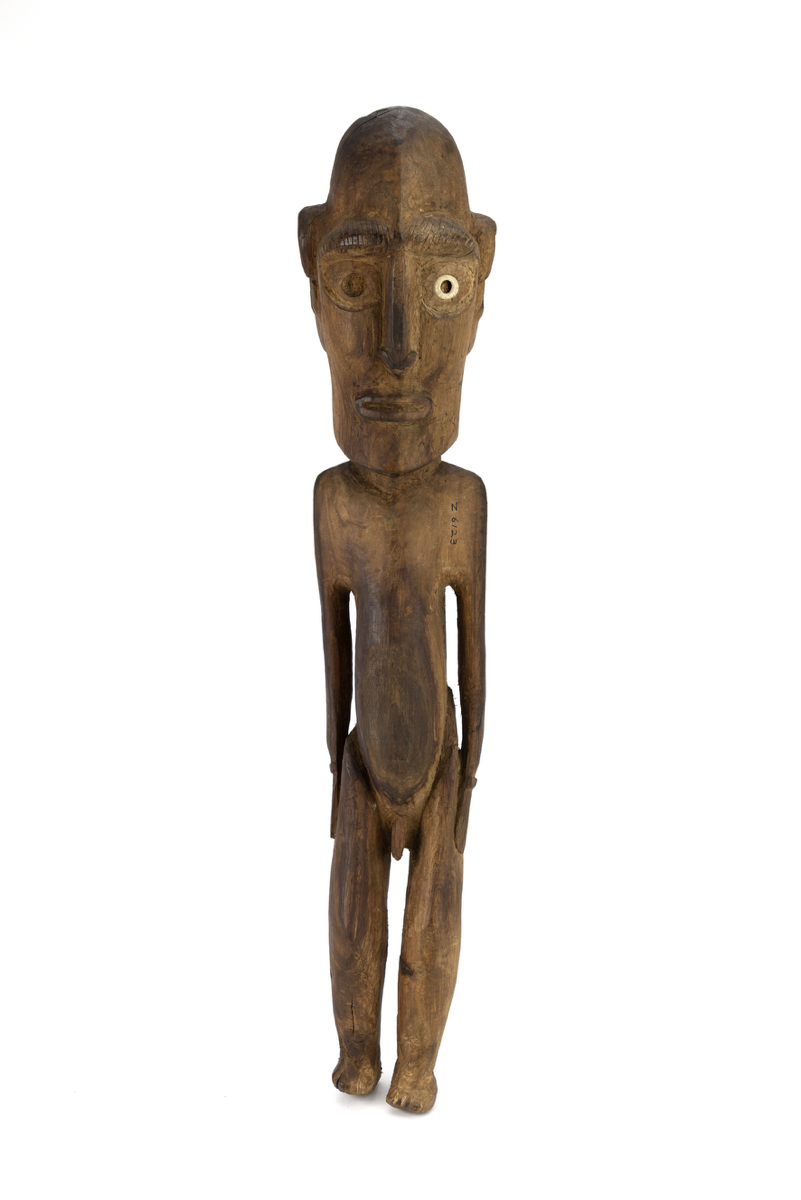
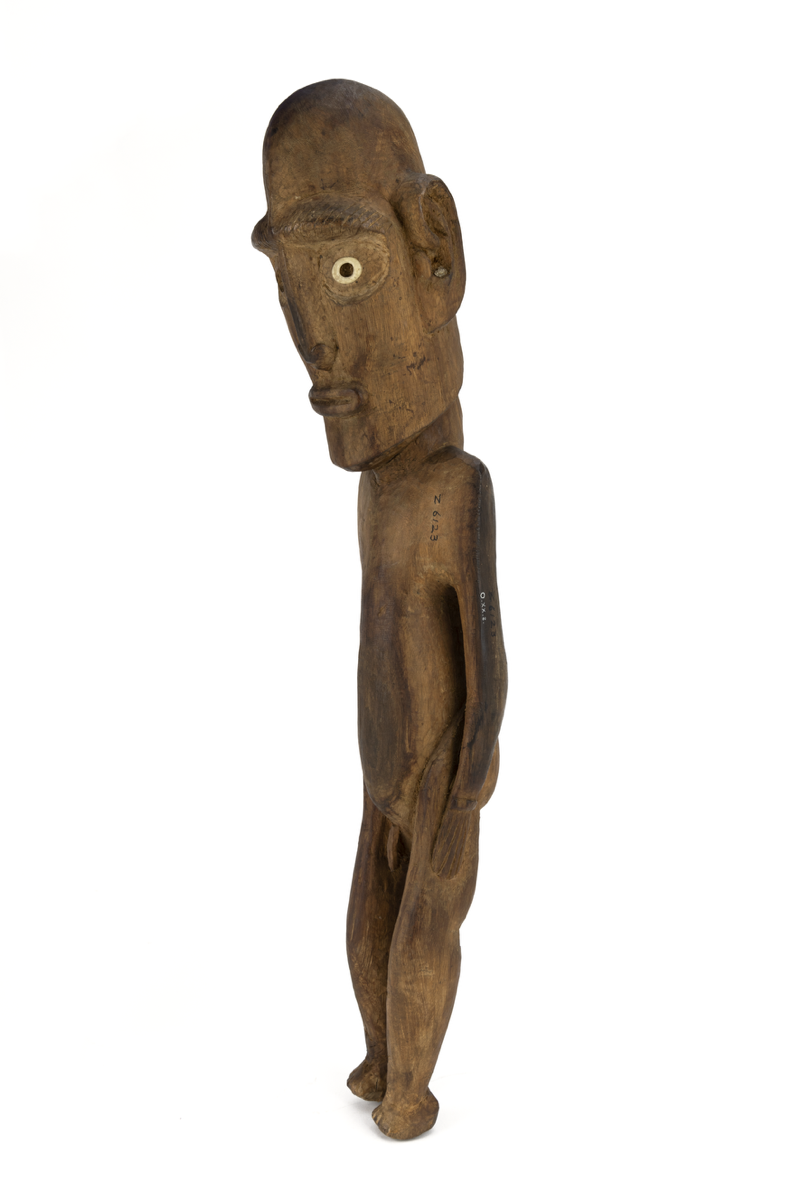
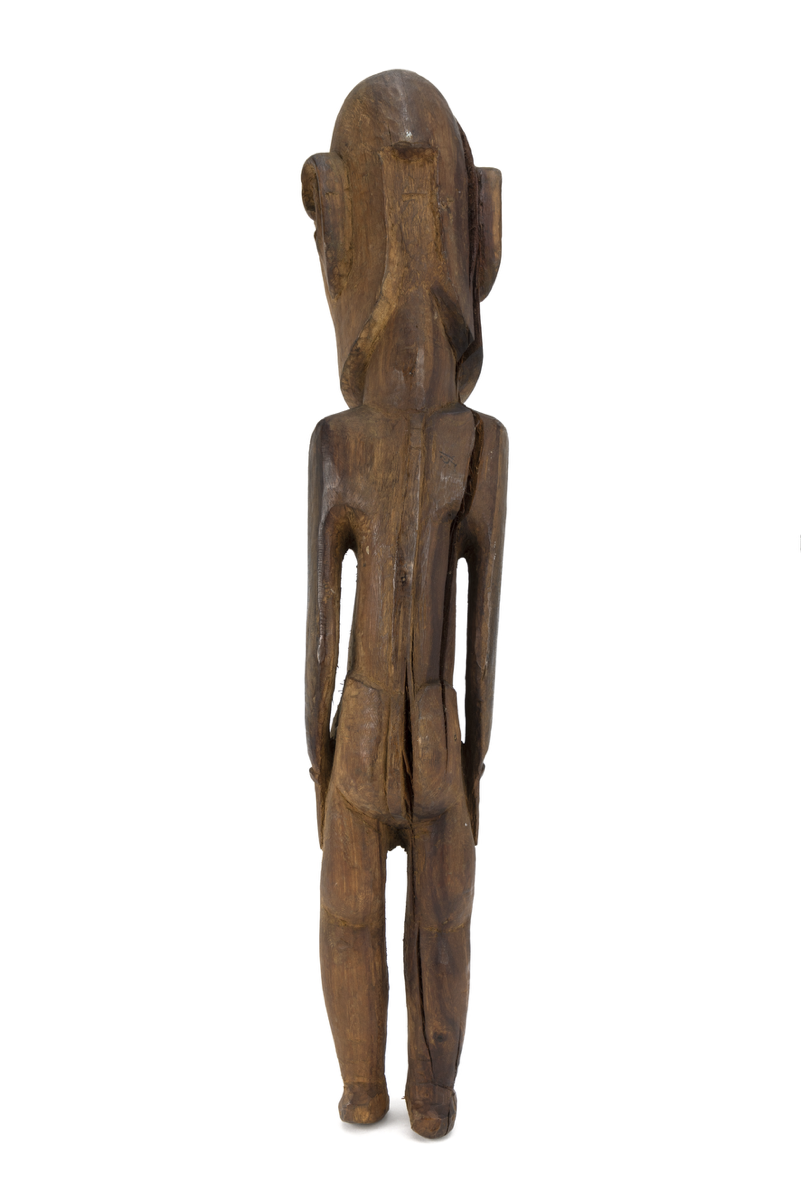
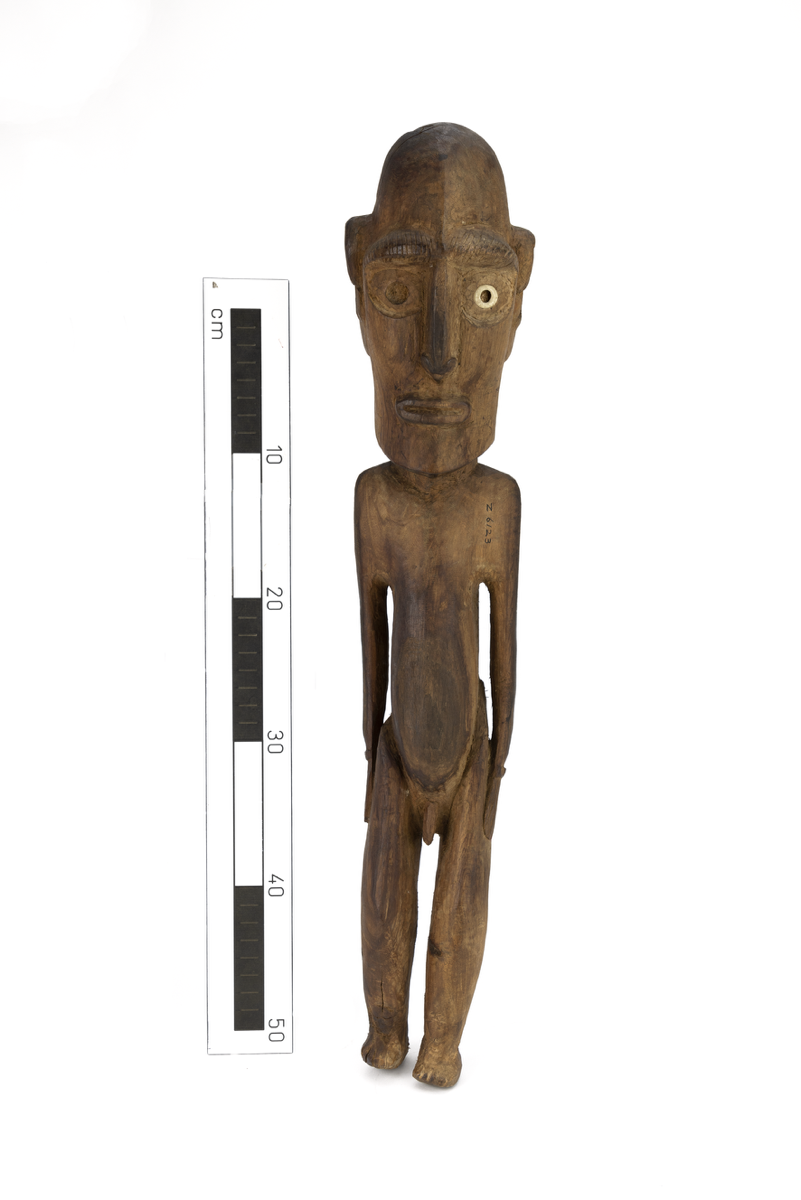
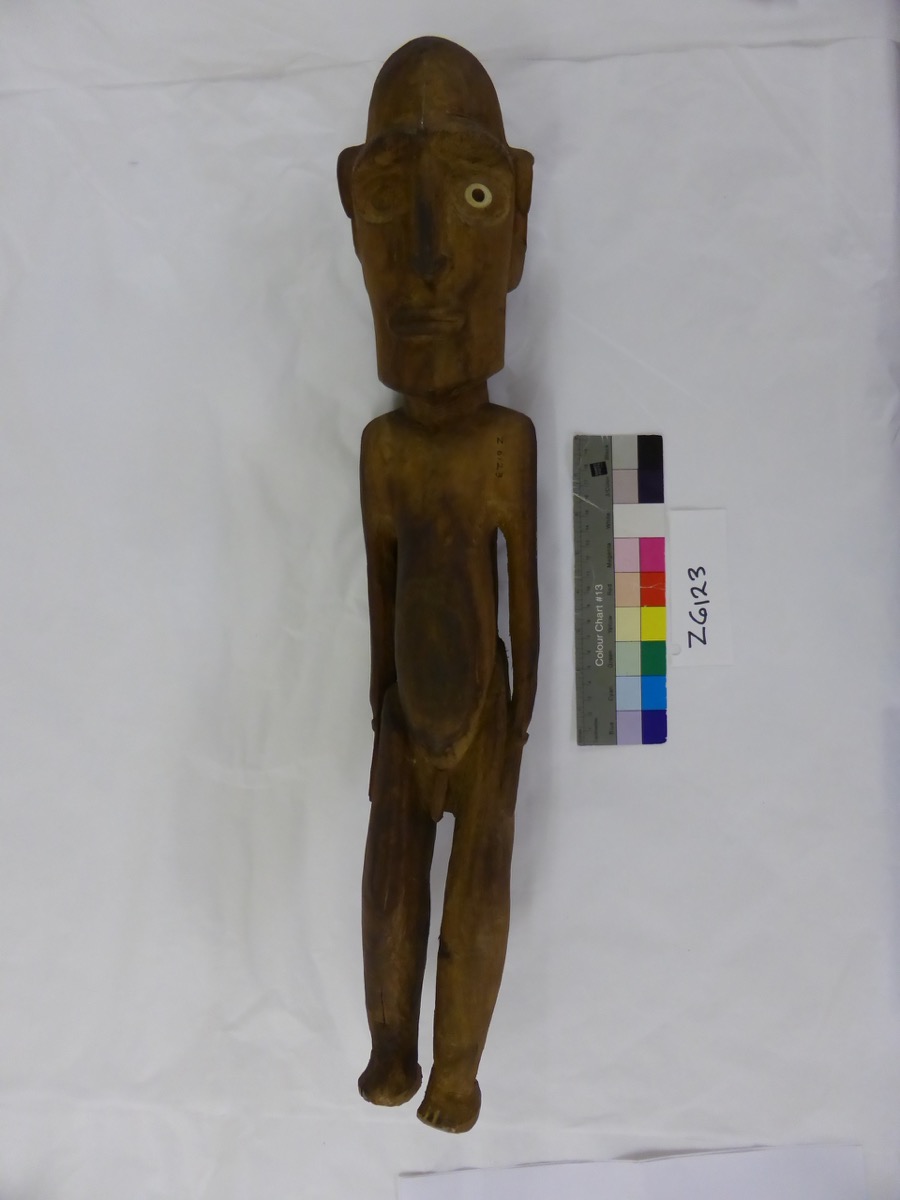
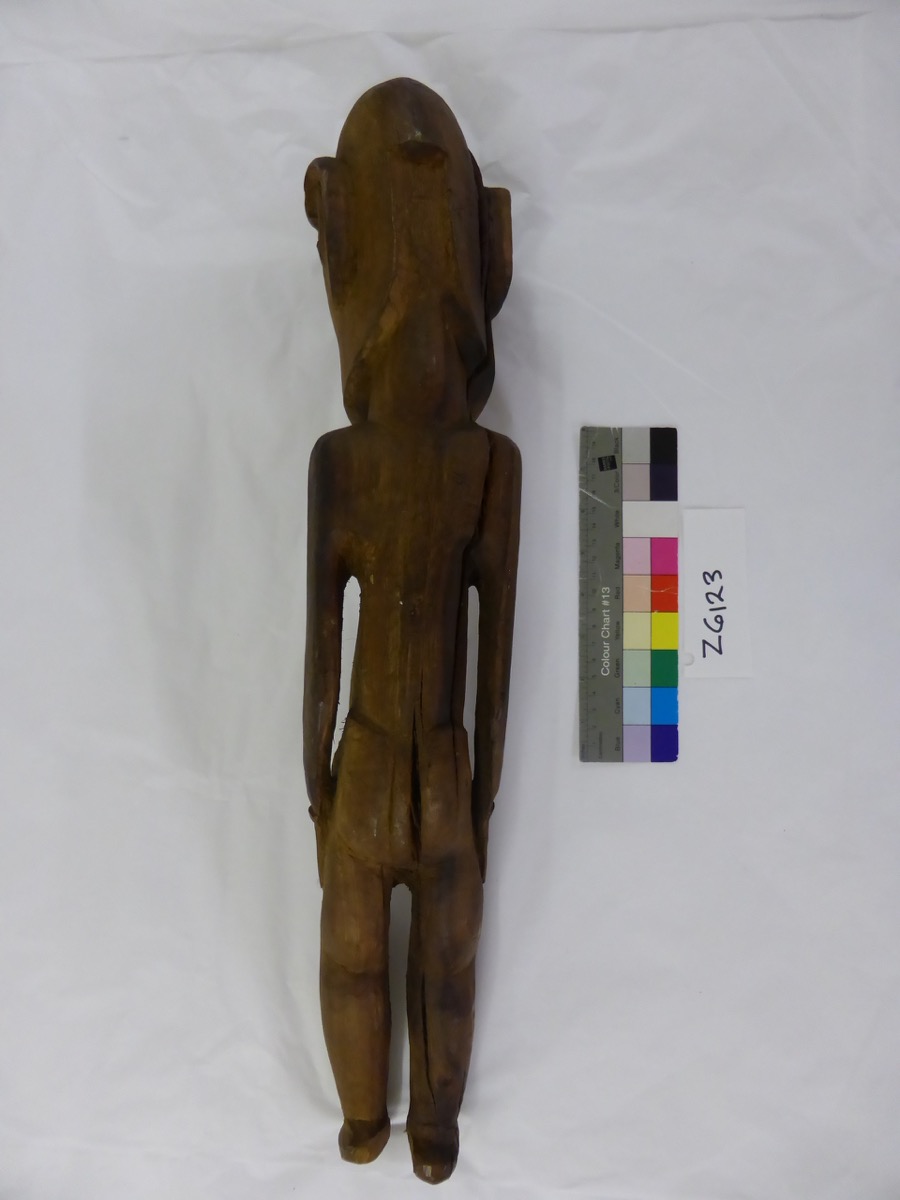
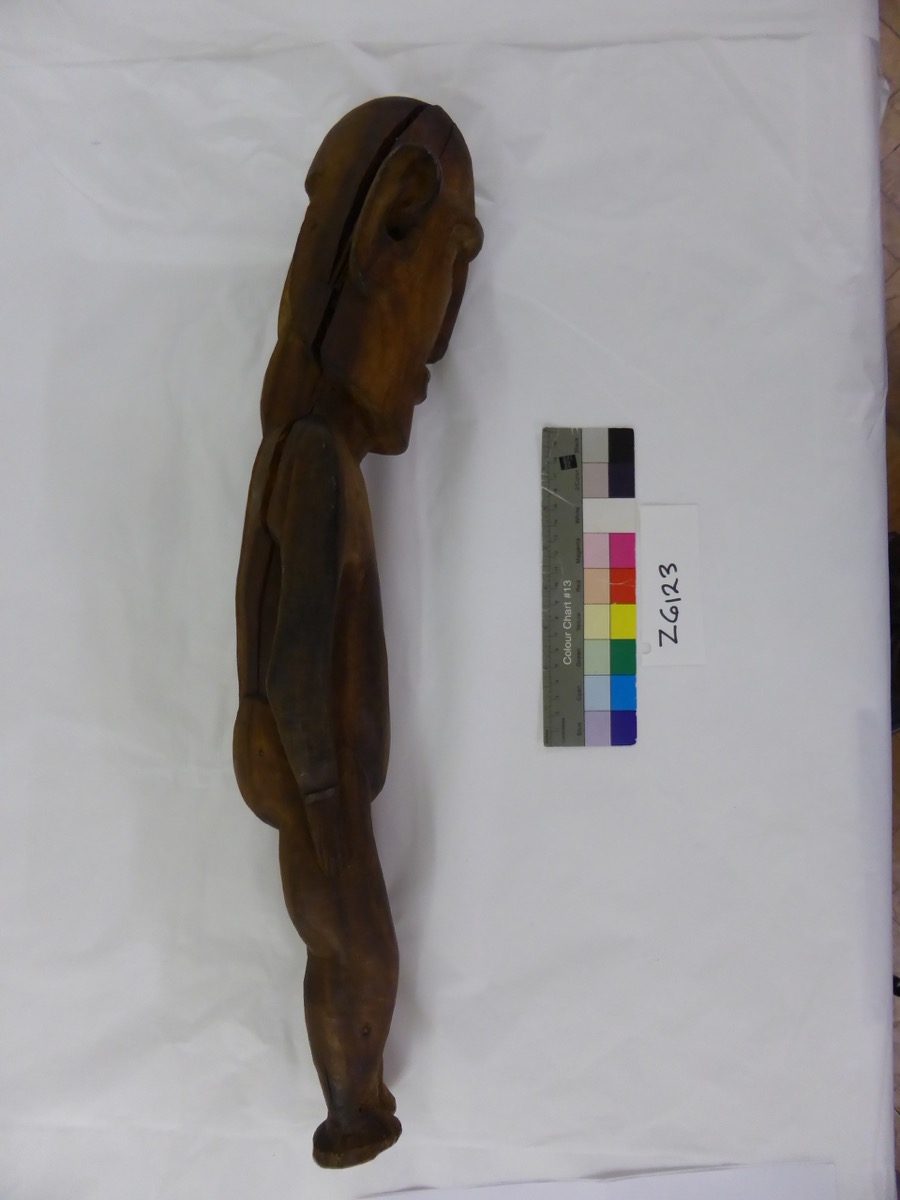
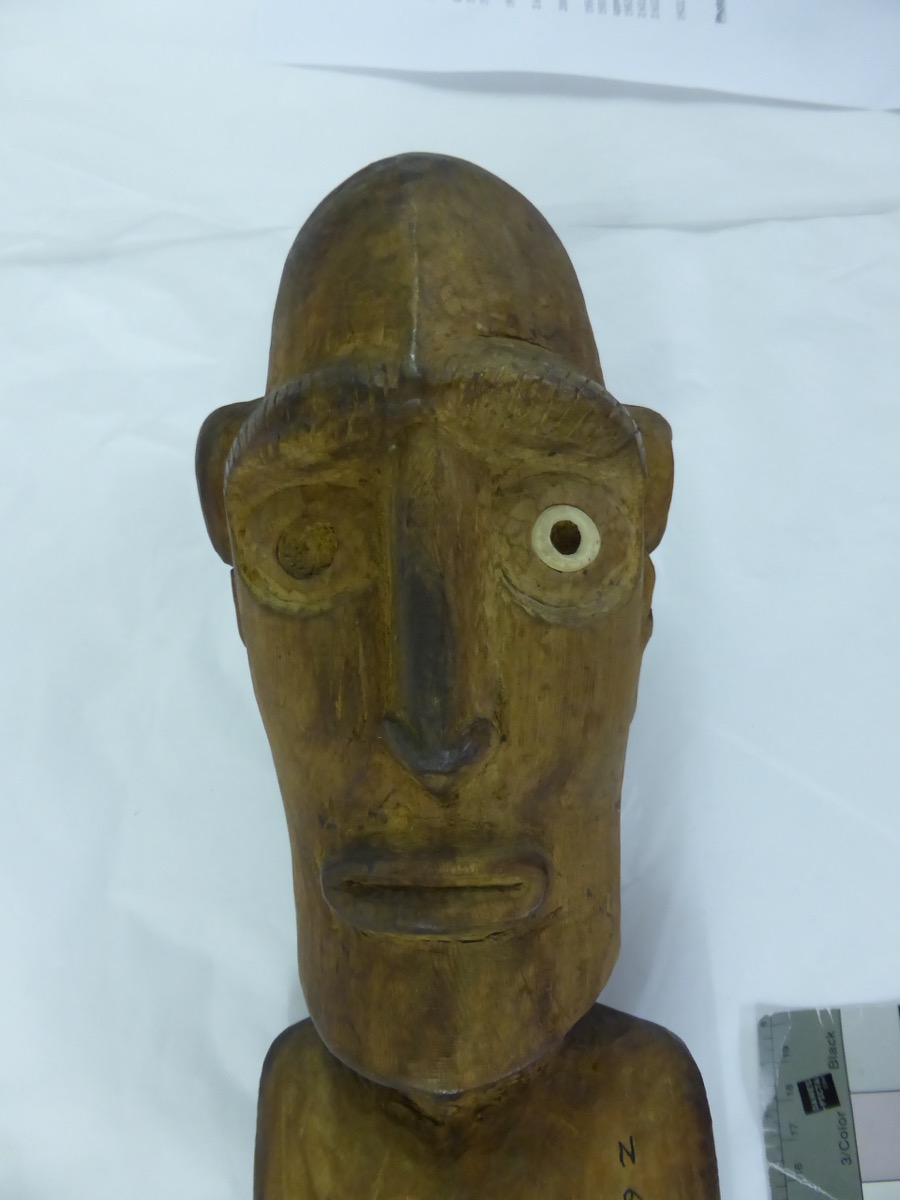
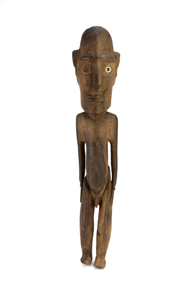
Moai tanagata. Wooden carved male figure, in a slightly bowed position, with a large head. One eye has a circle of shell inlay remaining, while the other is an empty cavity. The whole is a light brown colour; a wide crack runs from the proper right of the head down the length of the figure.
Place
Oceania; Polynesia; Rapa Nui [Easter Island]
Period
Source
von Hügel, Anatole Andreas Aloys (Baron) [ donor]
Department
Anth
Reference Numbers
Z 6123; MAA: O.XX.2; ?D 1887.9 (part); 15 [written in black on rear]
Cultural Affliation
Material
Wood; Shell
Local Term
Measurements
155mm x 605mm x 105mm
Events
Context (Related Documents)
Catalogue card reads, '[...] d.d. A. von Hugel / O. XX. 2)'. There is a red circular sticker to the top right of the card.
Event Date
Author: Flo Sutton
Description (Physical description)
Typed catalogue card reads, 'Male figure made of wood'.
Event Date
Author: maa
Context (Analysis)
Roughly carved figure in light coloured wood. One shell eye inset with obsidian remaining. Probably late nineteenth century -early twentieth century. Condition fair: large crack down rear of back. From notes by Rafal Wieczorek, 4/2/2014
Event Date 4/2/2014
Author: maa
Description (Labels & Markings)
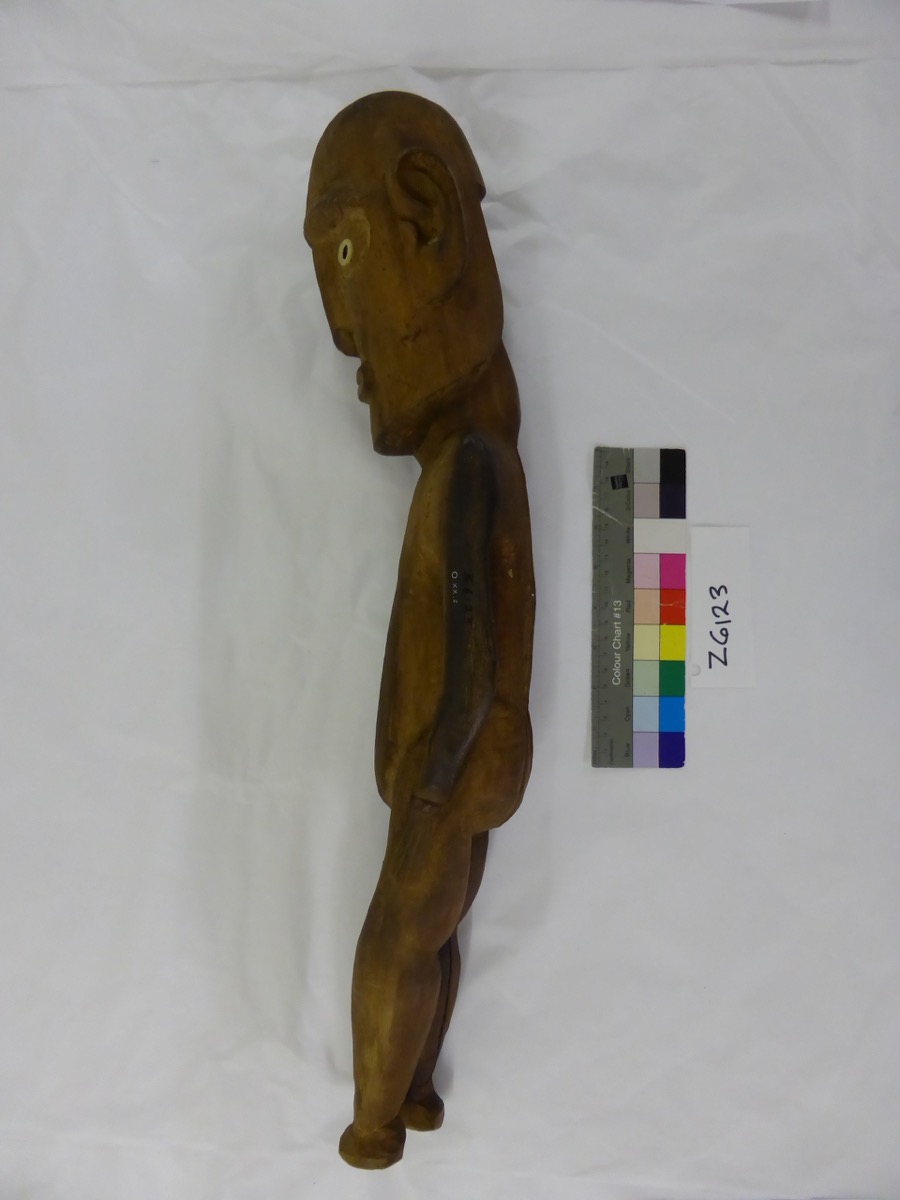
The number '15' is written in black ink on the back of the proper right shoulder and a von Hügel no, 'O.XX.2' in white on the proper right shoulder, referring to O=Oceania and XX= Rapa Nui.
Event Date 2/2/2023
Author: Flo Sutton
Description (Physical description)
Wooden carved male figure, in a slightly bowed position, with a large head. One eye has a circle of shell inlay remaining, while the other is an empty cavity. No obsidian remains. The whole is a light brown colour; a wide crack runs from the proper right of the head down the length of the figure.
Event Date 2/2/2023
Author: Flo Sutton
Description (Physical description)
Moai tanagata. These figures can be male or female- this is male. Carved using nineteeth century techiniques and styles with inlaid shell eyes- no obsidian remains. The base of the feet are rounded indicating it was suspended form the house and hung around the body like a bandolier for ceremonies, rather than carved for sale.
From knowledge shared by Rapanui archaeologist Enerike Ngaara Te Manu Carrasco Hotu on a visit to MAA, 13/05/2025
Event Date 13/5/2025
Author: rachel hand
FM:105566
Images (Click to view full size):