Accession No
1931.341
Description
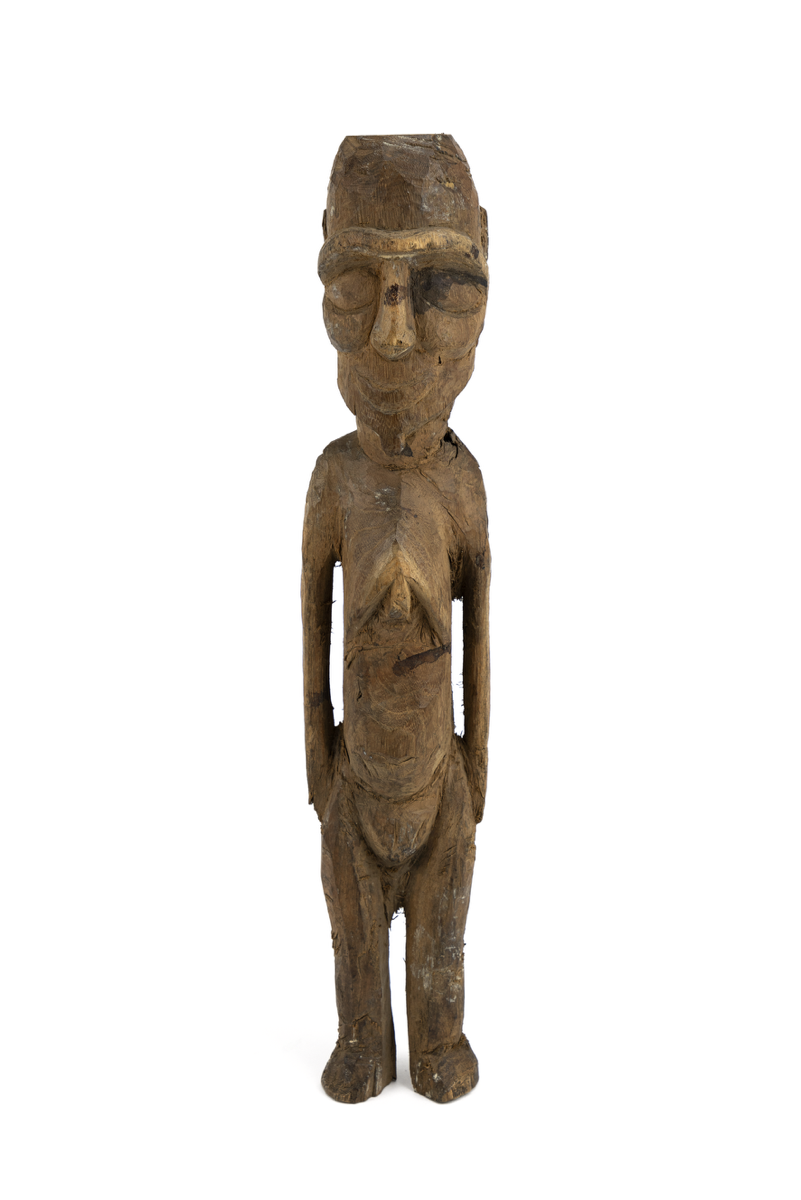
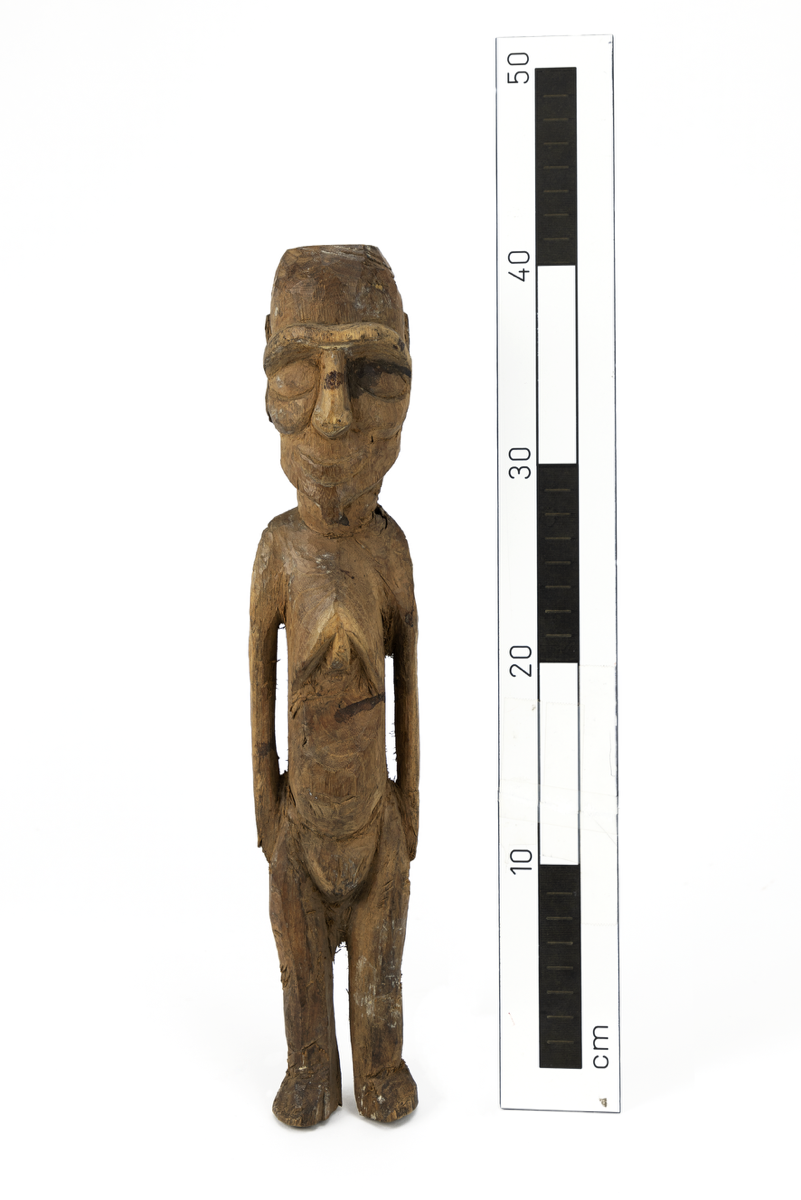
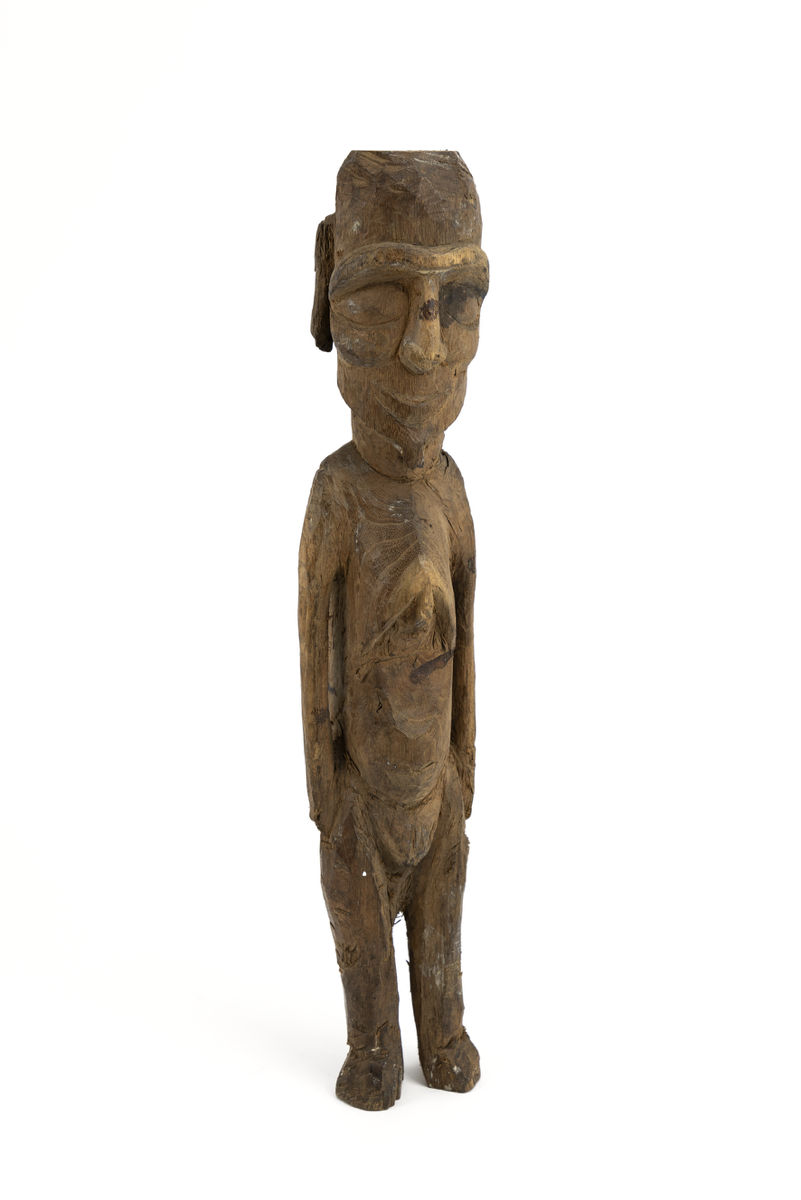
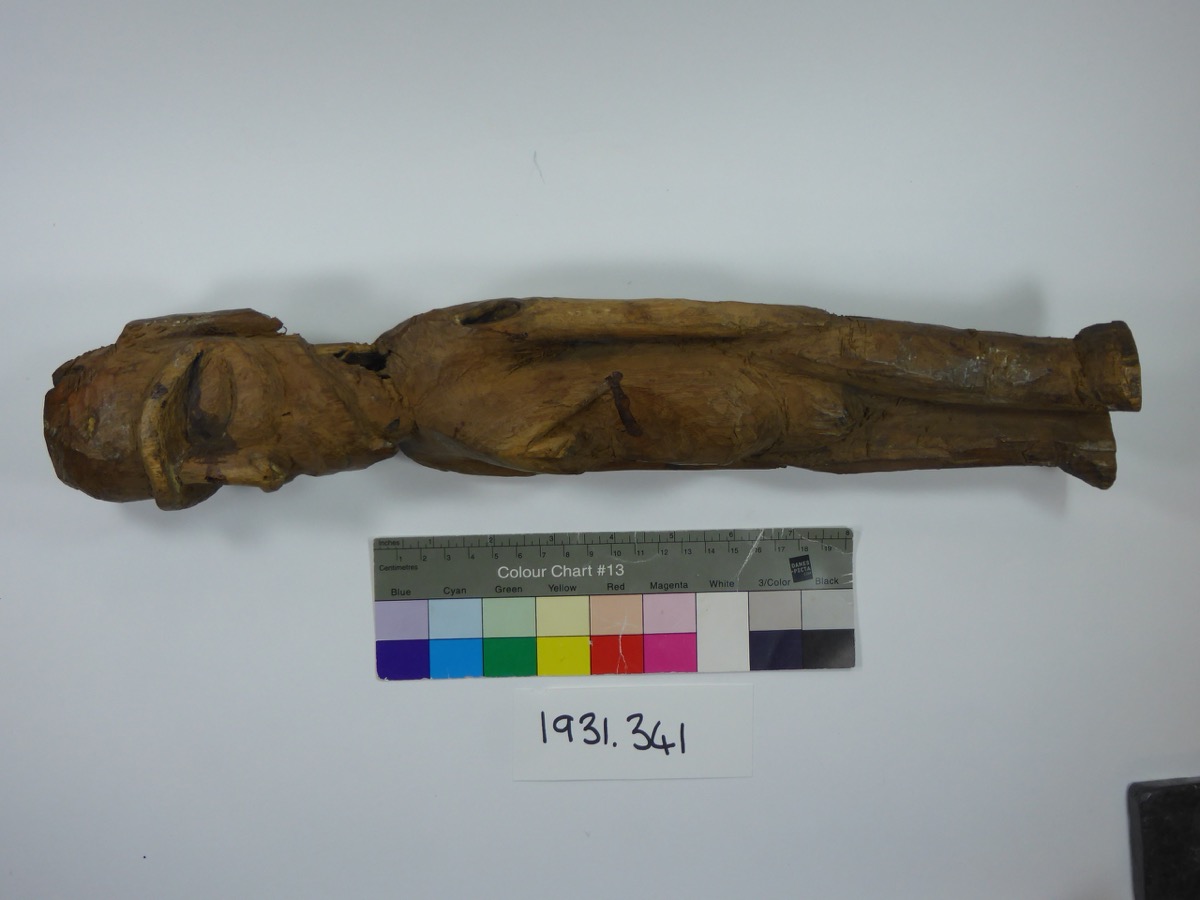
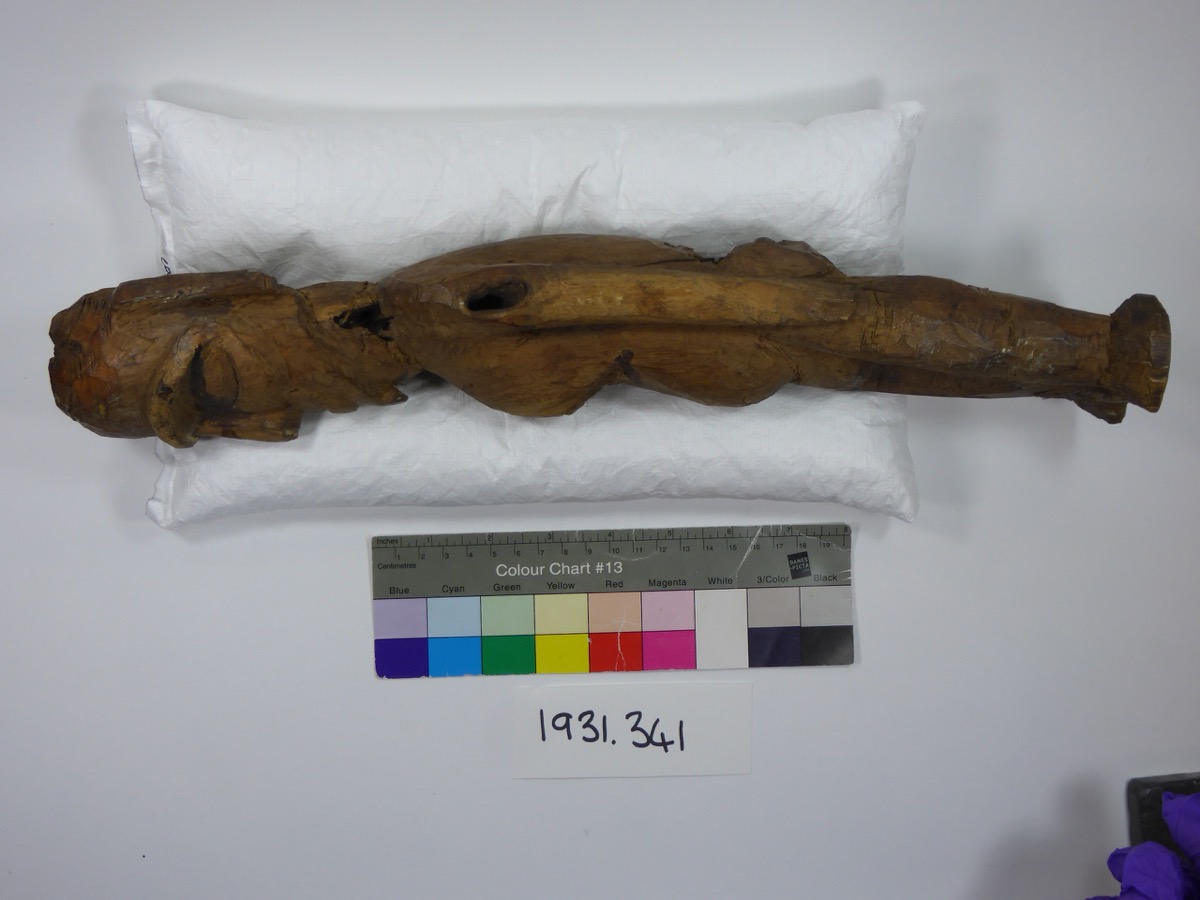
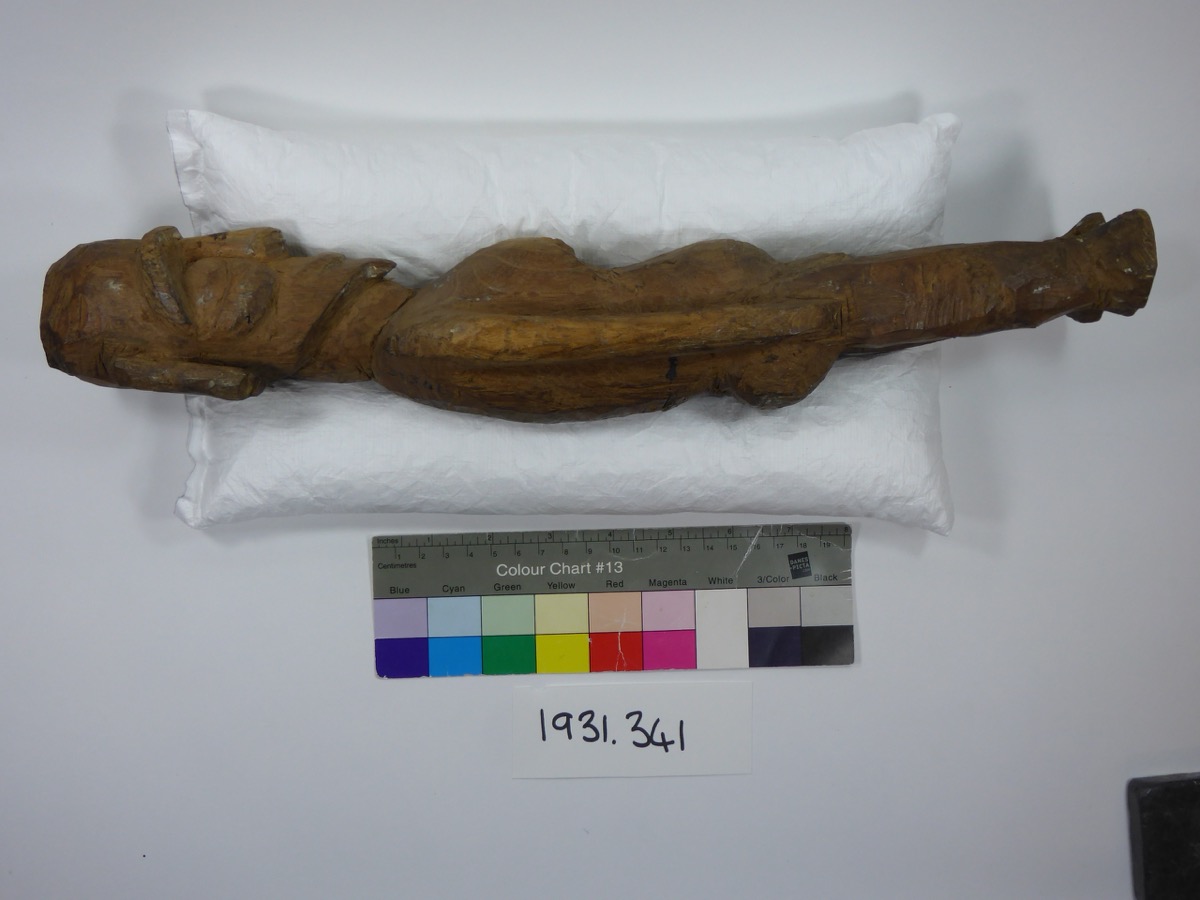
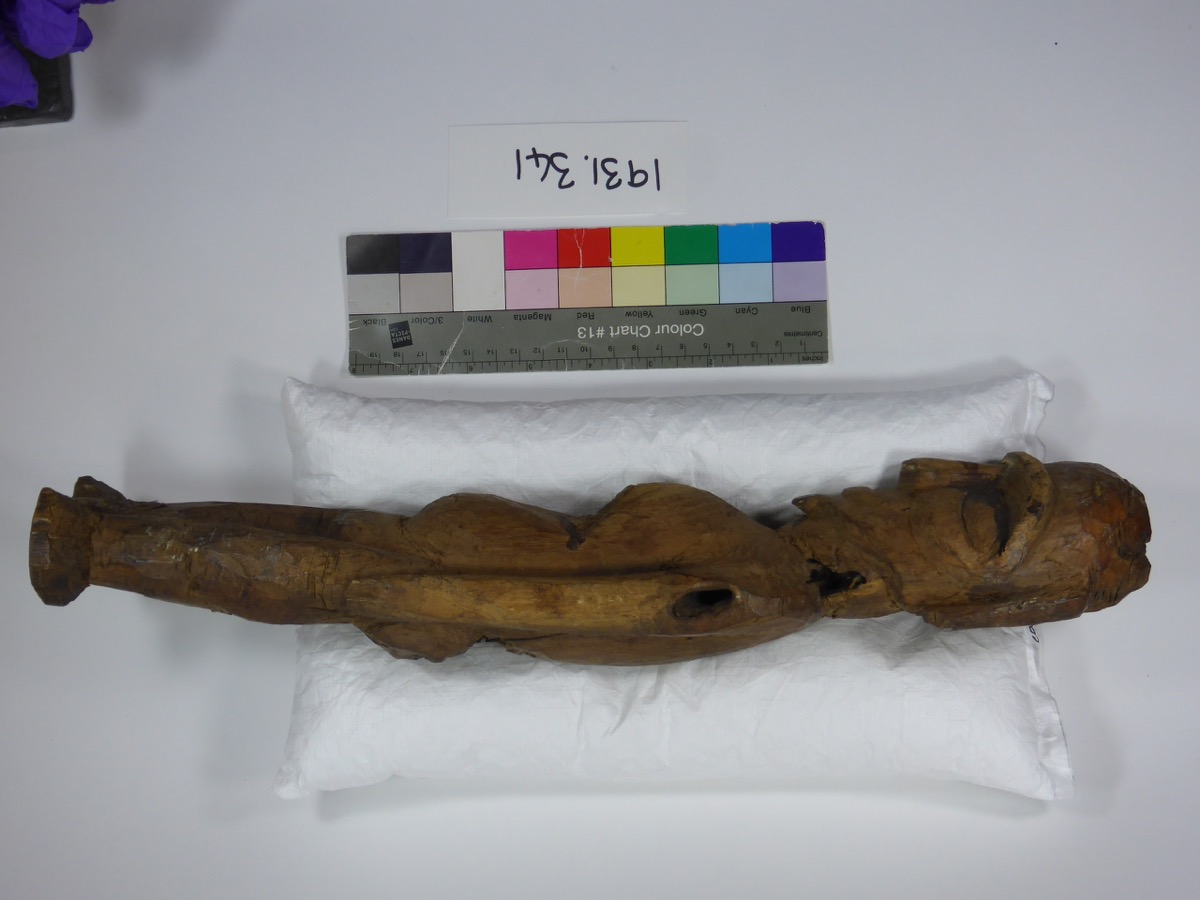
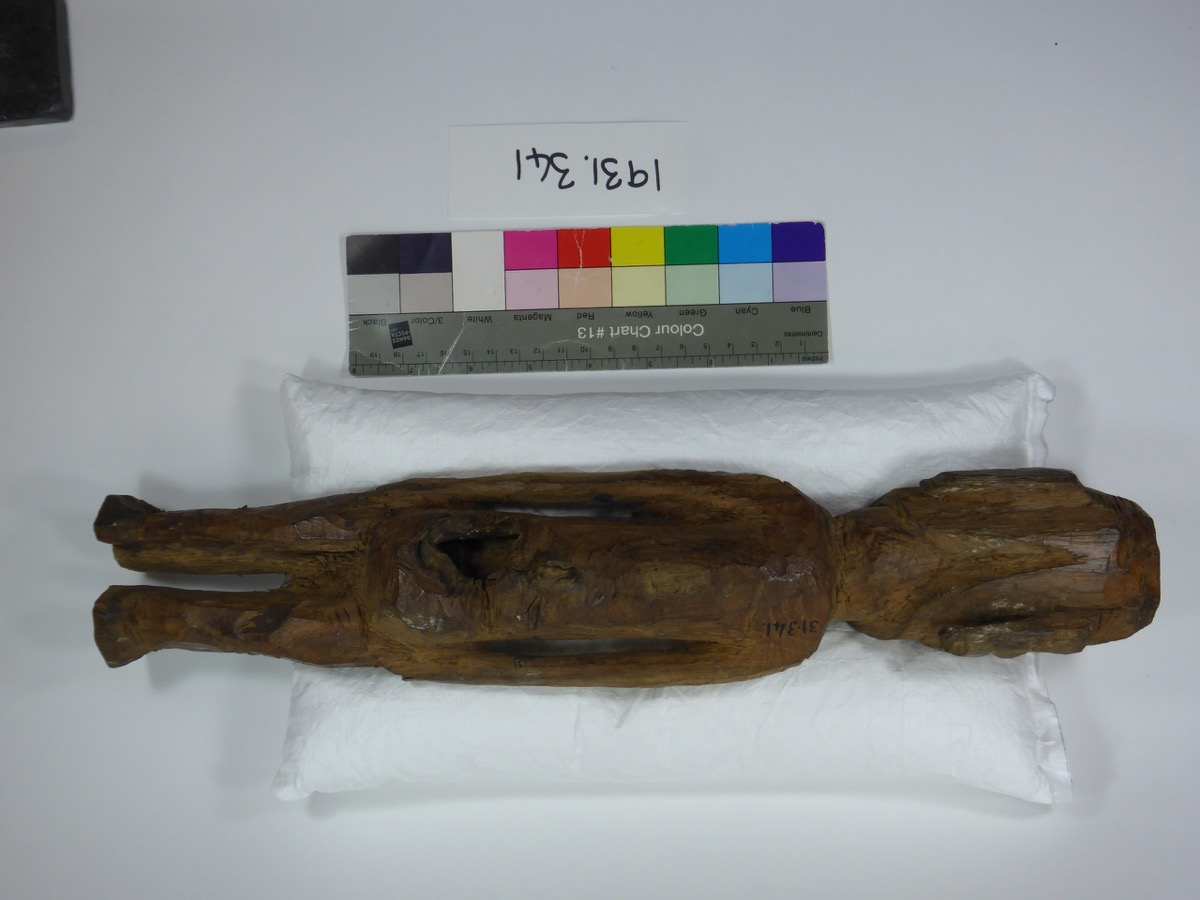
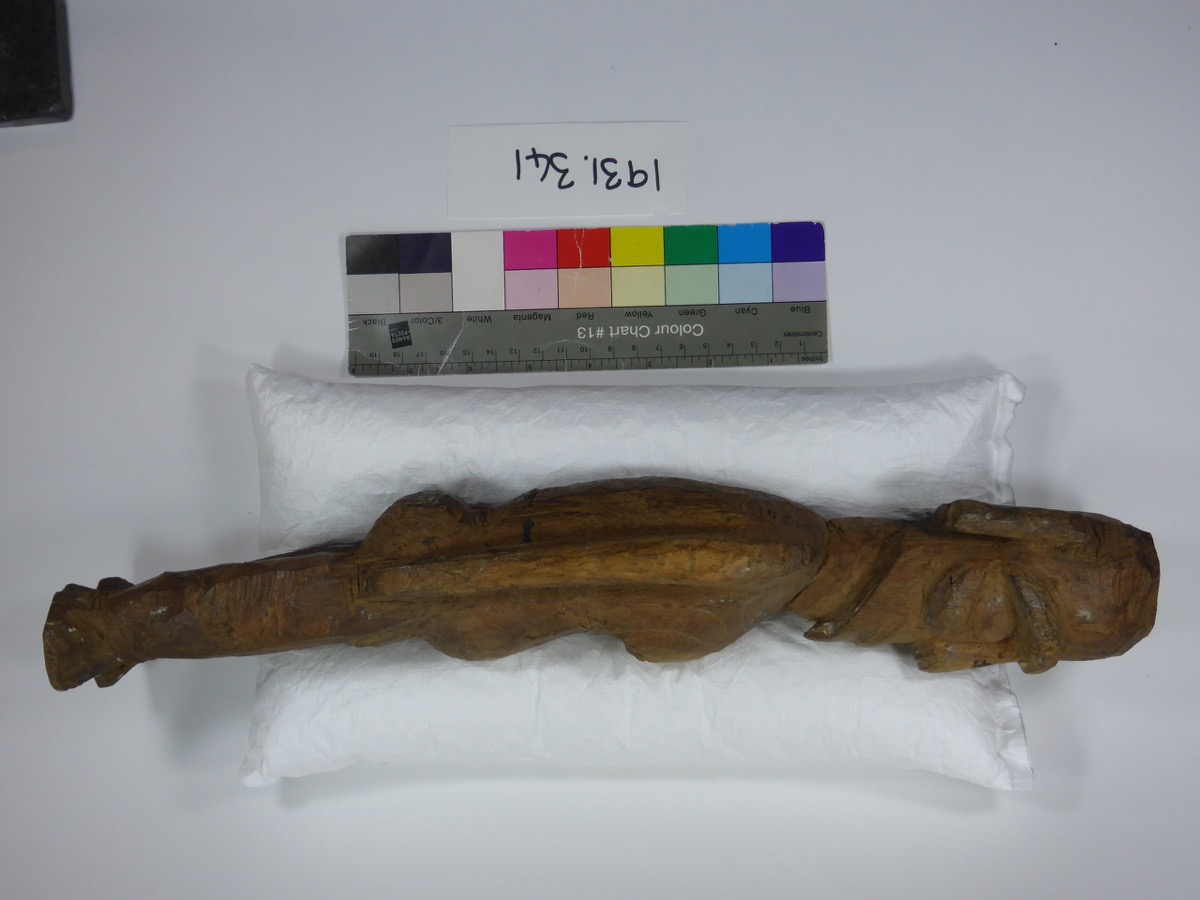
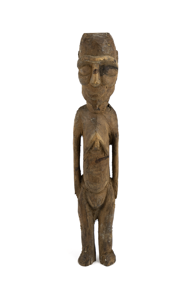
Moai kavakava. A roughly carved, potentially unfinished figure of a man or woman. The head is large, and there is an exaggerated chest, with a projection at the centre. The eyes and eyebrows are carved in high relief.
Place
Oceania; Polynesia; Rapa Nui [Easter Island]
Period
Source
Darwin, Maud (Lady) [donor]
Department
Anth
Reference Numbers
1931.341
Cultural Affliation
Material
Wood
Local Term
Moai kavakava
Measurements
83mm x 416mm x 105mm
Events
Description (Physical description)
Catalogue card handwritten in black ink reads, 'Wooden figure - very rough - the female organ appears to be shown but at the same time has the usual [?] bend.'
Event Date
Author: maa
Context (Analysis)
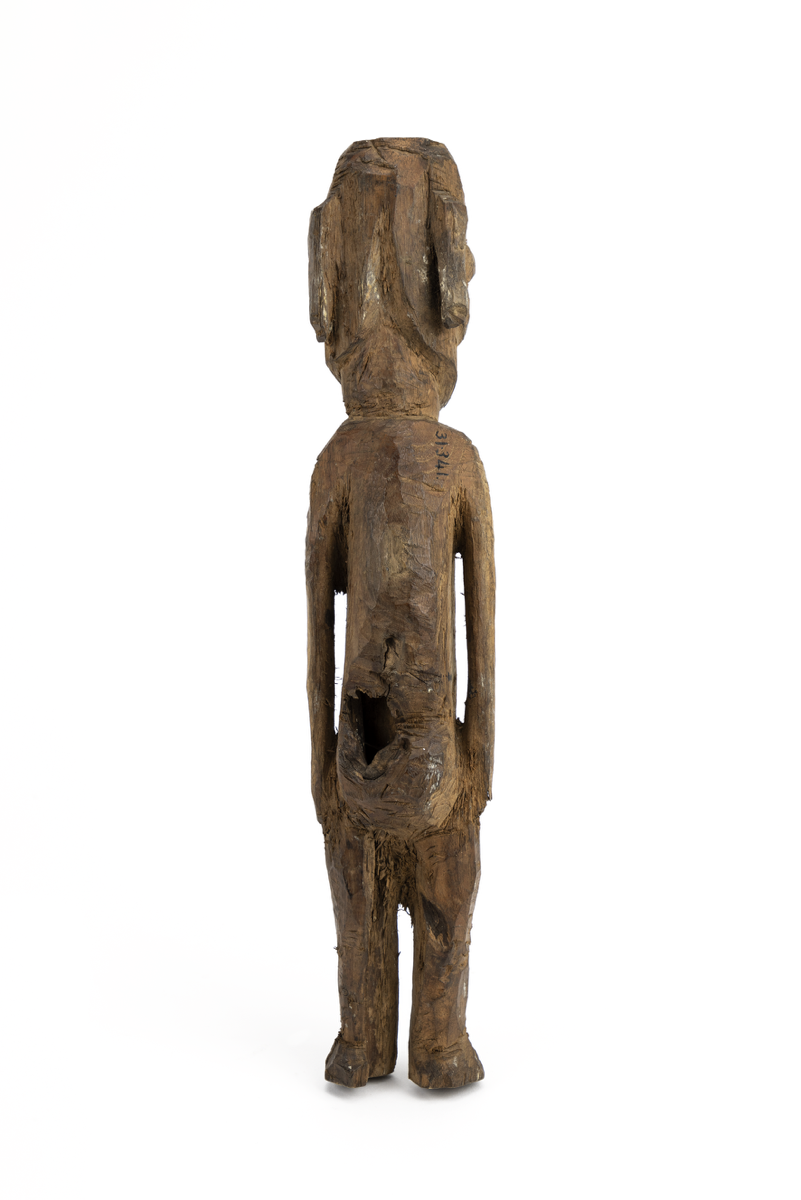
Carved from light coloured wood. A male figure, not female (moai kavakava) Probably late nineteenth - early twentieth century. Condition: good- but with a recess from a knot in the wood. From notes by Rafal Wieczorek during a visit to MAA, 4/2/2014
Event Date 4/2/2014
Author: maa
Description (Physical description)
Moai kavakava. A roughly carved, potentially unfinished figure of a man. A knot hole left shoulder. Less cadaverous than most moai kavakava.
Event Date 13/1/2022
Author: rachel hand
Context (Acquisition Details)
Given by Lady Martha 'Maud' Darwin (1861- 1947), an American socialite and widow of astronomer Sir George Howard Darwin (1945- 1912), Plumian professor of astronomy and experimental philosophy, Cambridge University.
Event Date 13/1/2022
Author: rachel hand
Description (Physical description)
Moai kavakava. A roughly carved, potentially unfinished figure of a man or woman. The head is large, and there is an exaggerated chest, with a projection at the centre. The eyes and eyebrows are carved in high relief.
Event Date 2/2/2023
Author: Flo Sutton
Context (Amendments / updates)
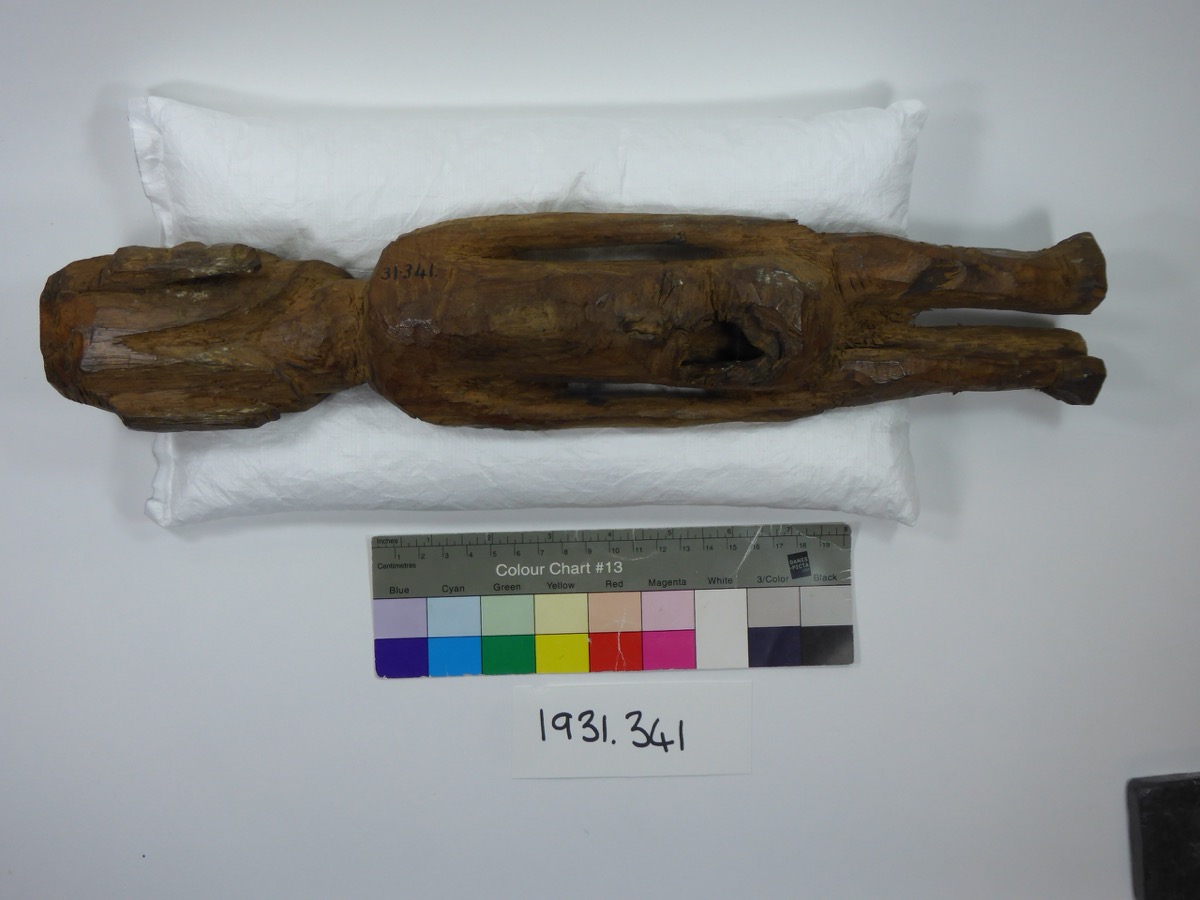
Moai tangata. Female figure carved from mirapūpū wood, lighter weight than the toromiro (Sophora toromiro). The base of the feet are flat suggesting it was not suspend from the house or used in ceremonies when it was hung around the body like a bandolier
From knowledge shared by Rapanui archaeologist Enerike Ngaara Te Manu Carrasco Hotu on a visit to MAA, 13/05/2025
Event Date 13/5/2025
Author: Flo Sutton
FM:105556
Images (Click to view full size):