Accession No
E 1916.148.8
Description
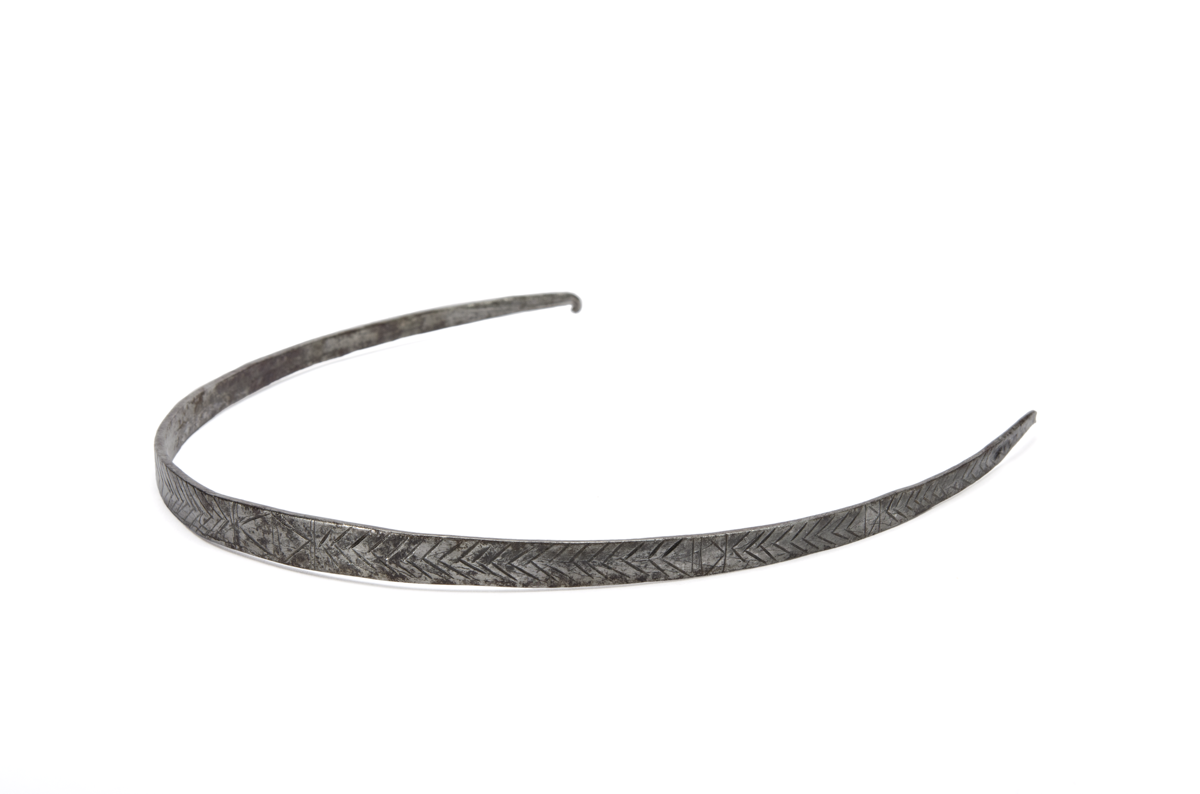
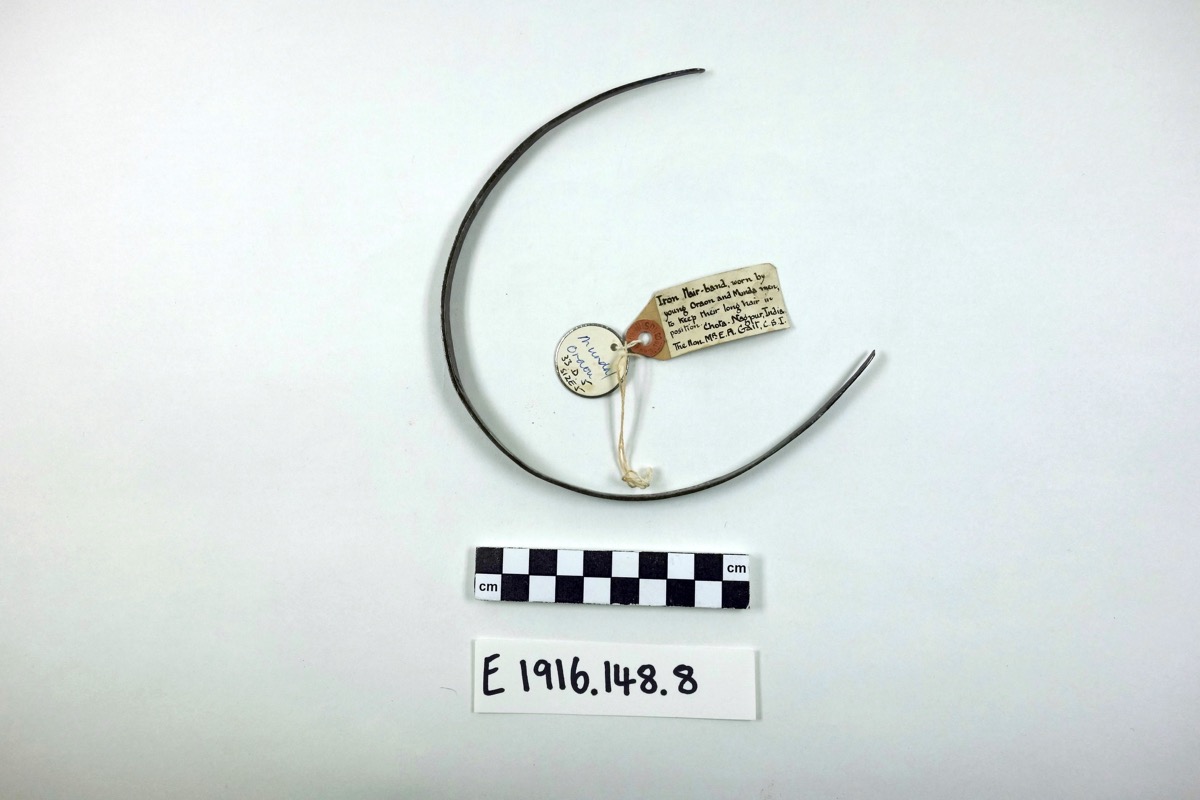
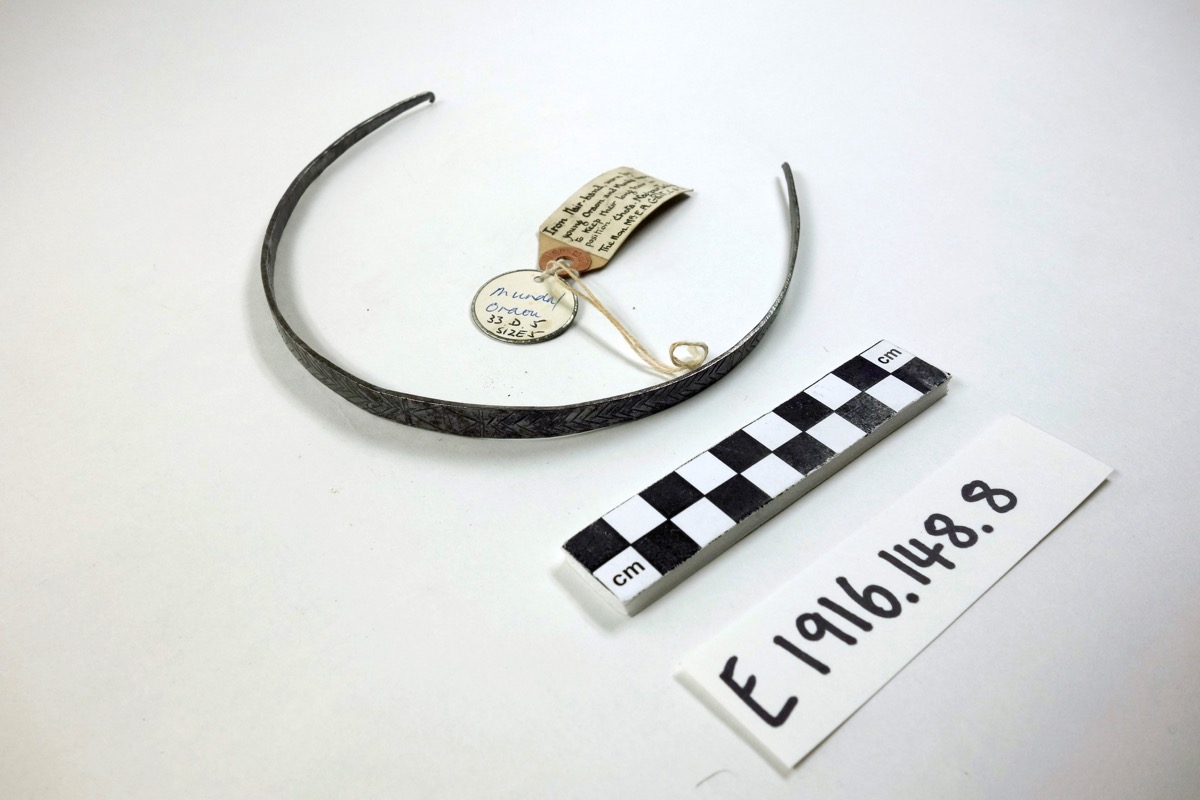
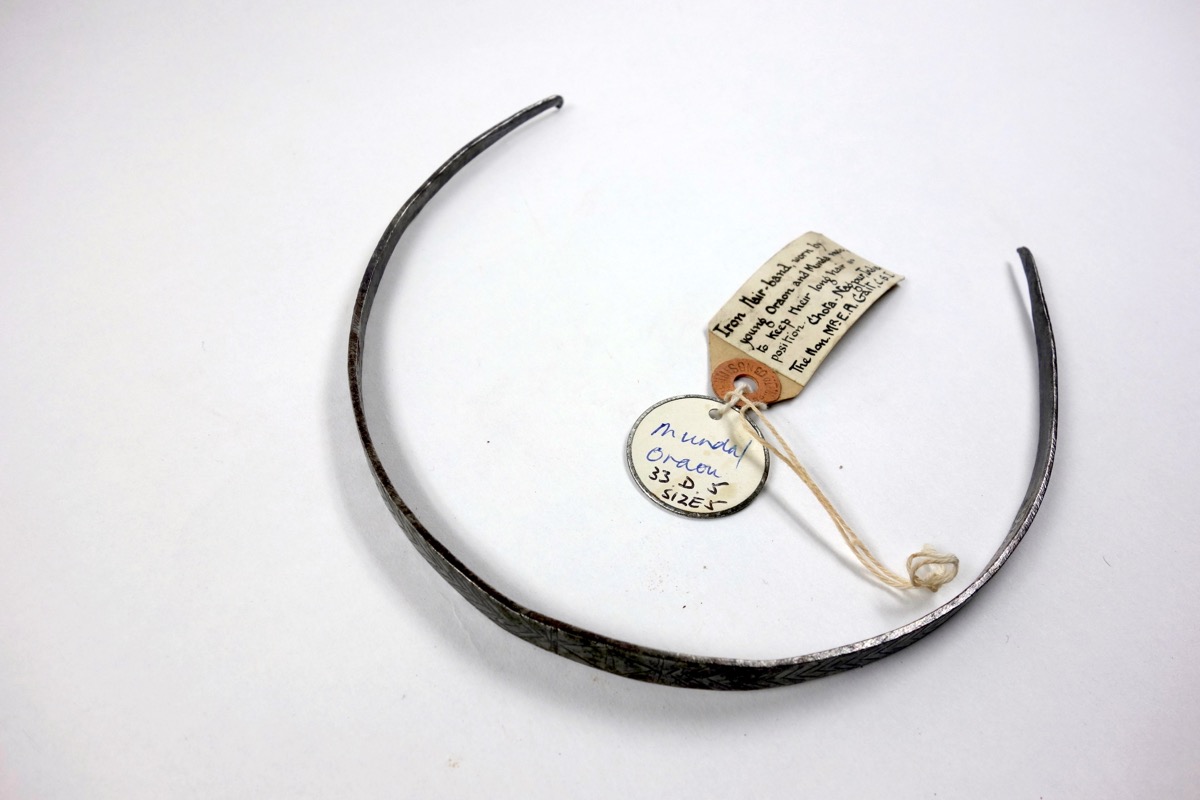
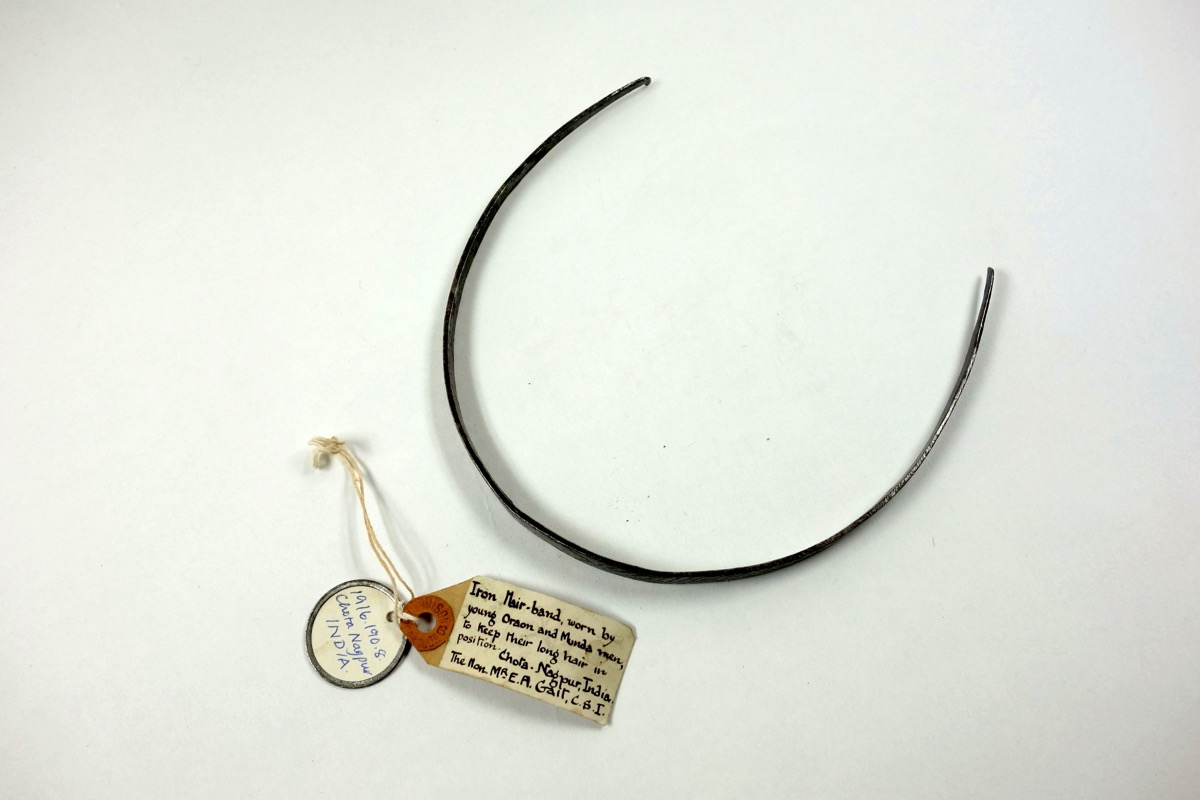
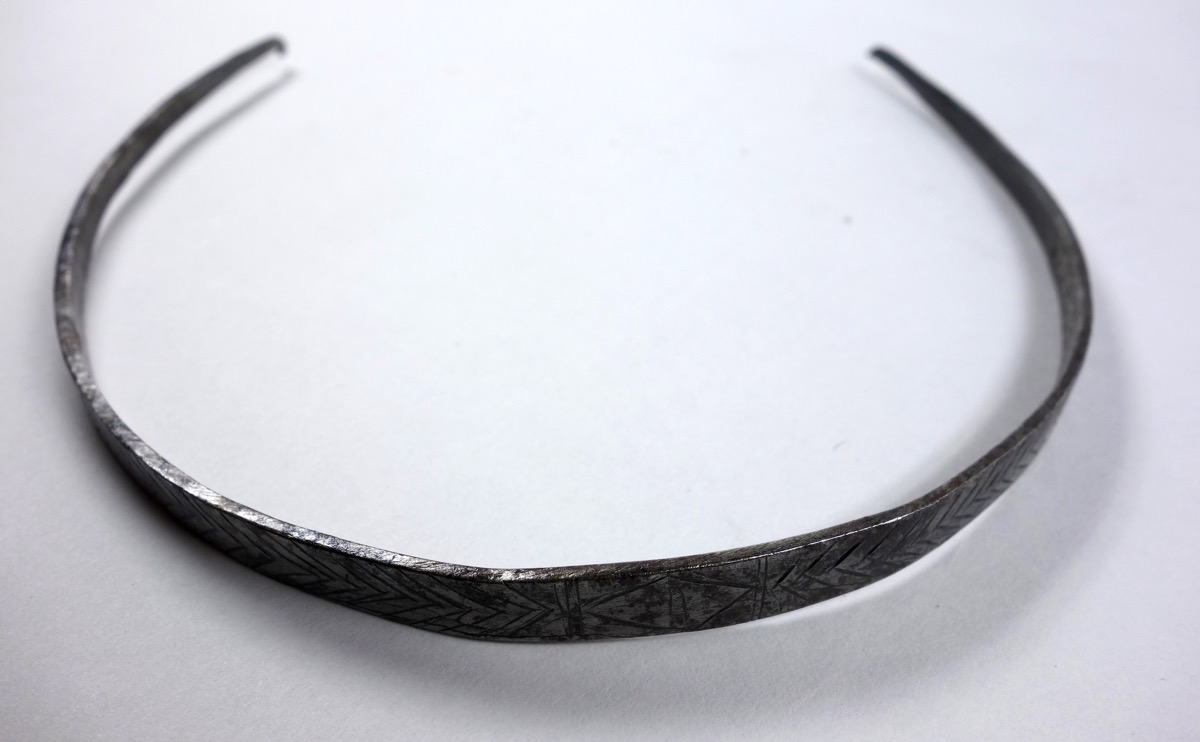
Hairband, made of a strip of iron curved into a crescent, worn by men. The ends are pointed and slightly hooked; the external surface is engraved with geometric line patterns.
Place
Asia; South Asia; India; [Chota Nagpur]; ?Jharkhand; ?West Bengal; ?Orissa; ?Chhattisgarh
Period
Source
Roy, Sarat Chandra [collector]; Gait, Edward Albert (Sir) [donor]
Department
Anth
Reference Numbers
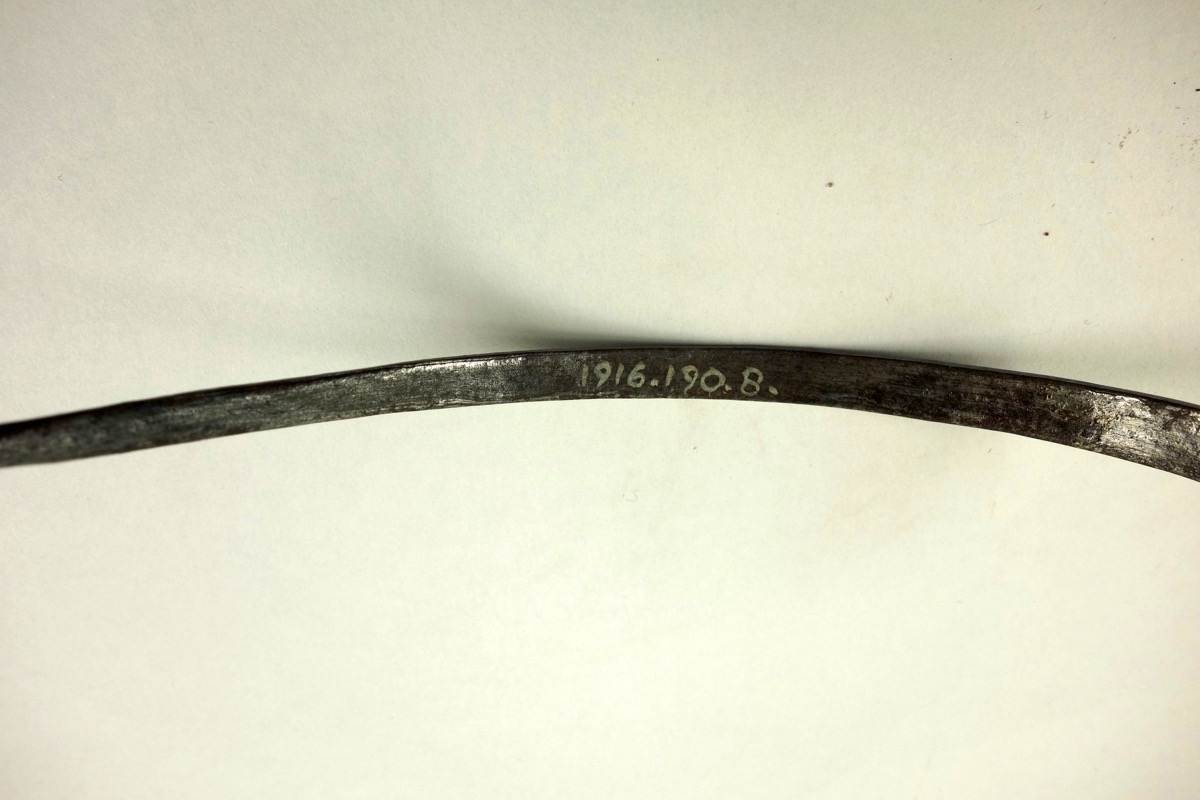
E 1916.148.8; MAA: AR 1916.190.8
Cultural Affliation
Munda; Kurukh [Oraon]
Material
Metal; Iron
Local Term
Measurements
141mm x 149mm x 9mm
Events
Context (Amendments / updates)
Part of a collection of Indian material donated by Gait, numbered E 1916.148.1-87 (from the entry in the accessions register). These items were also numbered as AR 1916.190.1-87 (from the entry in the Annual Report). Some items have since been known only by their Annual Report number and so, for the sake of consistency, the whole collection has been entered on computer as AR 1916.190.1-87. Original accessions numbers are entered in the CRN field. (Alison McKeating, April 1995)
Event Date 22/3/1995
Author: maa
Description (Physical description)
Iron hairband, worn by young Oraon and Munda men to keep their long hair in place
Event Date 22/3/1995
Author: maa
Context (Amendments / updates)
Gustav Imam: these kinds of metal items can be found for sale in village markets in south Jharkhand, made and sold by one of the metalworker communities, rather than either Oraon or Munda artistans.
Event Date 2/11/2015
Author: maa
Description (Physical description)
Oraon metal headband
Event Date 7/12/2016
Author: maa
Conservation (Remedial)
CON.2016.3488 | Remedial
Event Date 10/8/2016
Author: Kirstie Williams
Context (Display)
'Another India: Explorations and Expressions of Indigenous South Asia' 07/03/2017 - 22/04/2018 MAA exhibition label text reads:
Adorned bodies in Chota Nagpur
In 1916 the governor of Bihar and Orissa donated almost one hundred artefacts from the province to this Museum. Half of these, from the Chota Nagpur area, are thought to have been collected by Sarat Chandra Roy, a lawyer who had long worked with and on behalf of Adivasis in the region.
These ornaments, which Roy had described in his book The Oraons of Chota Nagpur the previous year, point to Adivasis’ connections with peoples nearby and across India. Presented here, removed from the bodies that gave them movement and sound, they call our attention to absent bodies.
6. Man’s head-band (patoa)
Metal headbands would probably have been made by metalworkers of the Lohar community and purchased by Oraon and Munda men at local markets, to hold their long hair in place.
Santal. Chota Nagpur
Collected by Sarat Chandra Roy Donated by Sir Edward A Gait, 1916 E 1916.148.8
Event Date 22/3/2017
Author: Remke Velden
Exhibition (Li Ka Shing Gallery)
EXH.2017.2 | Another India: Explorations and Expressions of Indigenous South Asia
Event Date 8/3/2017
Author: Remke Velden
Description (Physical description)
Hairband, made of a strip of iron curved into a crescent, worn by men. The ends are pointed and slightly hooked; the external surface is engraved with geometric line patterns.
Event Date 27/2/2023
Author: Flo Sutton
Context (Field collection)
'Asia; South Asia; India; [Chota Nagpur]; ?Jharkhand; ?West Bengal; ?Orissa; ?Chhattisgarh' has been entered as the place, as these are all contemporary regions corresponding to the historic region of Chota Nagpur.
Event Date 27/2/2023
Author: Flo Sutton
FM:94288
Images (Click to view full size):