Accession No
E 1916.148.1
Description
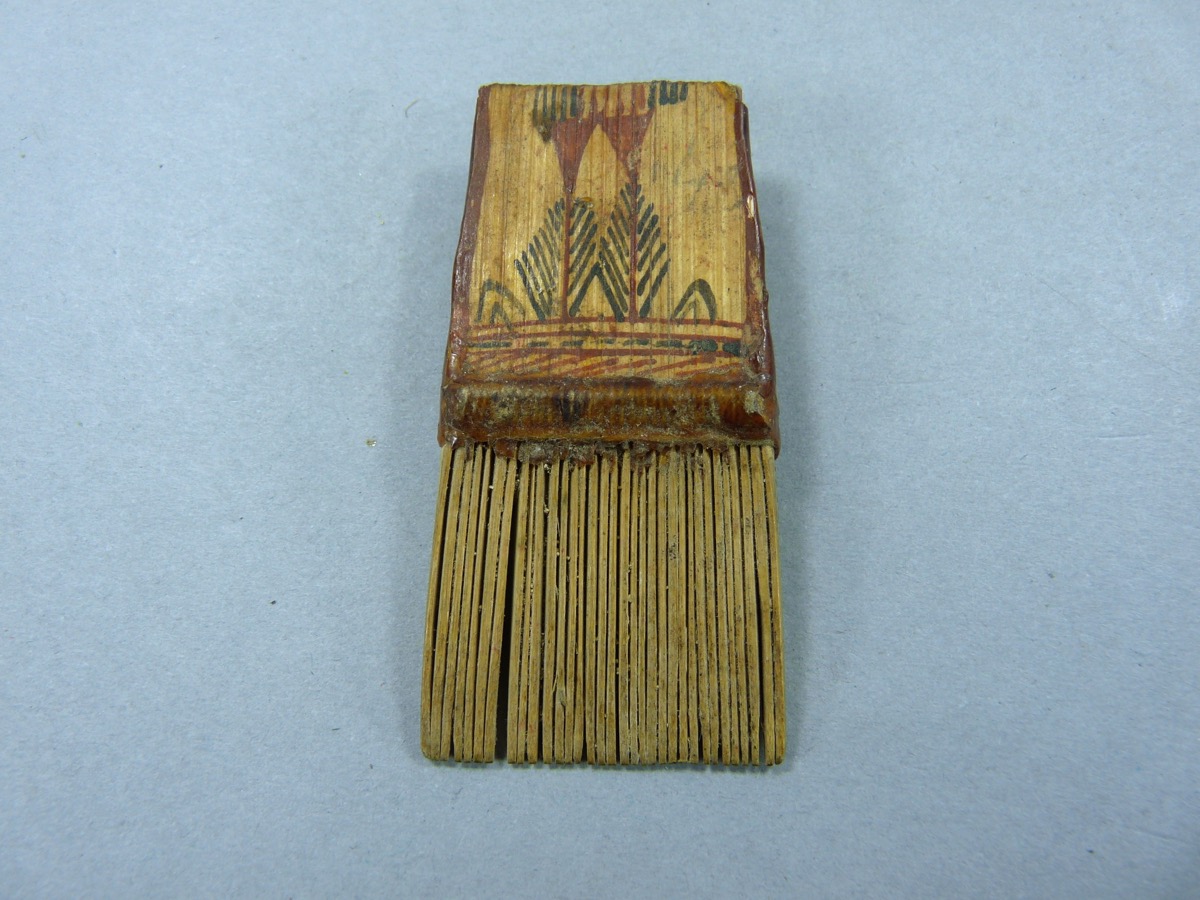
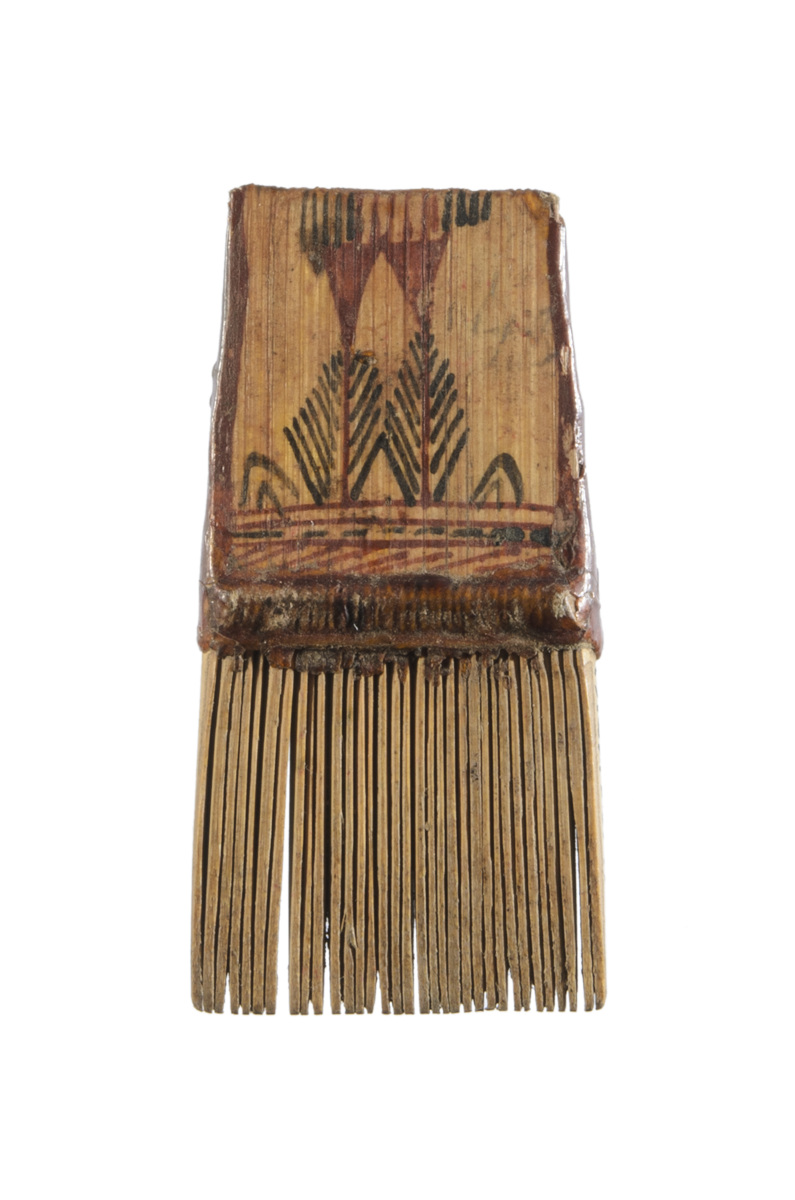
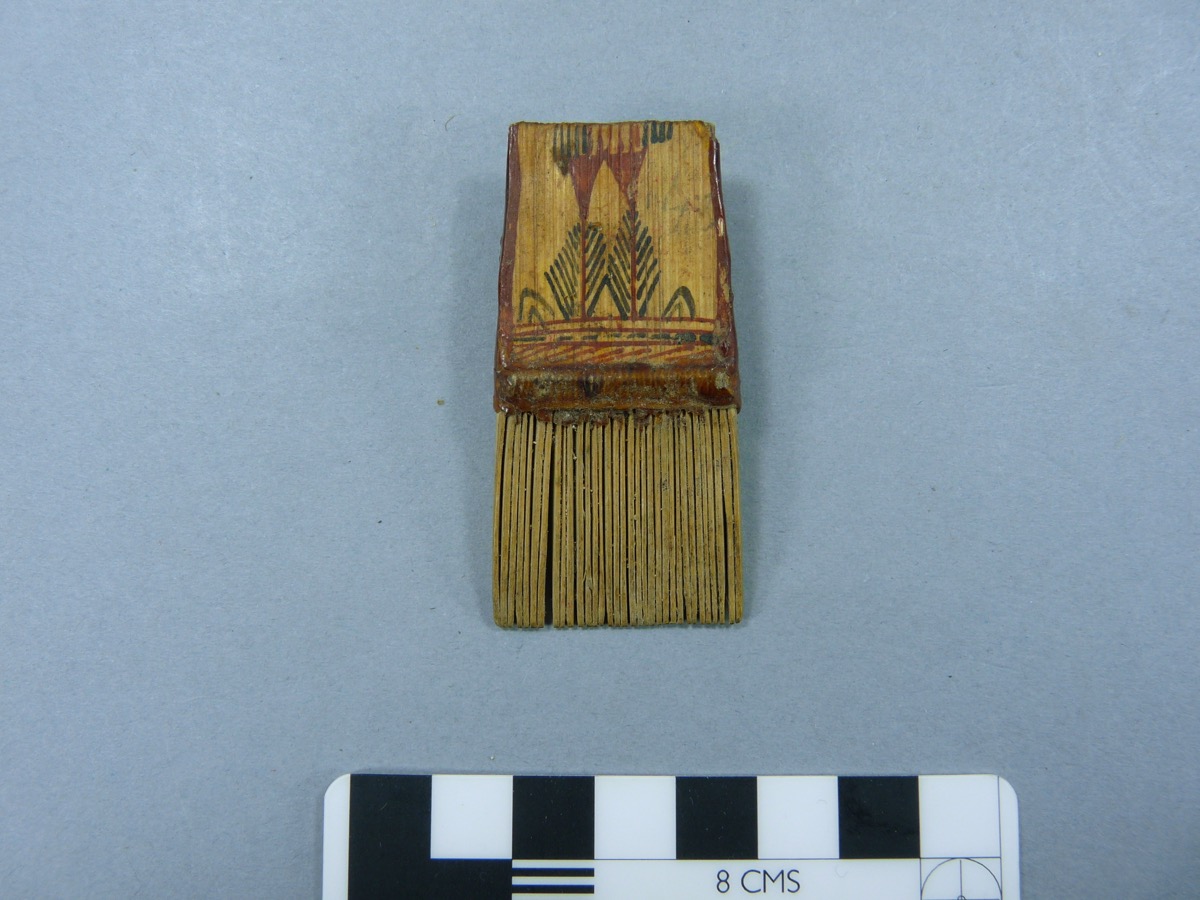
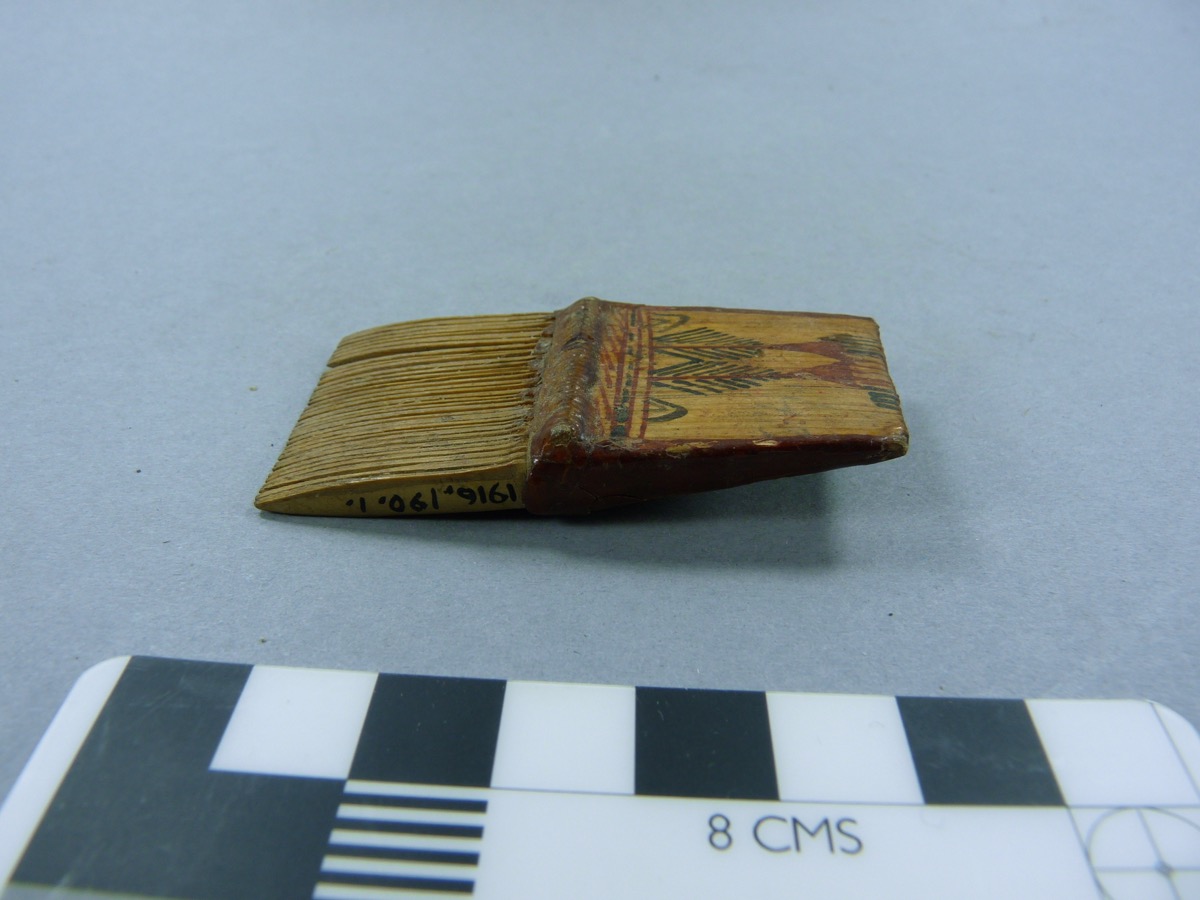
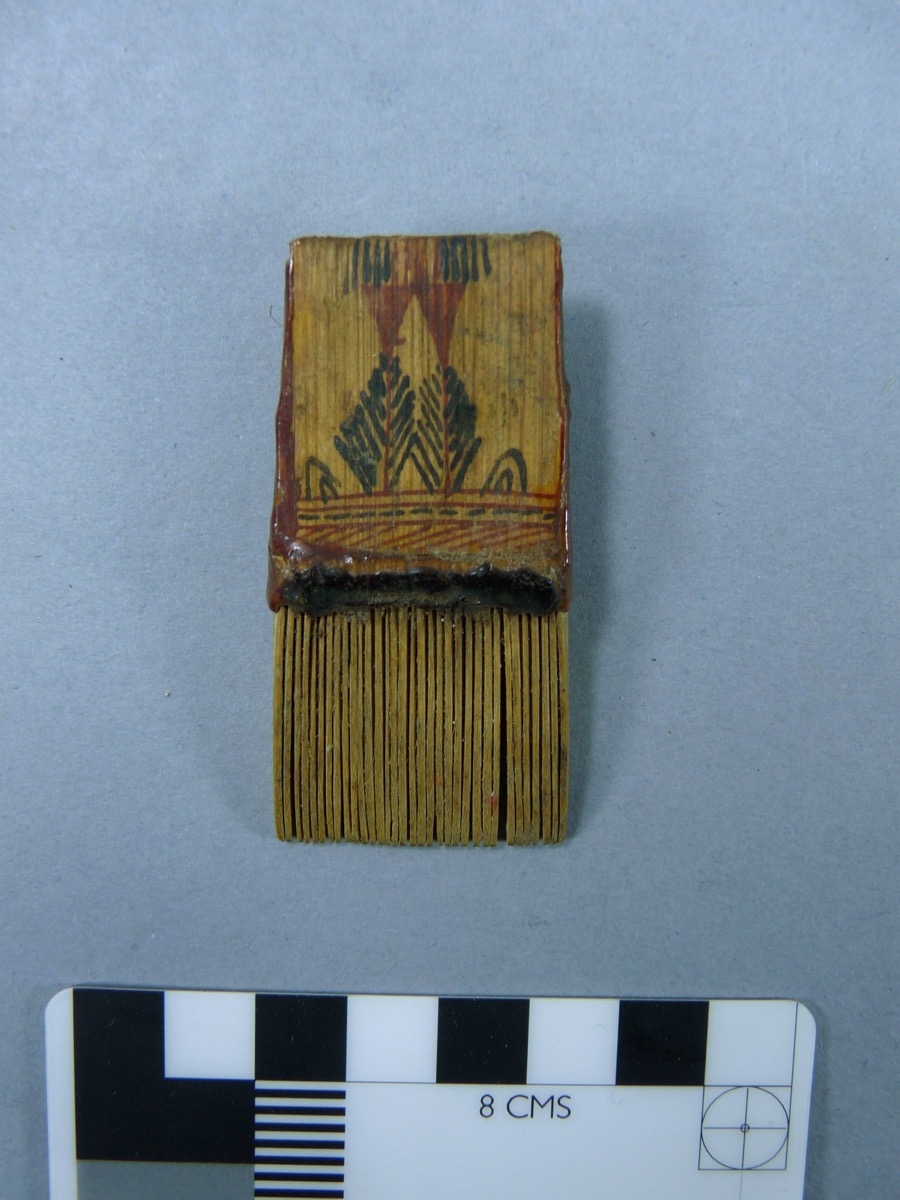
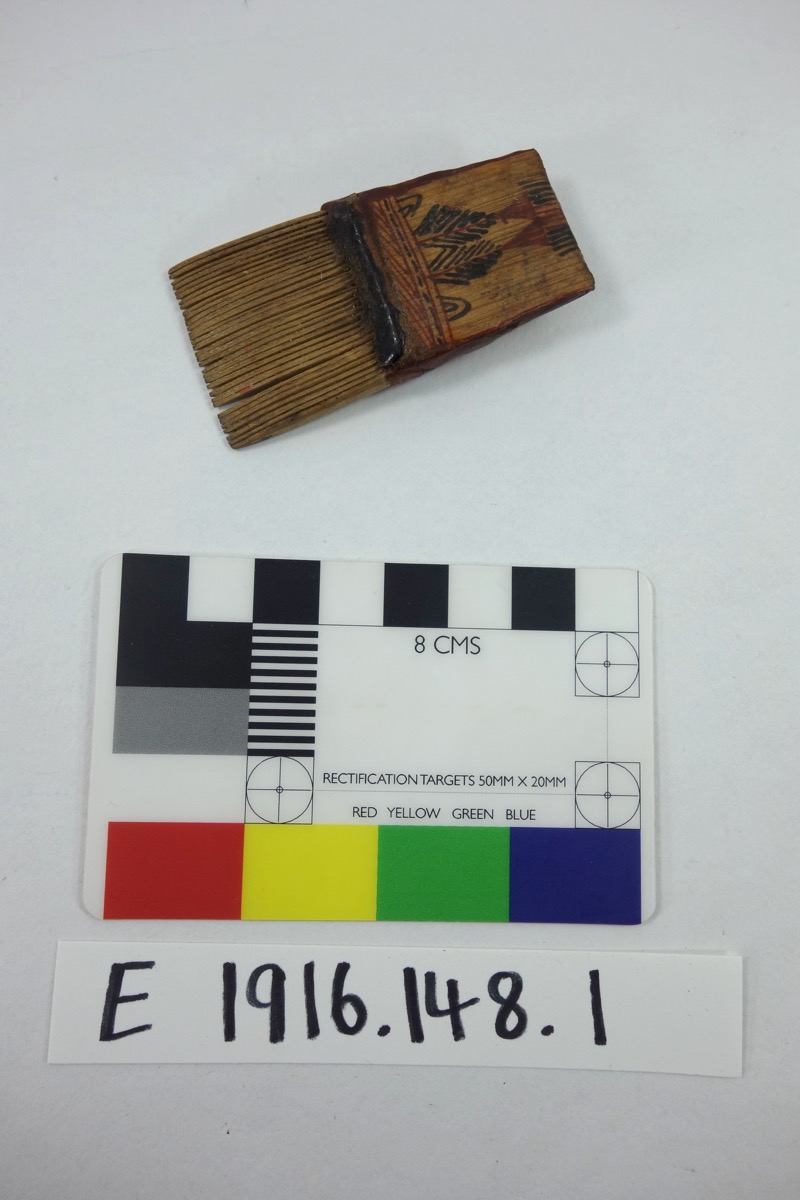
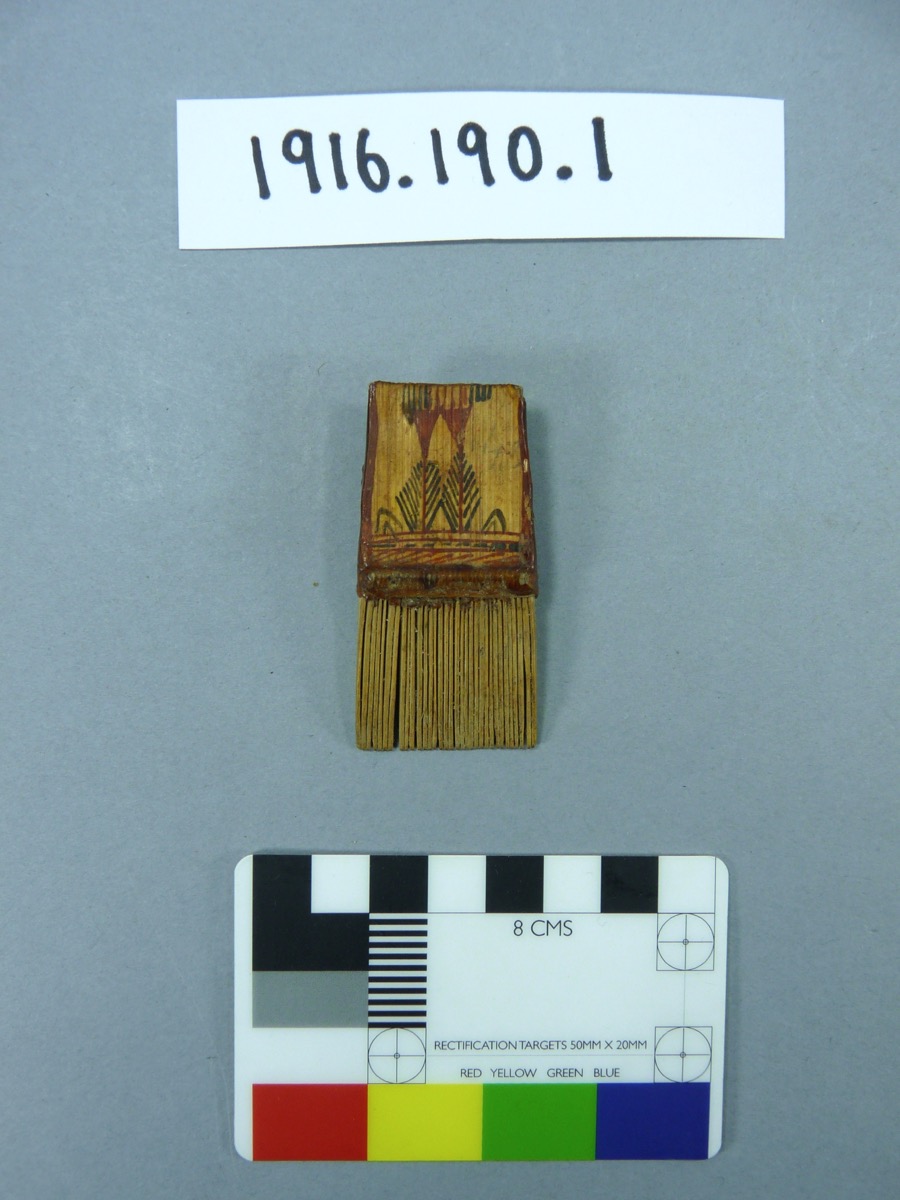
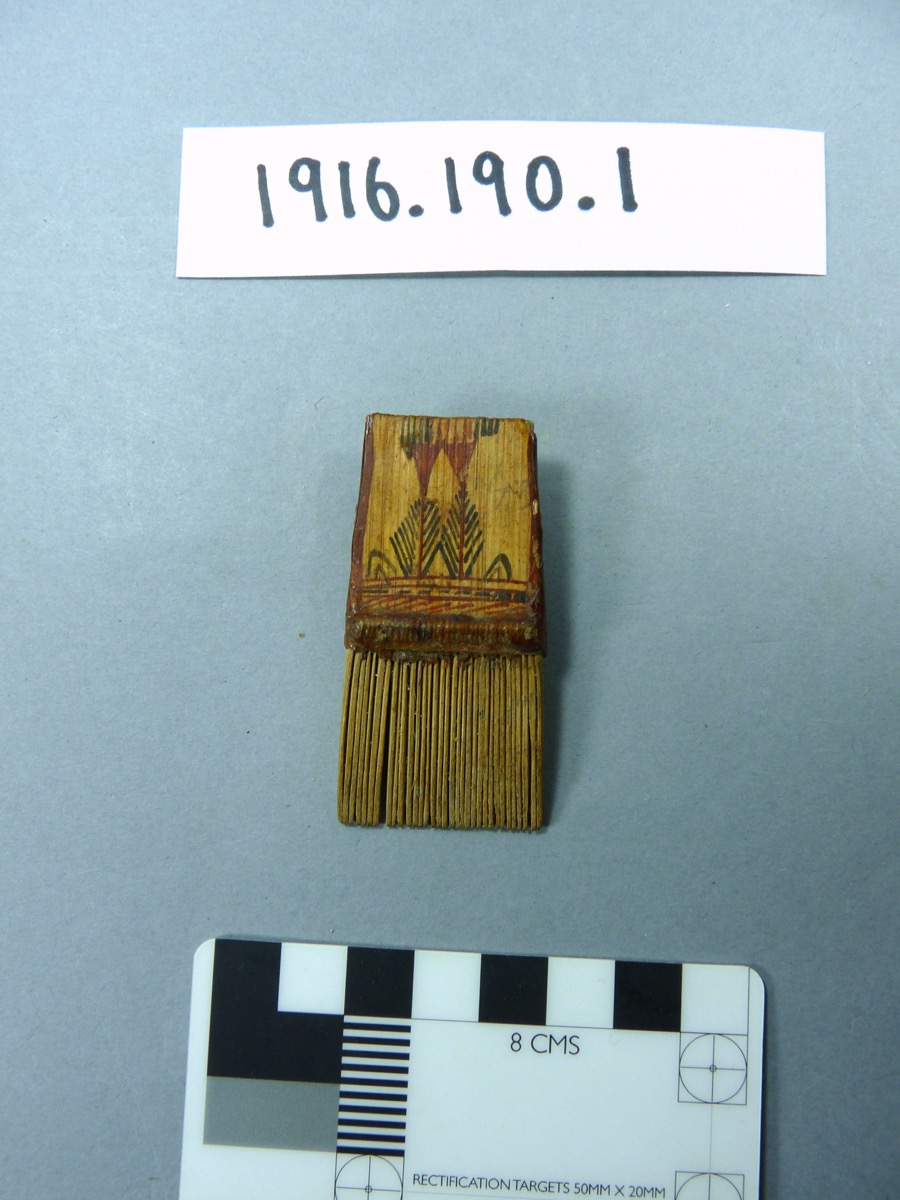
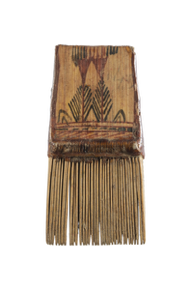
Bagirka. Small wooden comb worn in the hair. The comb has a rectangular handle with painted red and black patterns, which is attached with ?resin to the tightly packed teeth.
Place
Asia; South Asia; India; [Chota Nagpur]; ?Jharkhand; ?West Bengal; ?Orissa; ?Chhattisgarh
Period
?20th century
Source
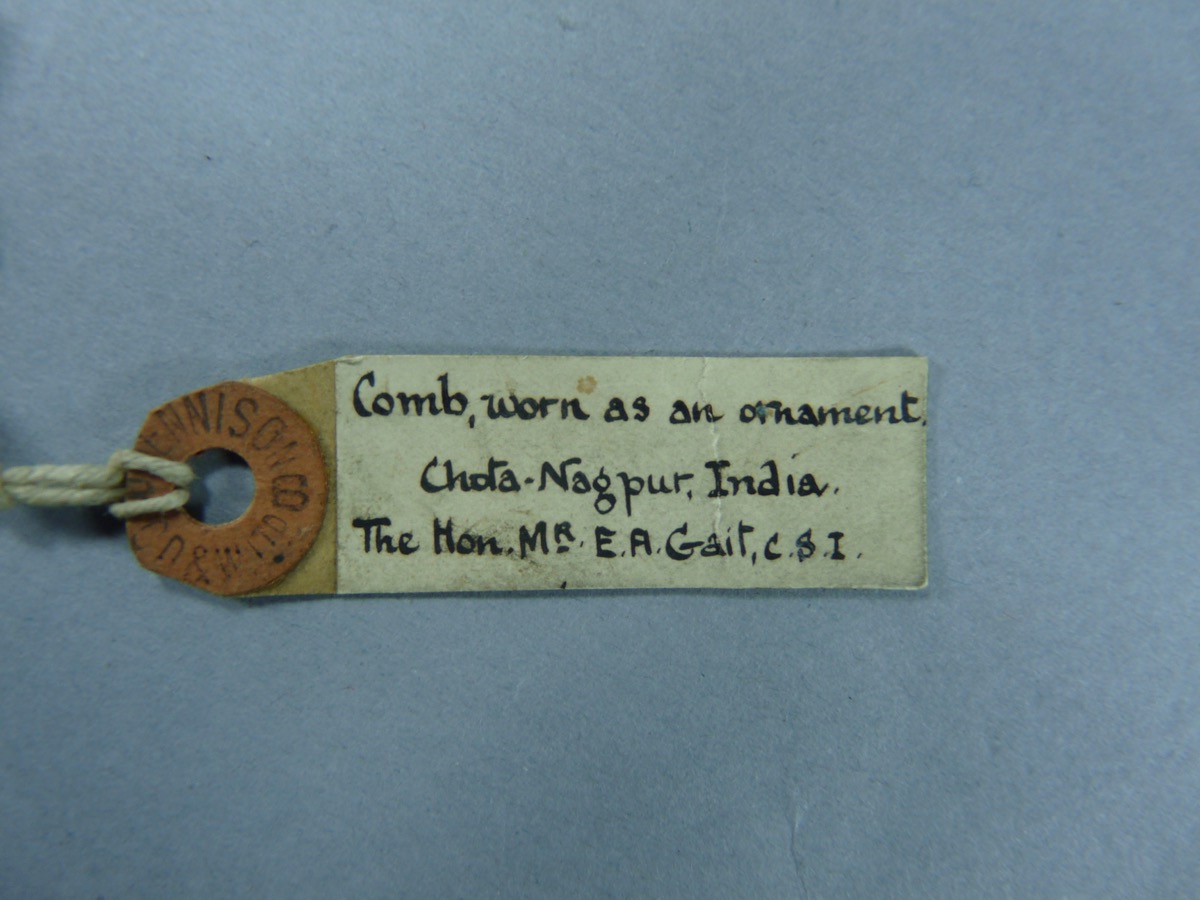
Roy, Sarat Chandra [?field collector]; Gait, Edward Albert (Sir) [donor]
Department
Anth
Reference Numbers
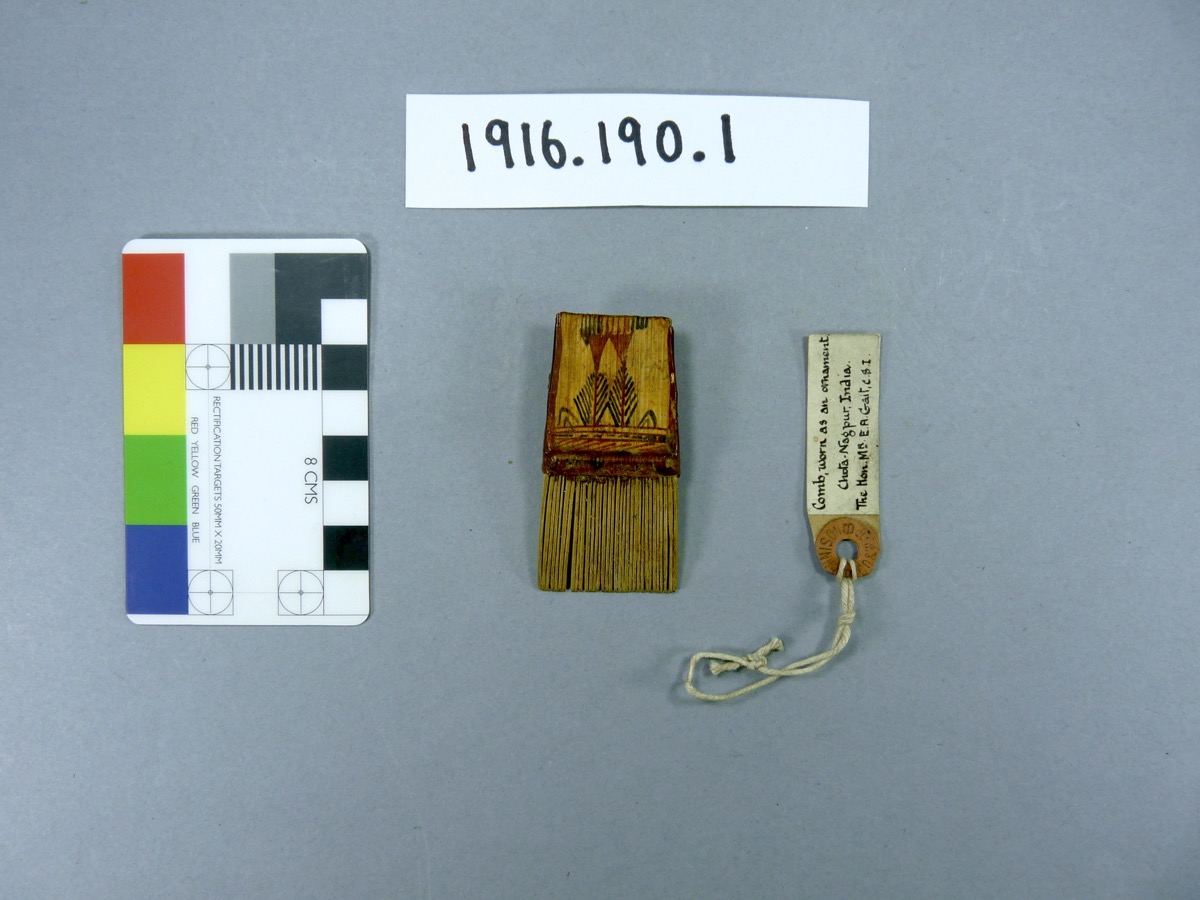
E 1916.148.1; MAA: AR 1916.190.1
Cultural Affliation
Oraon
Material
Wood; Pigment; ?Resin
Local Term
Bagirka
Measurements
32mm x 10mm x 62mm
Events
Context (Acquisition Details)
Part of a collection of Indian material donated by Gait, numbered E 1916.148.1-87 (from the entry in the accessions register). These items were also numbered as AR 1916.190.1-87 (from the entry in the Annual Report). Some items have since been known only by their Annual Report number and so, for the sake of consistency, the whole collection has been entered on computer as AR 1916.190.1-87. Original accessions numbers are entered in the CRN field. (Alison McKeating, April 1995)
Event Date 22/3/1995
Author: maa
Description (Physical description)
Wooden comb with decorated handle
Event Date 22/3/1995
Author: maa
Description (Physical description)
Comb
Red and black line decoration
Event Date 7/12/2016
Author: maa
Conservation (Remedial)
CON.2016.3471 | Remedial
Event Date 4/8/2016
Author: Kirstie Williams
Context (Display)
'Another India: Explorations and Expressions of Indigenous South Asia' 07/03/2017 - 22/04/2018 MAA exhibition label text reads:
Combs: Intimate associations
Combs like this were, and still are, worn in the hair by men and women as ornaments and to support elaborate hairstyles.
Given by one person to another on important occasions, from courtship to funerals, they were commonly worn by Adivasi peoples across India and frequently collected by the wide variety of outsiders who encountered them.
The combs shown here were collected and given to the Museum by Indians and Europeans at different points in history. But while we often know something about collectors and donors, we know little or nothing about the people who made and wore these objects, or about the encounters that led to them being given up.
2. Woman’s comb (bagirka)
This tiny comb with stylised floral decoration was collected by Sarat Chandra Roy, a Bengali lawyer who worked closely with the Oraons of Chota Nagpur and became known as the ‘founding father’ of Indian Anthropology. It was donated in 1914 by Roy’s patron Sir Edward A. Gait, a career civil servant and enthusiastic amateur ethnographer when he was Governor of Bihar and Orissa.
Oraon. Chota Nagpur
Collected by Sarat Chandra Roy
Donated by Sir Edward A Gait, 1916
E 1916.148.1
Event Date 22/3/2017
Author: Remke Velden
Exhibition (Li Ka Shing Gallery)
EXH.2017.2 | Another India: Explorations and Expressions of Indigenous South Asia
Event Date 8/3/2017
Author: Remke Velden
Context (Field collection)
'Asia; South Asia; India; [Chota Nagpur]; ?Jharkhand; ?West Bengal; ?Orissa; ?Chhattisgarh' has been entered as the place, as these are all contemporary regions corresponding to the historic region of Chota Nagpur.
Event Date 27/2/2023
Author: Flo Sutton
Description (Physical description)
Bagirka. Small wooden comb worn in the hair. The comb has a rectangular handle with painted red and black patterns, which is attached with ?resin to the tightly packed teeth.
Event Date 27/2/2023
Author: Flo Sutton
FM:94281
Images (Click to view full size):