Accession No
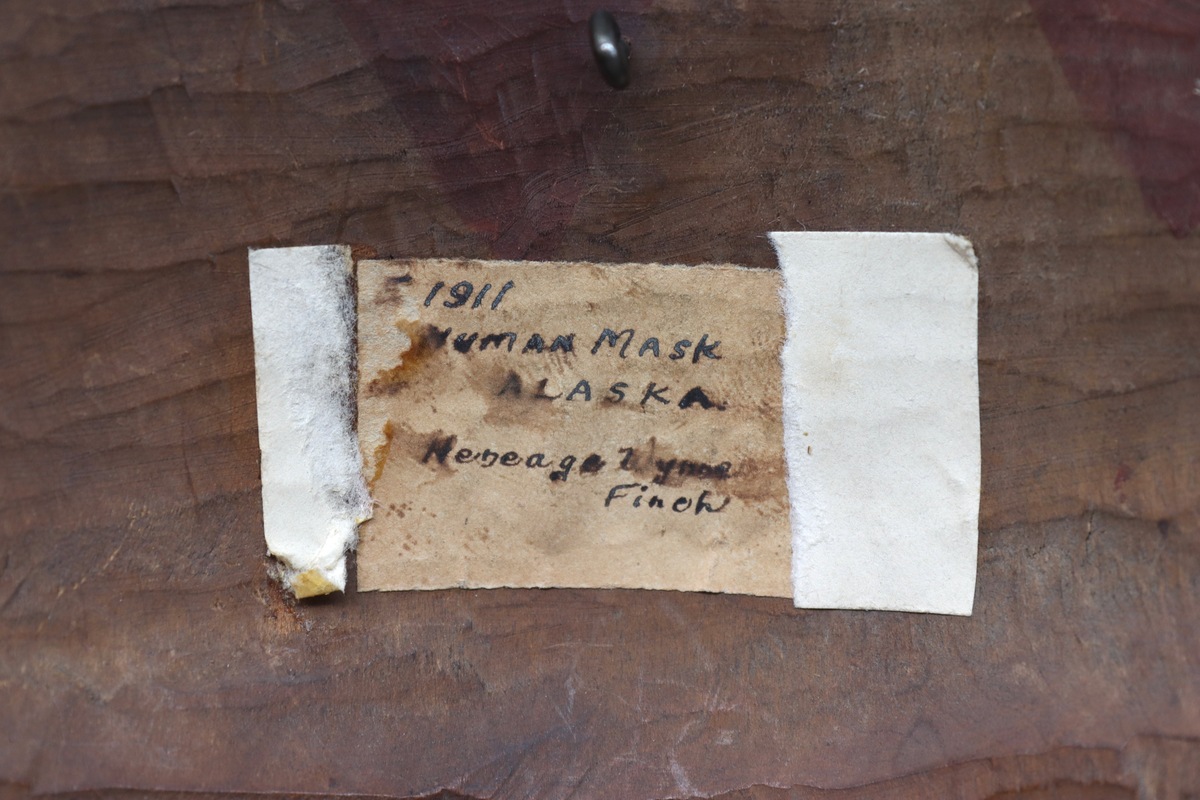
E 1911.26
Description
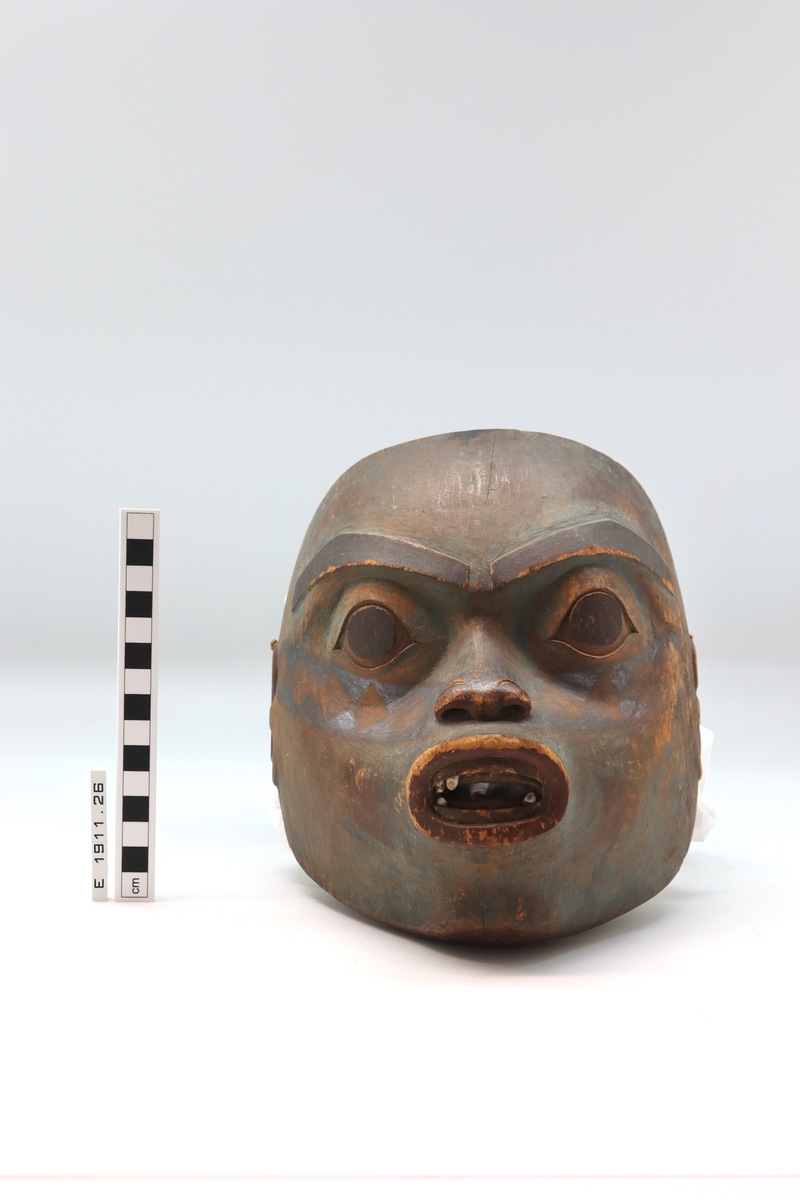
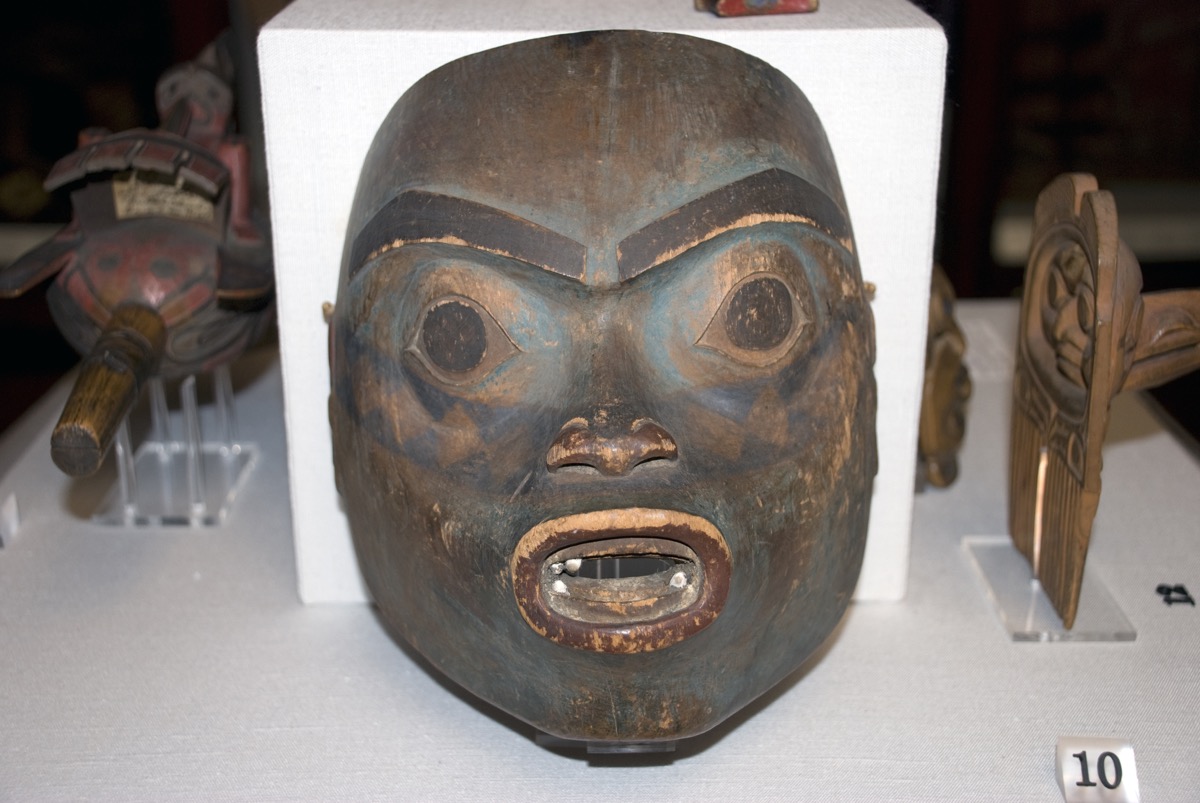
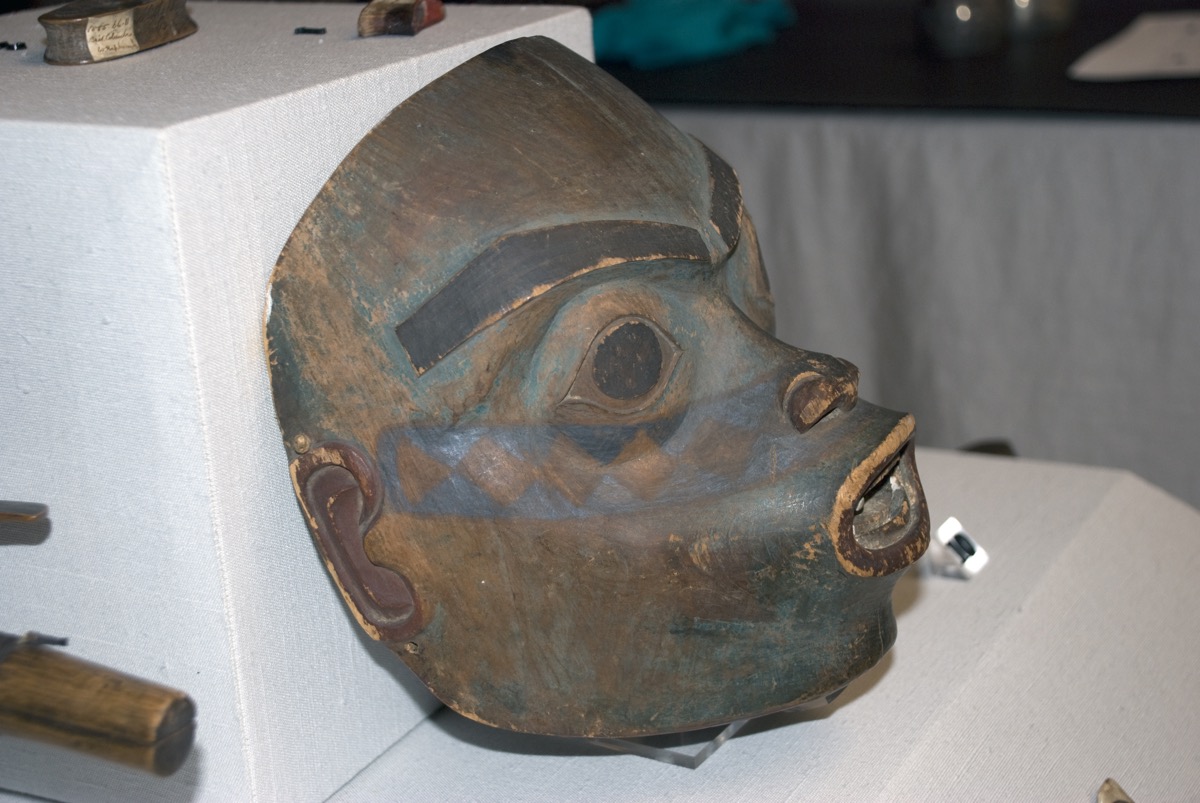
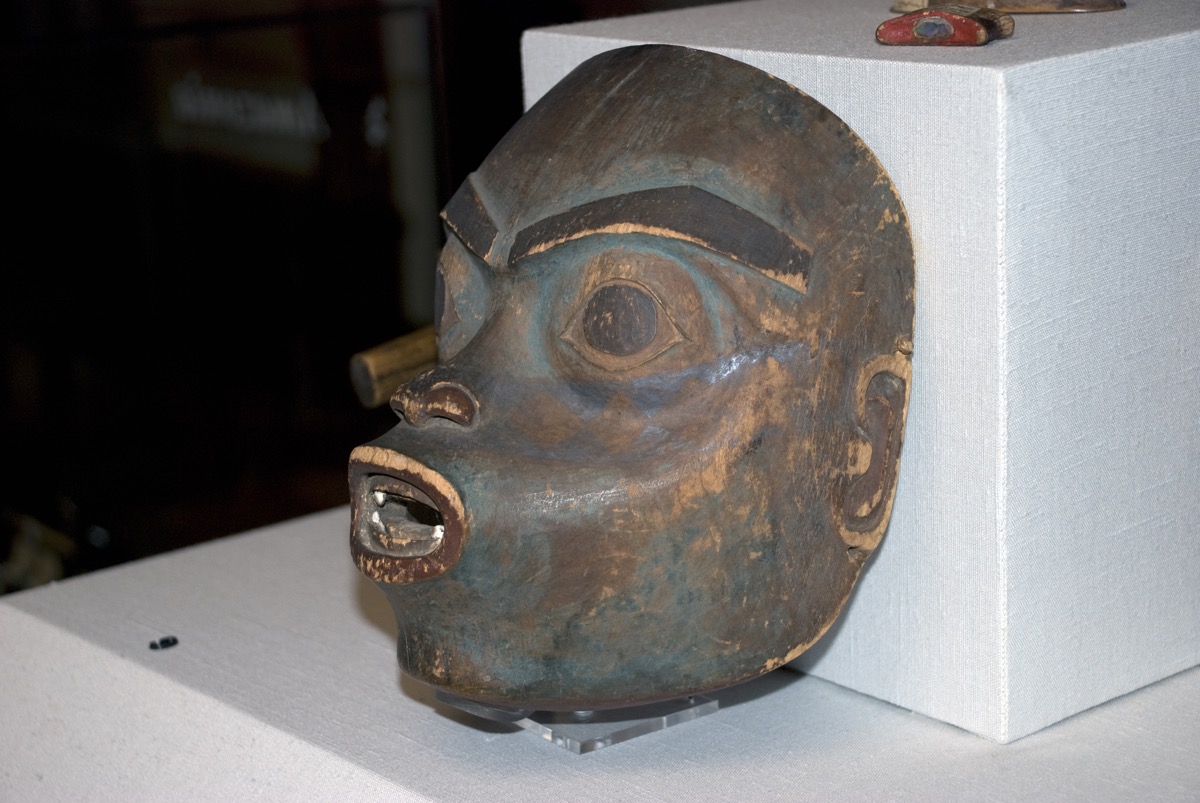
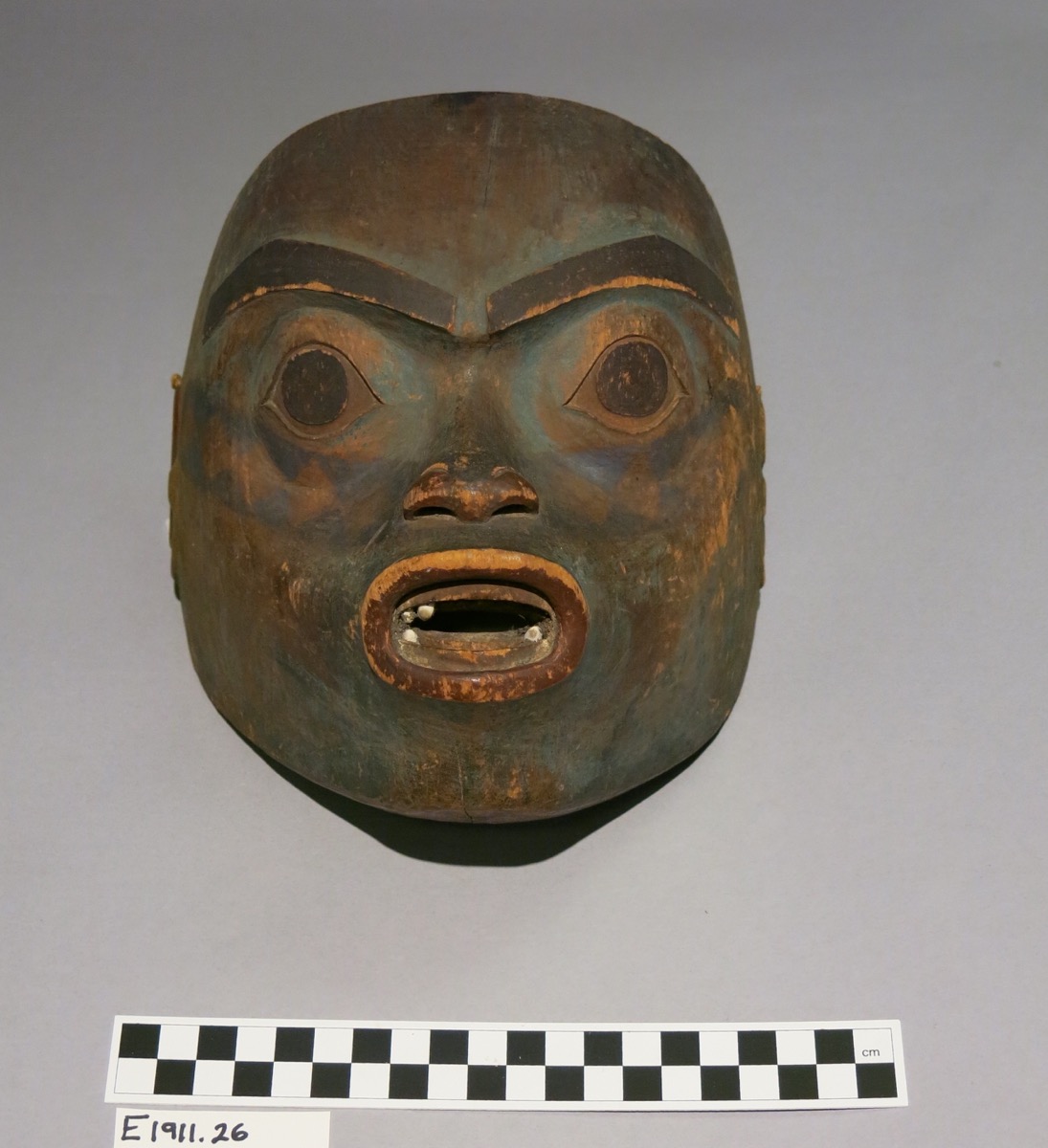
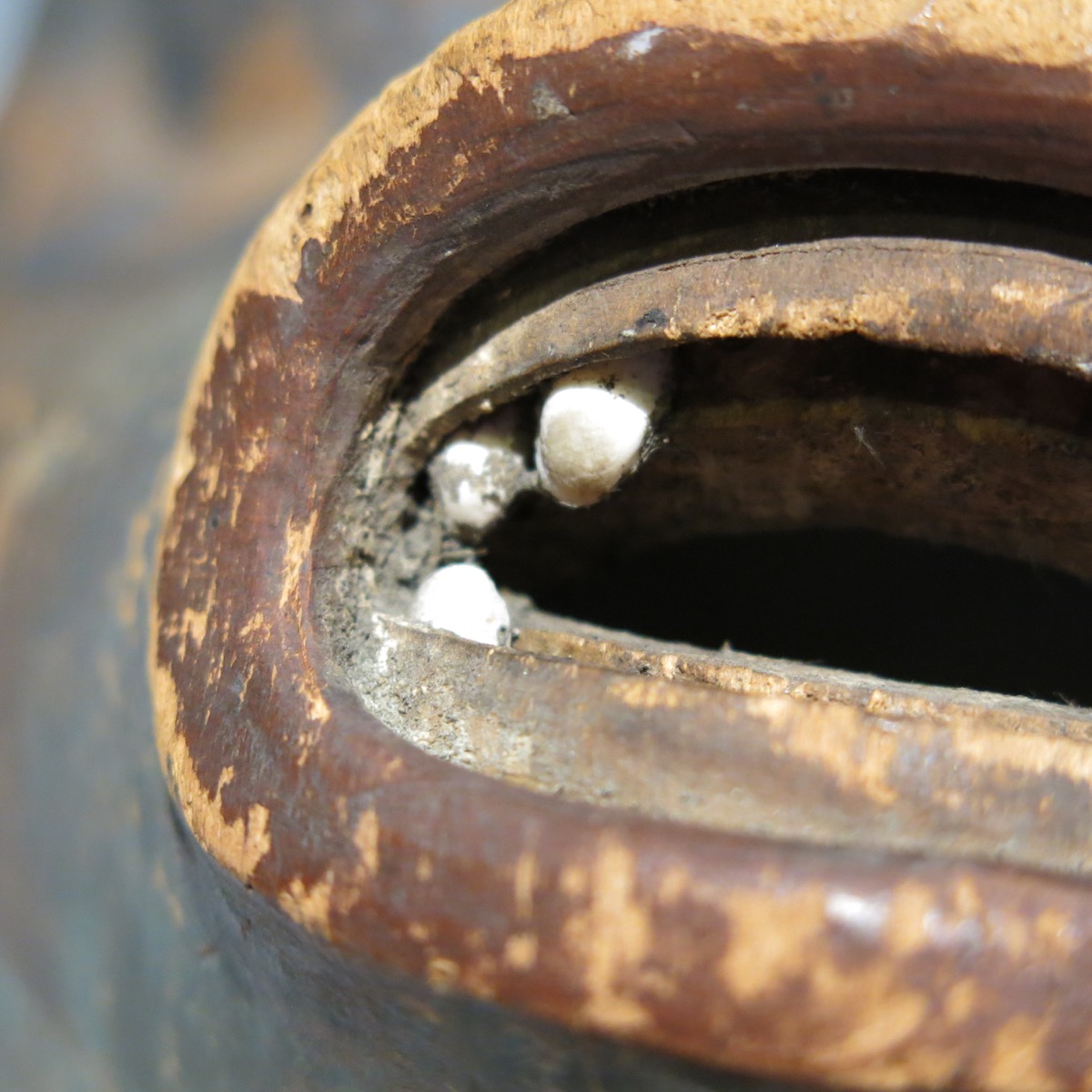
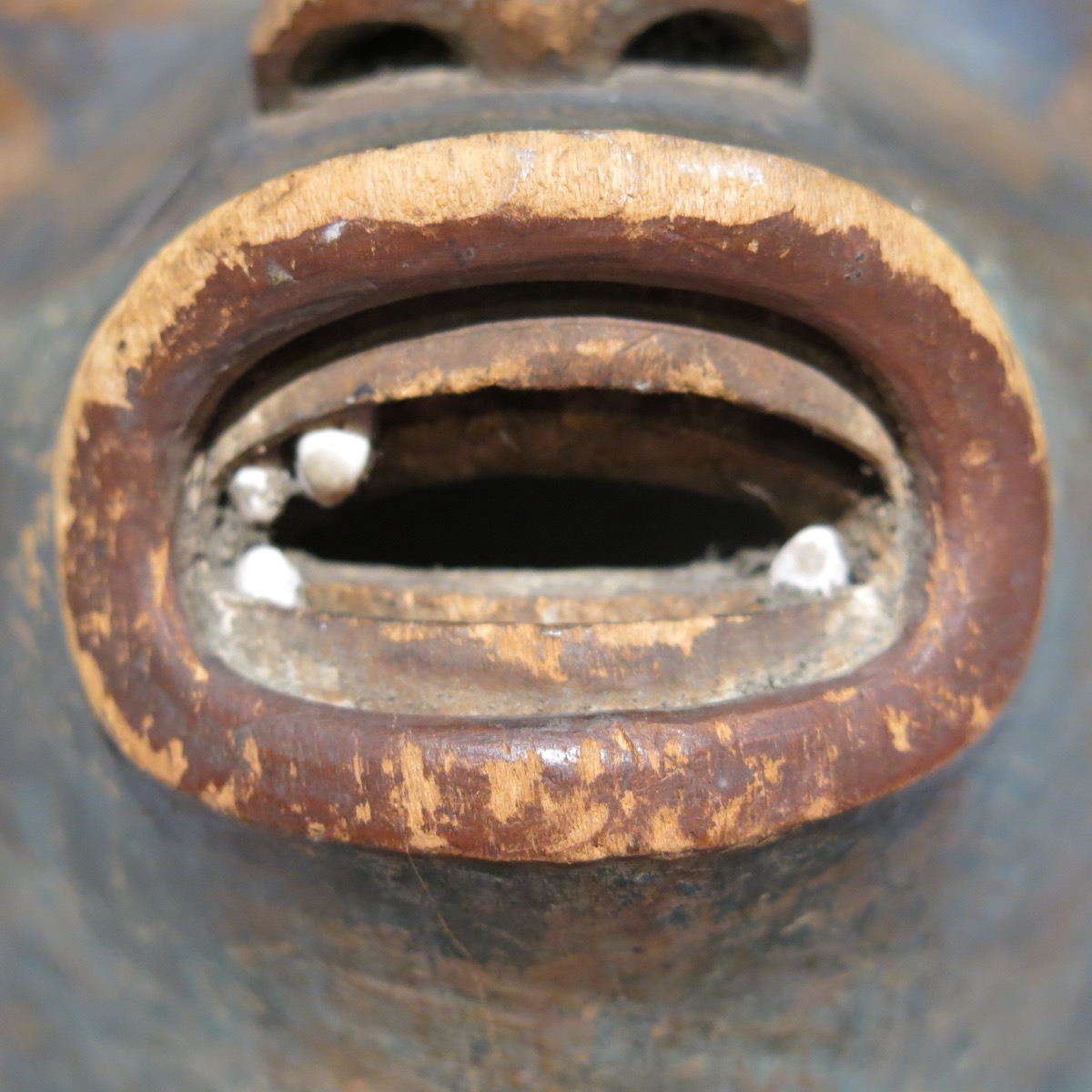
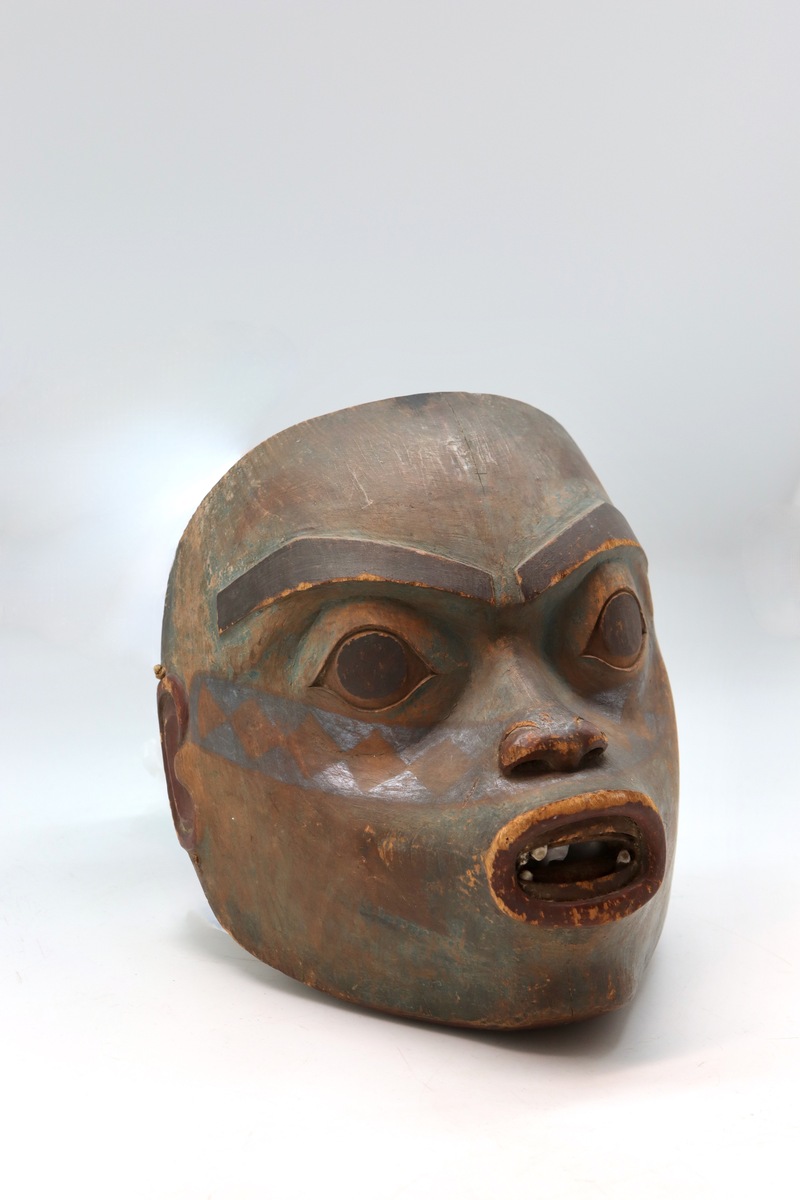
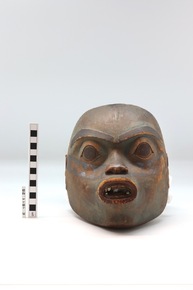
A wooden mask possibly a man or Kushtáka, a land otter man, with an open prognathic mouth set with operculum shell teeth. With a prominent painted black eyebrows, large black eyes, a small slightly flared nose and an open oval mouth.
Place
Americas; North America; USA; Alaska; Juneau
Period
Source
Wynne Finch, Heneage [collector and donor]
Department
Anth
Reference Numbers
E 1911.26; MAA: AR 1911.892
Cultural Affliation
Tlingit; ?Áa'kw khwáan [Auk]; ?Tsimshian; Northwest Coast
Material
Wood; Shell; Operculum; Paint
Local Term
Measurements
1700mm x 200mm x 135mm
Events
Context (Related Documents)
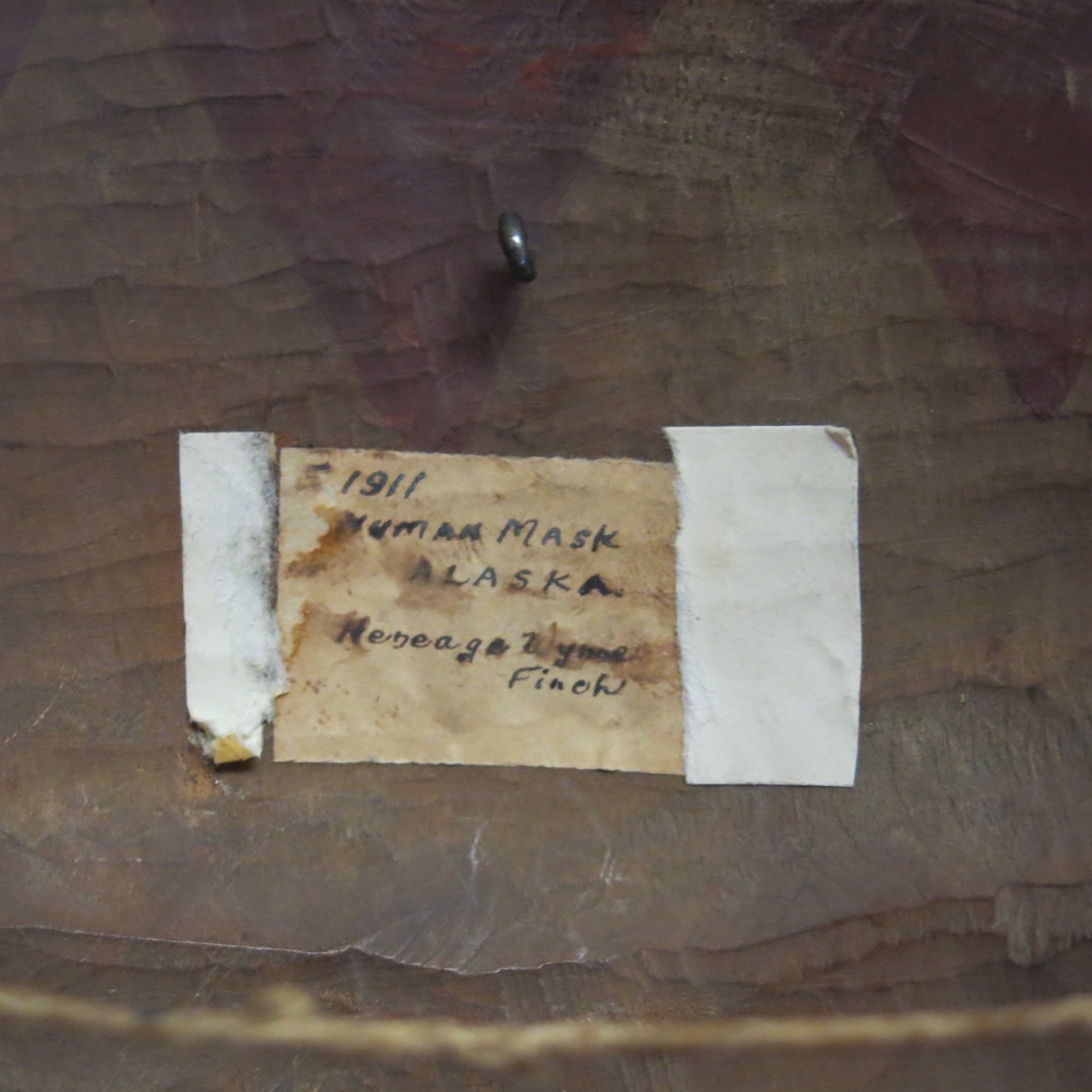
Blue Book noted presented by Heneage Wynne Finch, Esq. Crowborough [East Sussex].
Event Date 1911
Author: rachel hand
Context (Related Documents)
In a letter to Baron Anatole von Hügel, 26th January 1911 (MAA letters correspondence box 1911 January to March) Finch provide details on the collection and use of this mask together with E 1911.26. He rather wryly notes that the information is from memory and therefore may possibly be erroneous. "I was informed when I purchased the masks (in the town of Juneau Alaska circa the year 1900) by Lieut. Emmons (U.S. Navy) that the two masks represented the Good and Evil Spirits respectively: and that the witch doctors put them on when making incantations. The mask with labret (or lip ornament) is the Good Spirit, I believe: the one with a curiously shaped mouth containing (human?) teeth -the Evil Spirit. In the mask with the labret the teeth are represented by pieces of the shell of the haliotis as you have doubtless noticed. I do not think any of the Alaskan "Indian" tribes at present wear the labret, at any rate none of the "Indians" I have seen in my visit did.
Event Date 26/1/1911
Author: rachel hand
Context (Related Documents)
The 28th annual report (1914) reads, 'List of Accessions from January 1 to December 31, 1911 [...] ALASKA. 891—892. Two human masks carved in wood, [...] and one with open mouth set with teeth. Heneage Wynn Finch, M.A.'
Event Date 30/4/1914
Author: Guey-Mei Hsu
Context (Display)
Exhibited: Old Anthropological displays at CUMAA, case 21 and 22, number 16, dismantled 08.1986.
Event Date 1986
Author: rachel hand
Context (Display)
Exhbited: New Anthropological displays at CUMAA, square case, Northwest Coast, object number 10, 1990 onwards
Event Date 1990
Author: rachel hand
Description (Physical description)
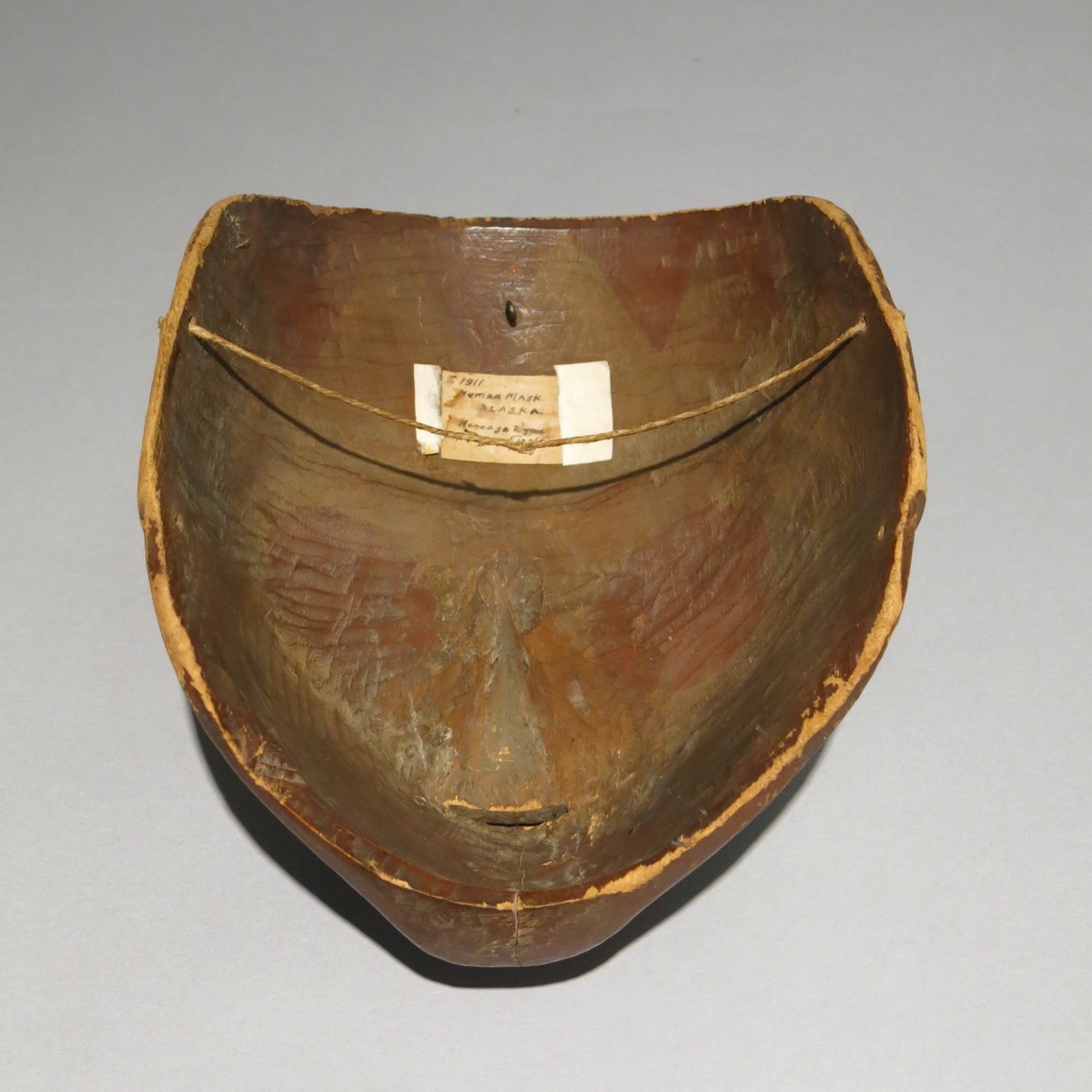
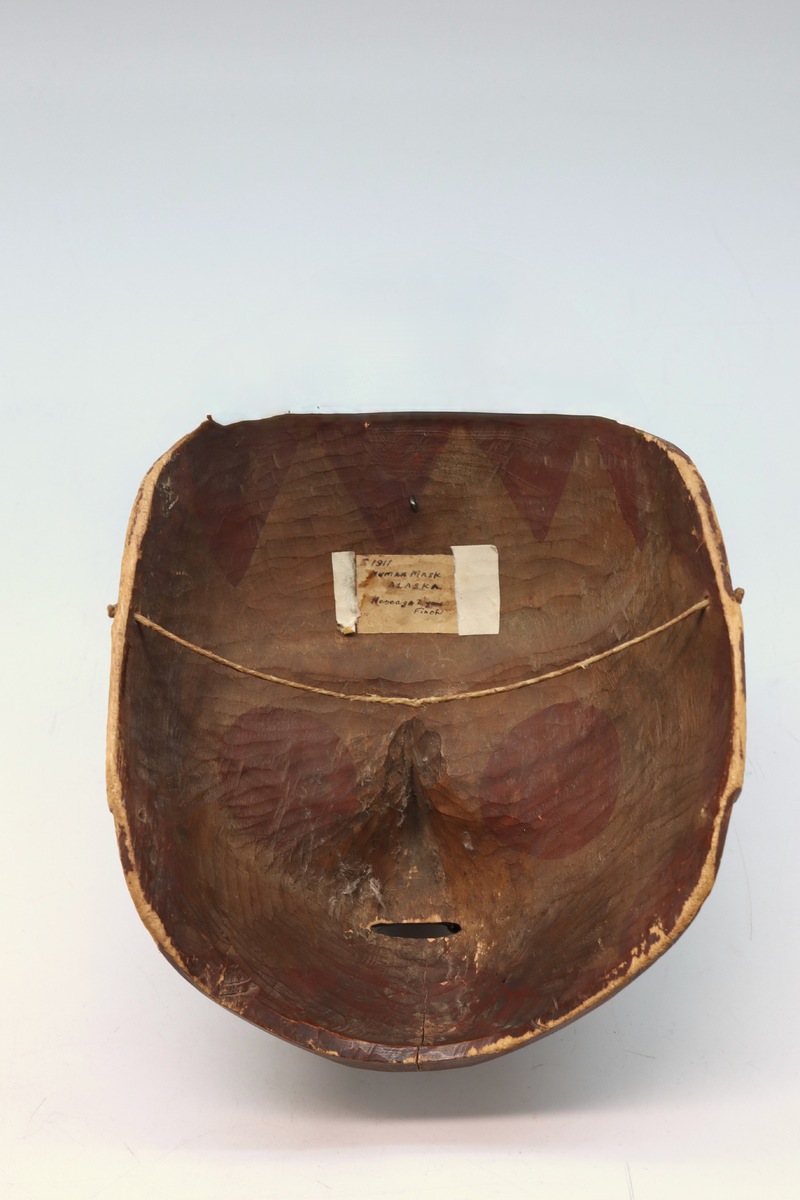
A human mask carved in wood with an open prognathic mouth set with operculum shell teeth. The mask has prominent black eyebrows, large black eyes, a small slightly flared nose and an open oval mouth with four teeth. The mask has a face-painting design on its surface which is composed of a band of intersecting diamonds across the nose and under the eyes, the eyes and chin are surrounded by pale blue. The ears are stylised and painted red. The inside of the mask is also painted with a red band of linked triangles at the upper edge.; Good
Event Date 1992
Author: maa
Context (Amendments / updates)
The Northwest Coast Collection was re-catalogued and photographed by Dr. Gillian Crowther in 1992, financed by a grant from the Pilgrim Trust. She noted 'the original European tribal names and, where possible, current tribal names have both been given in separate GLT fields.'
Event Date 1992
Author: Rachel hand
Context (Amendments / updates)
The revised database records were reproduced in Gillian Crowther (1992, revised 2nd edition 1996) Catalogue of the Northwest Coast Collection: Cambridge University Museum of Archaeology and Anthropology.
Event Date 1992
Author: rachel hand
Context (Production / use)
A note on the catalogue card states the mask may be numbered 1911.10 in the Blue Book. Although there is a clear provenance associated with these masks E 1911.25 & 26 the style of carving suggests a Tsimshian origin (G.Crowther).
Tlingit shamans masks represented the spirits or Yek controlled by the shaman, and from whom he derived his power. Often they are associated with asymmetrical face-painting, and eyes which cannot be looked through while the mask is worn; the older masks are thought not to have eye-holes.
This information, gleaned from Emmon's work, The Tlingit Indians (Washington University Press: Seattle 1991) page 377-79, is not surprisingly in keeping with the information given by Finch who also consulted Emmons. However there is a fine line between identifying shamans masks and portrait masks which were worn at potlatches to commemorate a known ancestor.
This point is also noted by Aldona Jonaitis in Art of the Northern Tlingit (Washington University Press: Seattle 1989) page 28. A difference has been suggested by Emmons, that the portrait masks had a cross-bar on the inside for the wearer to grip in their teeth, while the shamanic masks lack such a means of wearing. These two masks do not have mouth grips.
Event Date 1992
Author: maa
Description (Physical description)
A wooden face mask possibly representing a man or Kushtáka, a land otter man, with an open prognathic mouth set with four operculum shell teeth. With prominent painted black eyebrows, large black eyes, a small slightly flared nose and an open oval mouth.
Event Date 6/6/2023
Author: rachel hand
Context (Amendments / updates)
This may be a Kushtáka, a land otter man, a supernatural being, greatly feared by the Tlingit, who attack people who are drowning. The Áa'kw khwáan [noted by Crowther as Auk] are a subgroup of Tlingit in the Juno area
From notes by Emily Moore, Associate Professor of Art History, Colorado State University during a visit to MAA
Event Date 6/6/2023
Author: rachel hand
Conservation (Assessment Only)
CON.2025.6297 | Assessment Only
Event Date 4/12/2025
Author: Stephanie De Roemer
FM:82340
Images (Click to view full size):