Accession No
E 1910.15
Description
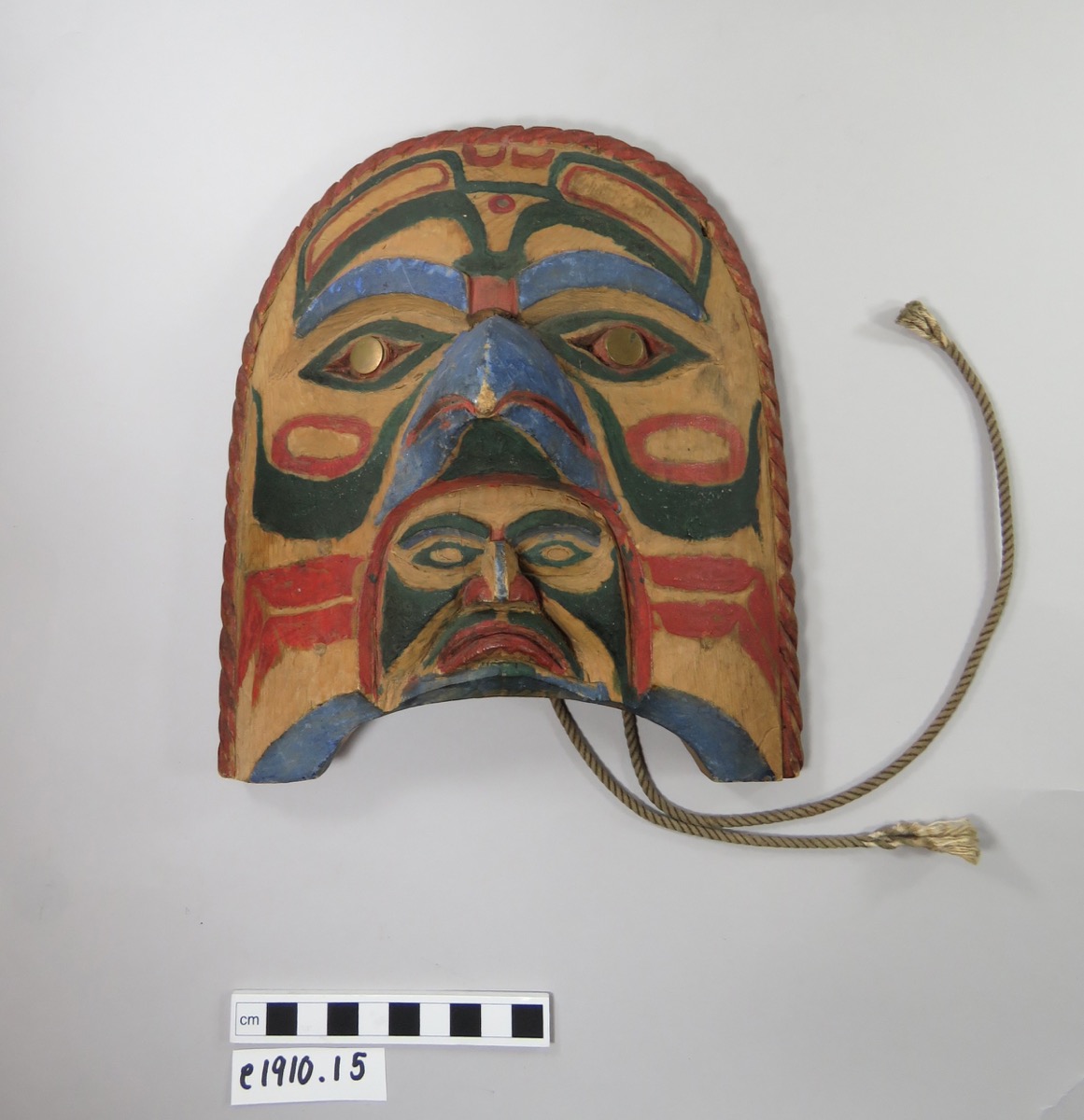
A carved and painted frontlet carved is an eagle with blue eyebrows and beak with a a humanoid face has been carved with a down-turned mouth and flared red nostrils below. The eagle's ears are painted as U-froms together with wing-like U- forms and ovoids below the eyes, together with double red claw-like lines. The eyes are formed from brass thumb tacks.
Place
Americas; North America; Canada; British Columbia; Kyuquot
Period
Source
Glaisher, James Whitbread Lee (Dr) [collector and donor]
Department
Anth
Reference Numbers
E 1910.15; MAA: E 1910.15; AR 1910 303
Cultural Affliation
Northwest Coast; Nuu-Chah-Nulth
Material
Wood; Metal; Brass; Iron; Paint
Local Term
Measurements
210mm x 120mm x 210mm
Events
Context (Amendments / updates)
Ron Hamilton, Ki-Ke-in, a Nuu-Chah-Nulth anthropologist and historian,suggested a Kyuquot provenance
Event Date
Author: rachel hand
Context (Field collection)
Glaisher visited Victoria in 1907 and bought from dealers such as H.Stadhagen and may have purchased the frontlet then
Event Date 1907
Author: rachel hand
Context (Related Documents)
Register notes fro E 1910.14-15 'two wooden masks/ J.W.L. Glaisher Se D /Kwakiutl Indians'
Event Date 1910
Author: rachel hand
Description (Physical description)
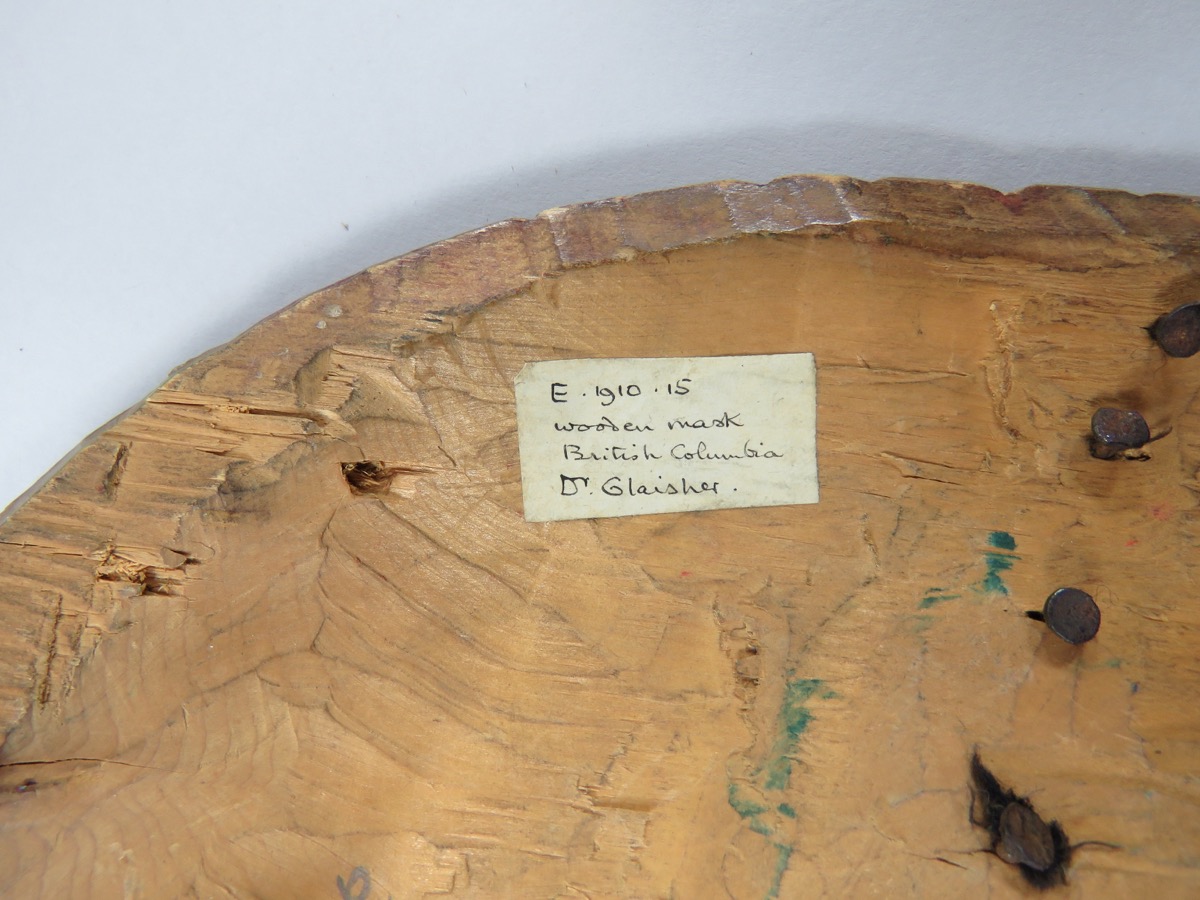
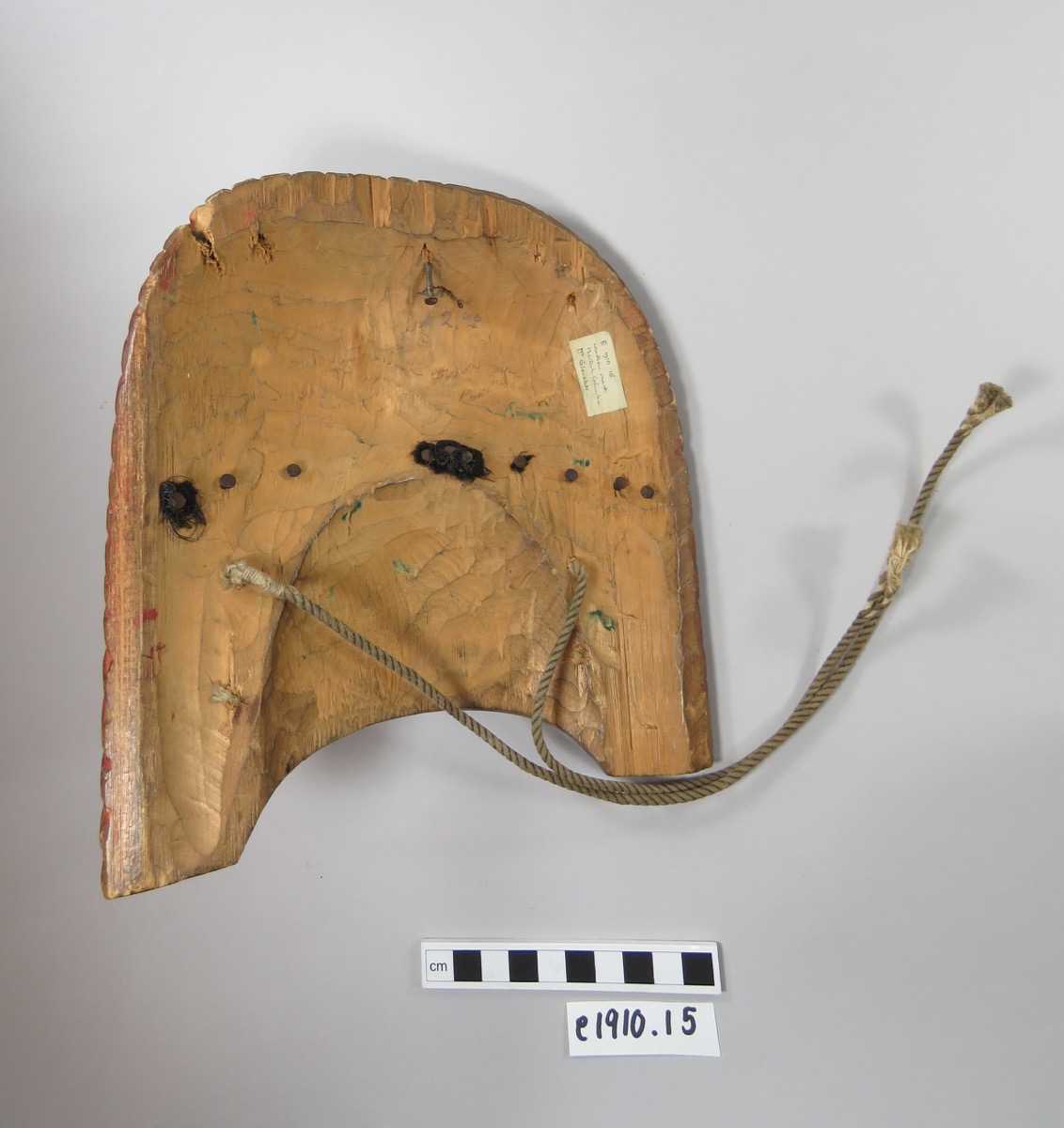
A carved and painted frontlet that does not have the associated headdress but there is a row of nails on the back of the frontlet, some still with material attached, where it would have been afixed to the headdress. The main crest carved is an eagle with blue eyebrows and beak. The eagle's ears are painted as U-froms together with wing-like U- forms and ovoids below the eyes, together with double red claw-like lines. The eyes are formed from brass thumb tacks. Below the eagle's beak a humanoid face has been carved with a down-turned mouth and flared red nostrils. Surrounding the arched frontlet a red twisted rope design has been carved. The lower edge of the frontlet has an arched section cut away.; Good
Event Date 1/12/1992
Author: maa
Context (Amendments / updates)
In 1994 Dr George MacDonald, of the Canadian Museum of Civilisation, suggested that the frontlet was Nootka of Nuu-Chah-Nulth, owing to the blue colours, broad expanse and rope-style edging.
Event Date 1994
Author: rachel hand
Context (Production / use)
Frontlets were worn by hereditary chiefs and were carved in the form of lineage crests. The frontlets were worn during potlatches and winter ceremonials and were part of chiefly regalia. As a chief danced he would flick his head forwards and backwards creating a momentary transformation of the individual into the live crest creature, compressing lineage history into one moment. The frontlets were attached to a head band or headdress often made from ermine skins, fabric, and cedar bark, with up- standing seal lion whiskers. Eagle down was put on the whiskers and flicked to the ground as the dancer moved as a sign of good will.
Event Date 1996
Author: maa
Context (Field collection)
Glaisher purchased many objects from dealers in British Columbia, the main one being H. Stadhagen of Victoria. This mask was probably purchased as it has the price of $2.66 pencilled onto the back surface.
Event Date 1996
Author: rachel hand
Description (Physical description)
Iron nails at the rear indicate where it was attached to the headdress. Remnents of black cotton fabric embedded under nails
Event Date 25/7/2023
Author: rachel hand
Context (Amendments / updates)
Quentin Ehrmann-Curat also suggests that this is Nuu-Chah-Nulth due to the shape of the frontlet
Event Date 25/7/2023
Author: rachel hand
FM:82337
Images (Click to view full size):