Accession No
1918.213.11
Description
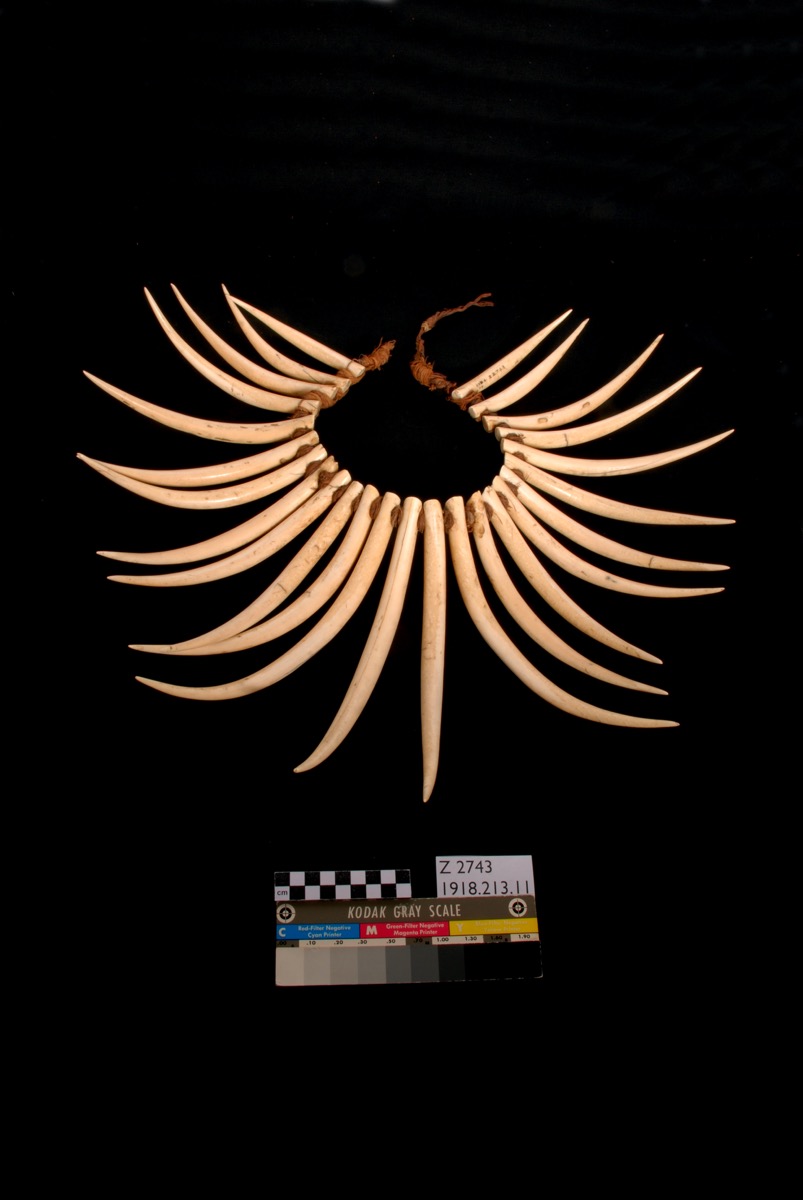
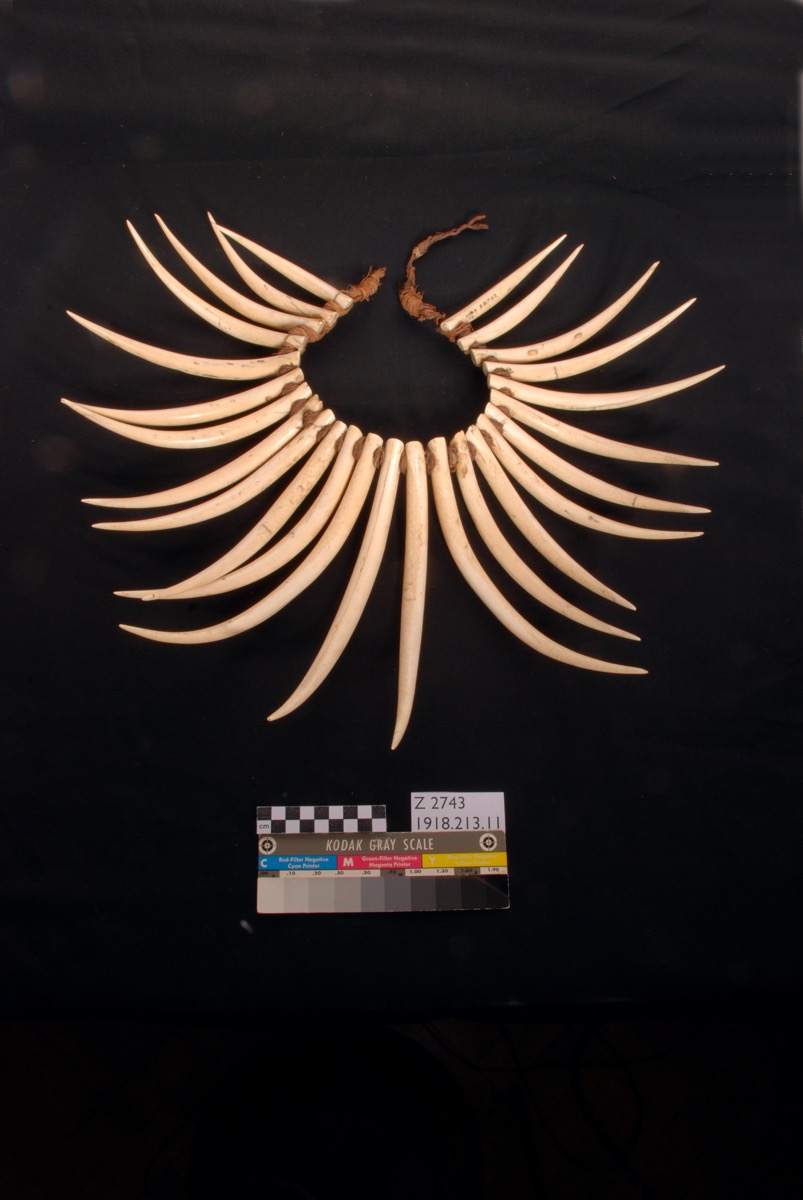
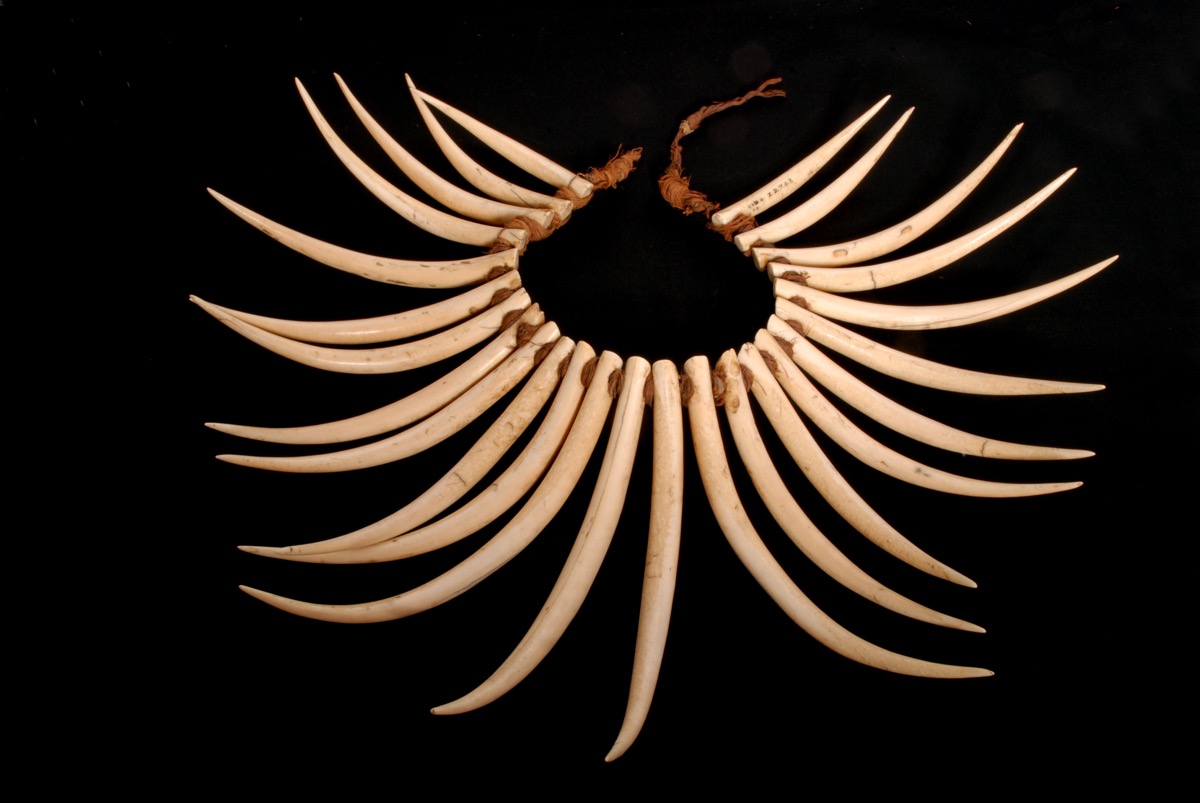
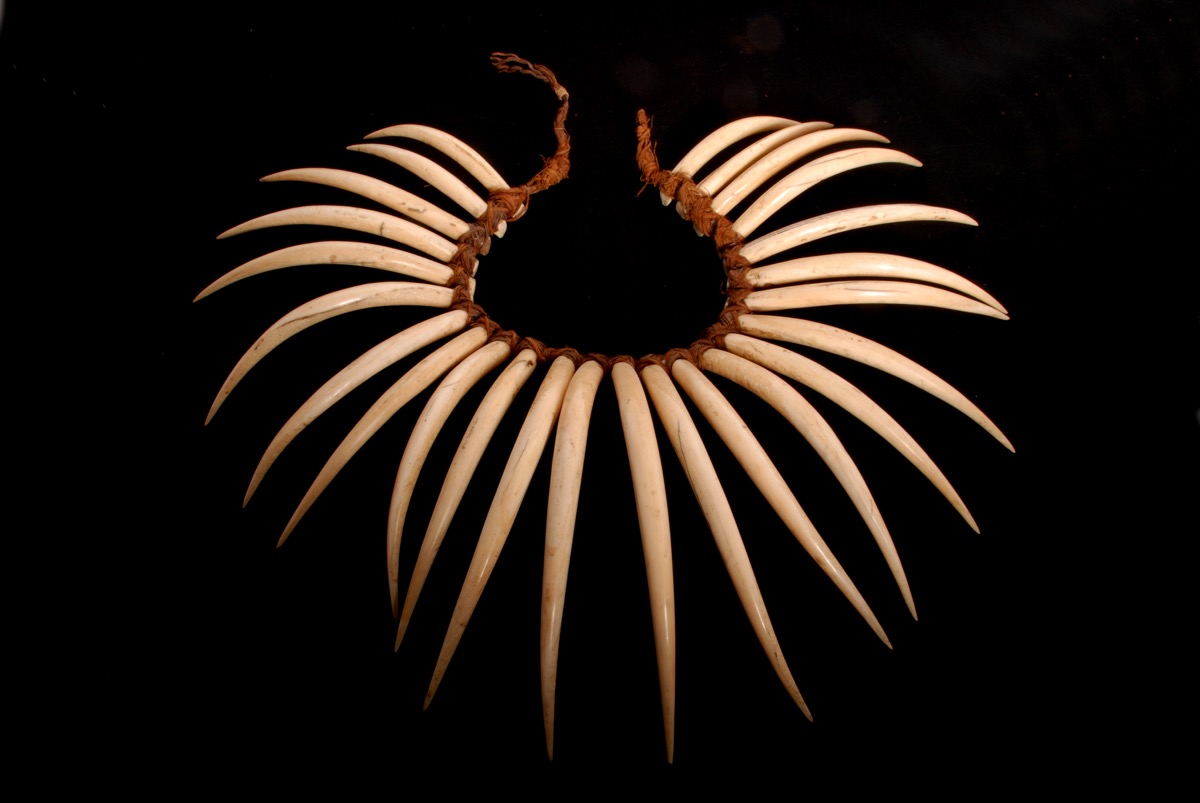
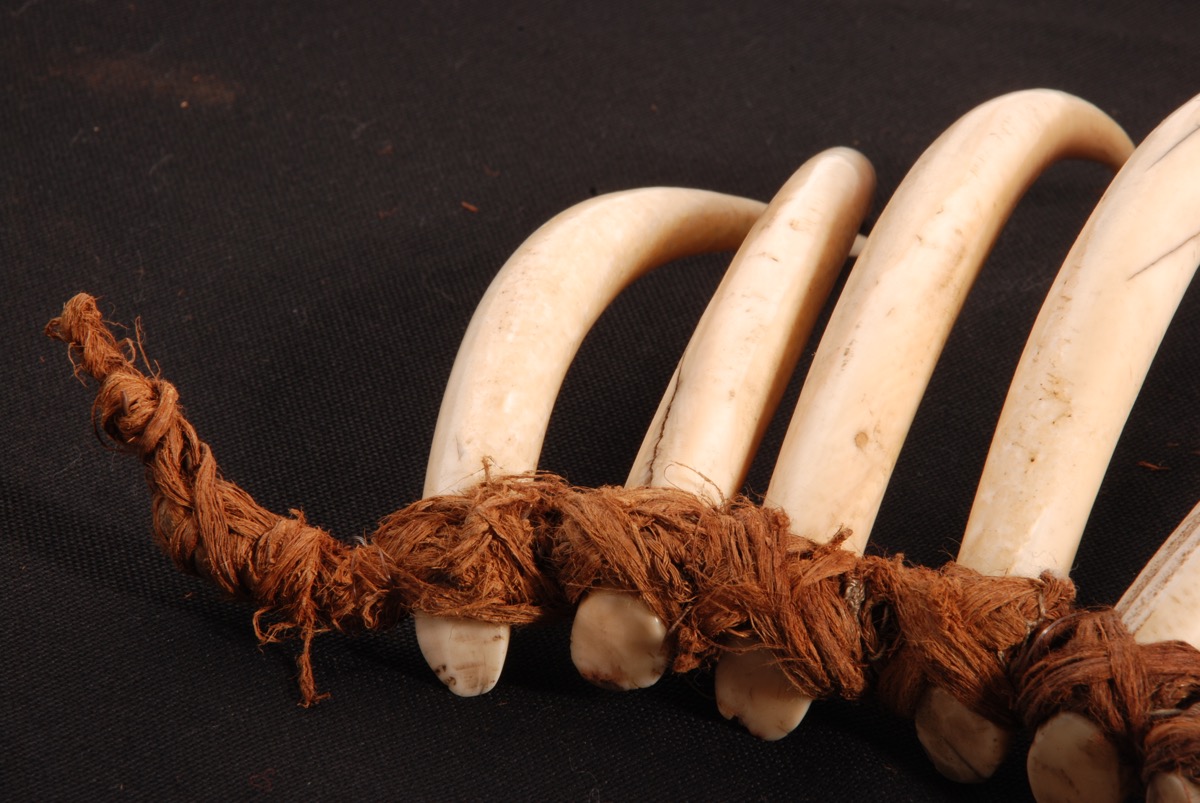
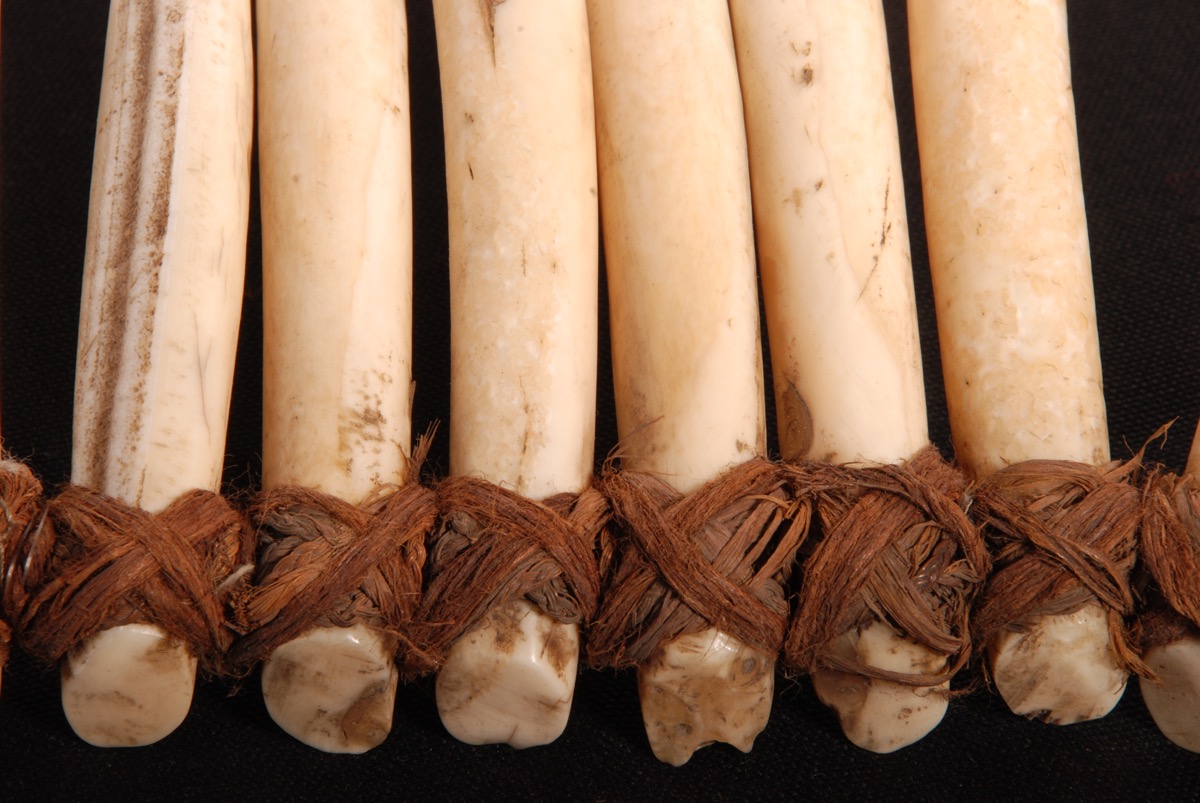
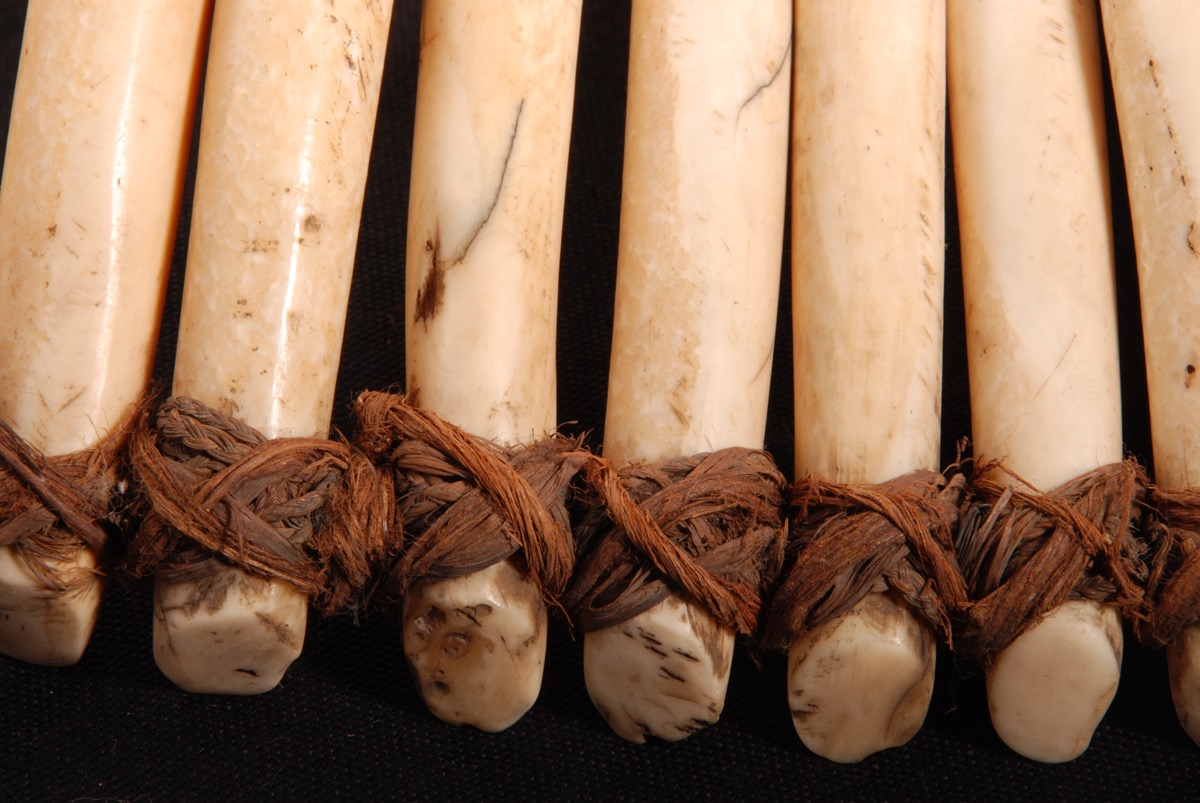
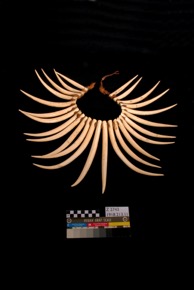
Necklace - Necklace of pointed pendants ground out of sperm whale teeth
Place
Oceania; Polynesia; Fiji
Period
Source
Gordon, Arthur Charles Hamilton [collector]; Gordon, George Arthur Maurice Hamilton [donor]; Stanmore (Lord)
Department
Anth
Reference Numbers
1918.213.11; MAA: Z 2743; G31
Cultural Affliation
Material
Tooth; Ivory; Plant; Fibre
Local Term
?Waseisei [Fijian Art research project]; ?Wasekaseka [Fijian Art research project]
Measurements
Events
Context (CMS Context)
One of 12 sperm whale teeth necklaces, one of which is described as "unusually large" and one "with pendants provided with extraordinary taper points" . The items need to be examined for more individual identification. The Fiji catalogue reference cards have the following entries: "Extract from register 1918.213.1-74: Additions to the Gordon Collections presented by George A.H. Gordon and collected by his father Sir A.H. Gordon during his governorship of Fiji from September 1875 till January 1880. (Sir A.H.Gordon was Governor of Fiji from September 1875 till January 1880. F.J.H)." " Confirm Minutes of the Cambridge Antiquarian Society 18 October 1883, and Accessions Register" Collected by: Gordon.Sir.Arthur.Hamilton-
Event Date 9/7/1987
Author: maa
Description (CMS Description)
Necklace of pointed pendants ground out of sperm whale teeth
Event Date 9/7/1987
Author: maa
Description (CMS Description)
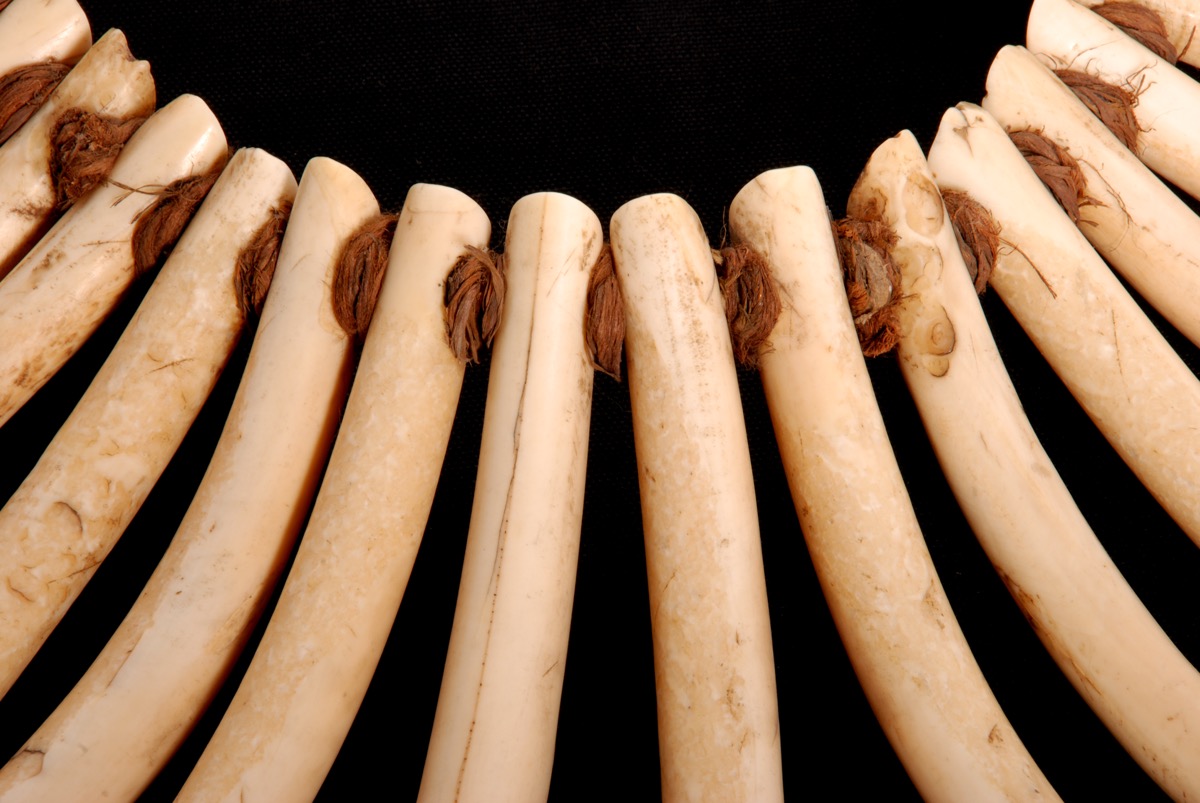
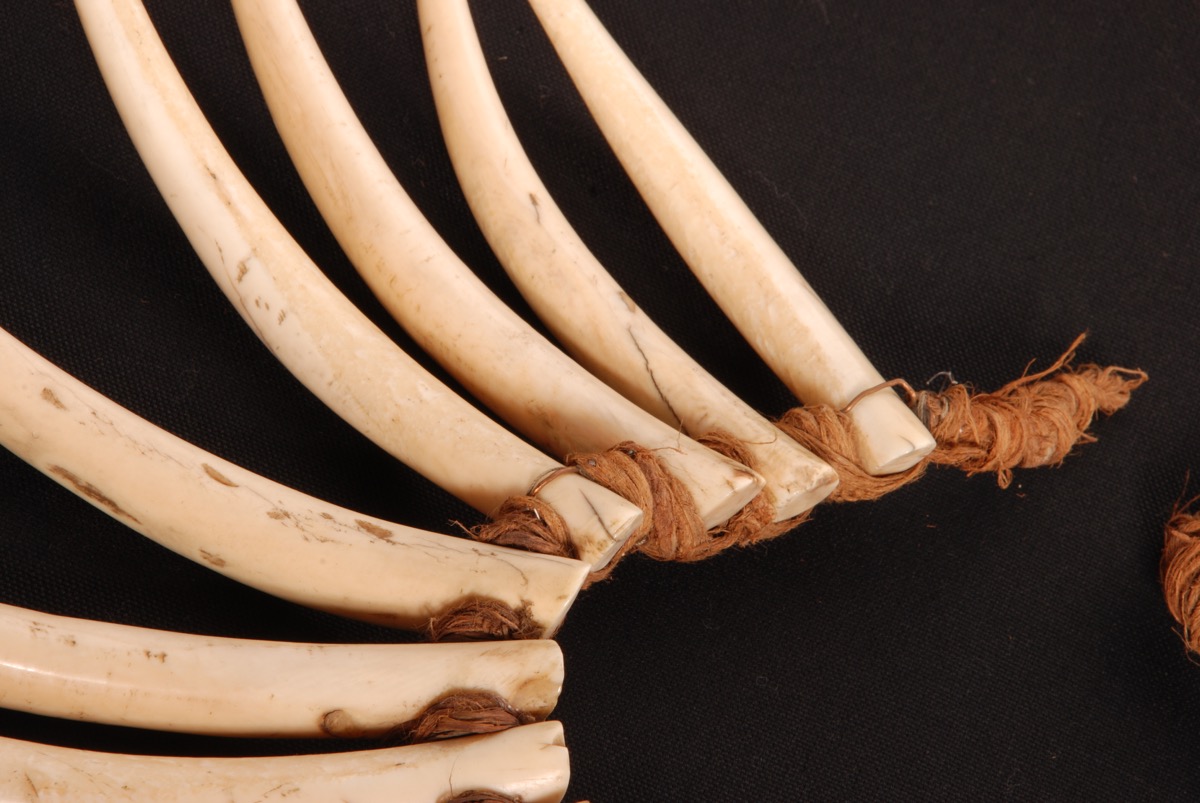
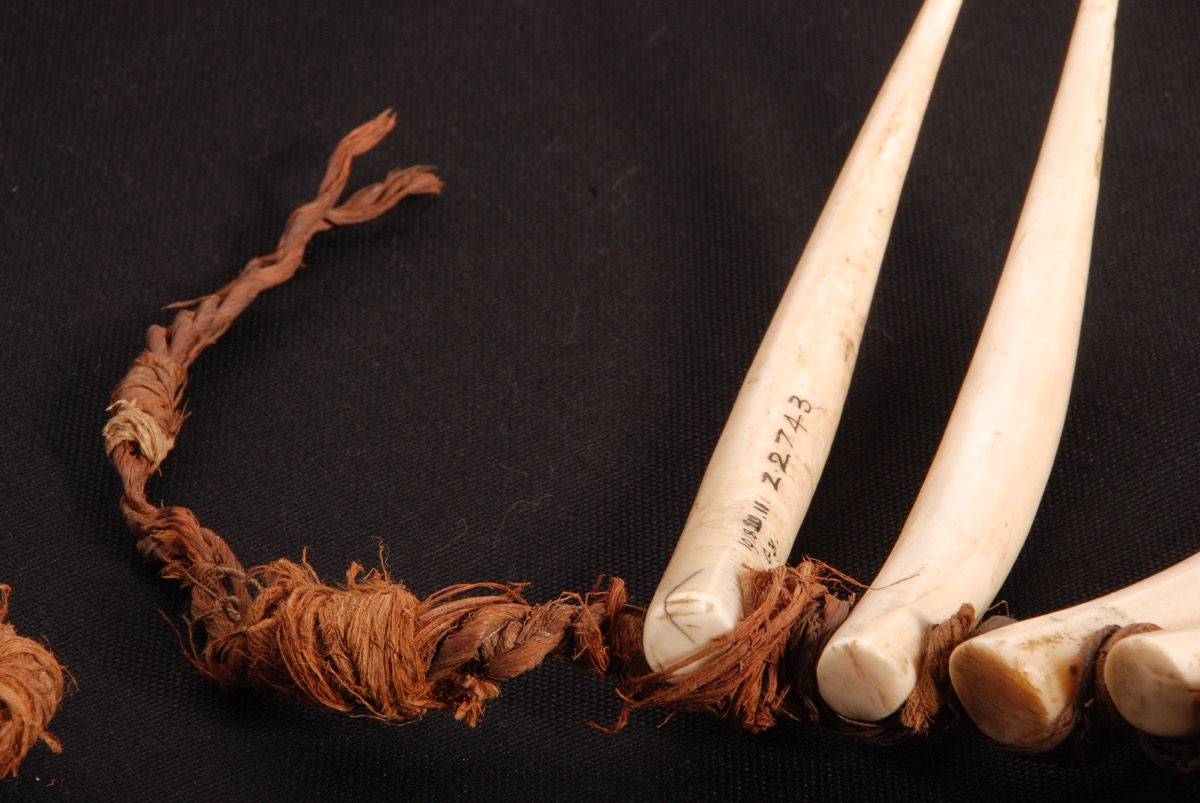
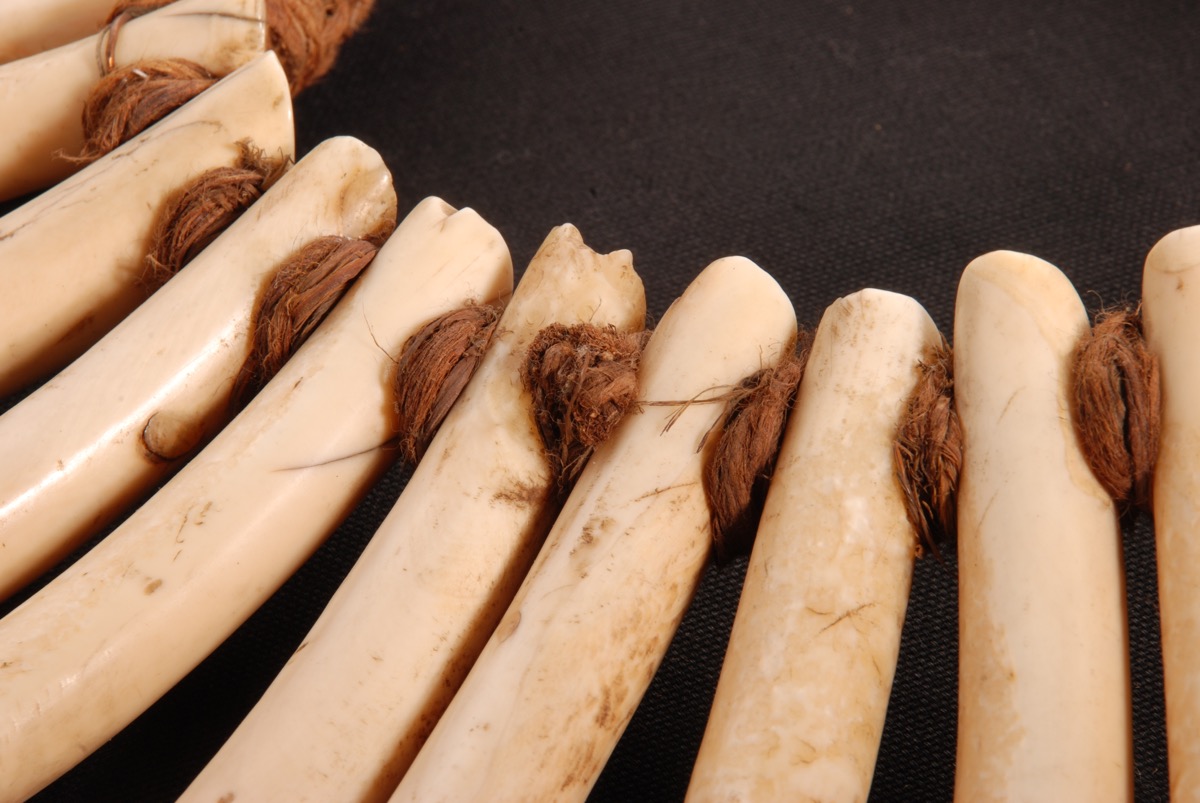
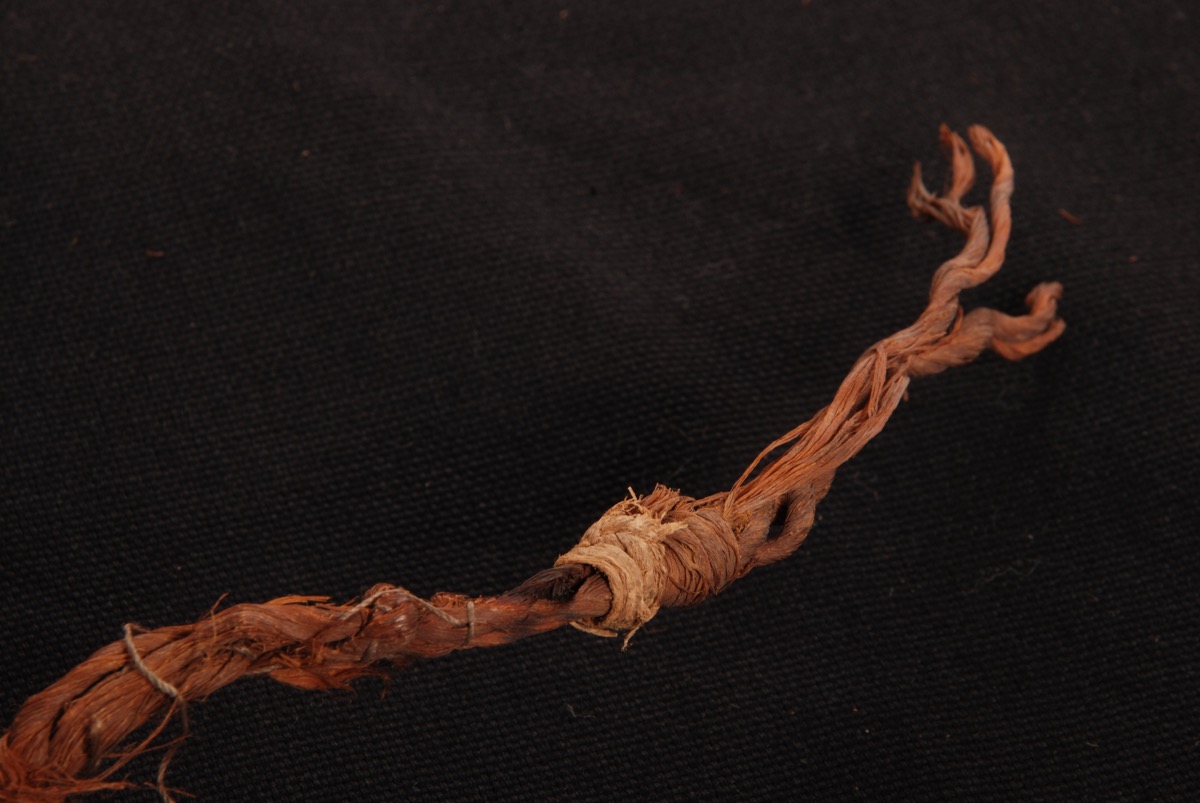
Necklace (waseisei) formed of 25 tusks carved from walrus ivory, pierced and the top and strung on a cord of twisted hibiscus fibre. An additional length of hibiscus fibre is woven around the cord and between the top of the tusks The binding is weak and shedding. A thick metal thread has also been woven around the top of the necklace to make the necklace sturdier. The tusks are very long, curving upwards and tapering. The tip of the thirteenth tusk from the left is chipped The tusks are of a light cream colour at the front and back. 'Z. 2743' and '1918.213.11 G 31.' inscribed in black ink on the last tusk from the left.
Event Date 25/10/2012
Author: maa
Context (CMS Context)
Catalogue card 1 reads [stamped in black ink:] 'Z 2743 FIJI'. [typed:] 'Necklace of ivory. A. H. Gordon circa 1875.' [in blue pen:] '1918.213.11'. [in pencil in the bottom left corner:] '1/206'. [stamped in blue ink in the bottom right corner:] 'SHOW CASE NUMBER 1'. A small round red sticker pasted to the card. [added in pencil:] 'Probably elephant ivory, traded down from the East Indies by whalers. As regards sailing ships trading from East Indies to Fiji in the early part of the 19th century see transactions Fijian Society 1908-1910. Page 7. There is a reference to an elephant tusk having been [continues on the back of the card:] seen in Fiji in 1849. See Erskine John E. The Western Pacific. London 1853, page 192. In library Museum A & E.' [in black ink:] '(Centenary Exhibition)'. [in black pen:] '26.xi.86. Prof. Whittaker & Mrs Janet West [Scott Polar Inst.] examined the above. It is definitely WALRUS ivory (& not elephant); a single walrus tusk could have supplied several spikes.
Catalogue card 2 reads [handwritten in black ink:] 'Z 2743. Necklace of ivory. Show Case Number 1'. [in pencil in the bottom left corner:] '1/206'. [added in pencil:] 'Probably elephant ivory, traded down from the East Indies by whalers. As regards sailing ships trading from East Indies to Fiji in the early part of the 19th century see transactions Fijian Society 1908-1910. Page 7. There is a reference to an elephant tusk having been [continues on the back of the card:] seen in Fiji in 1849. See Erskine John E. The Western Pacific. London 1853, page 192. In library Museum A & E.' [at back of the card, in blue pen:] 'C. SIR ARTHUR GORDON. D. 2ND LORD STANMORE'.
Event Date 25/10/2012
Author: Lucie Carreau
FM:80576
Images (Click to view full size):