Accession No
1988.270
Description
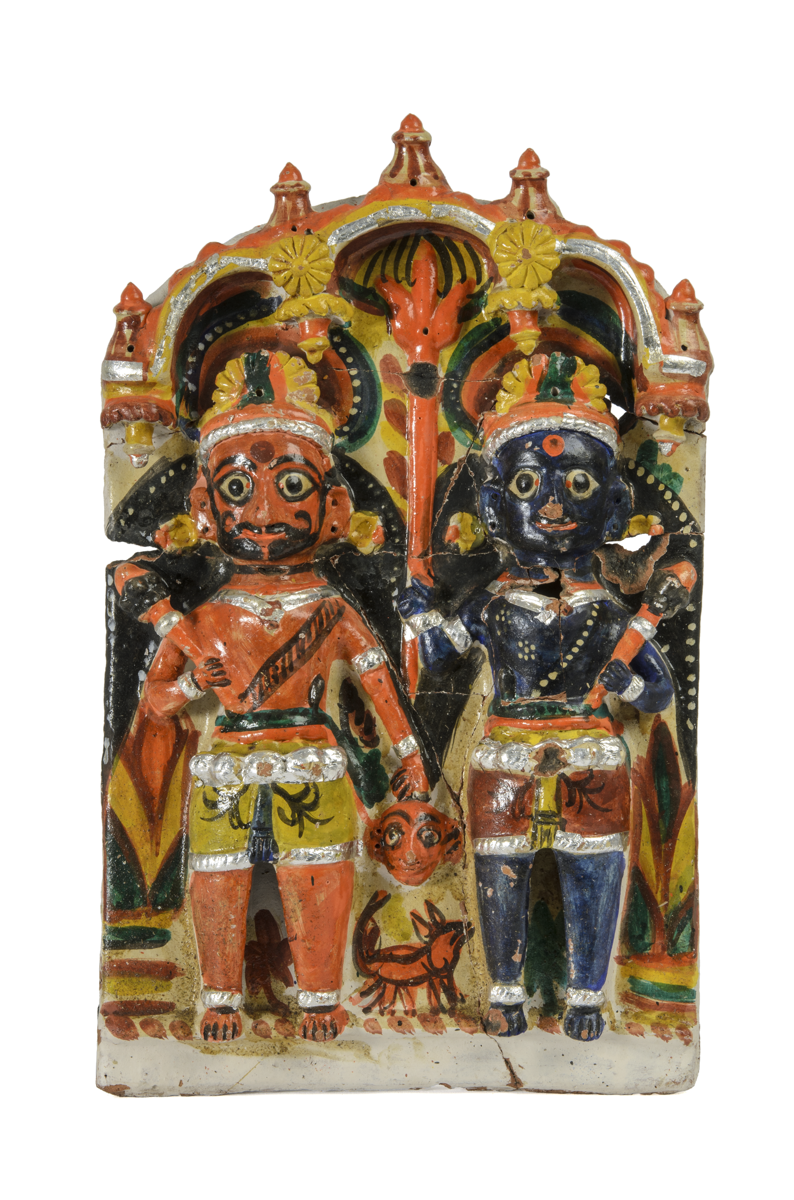
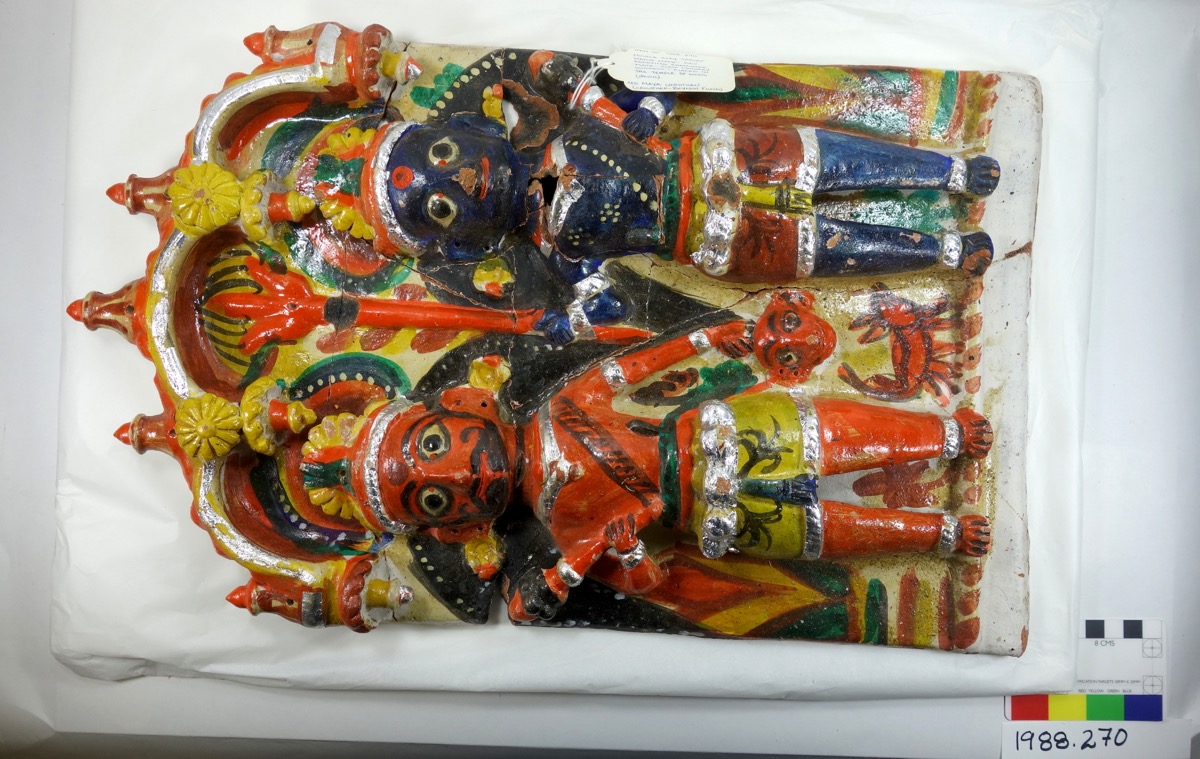
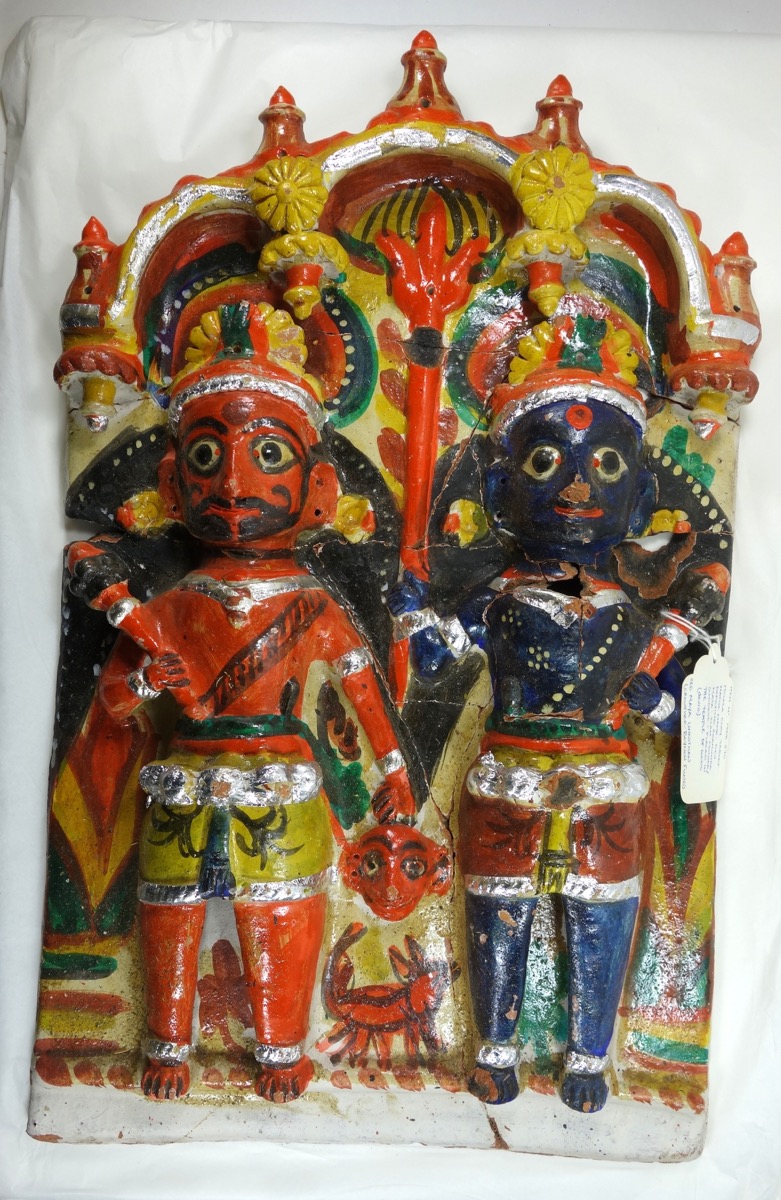
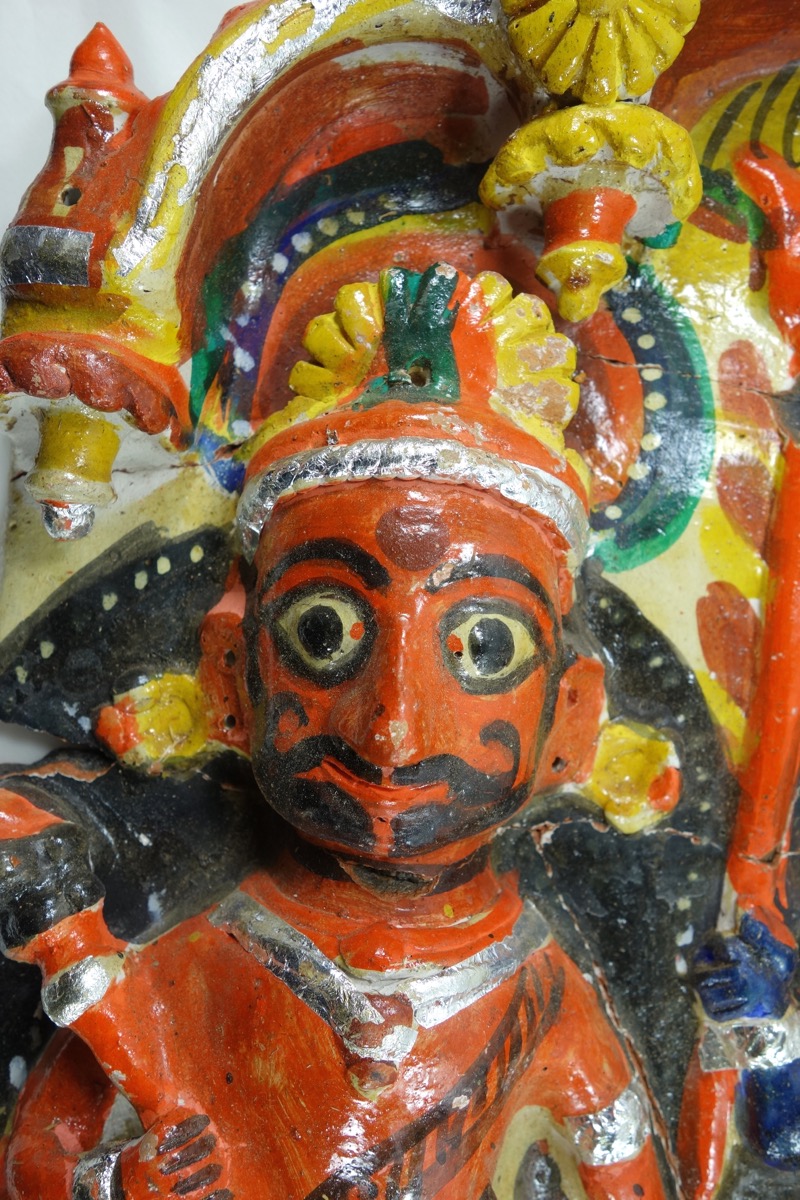
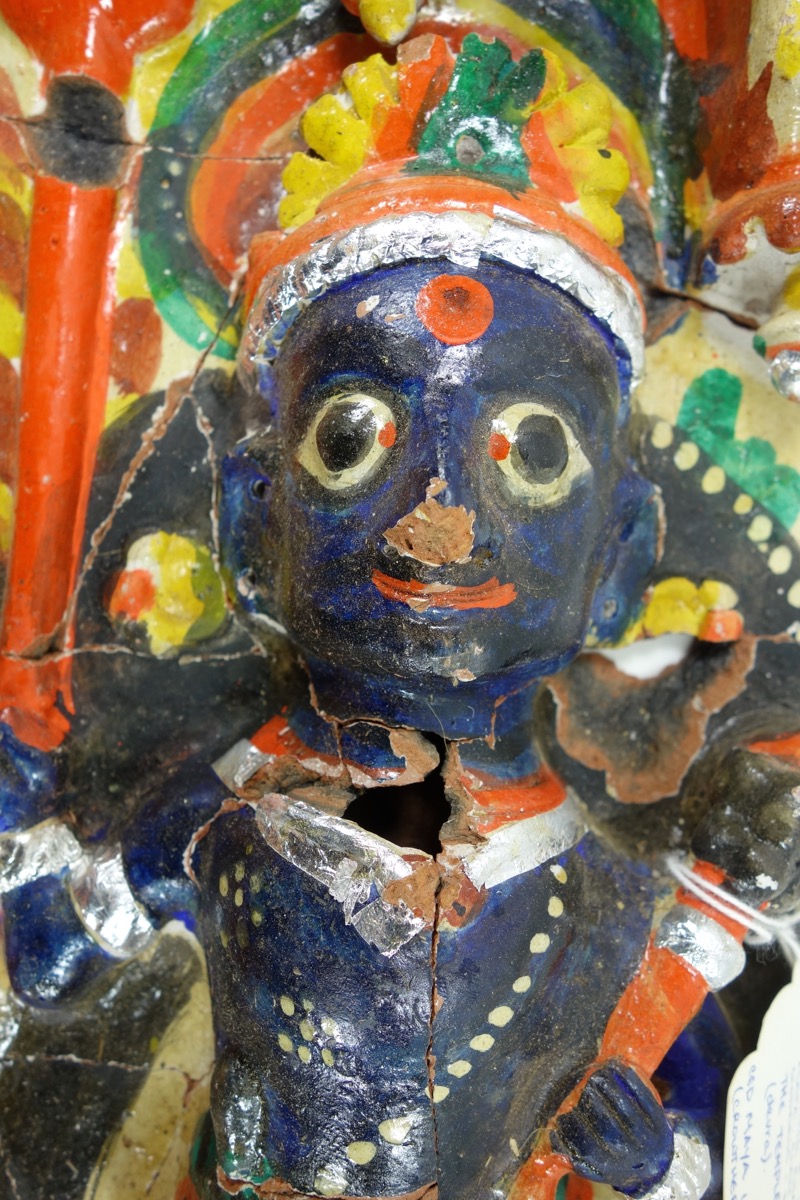
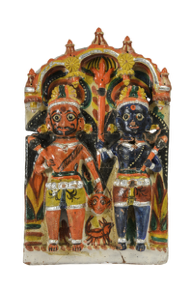
Baked clay Molela tablet with depiction of Kala and Ghora Bheru.
Place
Asia; South Asia; India; Rajasthan; Sirohi District; Uppalagarh
Period
20th century
Source
Unnithan, Maya [collector]
Department
Anth
Reference Numbers
1988.270
Cultural Affliation
Girahya [Girasia]
Material
Clay; Paint; Metal; Silver Foil; Pigment; Varnish
Local Term
Dev
Measurements
54mm x 494mm x 390mm
Events
Description (Physical description)
Card Catalogue Entry: 'Baked clay Molela tablet with depiction of Kala and Ghora Bheru: Forms of Shiva (four armed figure seated on tiger) painted in orange, yellow, etc. with foil decoration; Fair; Whole; Shiva'.
Event Date 1988
Author: maa
Description (Physical description)
Molela Clay tablet, depicting Chamunda.
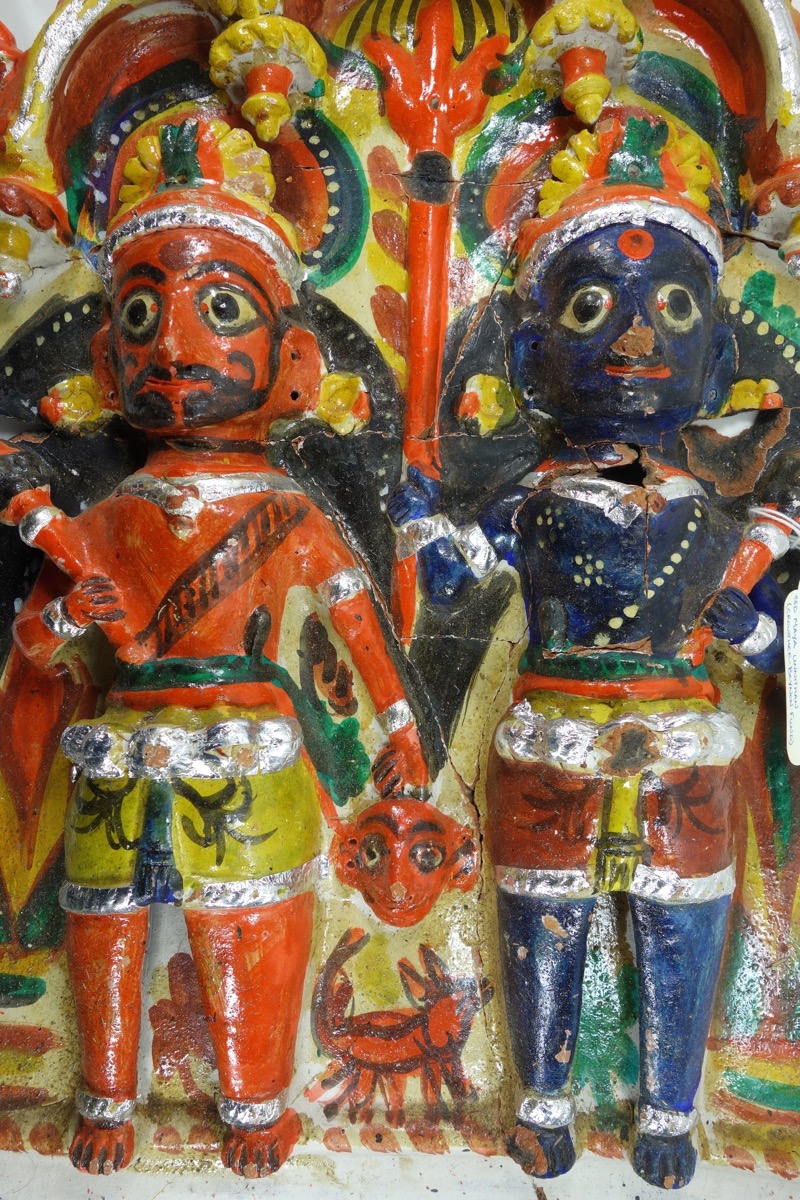
Brightly coloured clay tablet, (yellow, orange, blue, red, green). Two figures, one orange holding a head in the proper left hand, the second figure is blue and holding a staff.
Event Date 1988
Author: maa
Context (CMS Context)
Placed in the Temple of Gods (devra); Collected by: Unnithan.Maya in 1987: Molela Clay Tablets are produced by Hindu potters of Molela Village, the only village which produces these tablets; also in S. Rajasthan
Event Date 12/5/1988
Author: maa
Context (CMS Context)
This object and 1988.269 have been numbered incorrectly, and as a result the catalogue descriptions do not match the objects. The descriptions have been cut and pasted into the appropriate records so that 1988.269 is a tablet depicting Chamunda Mata and 1988.270 is a tablet depicting Kala and Ghora Bheru.
Event Date 24/10/2016
Author: Mark Elliott
Conservation (Remedial)
CON.2016.3504 | Remedial
Event Date 16/8/2016
Author: Kirstie Williams
Description (Display)
'Another India: Explorations and Expressions of Indigenous South Asia' 07/03/2017 - 22/04/2018 MAA exhibition label text reads:
Gods and heroes of the Girasia
The Girasia of southern Rajasthan share elements of Bhil culture, live in forest areas and speak a language that is part of the Bhil group. Many resist identification with Bhils, however, and the label ‘Adivasi’ altogether. The Girasia artefacts at MAA show a negotiation between ‘tribal’ and ‘non-tribal.’
Hilltop shrines called devra, maintained by kin groups, house clay tablets depicting folk heroes, Hindu gods
and ‘tribal’ deities. The shrines face the direction ‘from which the gods come’: the town of Molela where these plaques are made by Hindu artisans, highlighting the entanglement of people across boundaries of identity.
1. Khala Bheru and Ghora Bheru
The first tablet is dedicated to the deities Khala and Ghora Bheru. Khala (dark) is the most potent and destructive of the deities revered by Girasia. This is the most prominent tablet in any devra shrine.
Bhil. Molela, Rajasthan
Collected by Maya Unnithan, 1987
1988.270
Event Date 8/3/2017
Author: remke Velden
Exhibition (Li Ka Shing Gallery)
EXH.2017.2 | Another India: Explorations and Expressions of Indigenous South Asia
Event Date 8/3/2017
Author: Remke Velden
Description (Physical description)
Molela Clay tablet, depicting two forms of Bhairava. Brightly coloured clay tablet, (yellow, orange, blue, red, green). Depicting two figures, one orange holding a head in the proper left hand, the second figure is blue and holding a staff. Khala (dark blue) is the most potent and destructive of the deities revered by Girasia. This is the most prominent tablet in any devra shrine. Broken during transit and reconstructed.
Event Date 26/11/2018
Author: ashleigh griffin
Context (Other)
According to information previously in the 'Source Year' field, The object entered the museum on the 25th of April 1988.
Event Date 16/4/2018
Author: Remke Velden
FM:80112
Images (Click to view full size):