Accession No
1914.407 A-B
Description
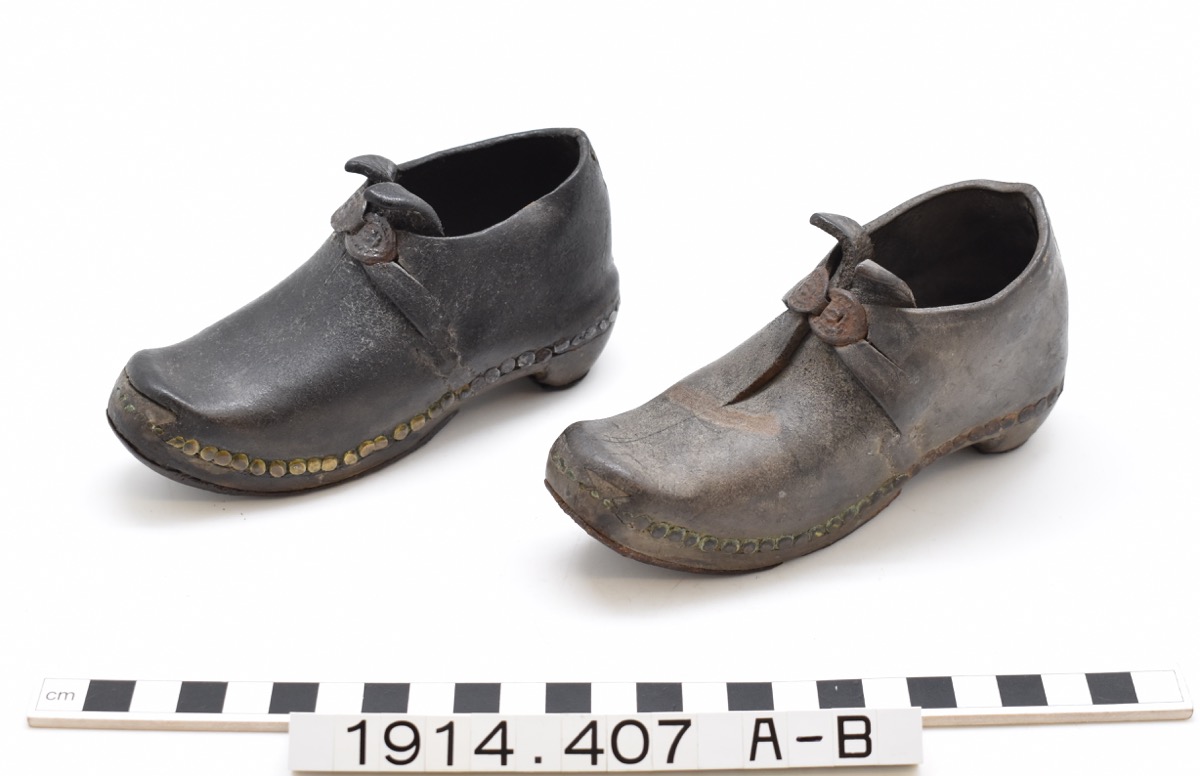
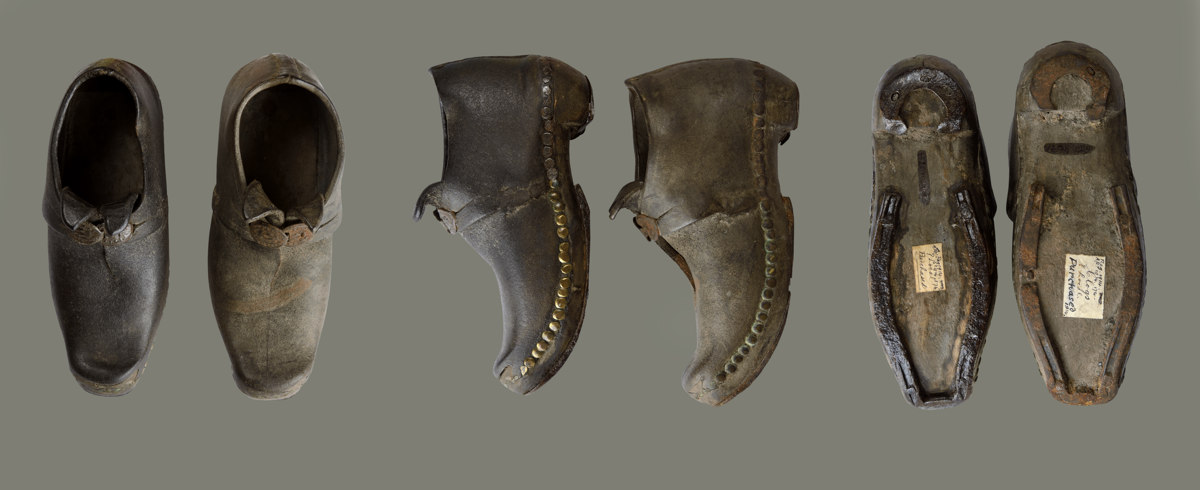
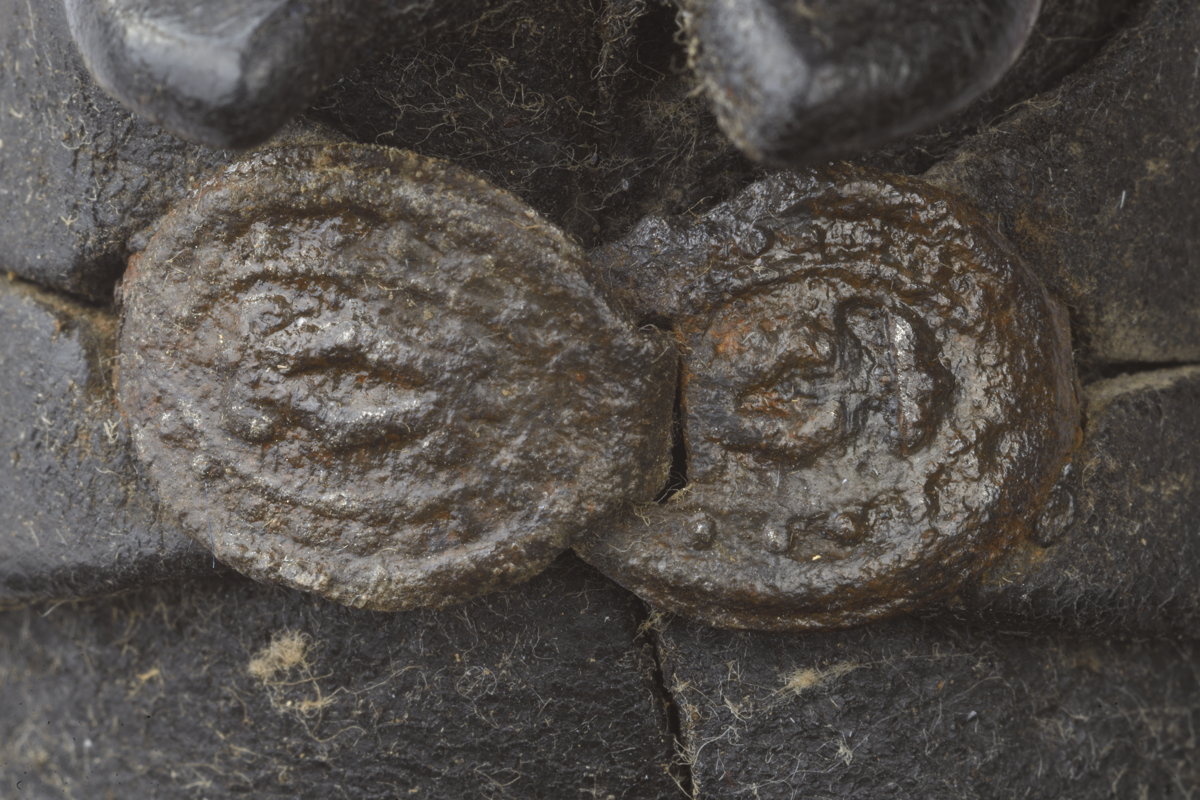
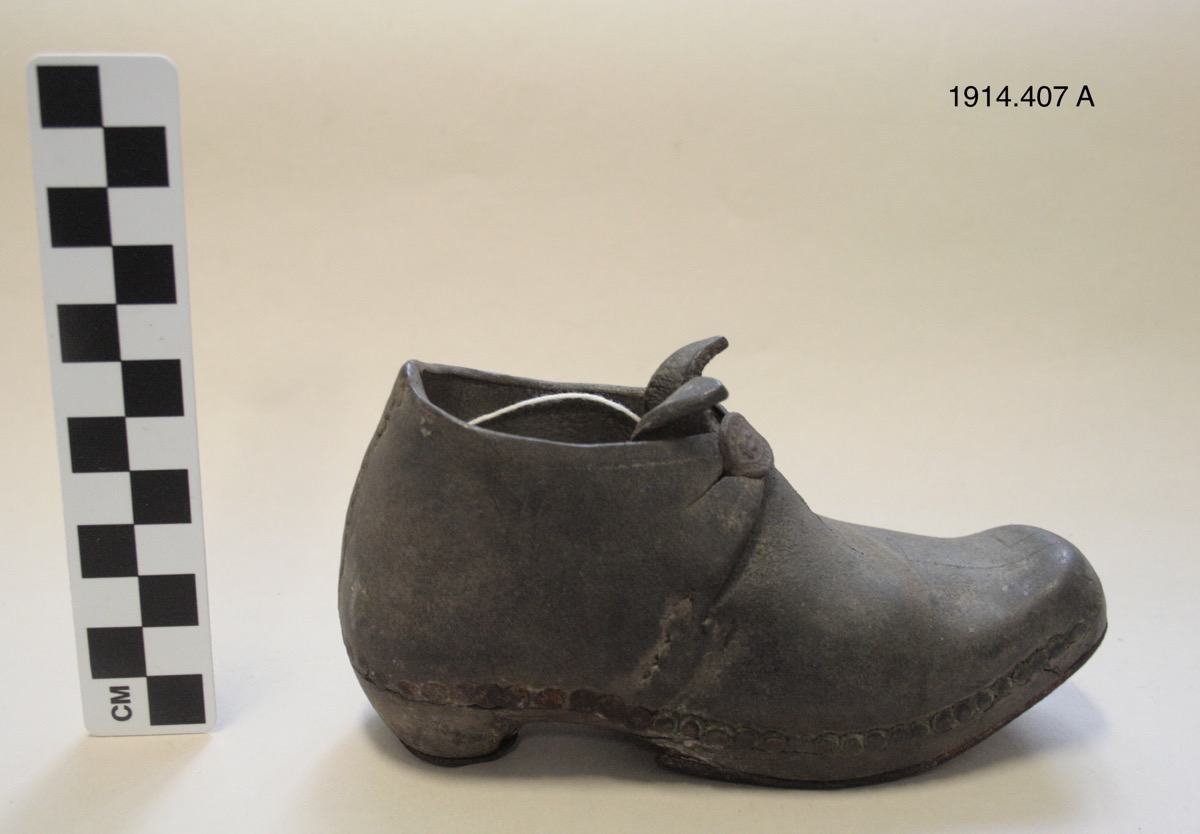
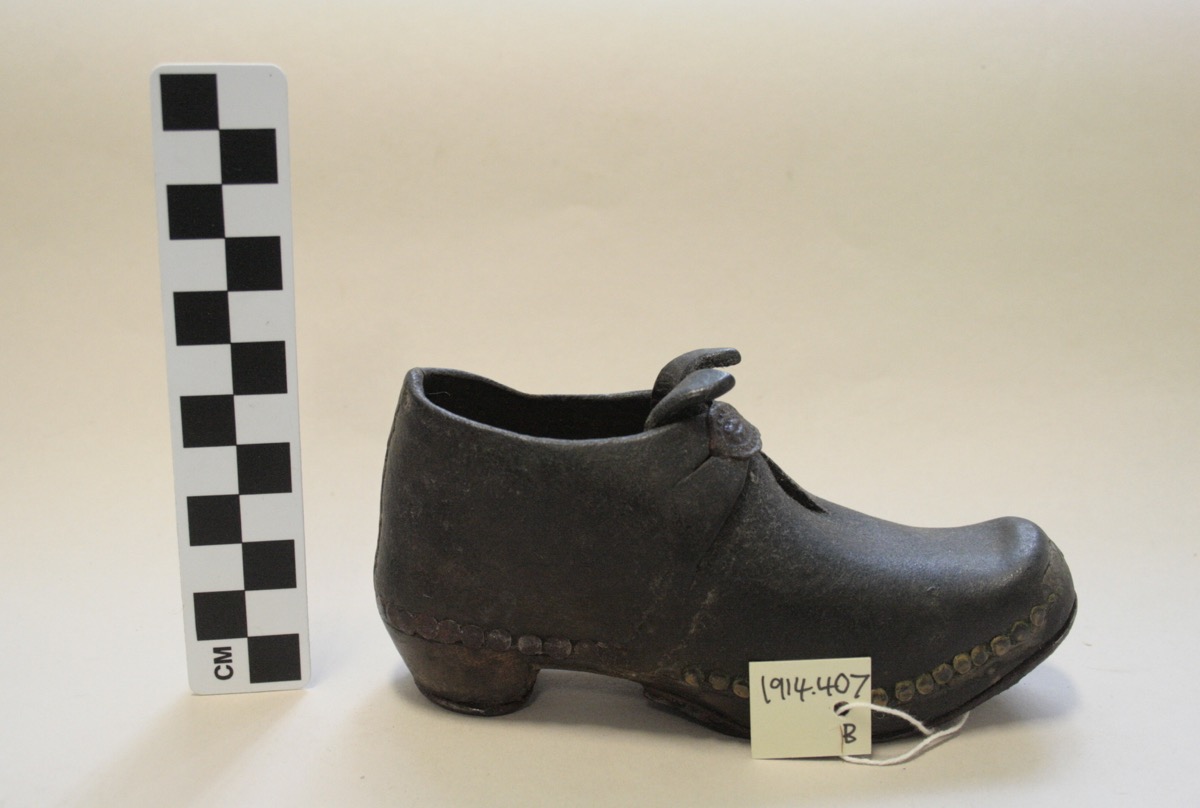
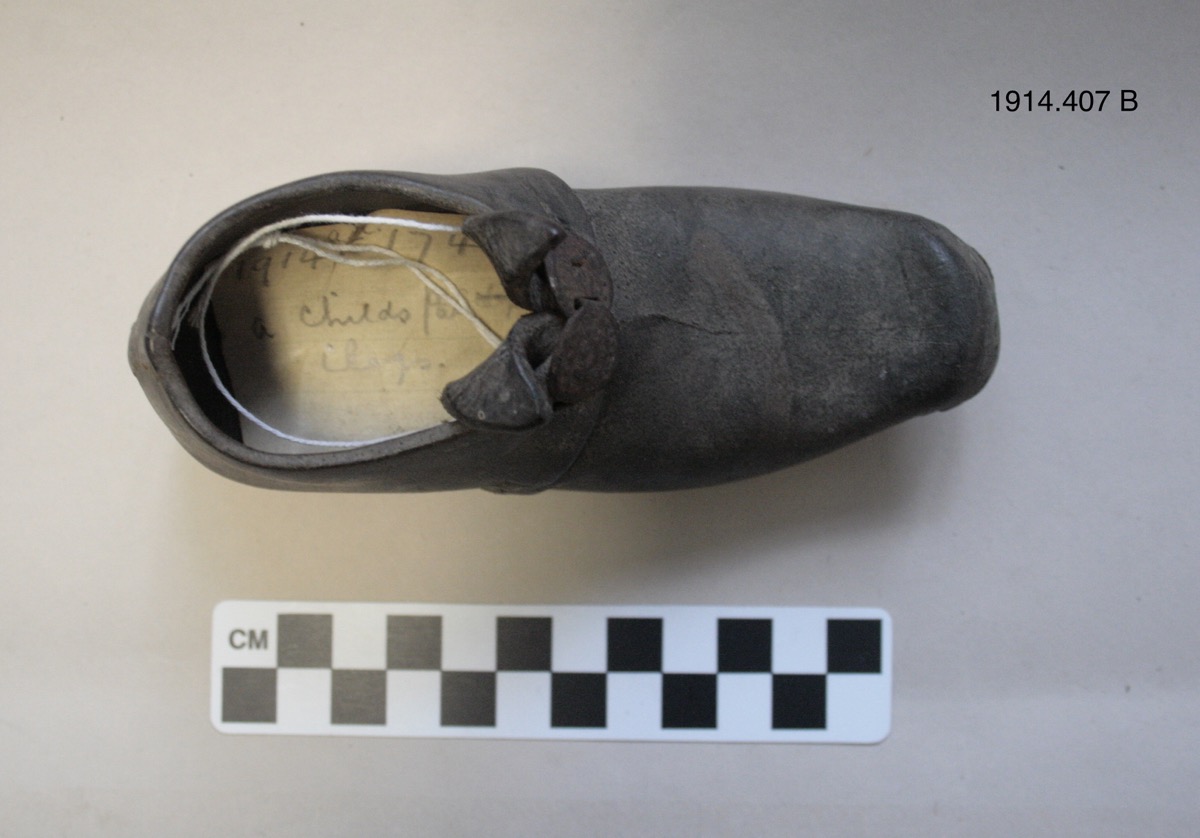
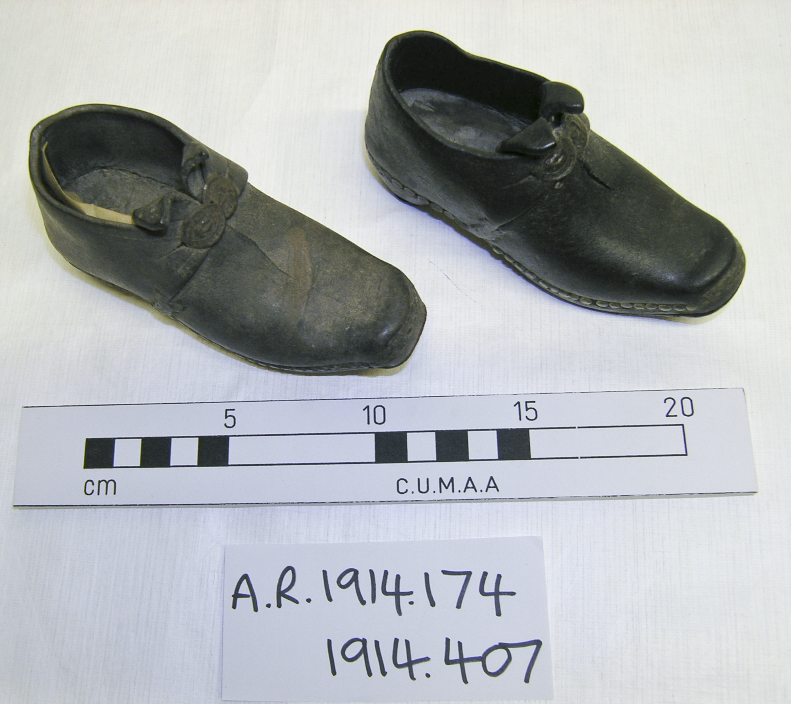
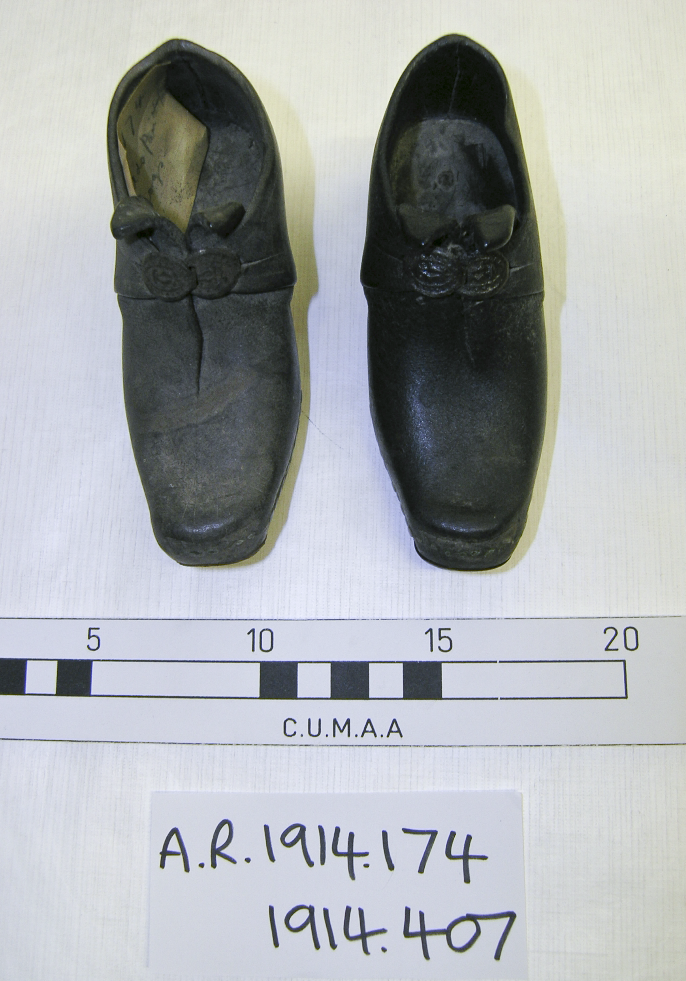
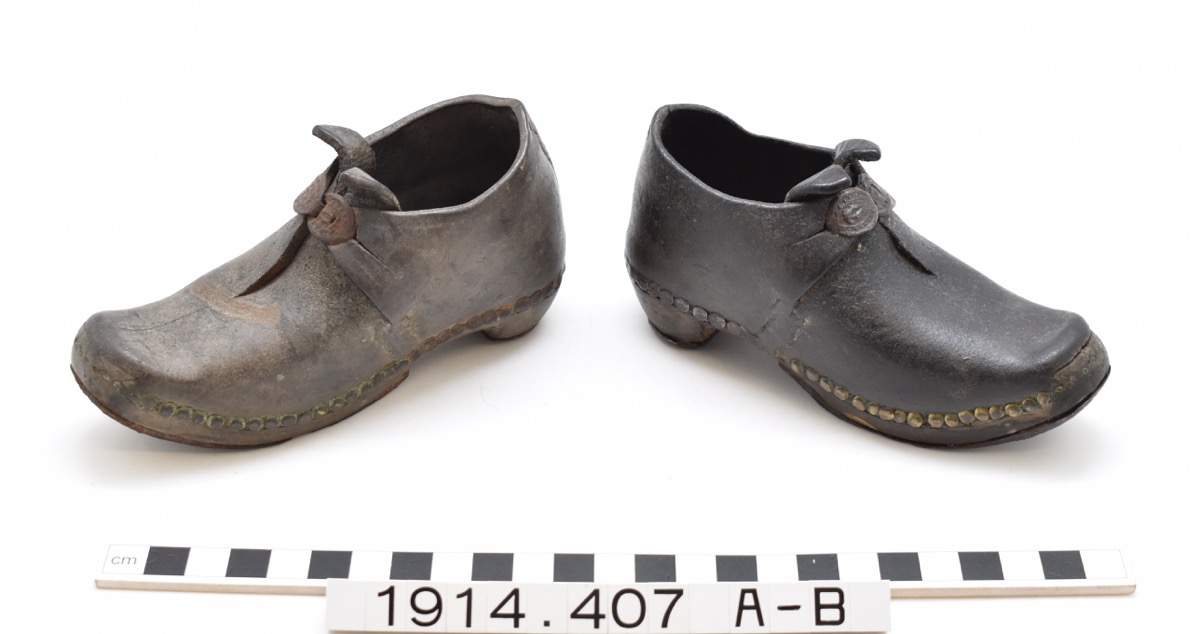
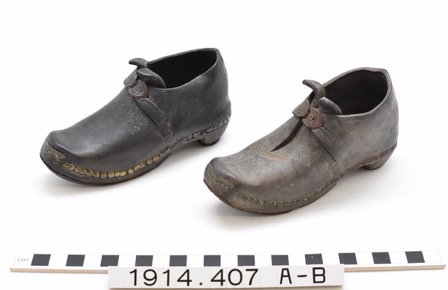
A pair of clasp clogs for a child. Leather uppers with a split tongue and metal clasp. Wood soles attached to the uppers with tacks: brass tacks around the forepart and iron tacks around the heel. Clog irons attached to the sole and the heel.
Place
Europe; Northern Europe; British Isles; United Kingdom; Great Britain; England; ?Lancashire; ?Yorkshire
Period
Post Medieval Late 19th century
Source
Department
Arch
Reference Numbers
1914.407 A-B; MAA: AR 1914.174 A-B
Cultural Affliation
Material
Leather; Wood; Metal; Steel
Local Term
Measurements
50mm x 75mm x 140mm
Events
Context (Related Documents)
Old paper label, handwritten in pencil, found inside the left shoes shoes, "AR 1914.174 a child's pair of Clogs" Previously stored and labeled with the Annual Report number, and now stored under the accession number
Event Date
Author: Rachel Hand
Description (Labels & Markings)
Old label adhered to object adds: '?local. Purchased.' [transcribed 4/8/2004]
Event Date
Author: Imogen Gunn (admin)
Context (Related Documents)
Card reads: '18th Century' and gives the provenance as 'No Provenance England'.
Event Date
Author: maa
Description (Physical description)
A child's pair of leather clogs, with wooden soles and steel latchets.
Event Date 24/1/1989
Author: maa
Context (Amendments / updates)
After checking the original accession records and annual report for this object, it appears that it came into the museum as an archaeology object, therefore its original accession number is A 1914.407.
Event Date 11/8/2004
Author: Louise Puckett
Context (Analysis)
In December 2014, Rebecca Shawcross, Shoe Resources Officer at Northampton Museums and Art Gallery, examined photographs of these clogs. She wrote the following: 'They are definitely clogs from either Lancashire or Yorkshire. Their style is called a clasp clog due to their fastening. I do see a lot of them and given their date of donation I would say they would be late nineteenth century. They are definitely not earlier.' She goes on to note that: 'Clogs can have different fastenings, most popular were the clasp clog, which has been in use since at least the end of the 18th century and bar clogs. Women and girls in working in textile mills normally wore traditional clasp clogs or bar strap clogs which became more popular in the beginning of the 20th century. Children’s clogs tend to sport either ankle straps or bar straps, though as your pair demonstrates they can be clasps too.' Given this information, the Place field has been changed from '?Cambridgeshire' to including both Lancashire and Yorkshire. The Period field has been modified to remove '18th century' and add 'late 19th century'. An updated description has also been added.
Event Date 12/2014
Author: Imogen Gunn
Conservation (Repack)
CON.2015.1423 | Repack
Event Date 13/5/2015
Author: cft31
Conservation (Repack)
CON.2015.1424 | Repack
Event Date 13/5/2015
Author: cft31
Context (Display)
On display in 'Hide and Seek: Looking for Children in the Past', Li Ka Shing Gallery, MAA from 30 January 2016 to 29 January 2017.
Event Date 30/1/2016
Author: Imogen Gunn
Description (Physical description)
A pair of clasp clogs for a child. Leather uppers with a split tongue and metal clasp. Wood soles attached to the uppers with tacks: brass tacks around the forepart and iron tacks around the heel. Clog irons attached to the sole and the heel.
Event Date 15/2/2016
Author: maa
Context (References)
Joy, J. May/June (2016). 'Hide and Seek: What Happened to Ancient Children?' British Archaeology, no. 148. pp. 42-47 (pictured)
Event Date 5/2016
Author: Imogen Gunn
FM:79941
Images (Click to view full size):