Accession No
1978.31
Description
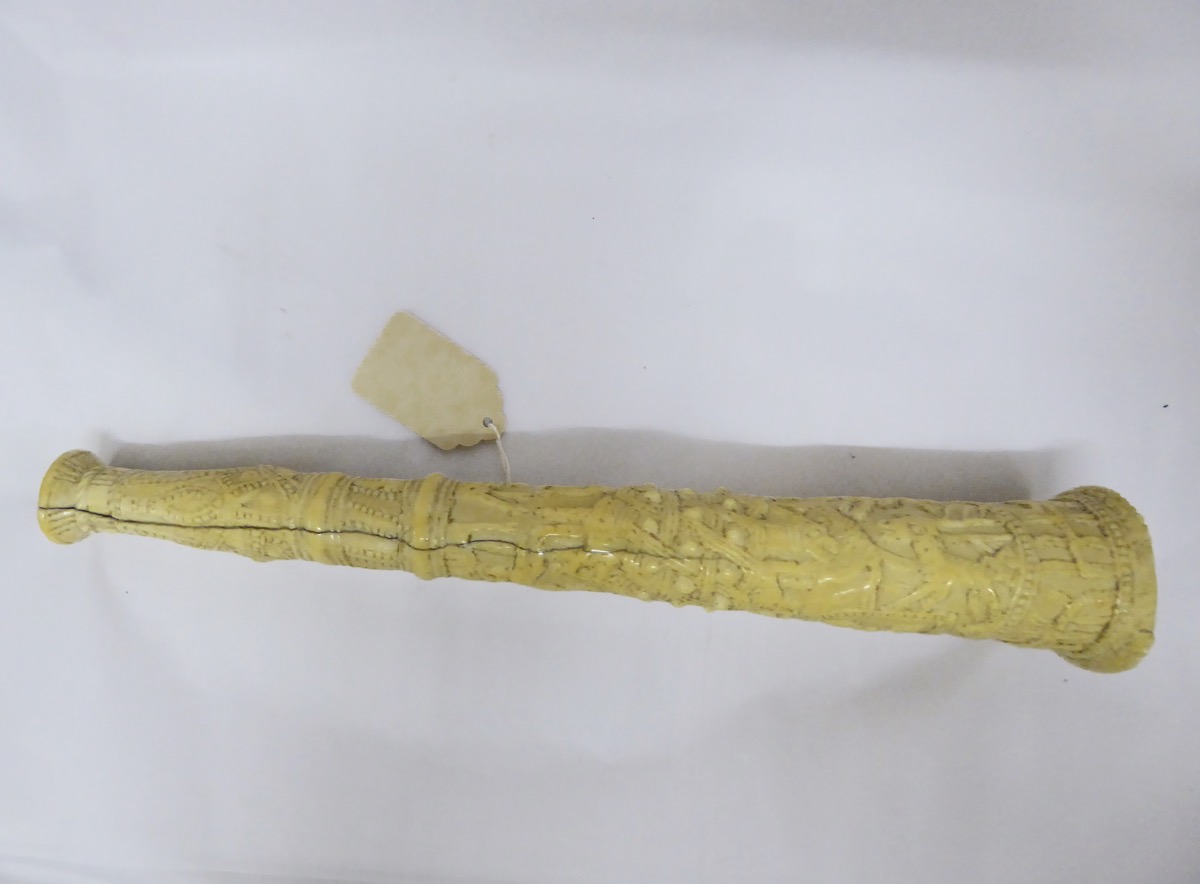
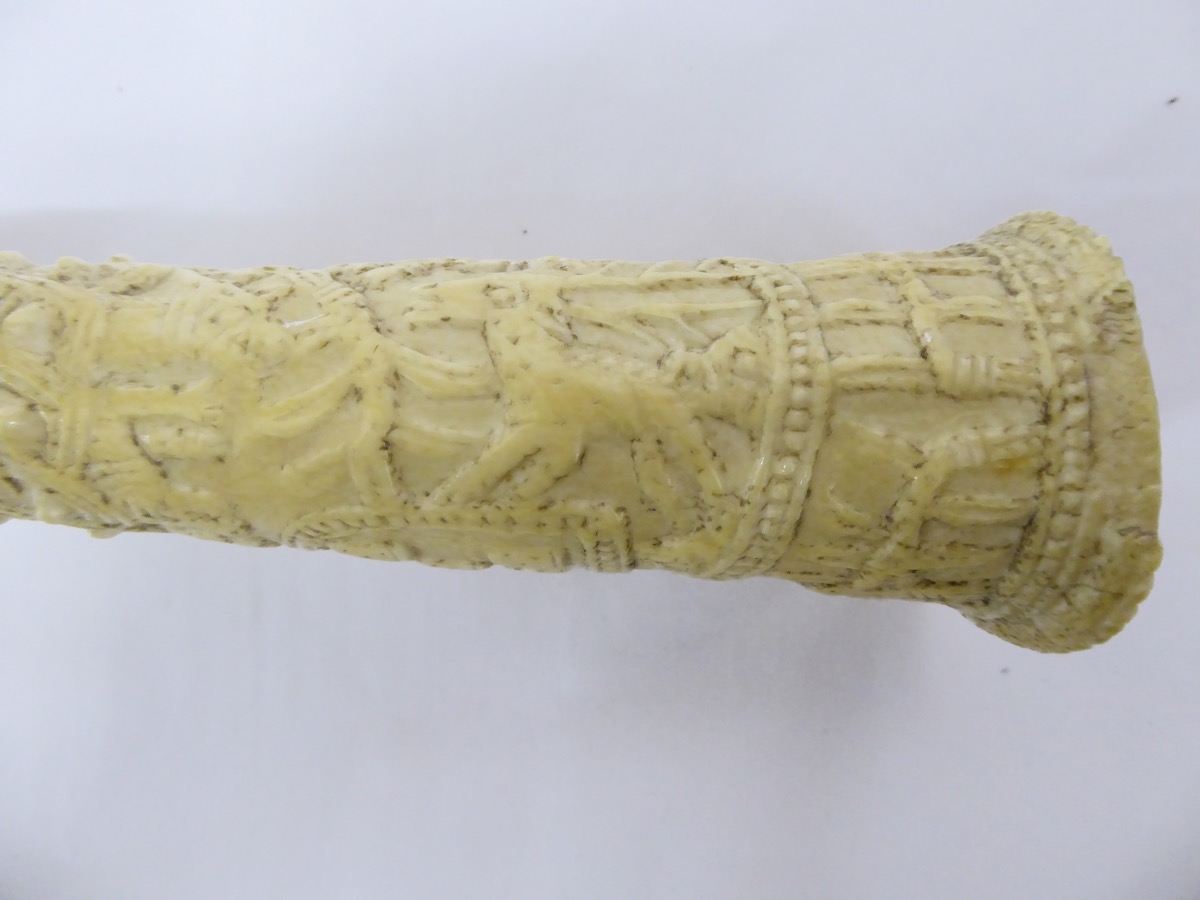
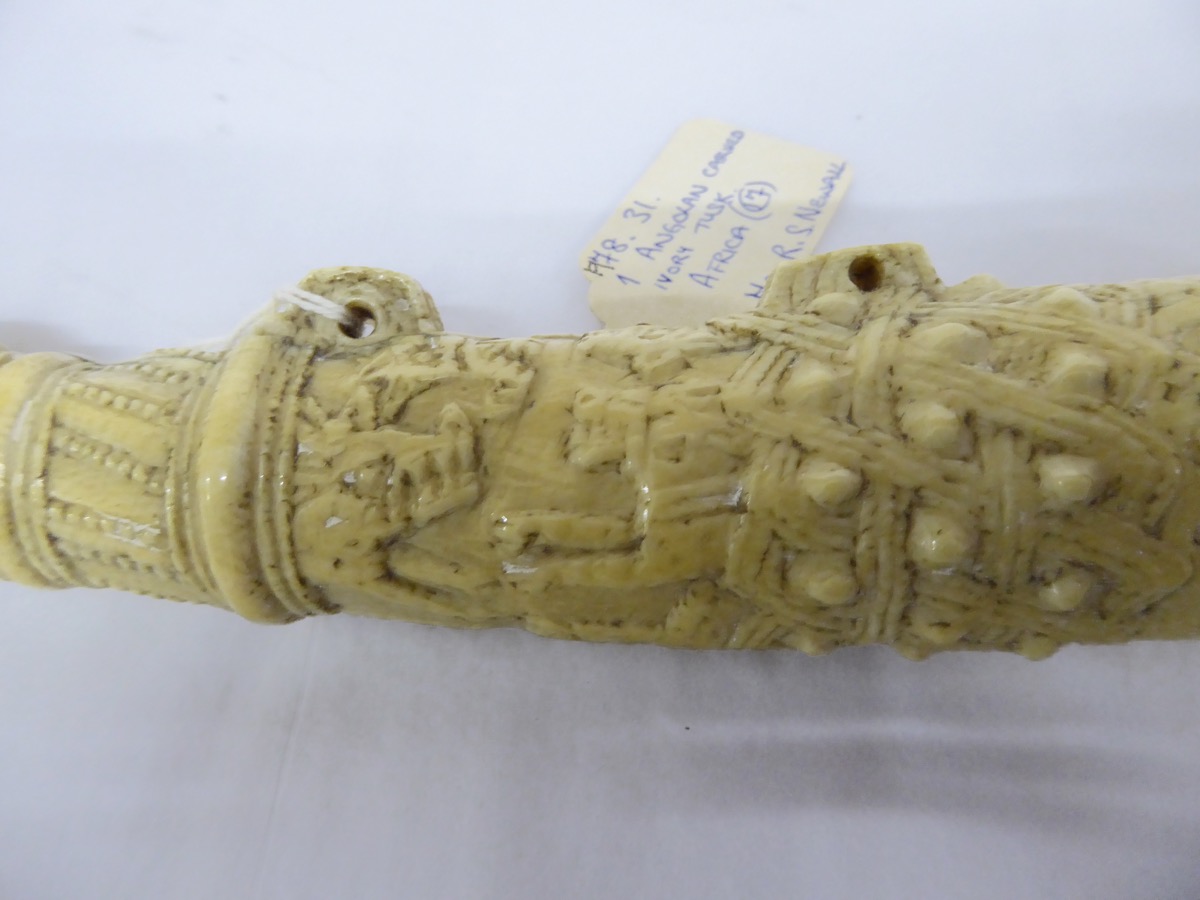
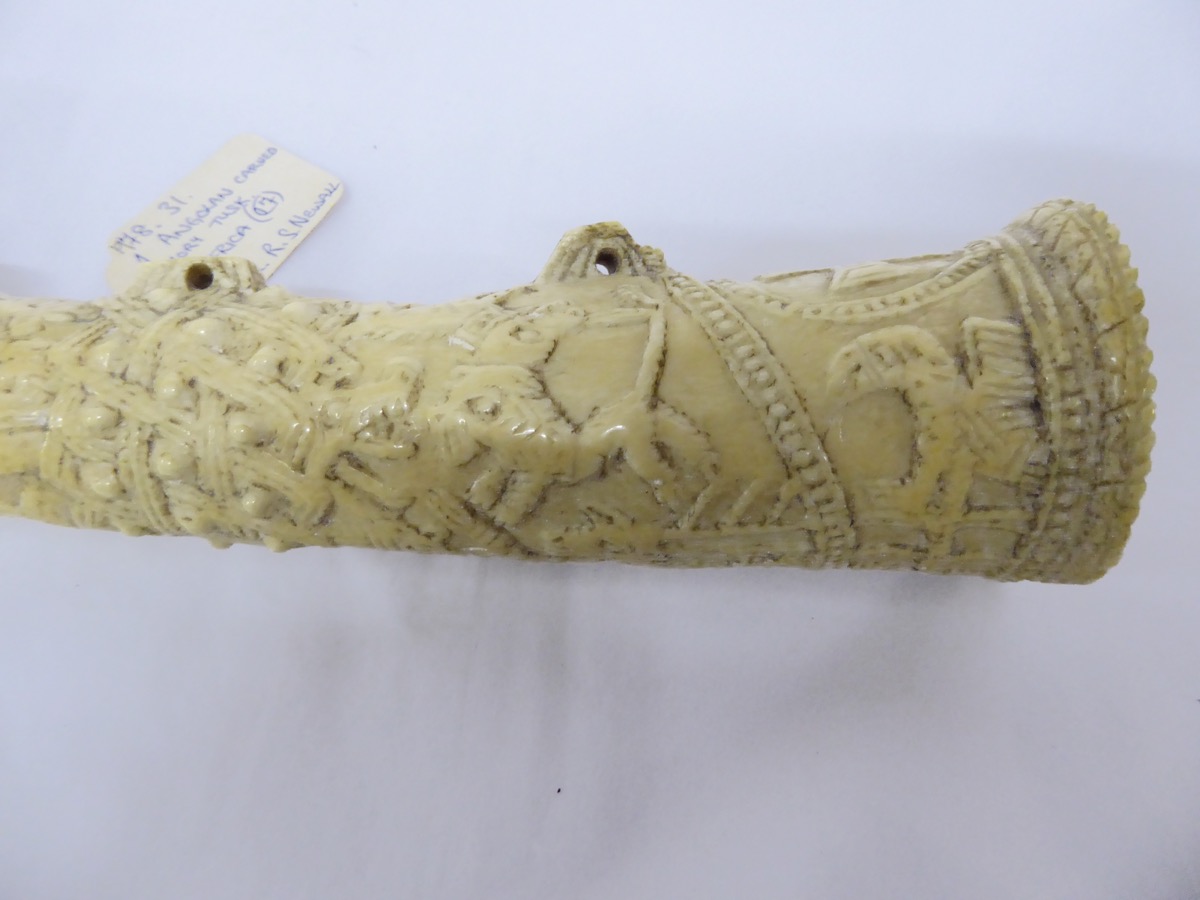
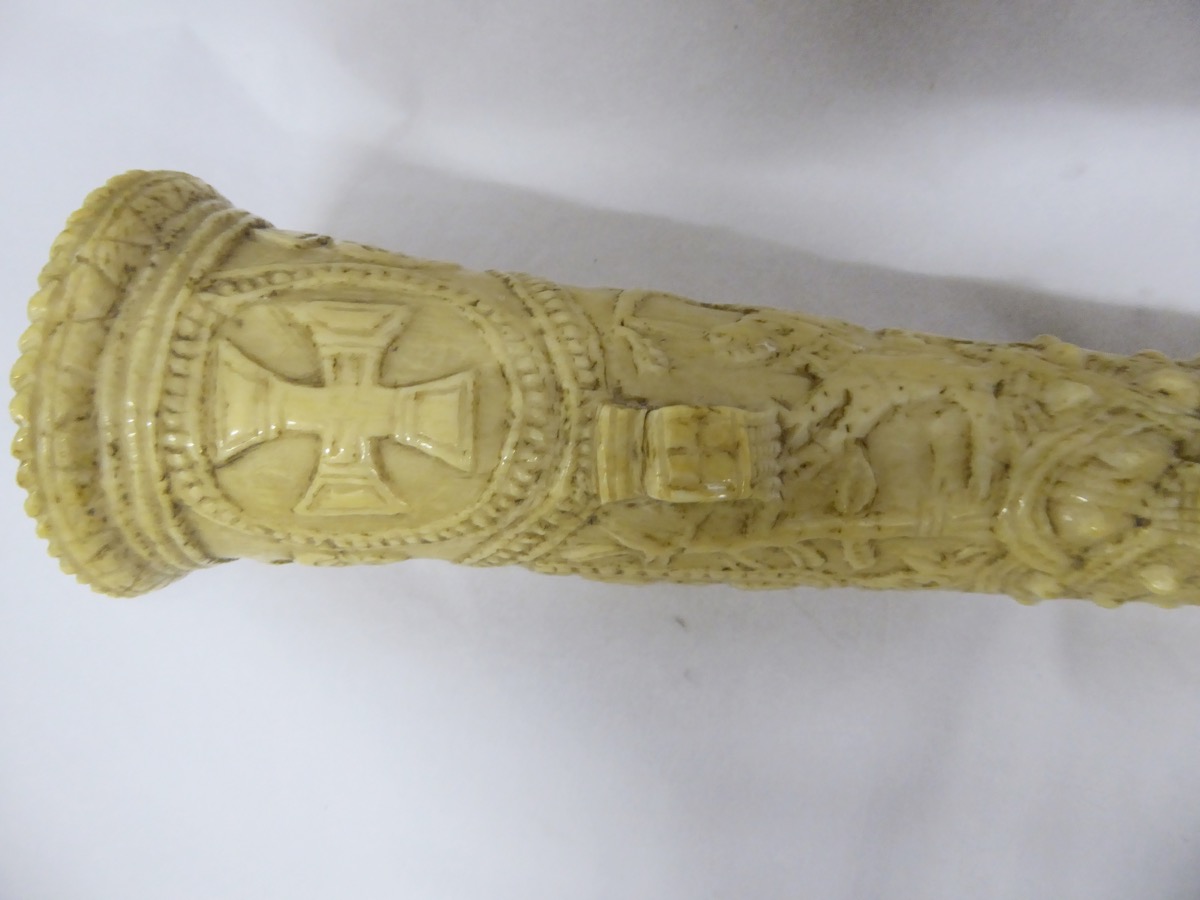
Horn made from an ivory tusk, possibly an oliphant. Carved in low relief with hunting scenes; around the base are two birds and a maltese cross in a circular border; the central section includes a knotwork pattern, hunting scenes with dogs and deer, and a coat of arms; the mouthpiece emerges from an animal head. Three pierced lugs for suspension. Long crack through the mouthpiece.
Place
Africa; West Africa; ?Sierra Leone Africa; ?Gambia Africa; Central Africa; ?Angola
Period
17th century
Source
Newall, Robert Stirling [collector and bequeather]
Department
Anth
Reference Numbers
1978.31
Cultural Affliation
Sapi
Material
Ivory
Local Term
Measurements
55mm x 60mm x 311mm
Events
Description (Labels & Markings)
Old label reads: 'Sherbo-Portugese 17th century'.
Event Date
Author: Lucie Carreau
Description (Physical description)
Accession Register: '1978.31. 1 Angolan carved ivory tusk. Africa. Mr R.S. Newall. Sherbro-Portuguese, 17th century.'
Event Date 1978
Author: Mark Elliott
Description (Physical description)
'Portuguese' ivory carved tusk.
Event Date 27/3/2000
Author: maa
Context (Amendments / updates)
Old box list noted Angola, and added "(Catalogue card says 'Sherbo', which means Sierra Leone or Gambia)".
Event Date 03/04/2006
Author: maa
Context (Analysis)
Katherine Prior via email: 'See Ezio Bassani's book, African Art and Artefacts in European Collections, 1400-1800 you'll see that the horn is very probably from Sierra Leone, made by the Sapi people for sale to Europeans as a Western-style hunting horn (blown from the end rather than side, as in African horns). He has photographs of many similar horns in European collections) though he missed the Cambridge one!), all of which he dates to the first half of the 16th century. Most appear to have been made for the Portuguese market, hence the presence of the Portuguese coat of arms and cross on them. The current generic label for them is 'Sapi-Portuguese ivories'.
Event Date 3/4/2006
Author: Katrina Dring
Description (Physical description)
Horn made from an ivory tusk, possibly an oliphant. Carved in low relief with hunting scenes; around the base are two birds and a maltese cross in a circular border; the central section includes a knotwork pattern, hunting scenes with dogs and deer, and a coat of arms; the mouthpiece emerges from an animal head. Three pierced lugs for suspension. Long crack through the mouthpiece.
Event Date 26/11/2020
Author: Katrina Dring
Context (References)
Bassani, E., (2000). African Art and Artefacts in European Collections, 1400-1800. London: British Museum Press.
Event Date 9/7/2021
Author: rachel hand
Conservation (Remedial)
CON.2022.5446 | Remedial
Event Date 10/10/2022
Author: Kirstie French
Loan (Exhibition)
Fitzwilliam Museum (UCM), 25/7/2023 to 7/1/2024, Enslavement & Resistance: Cambridge & the Black Atlantic
Event Date 25/7/2023
Author: rachel hand
FM:125851
Images (Click to view full size):